Documento original
GPT Image 2 · en
Scene:
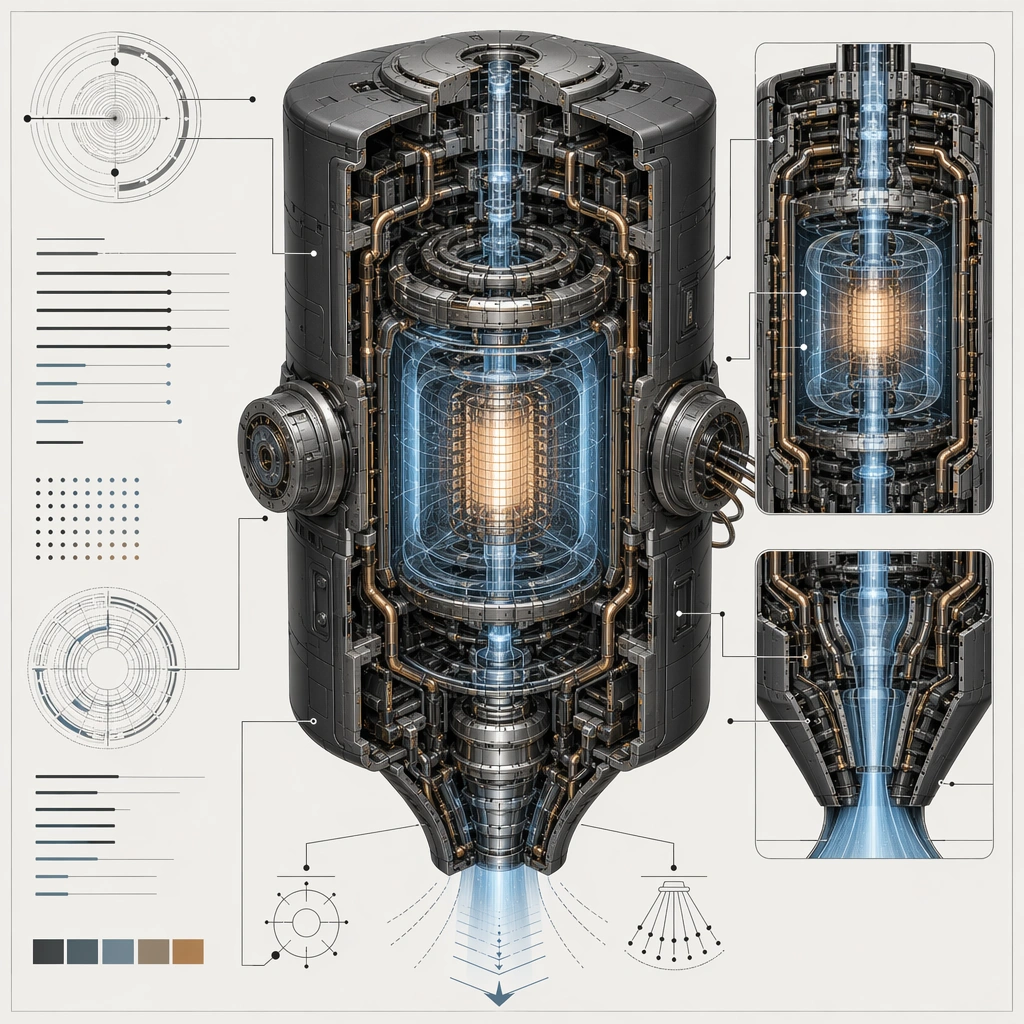
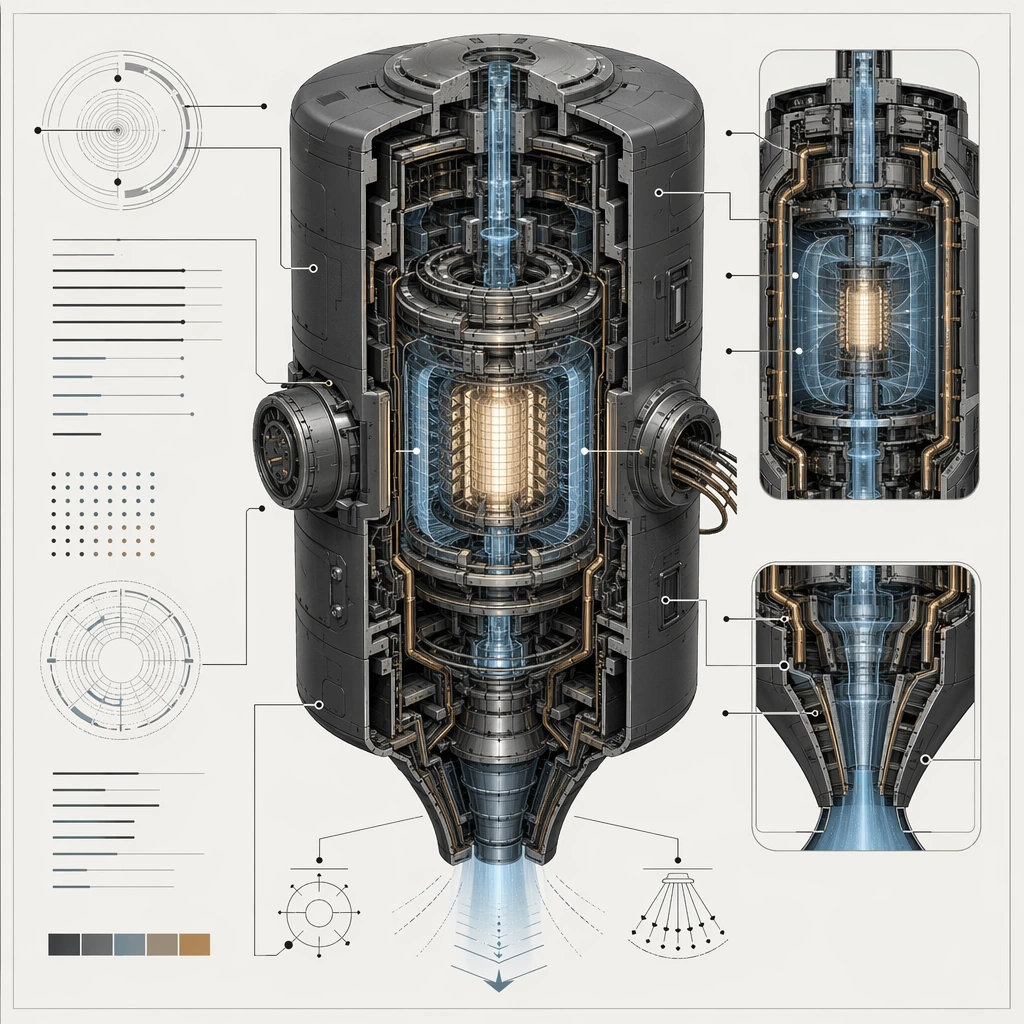
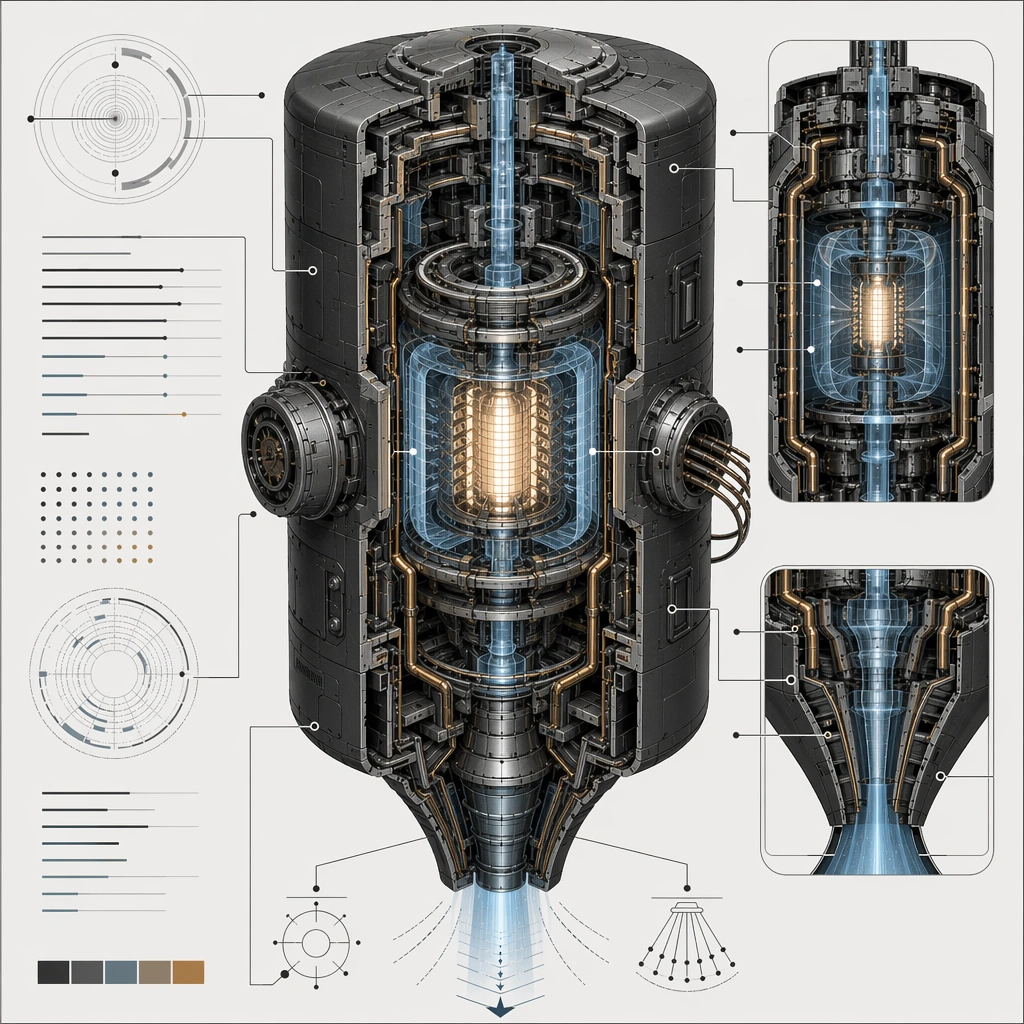
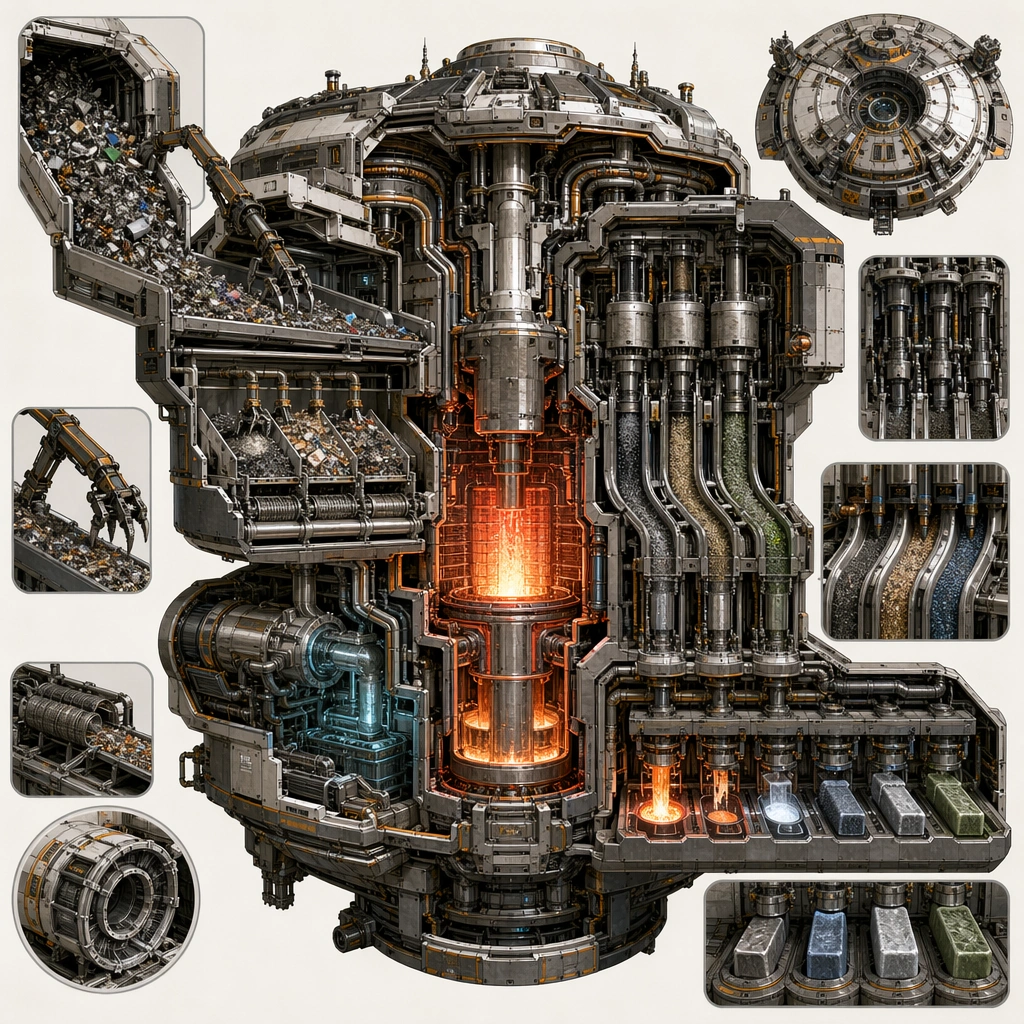
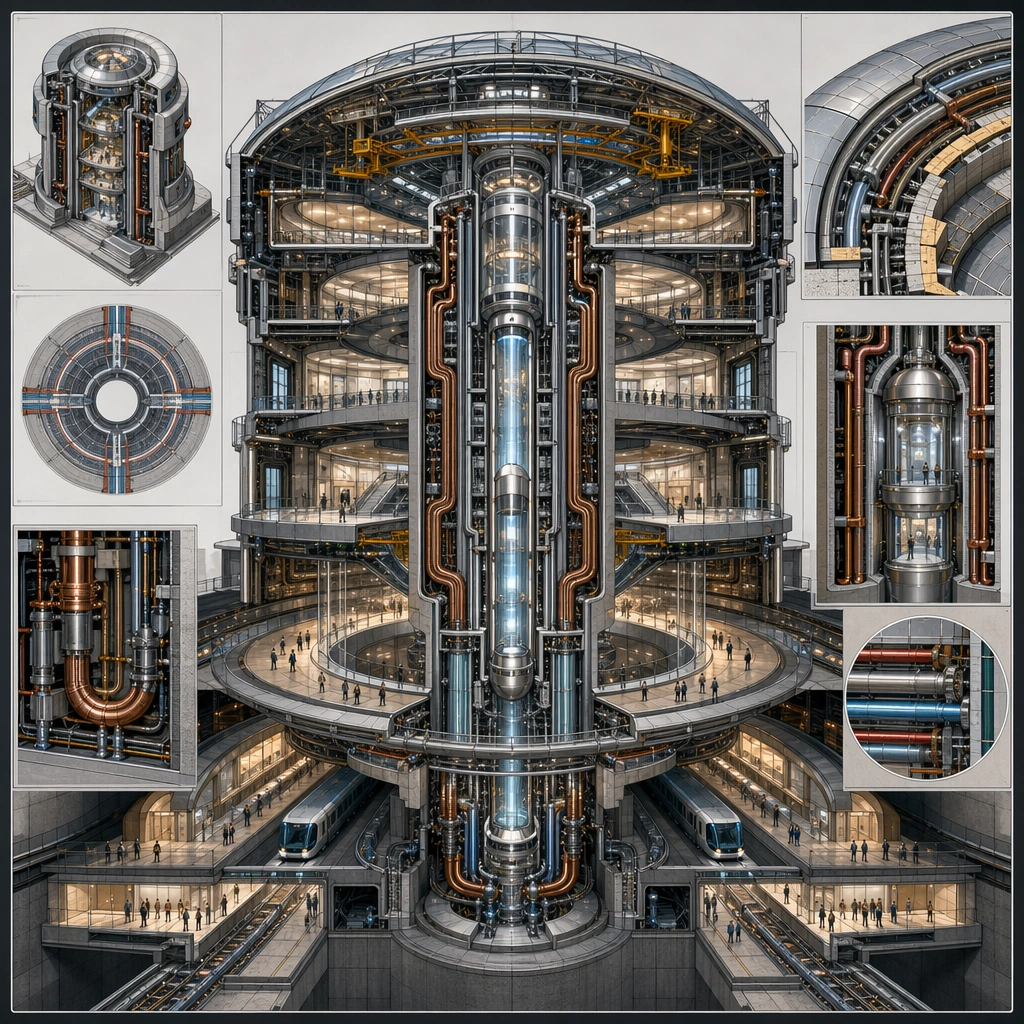
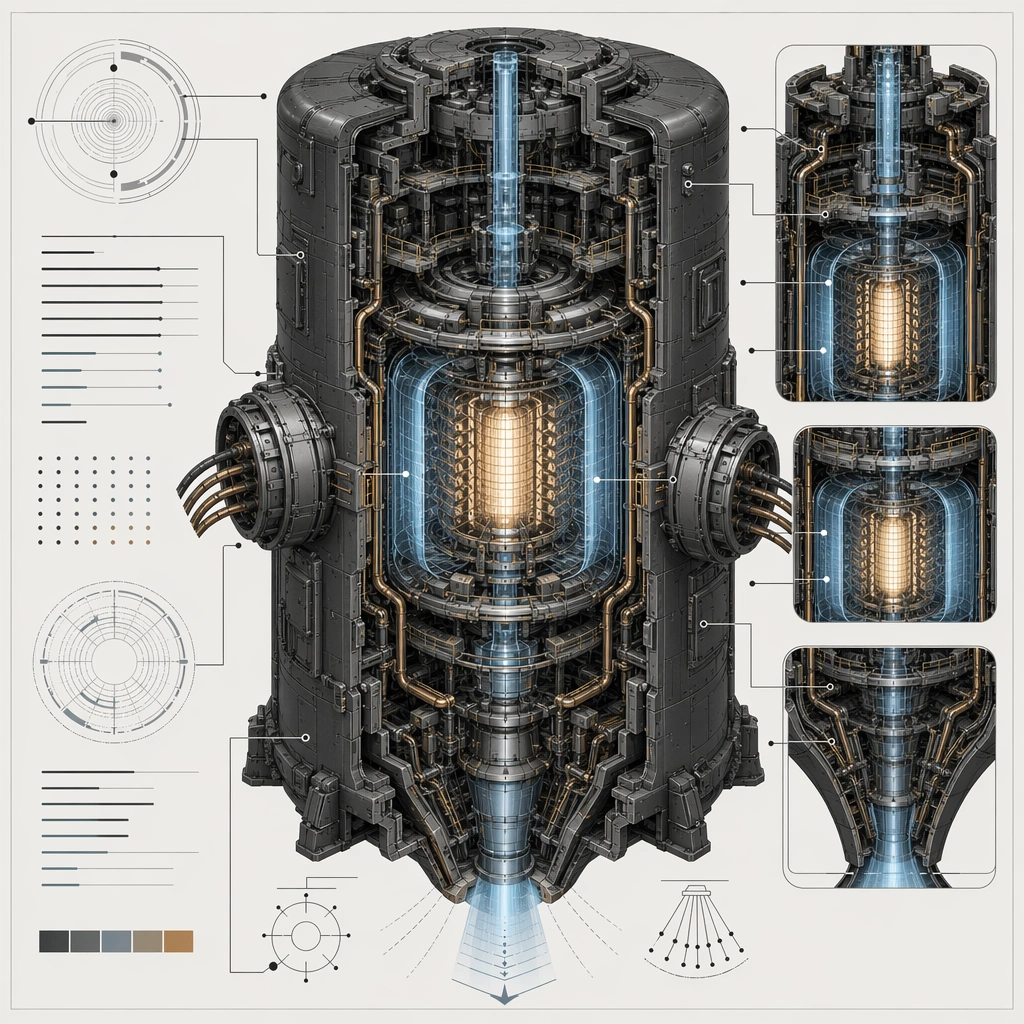
Create a square technical-poster composition for an impossible but convincing device, using cutaway views, section windows, and disciplined layout. The background should stay clean and poster-ready so internal chambers, conduits, shells, and field zones remain readable at a glance. Use lighting and color sparingly to clarify hierarchy rather than to decorate the page. Scale the familiar shell language up into a larger industrial module with the cutaway still occupying the square frame clearly and cleanly.

Subject:
Center the image on one speculative machine whose internal logic feels thought through: shell, core, coolant path, field chamber, maintenance access, and energy routing should all relate coherently. The device can be fantastical, but it must read like it could be explained by an engineering team. Preserve the reference chamber order and outer-shell identity while adding service walkways, larger coolant trunks, and more robust containment walls.

Important details:
Treat the poster as a visual explanation system without readable text. Use arrows, callout lines, index dots, section blocks, and sectional contrast only as abstract diagram grammar. The result should feel credible for a concept deck, patent-style board, or advanced product explanation poster. Scale must feel like a real engineering escalation rather than a total redesign into a different machine. Preserve the exact structural language established by the reference image, especially the outer shell silhouette, internal chamber sequencing, conduit routing, and diagram hierarchy.

Use case:
Spec Tech Cutaway series study 4/4, designed as a reusable core-system image for this topic.

Constraints:
No readable text, no watermark, no logos, preserve exact 1:1 aspect ratio, no readable labels, no exploded parts floating without logic, no cartoon simplification, no generic spaceship dashboard noise, no giant hangar scenery taking over the poster.
Como usar
- Copie o prompt original completo, incluindo os parâmetros.
- Adapte o tema, o texto e a composição aos seus requisitos.
- Use uma ferramenta externa compatível; confira o acesso e o resultado.
Antes de começar
- Verifique se é necessária uma imagem de referência. Compatibilidade não comprova qual modelo gerou o exemplo.
- Confira nomes, números e textos; os resultados variam entre versões do modelo.