Documento original
GPT Image 2 · en
Scene:
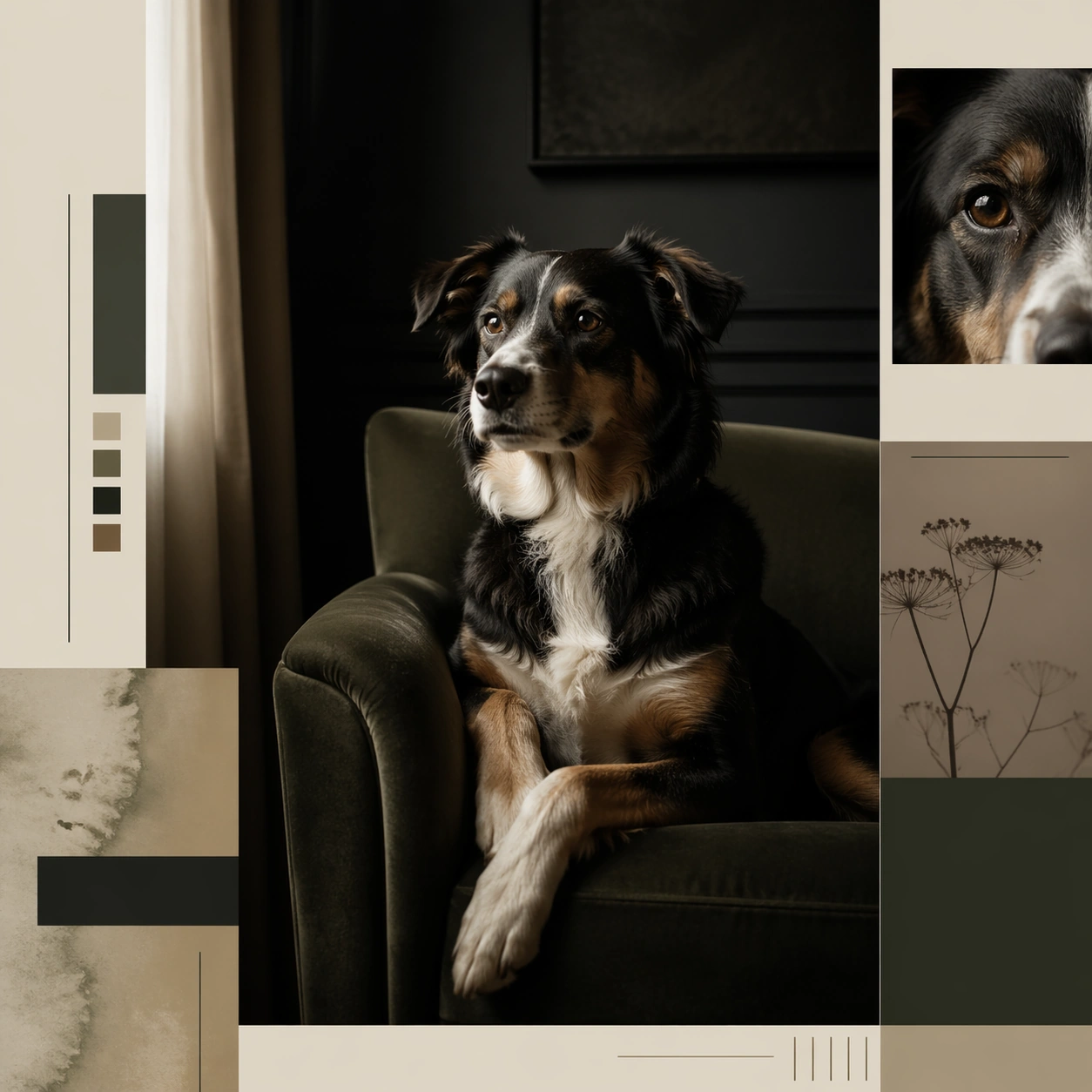
A square editorial spread opener or magazine board that combines photoreal animal portraiture with layout fragments, negative space, and sophisticated art direction. The animal should read as a character with presence and point of view, but never become a cartoon mascot or a human impersonation. Keep the image useful for brand editorials, cultural magazines, nonprofit storytelling, or visual essays where personality and atmosphere matter as much as realism. Use a moody domestic interior with one armchair, side light, and layout columns framing the portrait like a magazine opener.

Subject:
Focus on one animal in a setting that supports a distinct personality cue such as quiet confidence, urban wit, eccentric elegance, patient age, or tactile curiosity. Use real anatomy, plausible behavior, and emotionally controlled lighting. The animal may be framed with objects, set pieces, or composition motifs, but the scene must still feel truthful to the species and grounded in editorial photography logic. Show a medium dog seated with calm intelligence, looking slightly past camera as if holding a private opinion about the room.

Important details:
Use magazine-like hierarchy: one hero image, supporting crop windows, abstract text columns, margin bars, or pull quote blocks without readable words. The result should feel authored and surprising, not like a stock portrait dropped into a template. Aim for mood, specificity, and a polished sense of visual journalism. Let environment, gesture, and styling carry the personality instead of costumes or overt anthropomorphism. The image should feel serious, witty, and highly publishable, balancing portrait depth with elegant editorial spacing.

Use case:
Animal Character Editorial Spread Set single study 1/9, dog column opening spread for a commercially reusable prompt atlas example.

Constraints:
No readable text, no watermark, no logos, preserve exact 1:1 aspect ratio, no human clothes on animals, no cartoon facial exaggeration, no readable magazine text, no mascot smile effects, no fake celebrity parody, no novelty prop overload, no pipe-smoking parody, no human wardrobe, no kitschy study décor.
Como usar
- Copie o prompt original completo, incluindo os parâmetros.
- Adapte o tema, o texto e a composição aos seus requisitos.
- Use uma ferramenta externa compatível; confira o acesso e o resultado.
Antes de começar
- Verifique se é necessária uma imagem de referência. Compatibilidade não comprova qual modelo gerou o exemplo.
- Confira nomes, números e textos; os resultados variam entre versões do modelo.