原始文档
GPT Image 2 · en
Scene:
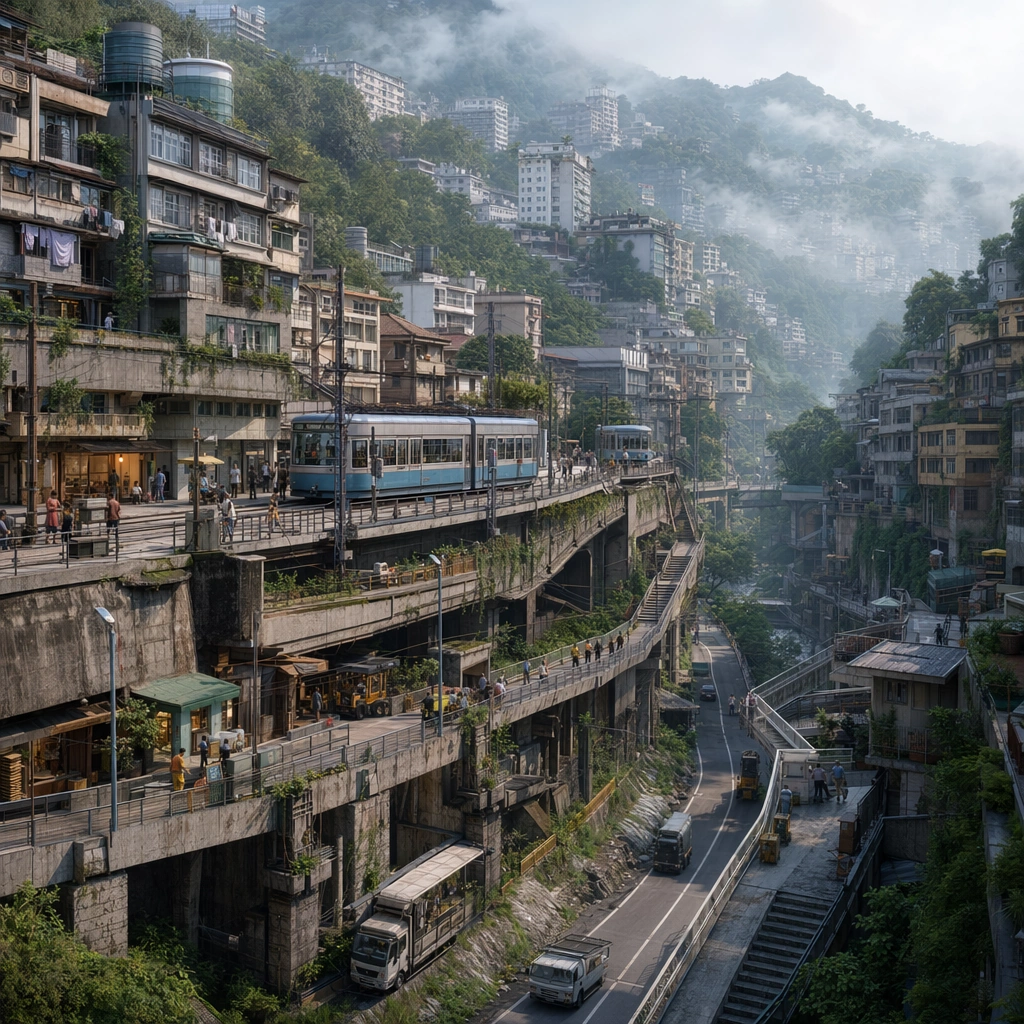
Design a square urban concept image that sells one future-city mobility idea clearly enough for an editorial spread, launch visual, or worldbuilding board. The framing should always reveal at least two transport layers and one strong lived-in density cue. Show a steep hillside district with terraced housing, switchback trams, layered retaining decks, and mist lifting through the valley.

Subject:
Show a complete district-scale mobility ecosystem with believable housing, transit, commerce, and utility access. Human presence can appear as tiny commuters, riders, or maintenance workers, but the main protagonist is the city system itself. The city should adapt to terrain elegantly, with circulation and density resolved through ramps, lifts, rail loops, and narrow civic terraces.

Important details:
Use depth layering, disciplined architecture families, and just enough weather or atmosphere to create mood without erasing the logic of roads, bridges, lines, and occupancy. The result should feel specific to a place and function, not like an all-purpose neon metropolis. Make slope logic, drainage, and movement the main read so the district feels engineered for real life, not merely picturesque. Preserve credible circulation between transport levels so every district reads as somewhere people could actually move through and inhabit.

Use case:
Future City single study 1/5, designed as a self-contained support image for this topic.

Constraints:
No readable text, no watermark, no logos, preserve exact 1:1 aspect ratio, no superhero chase scenes, no floating random platforms without support, no unreadable giant signage, no sterile empty plazas, no fantasy cliff palaces.
使用方法
- 复制完整原始提示词,并保留其中的参数。
- 按需求替换主体、文字和构图要求。
- 在兼容的外部工具中使用,核对当前使用条件并检查结果。
开始前需了解
- 先确认是否需要参考图。标注兼容模型,不代表该示例由这个模型生成。
- 核对名称、数字与画面文字;不同模型版本的结果可能不同。