原始文档
GPT Image 2 · en
Scene:
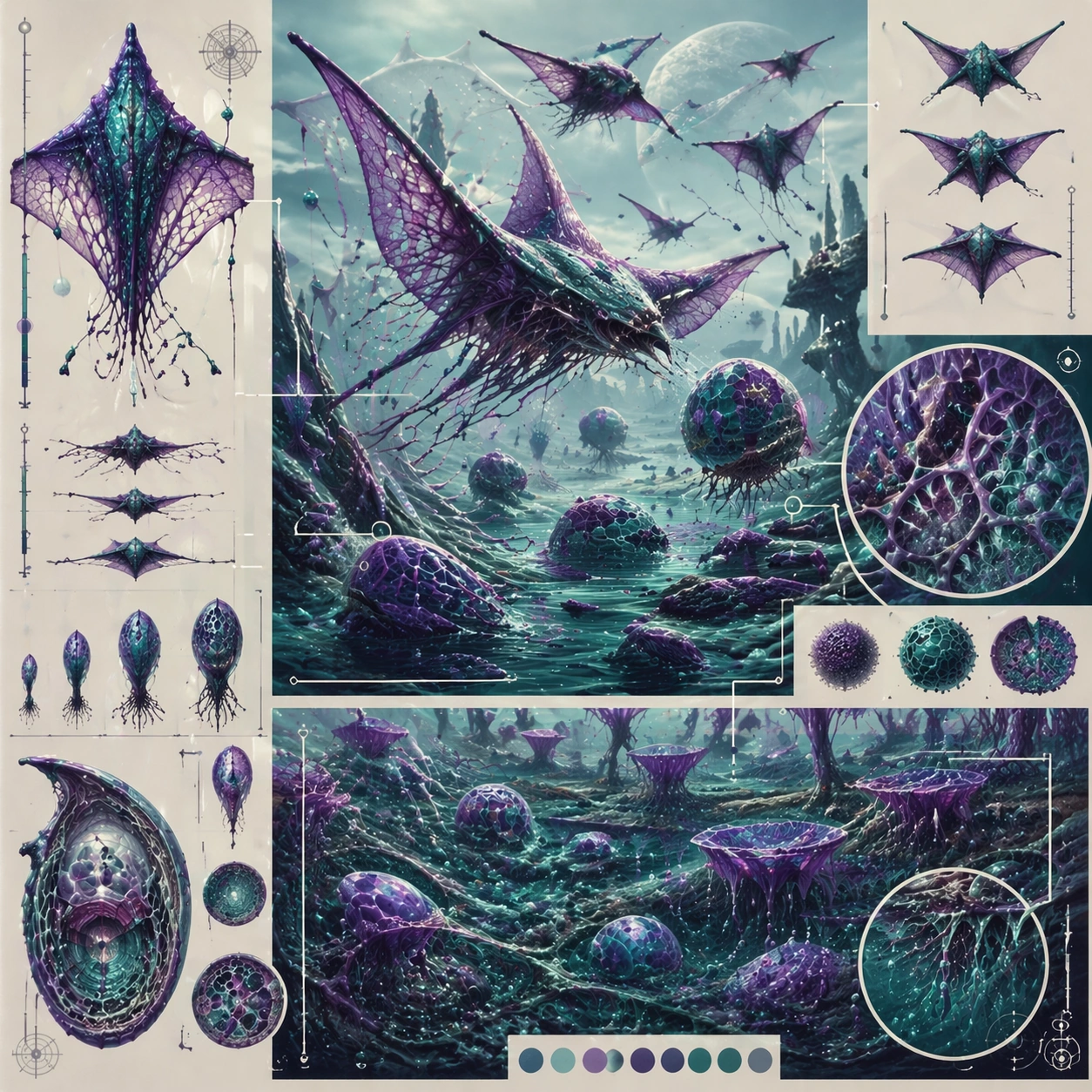
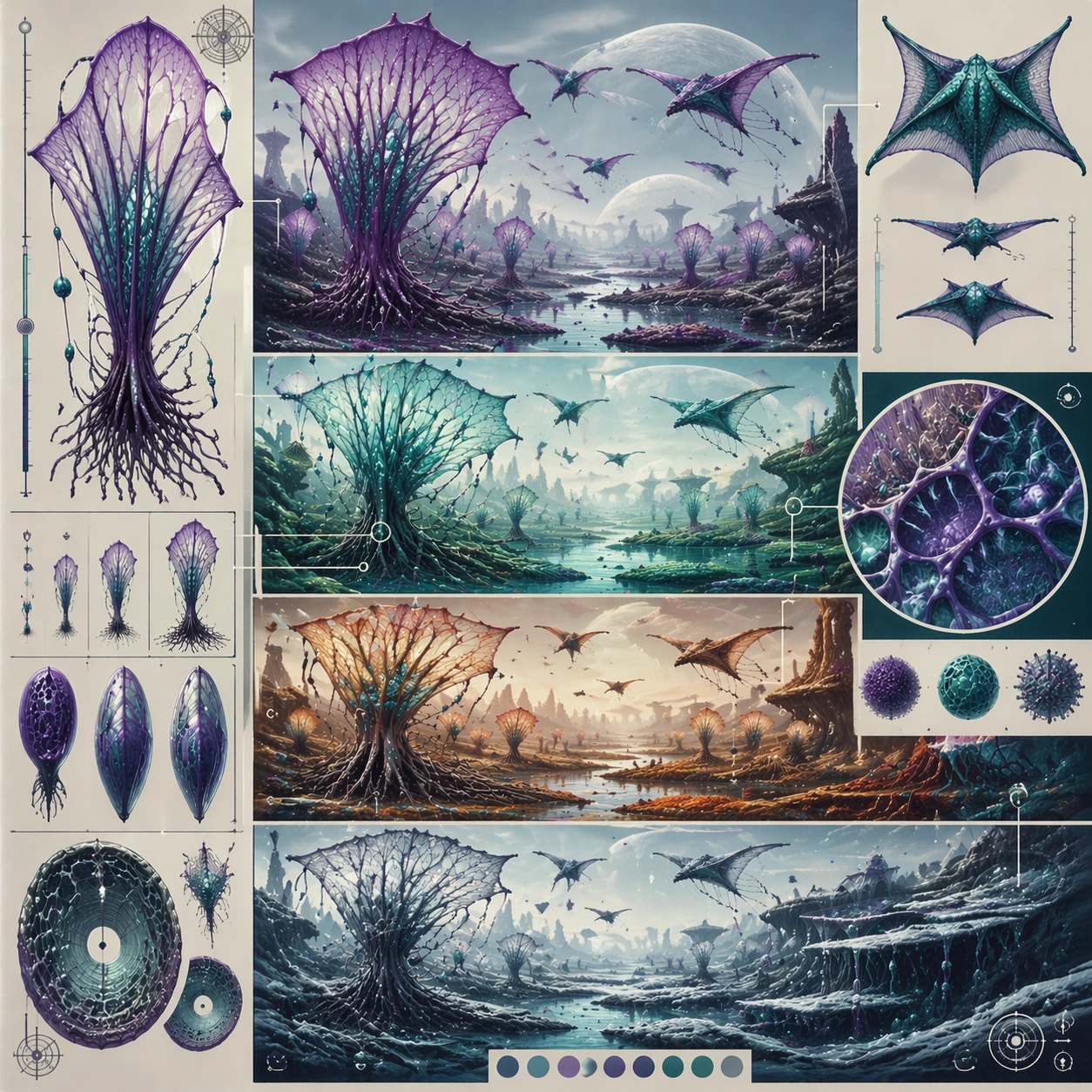
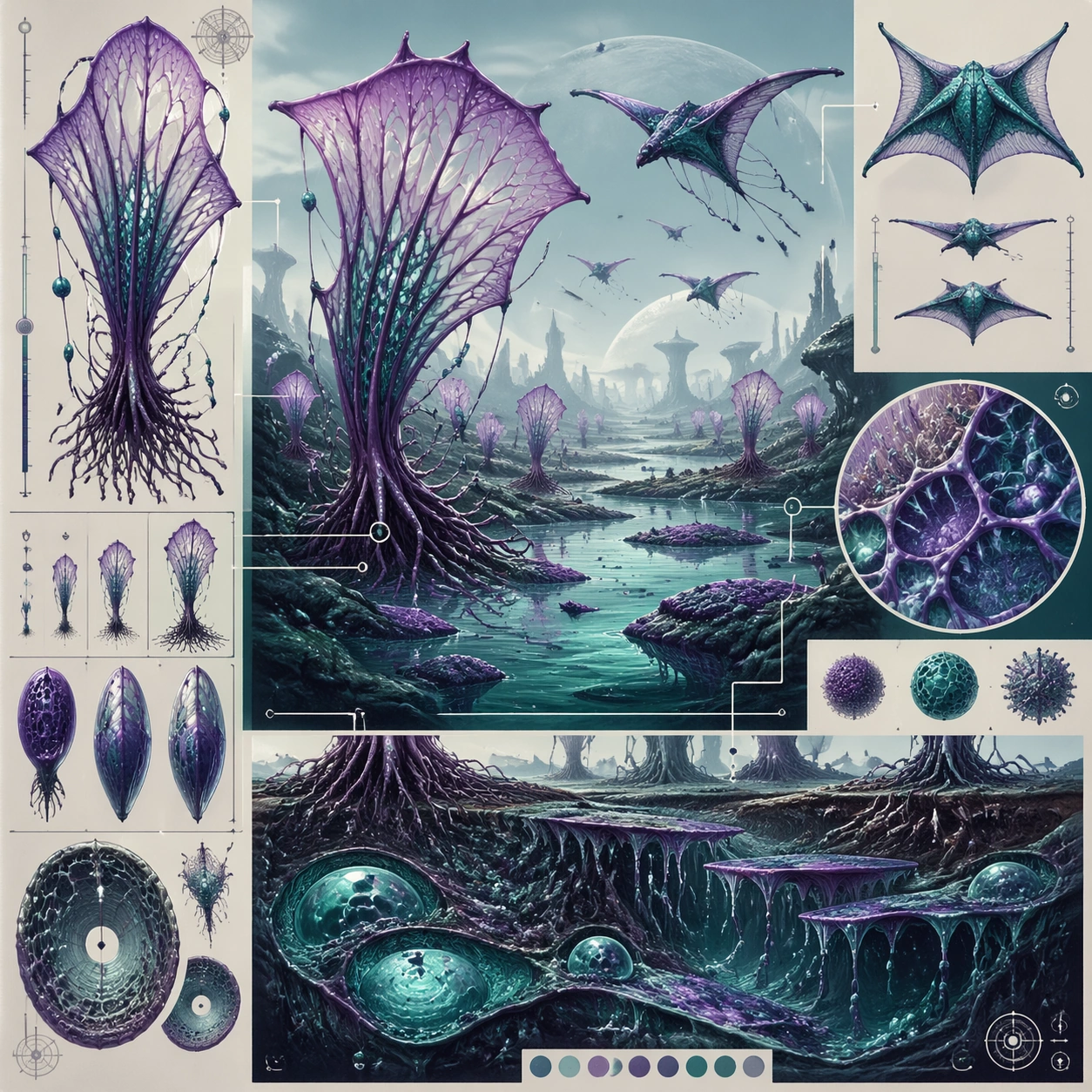
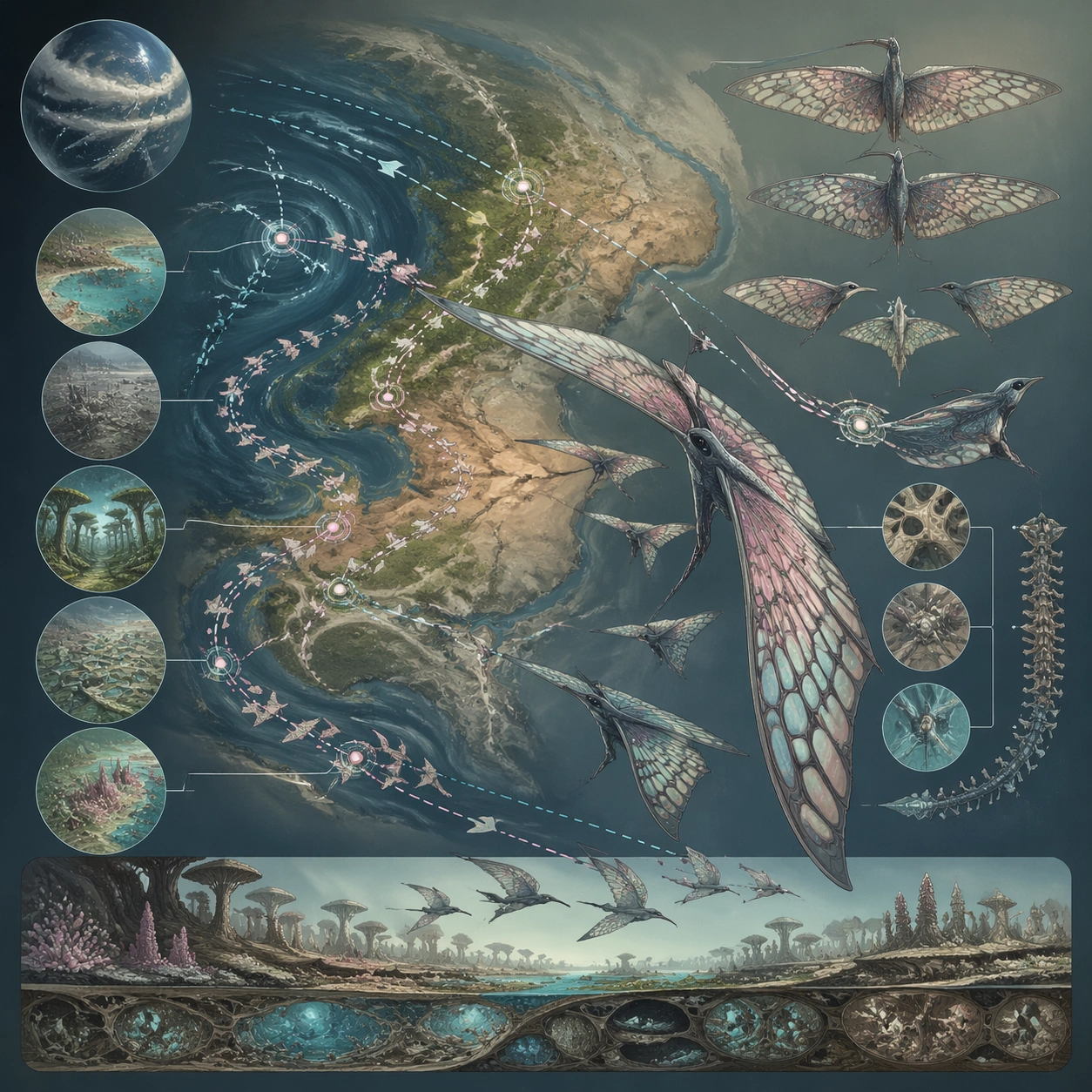
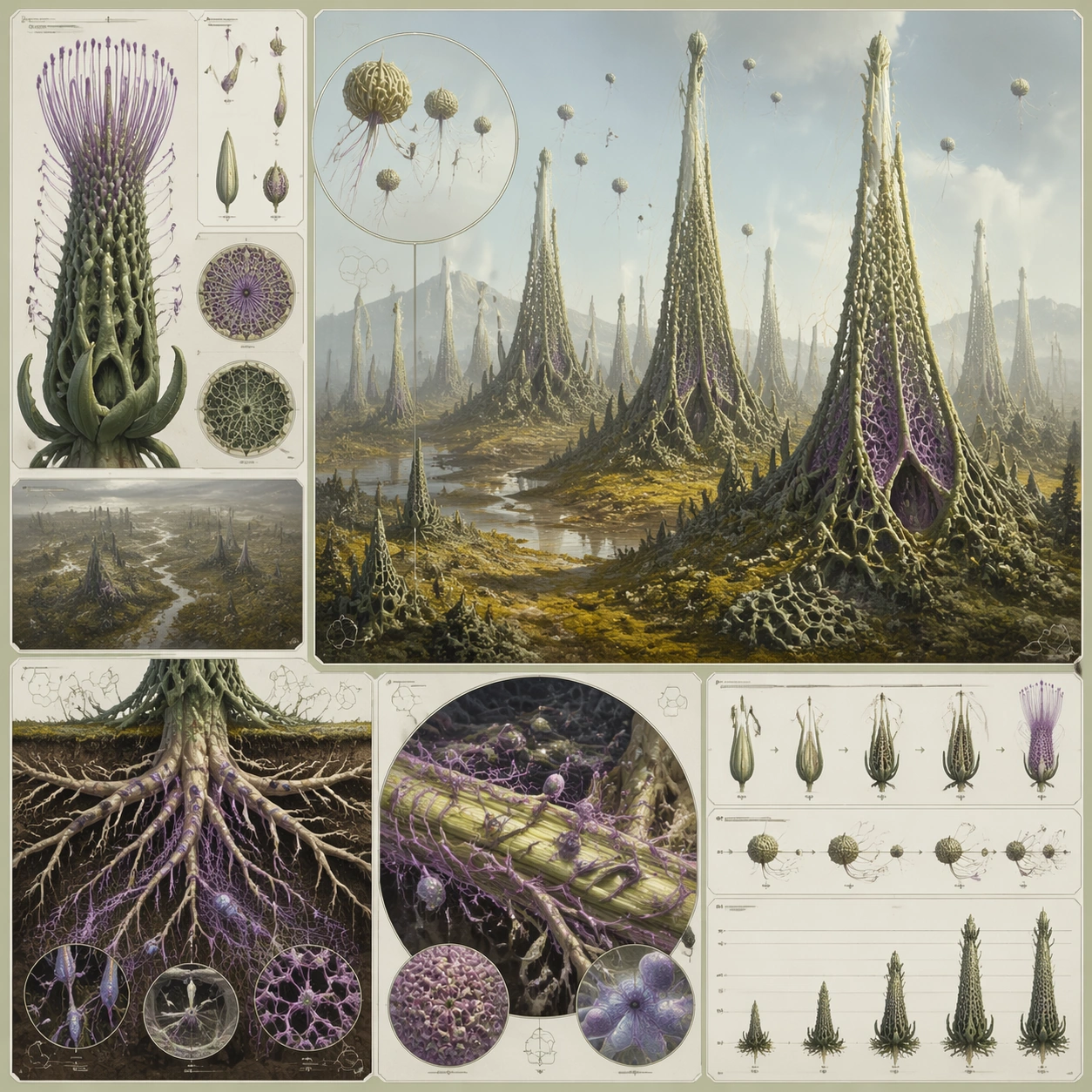
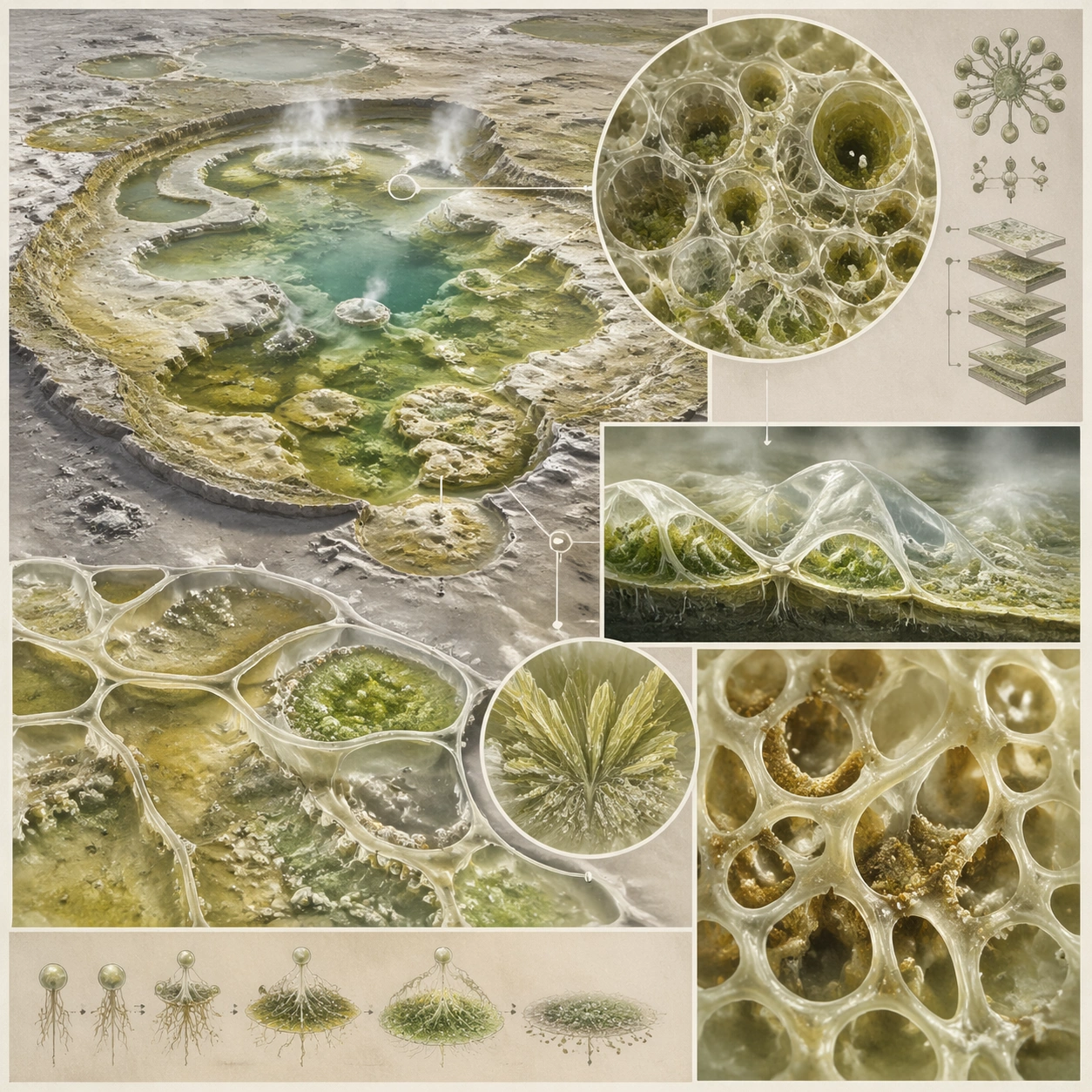
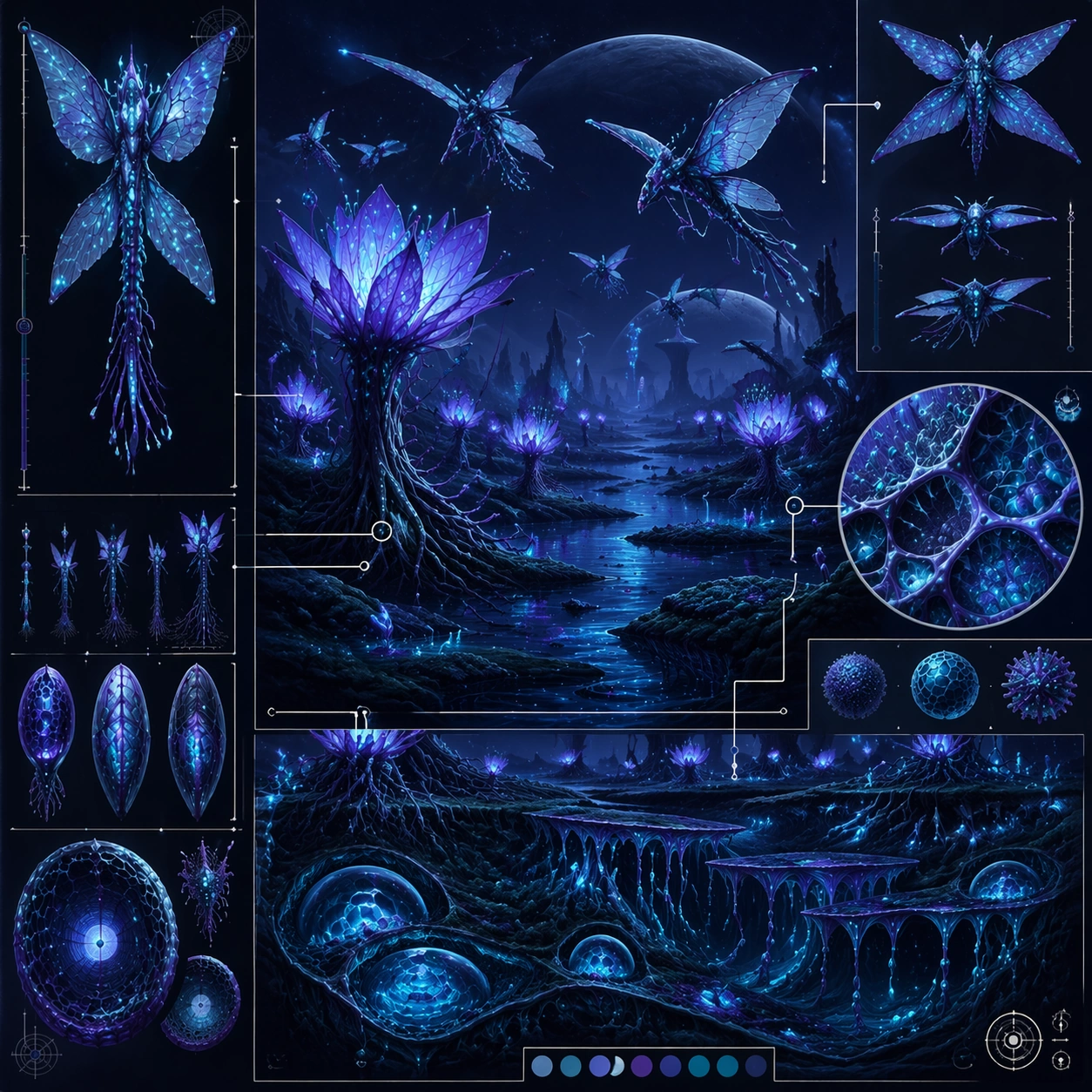
Create a square field-guide plate for an alien ecosystem, mixing specimen staging, habitat fragments, and diagrammatic order into one clean composition. The image should feel like a premium scientific editorial board with careful spacing, controlled backgrounds, and enough environmental cues to imply a larger biosphere. Keep the camera or layout disciplined so the viewer can study relationships between species, organs, and habitat layers. Keep the same board structure but shift the palette into low-light blues and bioluminescent accents as blooms open across a night version of the habitat.

Subject:
Center the image on a strange but internally patterned ecology: organisms, growth forms, spores, membranes, roots, shells, or flying bodies that clearly belong to the same world. Their silhouettes and textures should feel novel, yet their anatomical logic, habitat relationship, and life-cycle clues should read as coherent rather than random fantasy. Preserve the reference specimen layout while replacing the central protagonist with winged pollinators, bloom organs, and reproductive transfer paths.

Important details:
Use scientific realism without readable text. Unlabeled callout lines, scale markers, specimen windows, and sectional insets may appear, but the hierarchy must remain visual. Preserve a disciplined palette tied to one habitat so the package reads as a reusable guide system rather than a collection of unrelated creature paintings. Night lighting should remain analytical and readable, using glow only to explain ecological function rather than create fantasy fireworks. Preserve the exact structural language established by the reference image, especially the plate layout, habitat palette, anatomical callout grammar, and specimen scale cues.

Use case:
Alien Ecology series study 2/4, designed as a reusable core-system image for this topic.

Constraints:
No readable text, no watermark, no logos, preserve exact 1:1 aspect ratio, no humanoid monsters, no fantasy dragons, no horror gore, no readable labels, no magical fairy swarm.
使用方法
- 复制完整原始提示词,并保留其中的参数。
- 按需求替换主体、文字和构图要求。
- 在兼容的外部工具中使用,核对当前使用条件并检查结果。
开始前需了解
- 先确认是否需要参考图。标注兼容模型,不代表该示例由这个模型生成。
- 核对名称、数字与画面文字;不同模型版本的结果可能不同。