原始文档
GPT Image 2 · en
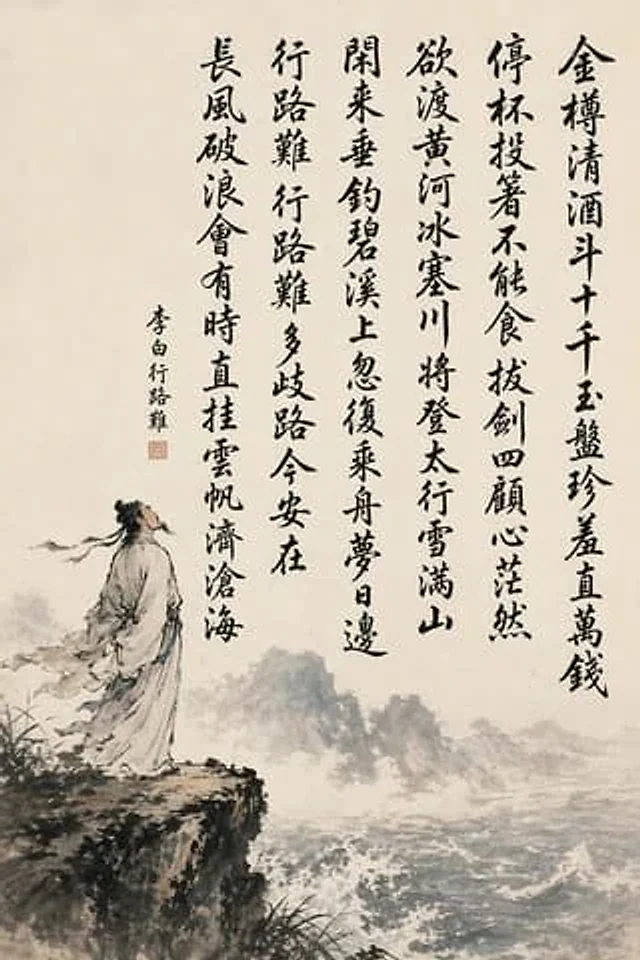
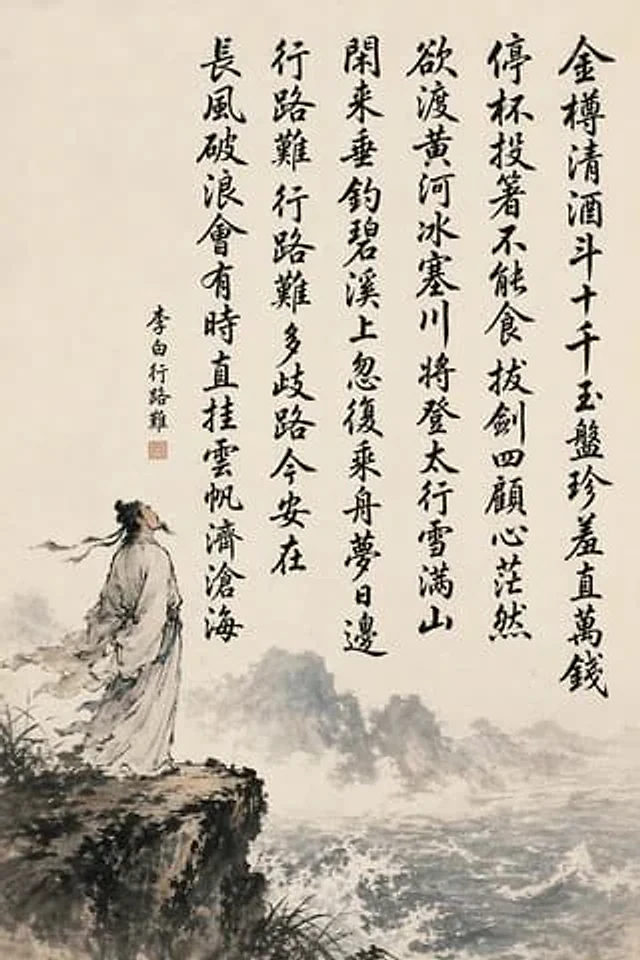
This is a traditional Chinese ink painting hanging scroll, painted on yellowed, aged Xuan paper, using a vertical composition. Six columns of striking black calligraphy are arranged at the top and right of the painting. The calligraphy should be clear and expressive in running script, with varying shades of ink and natural brushstrokes. The six columns, from right to left, contain the following: "A golden goblet of fine wine costs ten thousand coins, a jade plate of delicacies is worth ten thousand coins," "I stop drinking and eating, I draw my sword and look around, my heart is filled with confusion," "I want to cross the Yellow River, but the ice blocks the way; I want to climb Mount Taihang, but the snow covers the mountain," "Leisurely fishing on the green stream, suddenly I dream of sailing to the edge of the sun," "The road is hard, the road is hard, many are the forks in the road, where am I now?" "There will be a time when the long wind breaks the waves, and I will set sail to cross the vast sea." A smaller vertical inscription is added on the left, reading "Li Bai's Road is Hard," with a small red seal below. In the lower left foreground, an ancient Chinese literati poet is depicted, dressed in a flowing white-gray robe with a blue belt. His long black hair is styled in a traditional bun, the strands and ribbon fluttering in the wind. He stands on the edge of a dark cliff, leaning to the right, gazing upwards, his posture both contemplative and heroic. The lower half of the painting depicts a surging river or sea, rendered with black and white ink and soft gray tones to depict white waves. In the distance, misty mountains are obscured from the paper. The painting, in the style of classical literati painting, uses dynamic calligraphy as its visual focus, creating a poetic and powerful atmosphere. The color palette is restrained, primarily using black ink, gray tones, and off-white paper, with touches of soft blue adorning the robe. Ample white space completes the work, presenting a museum-quality fusion of Chinese landscape and calligraphy.使用方法
- 复制完整原始提示词,并保留其中的参数。
- 按需求替换主体、文字和构图要求。
- 在兼容的外部工具中使用,核对当前使用条件并检查结果。
开始前需了解
- 先确认是否需要参考图。标注兼容模型,不代表该示例由这个模型生成。
- 核对名称、数字与画面文字;不同模型版本的结果可能不同。