原始文档
GPT Image 2 · en
Scene:
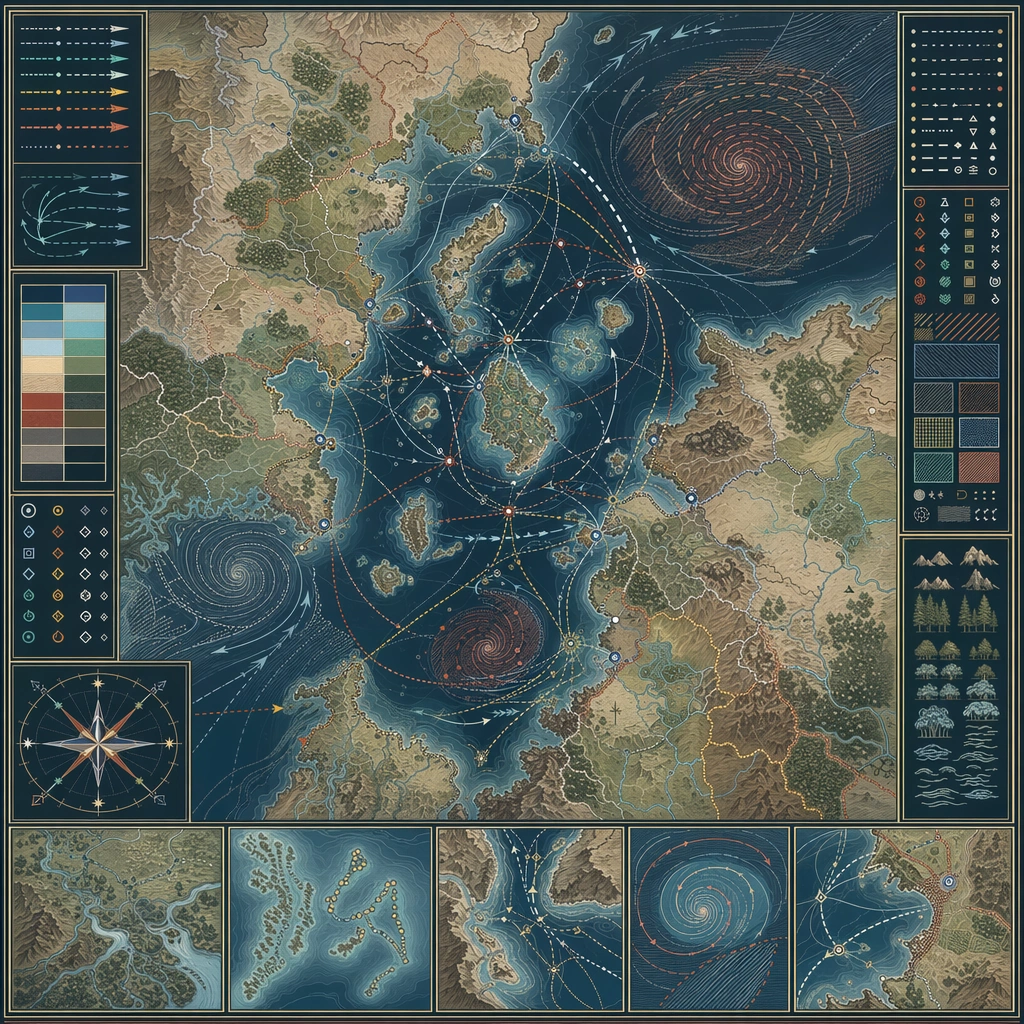
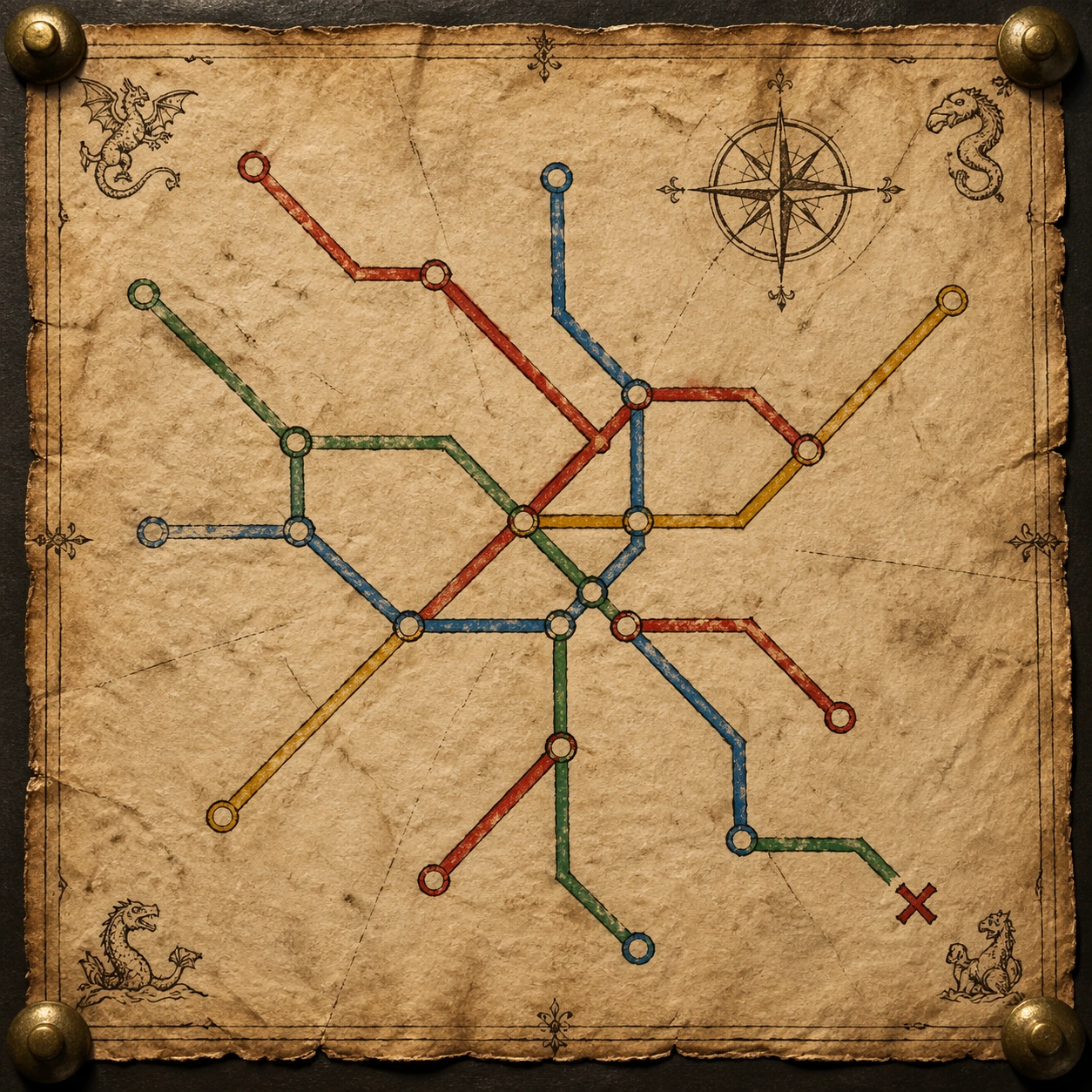
A square antique chart laid flat under museum-case lighting, combining the orderliness of a transit diagram with the tactile age of a medieval manuscript. The map is on yellowed vellum with darkened edges, pinned by small brass weights at the corners. The lighting is cool and controlled, revealing ink grooves, scraped corrections, and subtle vellum waviness.

Subject:
Transform a modern subway transfer map into a labyrinthine treasure chart. Use colored routes as faded mineral-pigment lines: one red route, one blue route, one green route, and one ochre route crossing at circular transfer nodes. The network must remain legible and connected, like a metro schematic translated into ancient cartography. At one far endpoint, replace the station marker with a small X-shaped treasure target. Do not use station names or numbers.

Important details:
The image should keep transit-map logic while changing every surface cue into antique material. Lines should be straight or gently angled like schematic routes, transfer nodes should align cleanly, and the treasure endpoint should be reachable through obvious line connections. Add a hand-drawn compass ornament, tiny border monsters, worn pigment, vellum fiber, pin shadows, and slight ink pooling where lines meet. Avoid making it a fantasy maze with dead ends unrelated to the transit structure.

Use case:
Maps to Treasure Map single study 6/8, testing a subway-style transfer diagram converted into an antique labyrinth treasure chart.

Constraints:
No readable text, no watermark, no logos, preserve exact 1:1 aspect ratio, no transit agency brand, no station labels, no route numbers, no disconnected line segments, no random maze walls, no glossy modern diagram, no objects hiding transfer nodes.
使用方法
- 复制完整原始提示词,并保留其中的参数。
- 按需求替换主体、文字和构图要求。
- 在兼容的外部工具中使用,核对当前使用条件并检查结果。
开始前需了解
- 先确认是否需要参考图。标注兼容模型,不代表该示例由这个模型生成。
- 核对名称、数字与画面文字;不同模型版本的结果可能不同。