原始文档
GPT Image 2 · en
Scene:
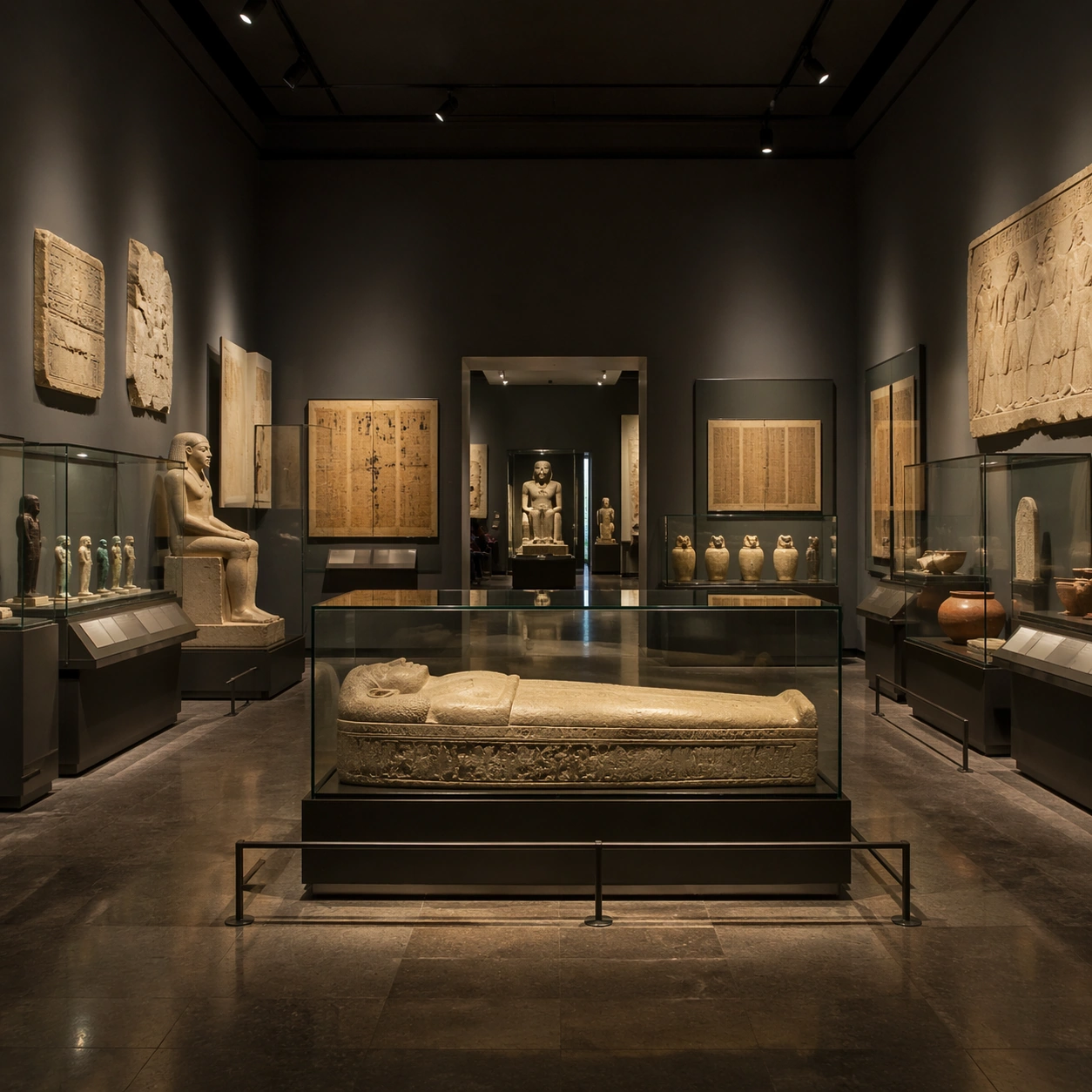
A square photorealistic museum gallery interior, viewed from the center of a dim but carefully lit ancient Egypt exhibition hall. The atmosphere is quiet, scholarly, and realistic: dark neutral walls, warm spotlights, glass vitrines, polished floor reflections, wide visitor paths, and clear object groupings. The camera should show the entire display system, not just one artifact.

Subject:
The subject is a reconstructed major-museum Egypt gallery without any real museum branding. Include a central stone sarcophagus case, wall relief fragments, small ushabti-like figures in vitrines, pottery, canopic-jar-like silhouettes, a seated statue, papyrus-colored panels rendered as unreadable texture, conservation mounts, label rails as blank blocks, low barriers, and controlled lighting. Visitors are sparse and small so the artifact layout remains dominant.

Important details:
World knowledge must appear through curatorial logic: objects grouped by type and scale, fragile pieces behind glass, large stone items on plinths, neutral conservation lighting, accessible circulation, and restrained museum architecture. The gallery should avoid theme-park spectacle, treasure-room fantasy, glowing curses, incorrect pyramid interiors, or random gold overload. Text panels may exist as design blocks but cannot contain readable words; the image must communicate museum organization through display placement and material accuracy.

Use case:
World Knowledge Reconstruction single study 8/8, testing museum display systems, archaeological object knowledge, and photoreal cultural-space reconstruction.

Constraints:
No readable text, no watermark, no logos, preserve exact 1:1 aspect ratio, no real museum name, no fantasy magic effects, no tomb tunnel, no piles of gold, no crowded tourists blocking cases, no distorted artifact scale.
使用方法
- 复制完整原始提示词,并保留其中的参数。
- 按需求替换主体、文字和构图要求。
- 在兼容的外部工具中使用,核对当前使用条件并检查结果。
开始前需了解
- 先确认是否需要参考图。标注兼容模型,不代表该示例由这个模型生成。
- 核对名称、数字与画面文字;不同模型版本的结果可能不同。