原始文档
GPT Image 2 · en
Scene:
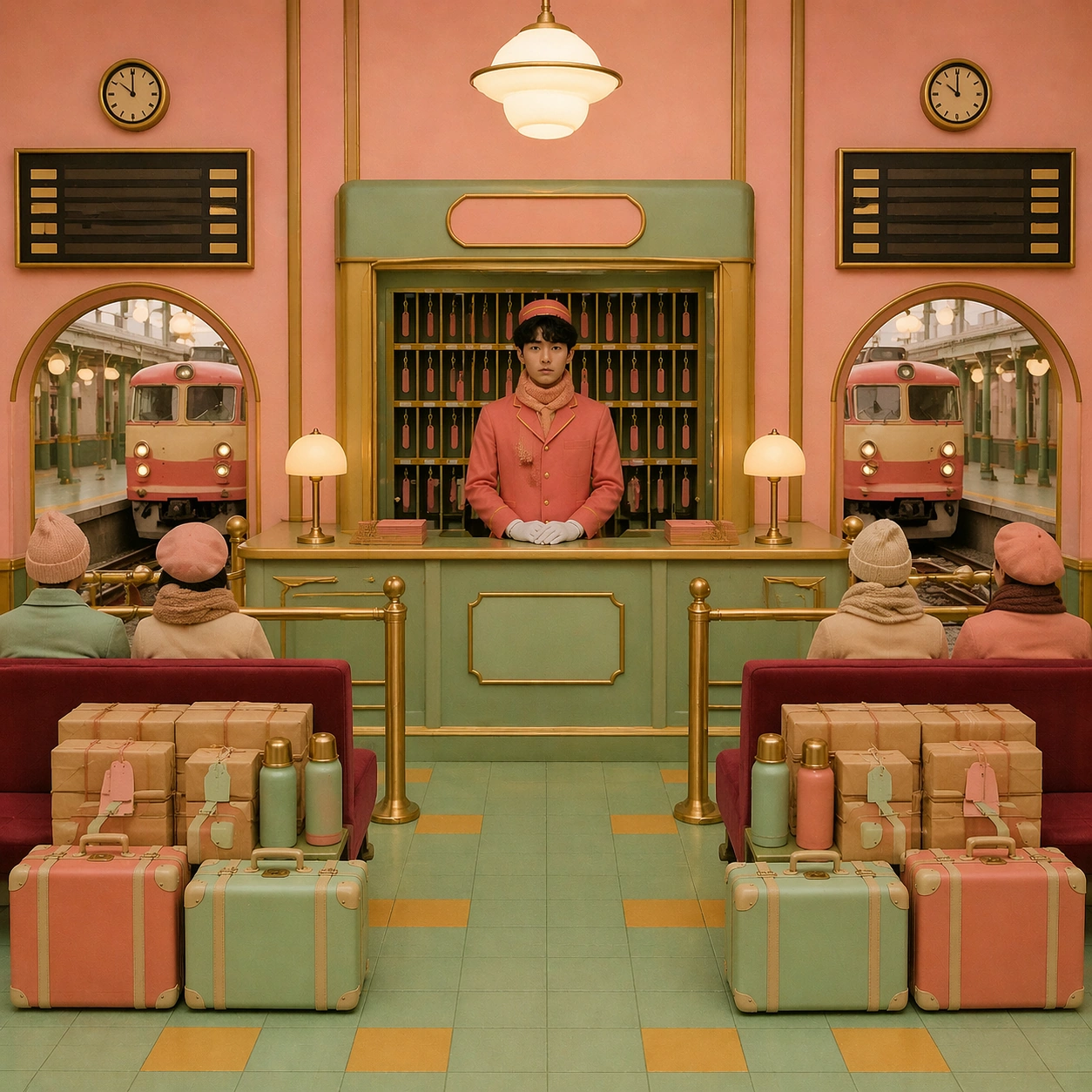
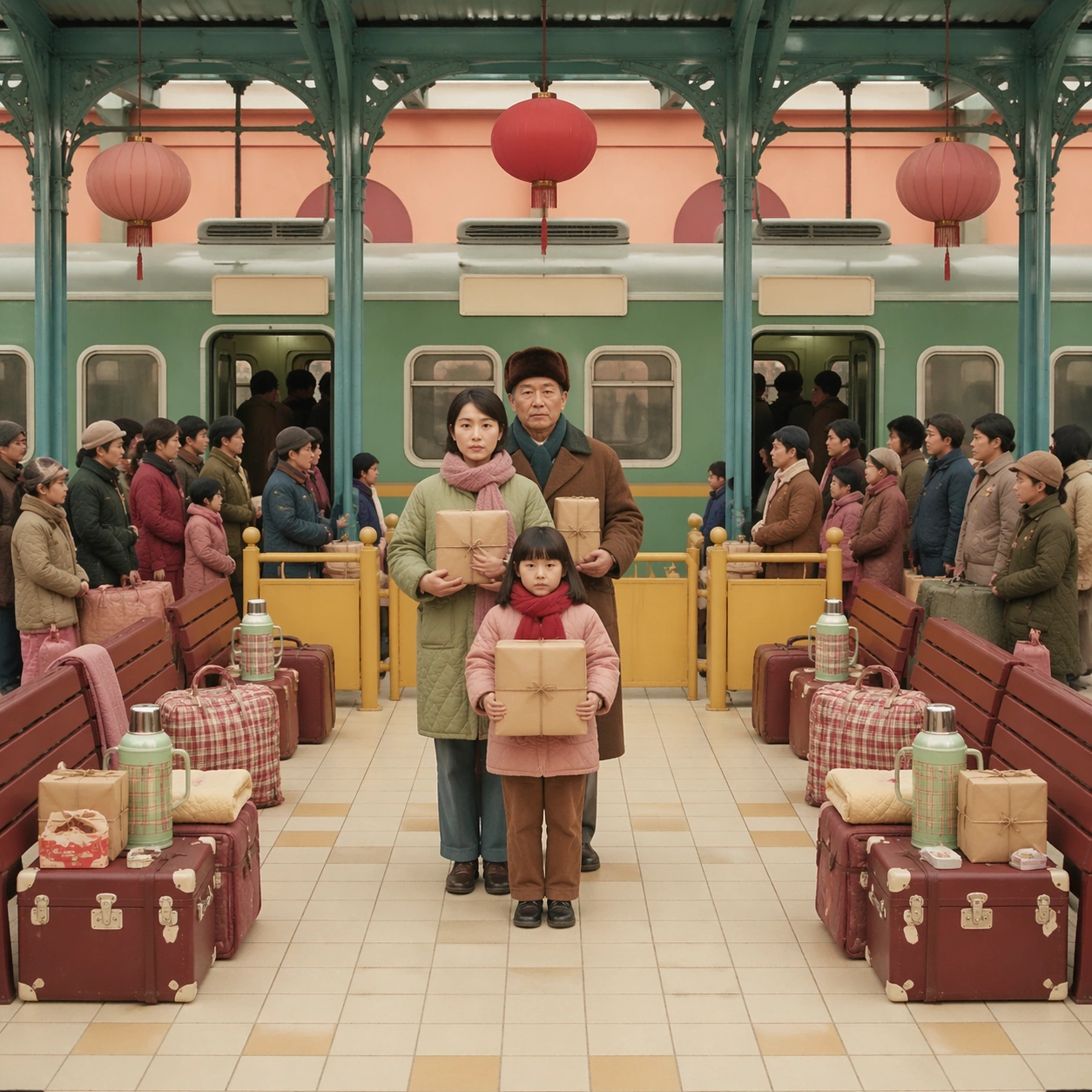
A square, straight-on view of a crowded but orderly railway platform during a fictional spring travel rush. The image is composed like a centered stage set: the platform roof, tile grid, bench rows, luggage stacks, and train doors all align to a strict middle axis. Use clear winter daylight, faded teal beams, peach walls, maroon luggage, cream tiles, butter yellow ticket barriers, and soft red lantern shapes with no text.

Subject:
A family of three stands exactly in the center facing the camera: grandparent, parent, and child arranged in a compact vertical triangle, each holding simple parcels tied with string. On both sides, travelers become balanced repeating groups rather than chaos: matching thermos bottles, checked bags, quilted coats, paper snack boxes, folded blankets, and two train doors behind them. The train is present as a pastel green carriage with blank destination panels and rounded windows.

Important details:
The visual language must be controlled through geometry and production design: central frontal gaze, bilateral symmetry, deadpan stillness, miniature-like props, pastel color blocking, and carefully repeated luggage motifs. The travel-rush idea should be readable from density, winter clothing, family grouping, platform architecture, and parcels, but the composition must not become documentary clutter. All signage, tickets, train panels, package labels, and lanterns must remain blank or abstract shapes.

Use case:
Wes Anderson Language single study 6/8, independent transfer into a spring travel railway platform.

Constraints:
No readable text, no watermark, no logos, preserve exact 1:1 aspect ratio, no celebrity likeness, no named film references, no real railway branding, no unsafe crowd crush, no photojournalistic chaos, no diagonal station perspective, no extra typography.
使用方法
- 复制完整原始提示词,并保留其中的参数。
- 按需求替换主体、文字和构图要求。
- 在兼容的外部工具中使用,核对当前使用条件并检查结果。
开始前需了解
- 先确认是否需要参考图。标注兼容模型,不代表该示例由这个模型生成。
- 核对名称、数字与画面文字;不同模型版本的结果可能不同。