原始文档
GPT Image 2 · en
Scene:
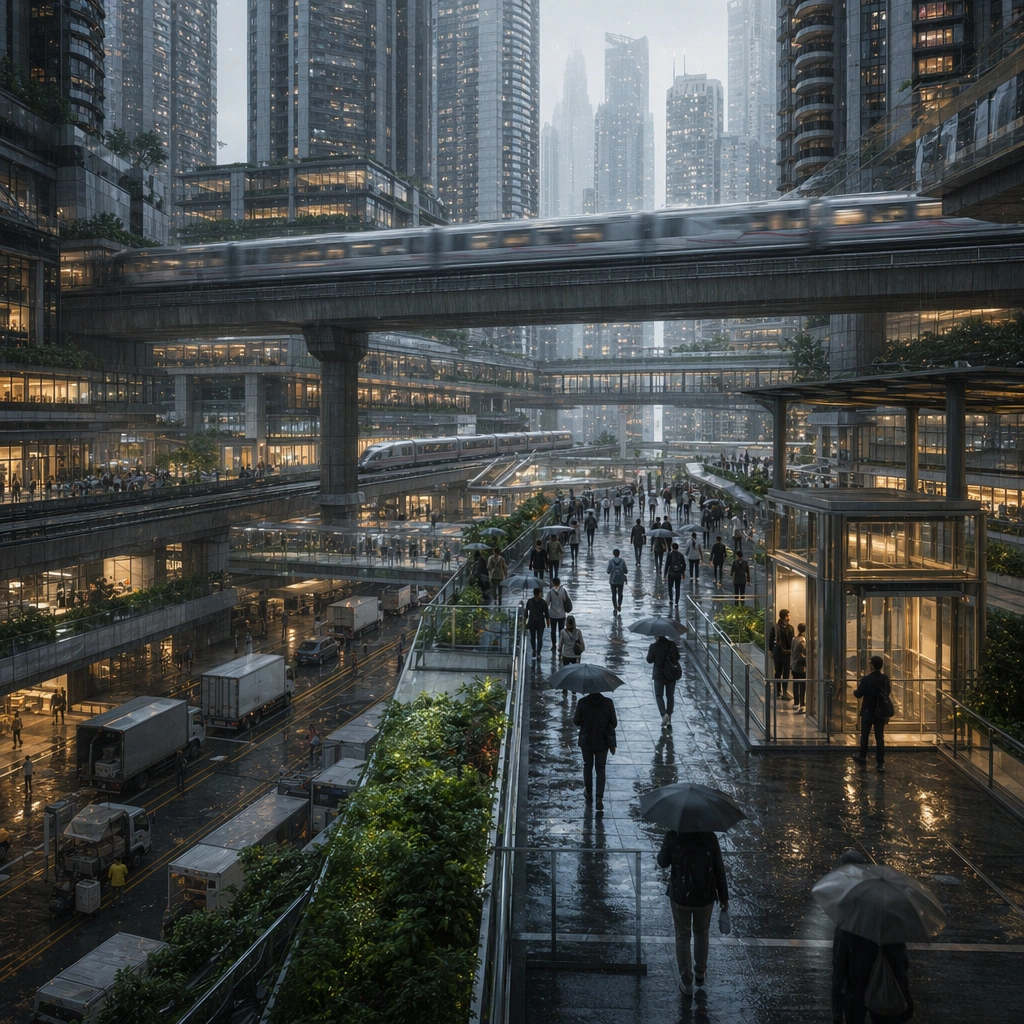
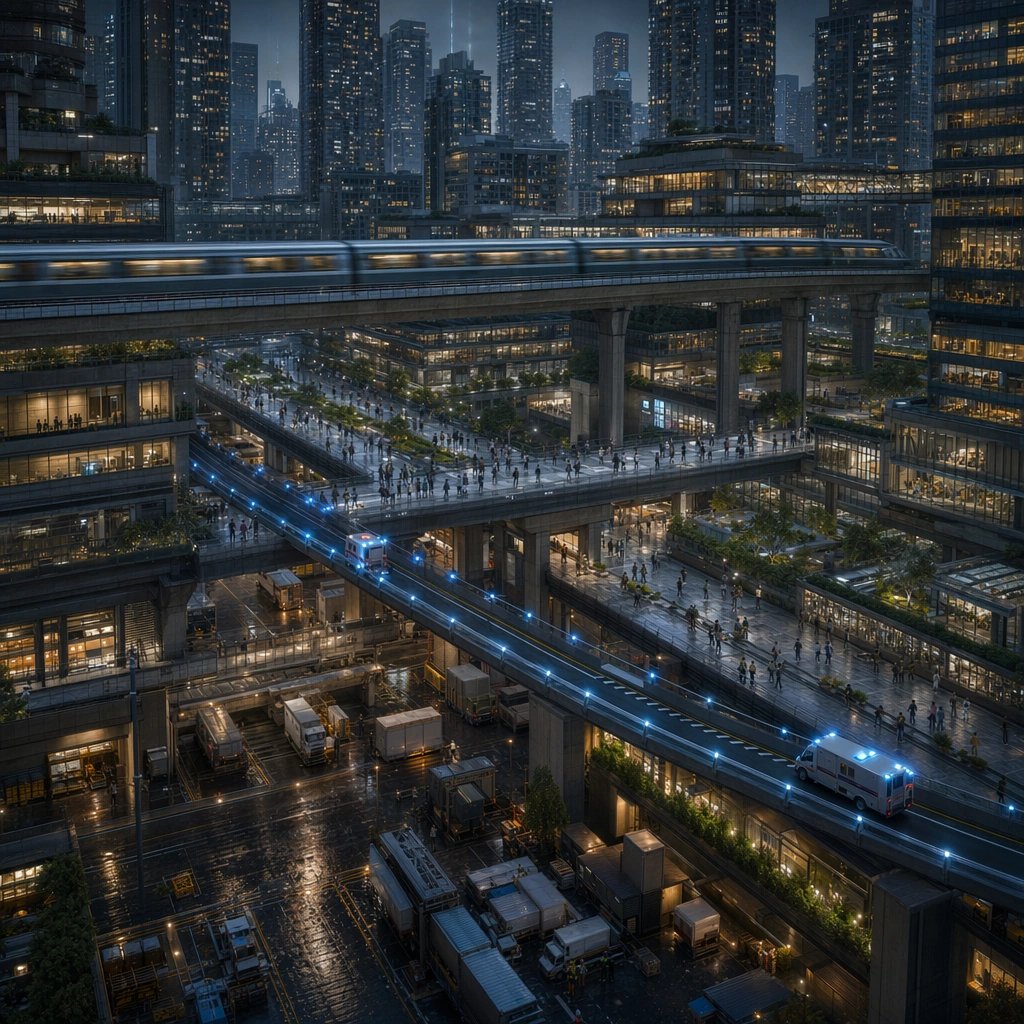
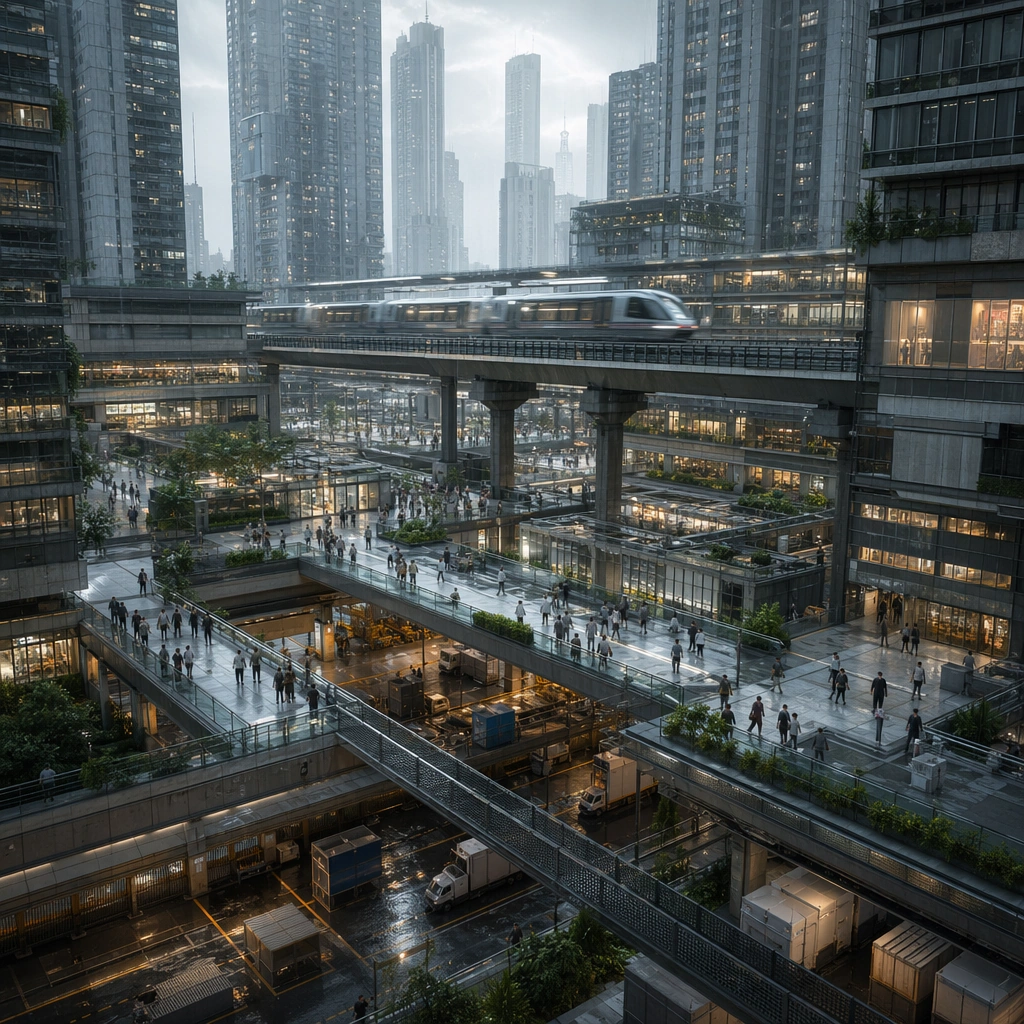
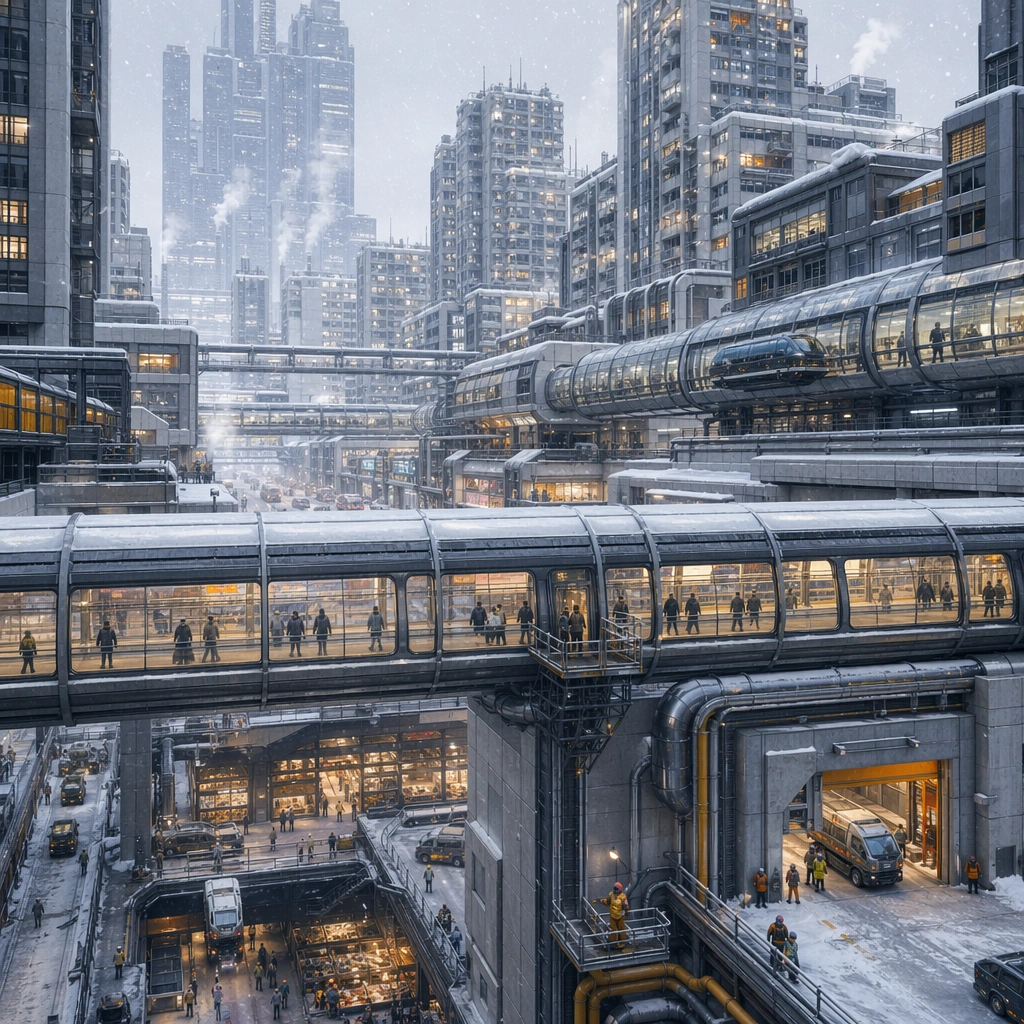
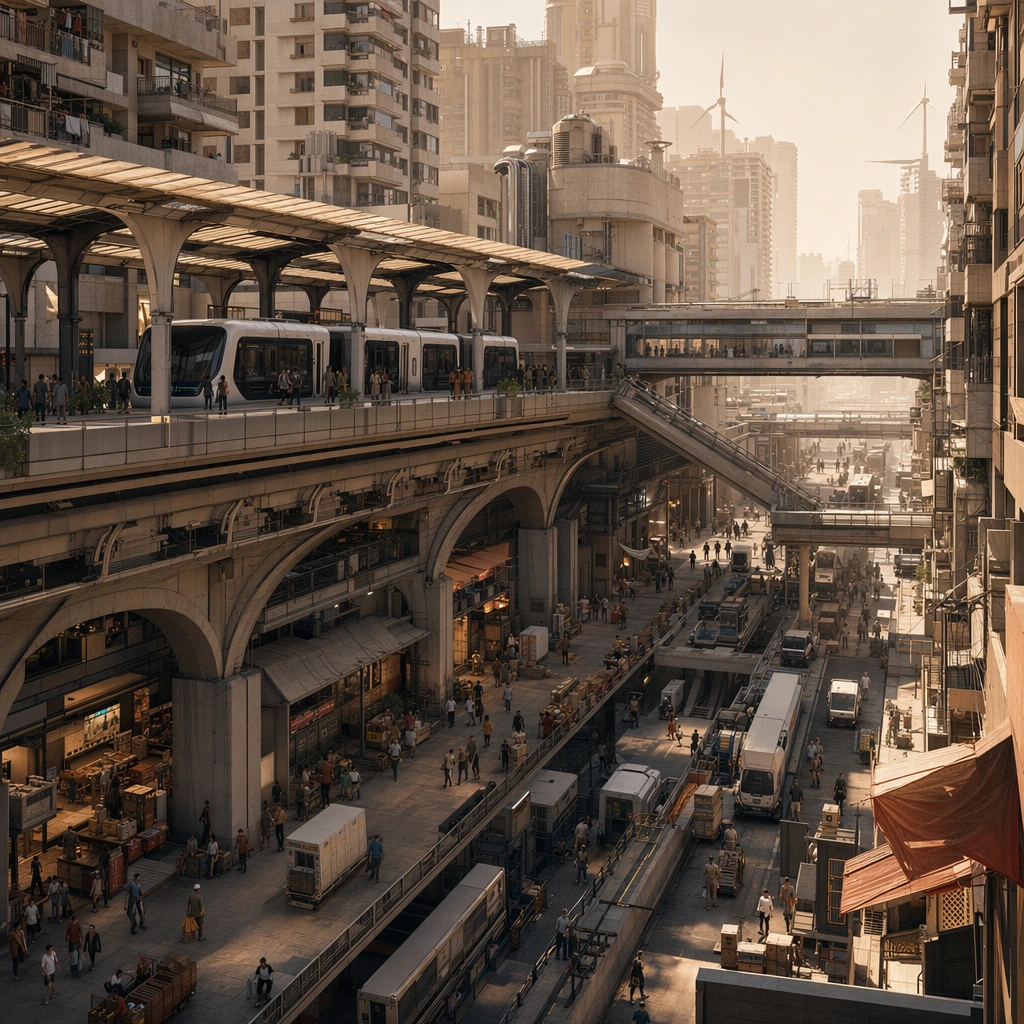
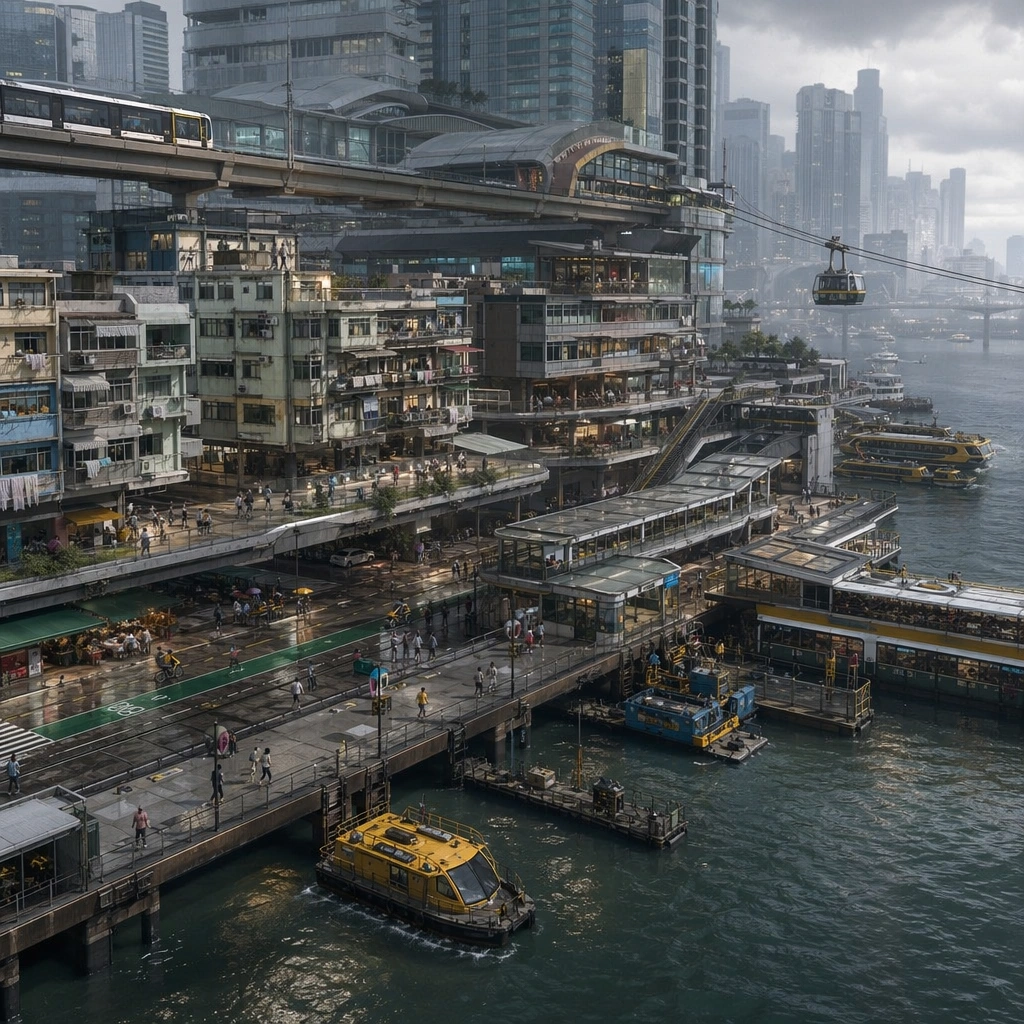
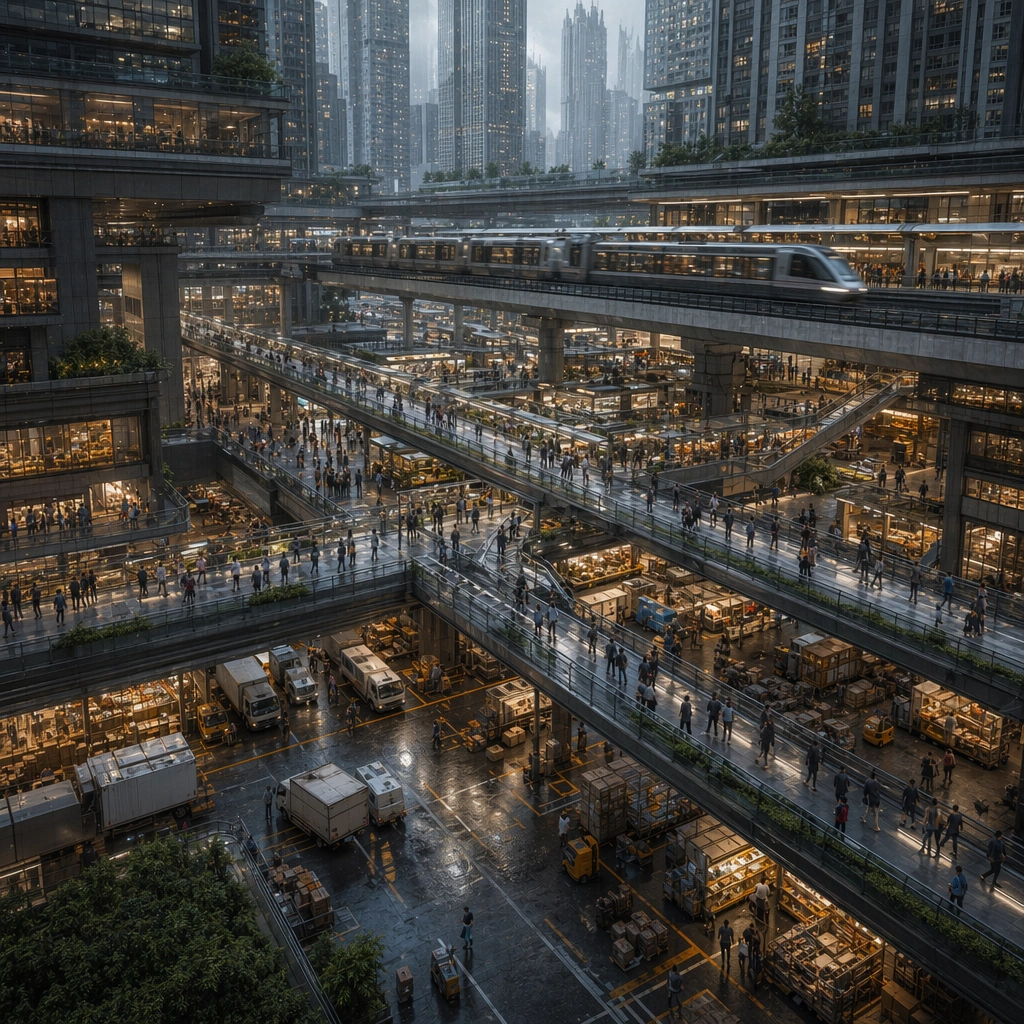
Create a square future-city key visual where transport layers, housing density, and skyline depth are all legible in one controlled composition. The camera should sit at mid-to-high elevation so the viewer can read arterial rails, pedestrian decks, service lanes, and the inhabited mass of the city at once. Favor rainy or hazy atmospheric perspective that enhances depth without hiding structural logic. Stage the same city family around a busy transfer market where escalated walkways, food kiosks, and rail platforms overlap in an orderly vertical knot.

Subject:
Center the image on a dense but coherent urban stack: rail viaducts, skybridges, delivery lanes, tower podiums, residential blocks, and public circulation surfaces all working together. The city should feel designed around movement, commerce, and real occupancy rather than as a pile of disconnected towers. The same transit skeleton must remain recognizable while the emphasis shifts toward mixed-use commerce, platform interfaces, and short-distance circulation.

Important details:
Hierarchy is critical. Distinguish fast transit, local walking, freight access, and private shelter zones through lighting, material changes, and depth organization. Use disciplined steel, concrete, glass, and muted light accents so the city feels like a credible urban product surface rather than generic cyberpunk spectacle. Crowd energy should feel dense but organized, using repeated canopies, rails, and platform lighting to clarify hierarchy rather than create noise. Preserve the exact structural language established by the reference image, especially the stacked transit decks, bridge proportions, mixed residential density, and cool rain-surface lighting.

Use case:
Future City series study 3/4, designed as a reusable core-system image for this topic.

Constraints:
No readable text, no watermark, no logos, preserve exact 1:1 aspect ratio, no empty streets, no retro cars, no generic neon gibberish billboards, no impossible lane geometry, no carnival styling, no giant ad billboards.
使用方法
- 复制完整原始提示词,并保留其中的参数。
- 按需求替换主体、文字和构图要求。
- 在兼容的外部工具中使用,核对当前使用条件并检查结果。
开始前需了解
- 先确认是否需要参考图。标注兼容模型,不代表该示例由这个模型生成。
- 核对名称、数字与画面文字;不同模型版本的结果可能不同。