Originaldokument
GPT Image 2 · en
Scene:
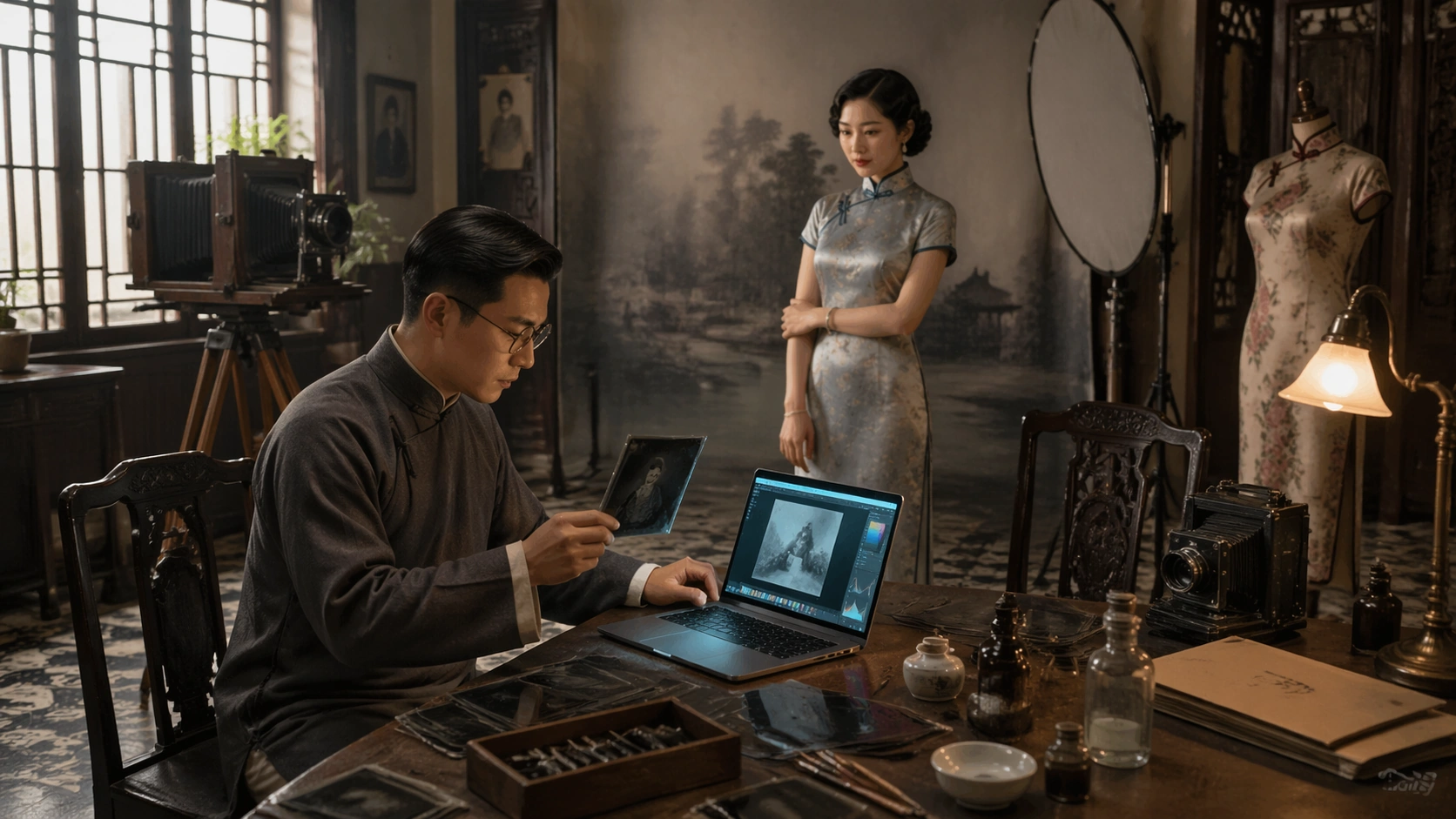
A horizontal 16:9 photoreal interior of a 1930s Shanghai-style portrait photography studio, with painted backdrop, patterned tile floor, wooden camera tripod, fabric reflector, carved chair, qipao display mannequin, and soft window light mixed with a small practical lamp. The composition should be elegant, restrained, and historically grounded, with one modern laptop creating a precise time-space rupture inside an otherwise period-correct room.

Subject:
A Republican-era studio photographer in a long gown and round spectacles sits at a wooden worktable, comparing glass-plate negatives with a slim modern laptop. A fashionable woman in a silk qipao waits near the backdrop, watching the glowing screen with composed curiosity. The laptop is open but unbranded, showing abstract image-editing panels as colored blocks and tonal curves without readable text. Period cameras, chemical bottles, retouching brushes, and paper envelopes sit around it.

Important details:
Keep the 1930s setting plausible: studio furniture, camera technology, textile patterns, hairstyle, spectacles, qipao cut, and photographic workflow should feel researched. The laptop must be the only modern object and should cast a cool reflection on nearby negatives. The scene tests editing-workflow contrast without displaying actual UI words. The viewer should understand old photographic craft meeting digital postproduction instantly from the objects and gestures.

Use case:
Time-Space Contrast single study 8/8, an independent early-modern photo studio and laptop editing collision.

Constraints:
No readable text, no watermark, no logos, preserve exact 16:9 horizontal aspect ratio, no brand marks, no modern office furniture, no neon cyberpunk lighting, no inaccurate costumes, no readable software interface, no clutter that hides the laptop interaction.
Verwendung
- Den vollständigen Original-Prompt einschließlich Parametern kopieren.
- Motiv, Text und Komposition an die eigenen Anforderungen anpassen.
- Ein kompatibles externes Werkzeug nutzen; Zugangsbedingungen und Ergebnis prüfen.
Vor dem Start
- Prüfen, ob ein Referenzbild nötig ist. Kompatibilität belegt nicht das tatsächlich verwendete Modell.
- Namen, Zahlen und Bildtexte prüfen; Modellversionen können andere Ergebnisse liefern.