Document original
GPT Image 2 · en
Scene:
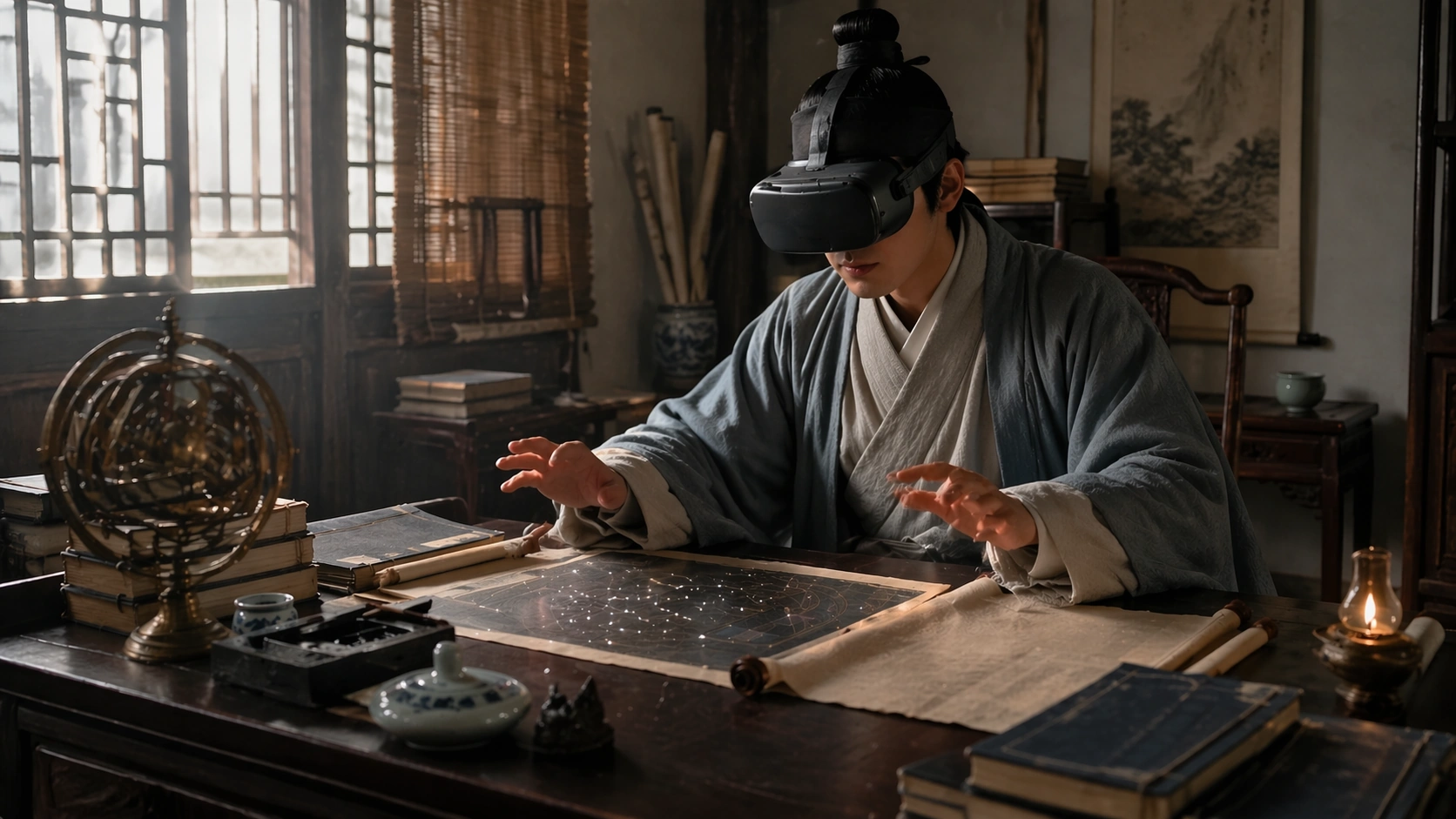
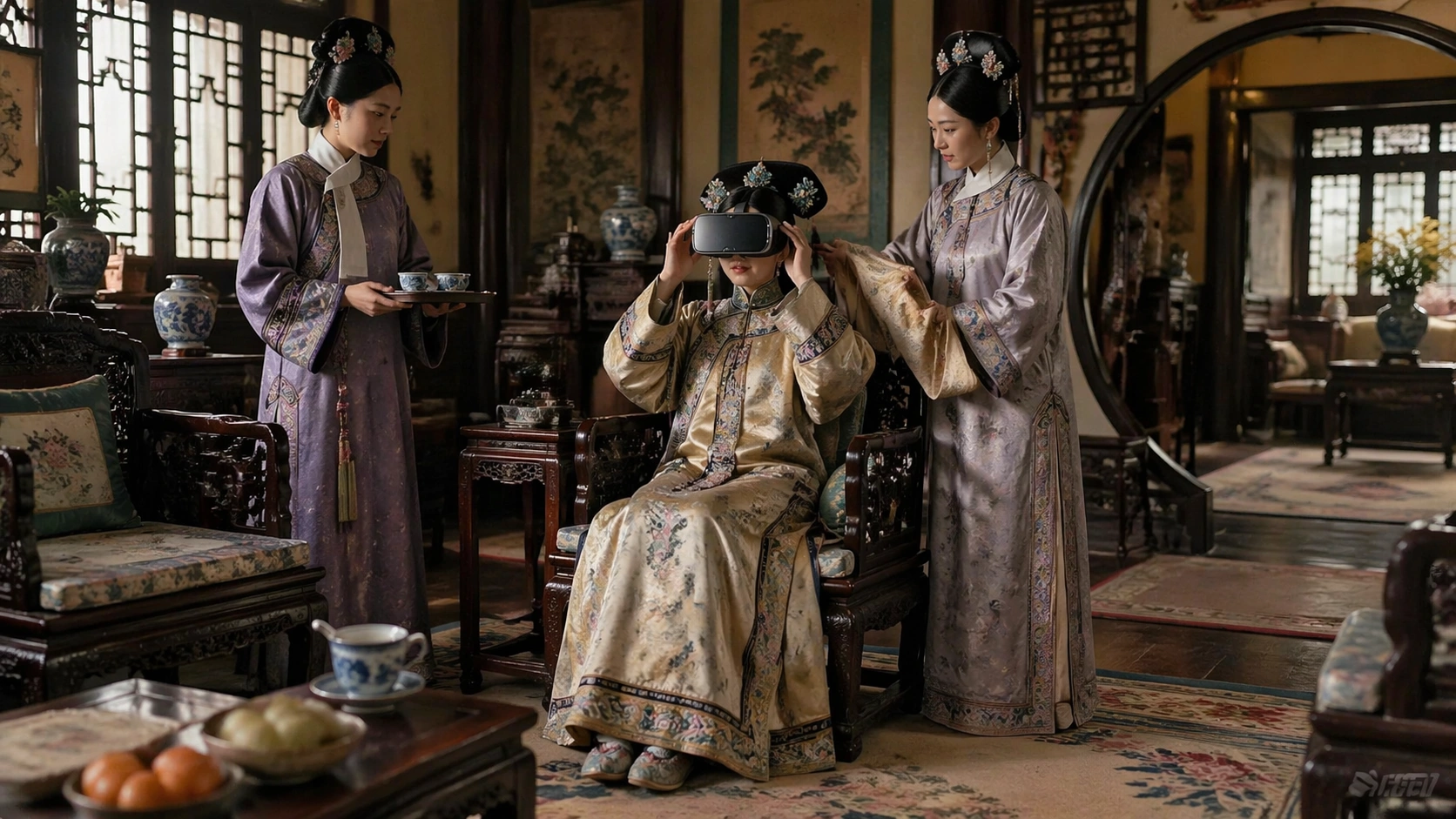
A horizontal 16:9 photoreal interior of a Qing dynasty upper-class parlor, composed like a still from a prestige period film. The room has dark carved hardwood furniture, embroidered seat cushions, blue-and-white porcelain, a lacquer side table, silk wall hangings with abstract floral motifs, a moon-gate doorway, and soft afternoon light filtered through paper windows. The wide frame should leave enough space to compare historical domestic detail with one modern object.

Subject:
A Qing-era noblewoman sits upright on a carved chair wearing layered silk robes with cloud collar details, a formal headdress, embroidered shoes, and restrained jewelry. She wears a plain black VR headset over her eyes, holding the side straps carefully with both hands as if being fitted for an impossible court entertainment. Two attendants in period dress stand nearby with reserved curiosity, one holding a tray with tea cups, the other lifting a folded silk sleeve away from the headset cable-free device.

Important details:
Keep the scene culturally grounded: accurate robe layering, Manchu-inspired court silhouette, polished wood furniture, porcelain scale, and domestic etiquette. The VR headset must look modern but unbranded, with matte plastic, soft padding, and subtle reflections. The humor should come from precise contradiction between formal historical composure and futuristic immersion. Do not turn the parlor into cyberpunk; modern technology is limited to the headset.

Use case:
Time-Space Contrast single study 5/8, an independent Qing parlor VR collision testing photoreal world knowledge.

Constraints:
No readable text, no watermark, no logos, preserve exact 16:9 horizontal aspect ratio, no brand marks, no fantasy palace armor, no neon holograms, no inaccurate modern furniture, no exaggerated comedy faces, no extra devices.
Mode d’emploi
- Copiez le prompt original complet, paramètres compris.
- Adaptez le sujet, le texte et la composition à vos besoins.
- Utilisez un outil externe compatible ; vérifiez l’accès et le résultat.
Avant de commencer
- Vérifiez si une image de référence est nécessaire. La compatibilité ne prouve pas le modèle utilisé pour cet exemple.
- Vérifiez noms, chiffres et textes ; les versions du modèle peuvent produire des résultats différents.