
Document original
GPT Image 2 · en
Scene:
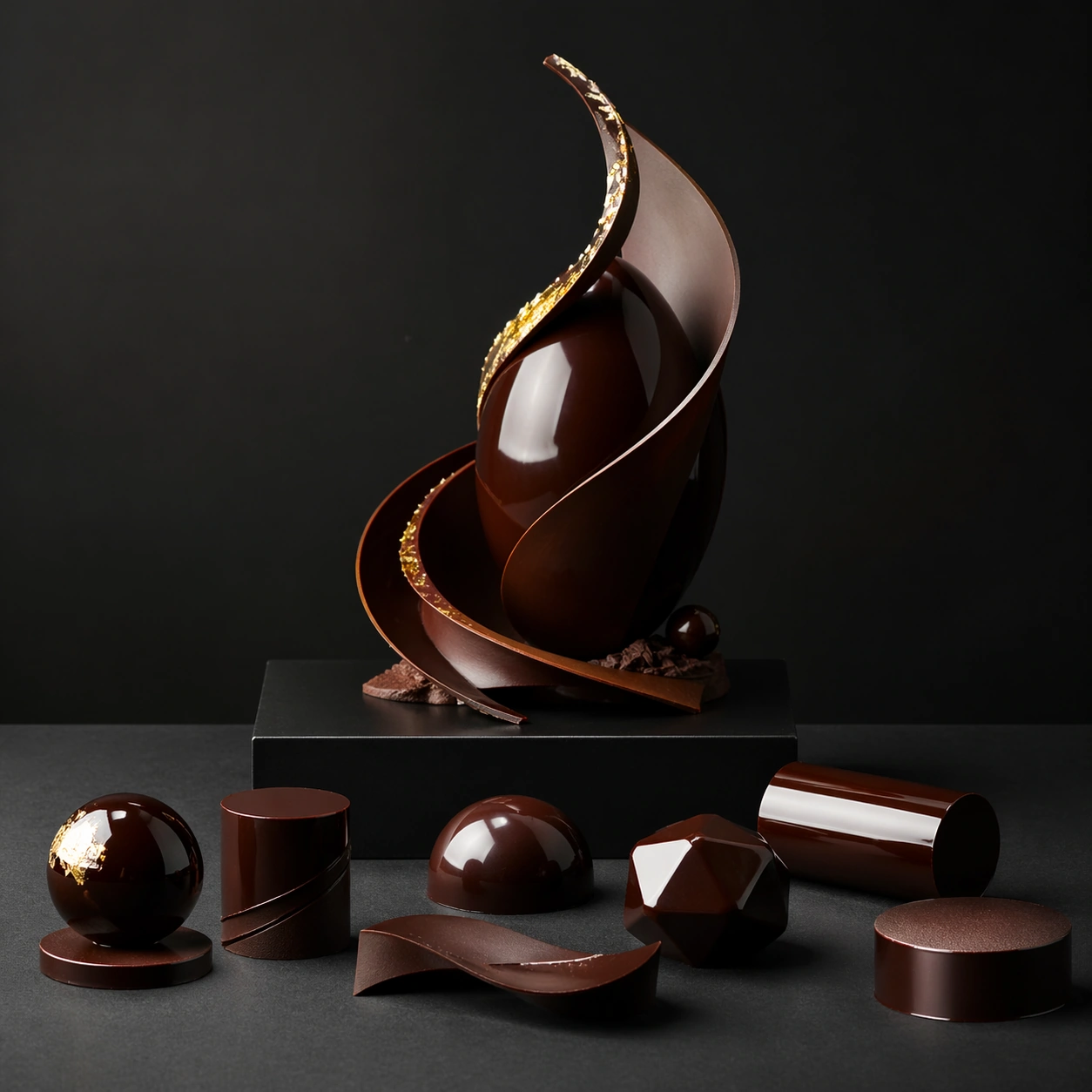
Create a square competition-style pastry studio photograph with one sculptural chocolate showpiece on a dark pedestal against a controlled neutral or black backdrop. Softbox reflections should skim the tempered surfaces with glass-like sharpness, while shadows stay deep and elegant. The object must feel large, balanced, and professionally lit, as if documented after winning a grand pastry prize. Use a square dark-studio tabletop with neutral lighting and enough spacing for several geometric chocolate forms to sit like material samples. Reflection bands should remain the main graphic event across the objects.

Subject:
Arrange a few small tempered shapes such as spheres, cylinders, ribbons, and facets on the table, each showing a different reflection behavior. The setup should look like a pastry studio testing surface perfection before building a larger showpiece. The objects should feel disciplined, expensive, and purpose-built.

Important details:
Tempered chocolate realism is critical: mirror reflections, crisp edges, matte-to-gloss transitions, gold leaf, sugar accents, and structural balance all need to feel plausible. The sculpture can be impossible in composition, but never sloppy in craft. Every support point and reflection line should suggest deliberate pastry engineering. The key is comparative clarity: each form should reveal temper quality through different reflection curvature and edge sharpness. The image should feel like a material benchmark, not a product advertisement.

Use case:
Chocolate lacquer sculpture single study 6/9, turning surface-reflection testing into a refined studio still life.

Constraints:
No readable text, no watermark, no logos, preserve exact 1:1 aspect ratio, no candy-bar packaging cues, no readable competition banners, no cartoon dessert palette, no smudged fingerprints, no cluttered workshop background, no candy wrappers, no printed notes, no playful colorful toppings.
Mode d’emploi
- Copiez le prompt original complet, paramètres compris.
- Adaptez le sujet, le texte et la composition à vos besoins.
- Utilisez un outil externe compatible ; vérifiez l’accès et le résultat.
Avant de commencer
- Vérifiez si une image de référence est nécessaire. La compatibilité ne prouve pas le modèle utilisé pour cet exemple.
- Vérifiez noms, chiffres et textes ; les versions du modèle peuvent produire des résultats différents.