Document original
GPT Image 2 · en
Scene:
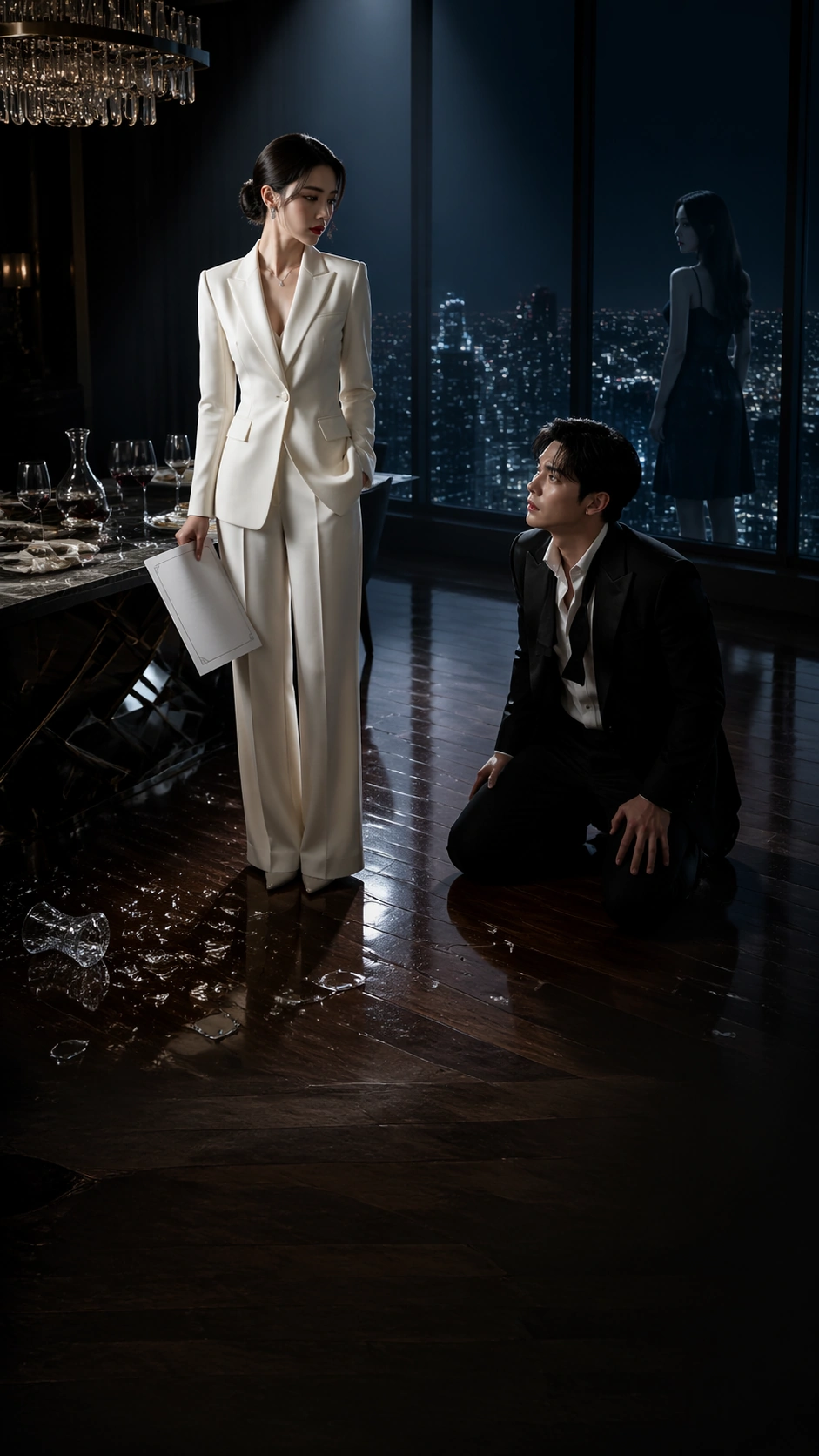
A tall 9:16 short-drama cover inside a penthouse dining room at blue-black night, with floor-to-ceiling windows, a city of tiny lights, shattered crystal on polished wood, and a cold spotlight framing the central confrontation. The composition must work like a mobile app cover: a strong silhouette at top, a dominant emotional event in the middle, and a lower area calm enough for future title and badge placement without readable text. Use black, chrome, wine, and ivory as the main palette.

Subject:
Create a revenge-melodrama cover featuring a poised woman in a white suit holding divorce papers beside a half-cleared dinner table, while a wealthy man in a loosened tuxedo kneels slightly lower in frame after realizing he has lost control. A younger half-sister figure should appear only as a distant reflected silhouette in the window, not as a full competing lead. The drama should feel immediate and addictive, but the relationships and visual hierarchy must stay clear in the narrow vertical frame.

Important details:
The poster should feel like premium platform packaging rather than tabloid collage. Reserve structured space for unreadable title blocks, use reflective surfaces to imply wealth, and emphasize body language over prop clutter. The emotional hook must survive thumbnail scale: white suit, broken crystal, kneeling tuxedo, city night. No readable copy, but the layout should strongly suggest where copy would go.

Use case:
Vertical Drama Poster System single study 5/9, testing a revenge-penthouse short-drama hook in a clean mobile-first poster format.

Constraints:
No readable text, no watermark, no logos, preserve exact 9:16 aspect ratio, no cast crowding, no tabloid montage, no action slap, no giant ring-box prop, no cheap neon club palette, no social-media UI, no broken anatomy.
Mode d’emploi
- Copiez le prompt original complet, paramètres compris.
- Adaptez le sujet, le texte et la composition à vos besoins.
- Utilisez un outil externe compatible ; vérifiez l’accès et le résultat.
Avant de commencer
- Vérifiez si une image de référence est nécessaire. La compatibilité ne prouve pas le modèle utilisé pour cet exemple.
- Vérifiez noms, chiffres et textes ; les versions du modèle peuvent produire des résultats différents.