
Documento originale
GPT Image 2 · en
Scene:
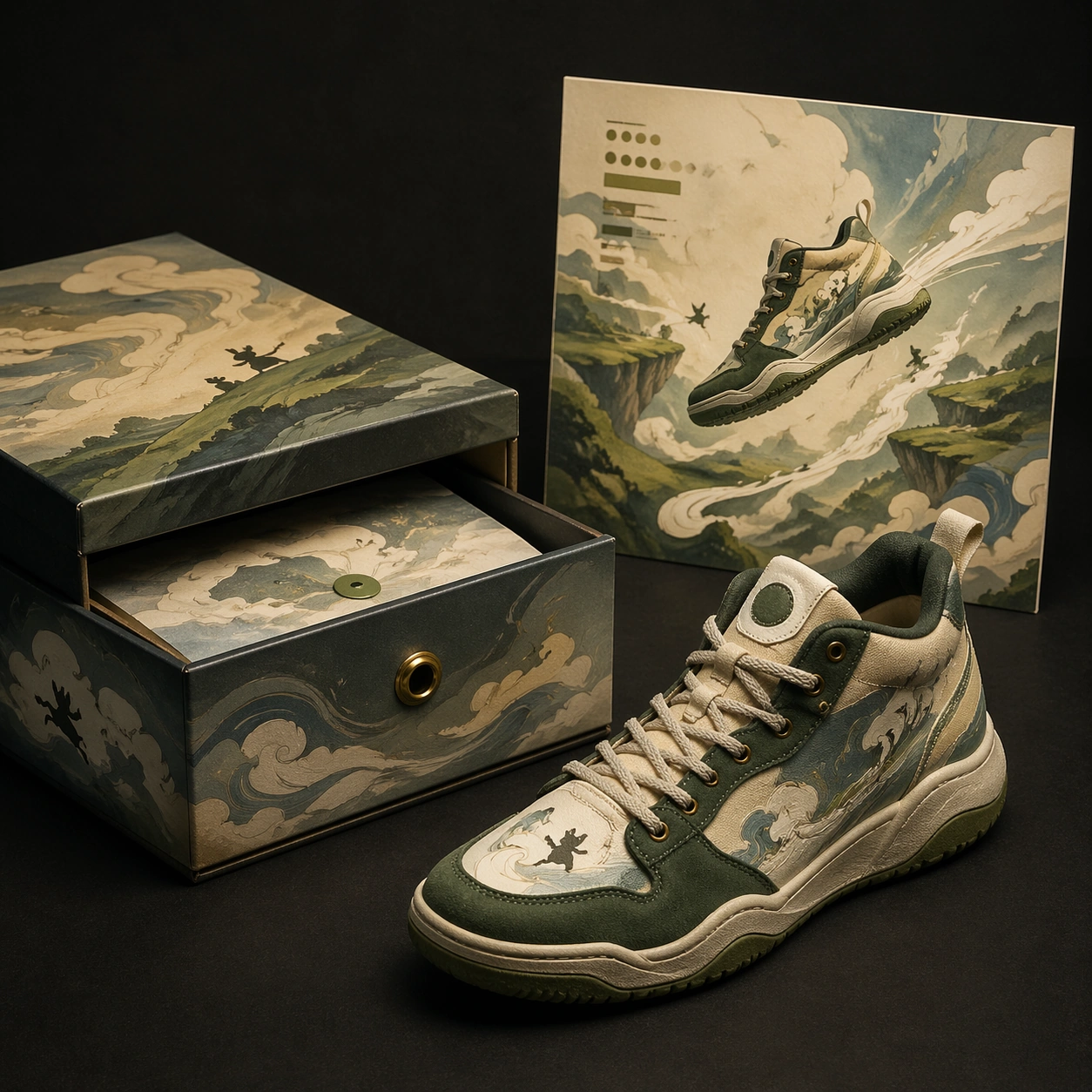
A square collector release mockup on a matte black table with warm cinematic overhead lighting. The frame is organized like a high-end footwear campaign board: one sneaker at a three-quarter angle, a rigid drawer box opened beside it, and a square poster card standing upright in the rear. The scene should feel like a studio photograph prepared for a licensing pitch, with controlled shadows and no environmental clutter.

Subject:
A fictional basketball sneaker collaboration with a hand-painted animation background language. The sneaker combines cream canvas, forest-green suede, weathered brass eyelets, and painted wind-swirl panels that feel like moving storybook air. The drawer box has illustrated cloud bands, tiny creature silhouettes, and layered paper texture. The poster card shows the sneaker crossing a floating landscape of hills and sky paths, with a quiet cinematic composition and abstract subtitle-like blocks that remain non-readable.

Important details:
Keep the artwork influence broad and original: soft gouache landscapes, rounded hand-painted forms, and gentle motion lines, not a copy of any known film. Product realism is critical: laces thread through eyelets correctly, sole tread wraps around the shoe, box lid thickness is visible, and the poster card casts a real shadow. The three objects must share one palette of cream, moss, sky blue, charcoal, and brass. Use clean commercial hierarchy without legible copy.

Use case:
Brand Artist Collab Mockup single study 4/8, focused on a cinematic animated-language sneaker release board.

Constraints:
No readable text, no watermark, no logos, preserve exact 1:1 aspect ratio, no existing team marks, no known animation characters, no real studio references, no extra shoes, no impossible lacing, no poster floating without support.
Come usare
- Copia tutto il prompt originale, inclusi i parametri.
- Adatta soggetto, testo e composizione alle tue esigenze.
- Usa uno strumento esterno compatibile; verifica accesso e risultato.
Prima di iniziare
- Controlla se serve un’immagine di riferimento. La compatibilità non prova il modello usato per l’esempio.
- Verifica nomi, numeri e testi; i risultati cambiano con le versioni del modello.