PROMPT · ESPLORAZIONE CREATIVA

Galleria di prompt

Esplora prompt reali ed esempi generati. Trova ispirazione per la prossima missione creativa e copia gratuitamente il prompt completo.

Esempi
10,974
Modelli
17
Fonti
1277
10.974 esempi di prompt · pagina 38 di 229
Example generated from “Onboarding Empty State Premium Kit — Variant One”
GPT Image 2en

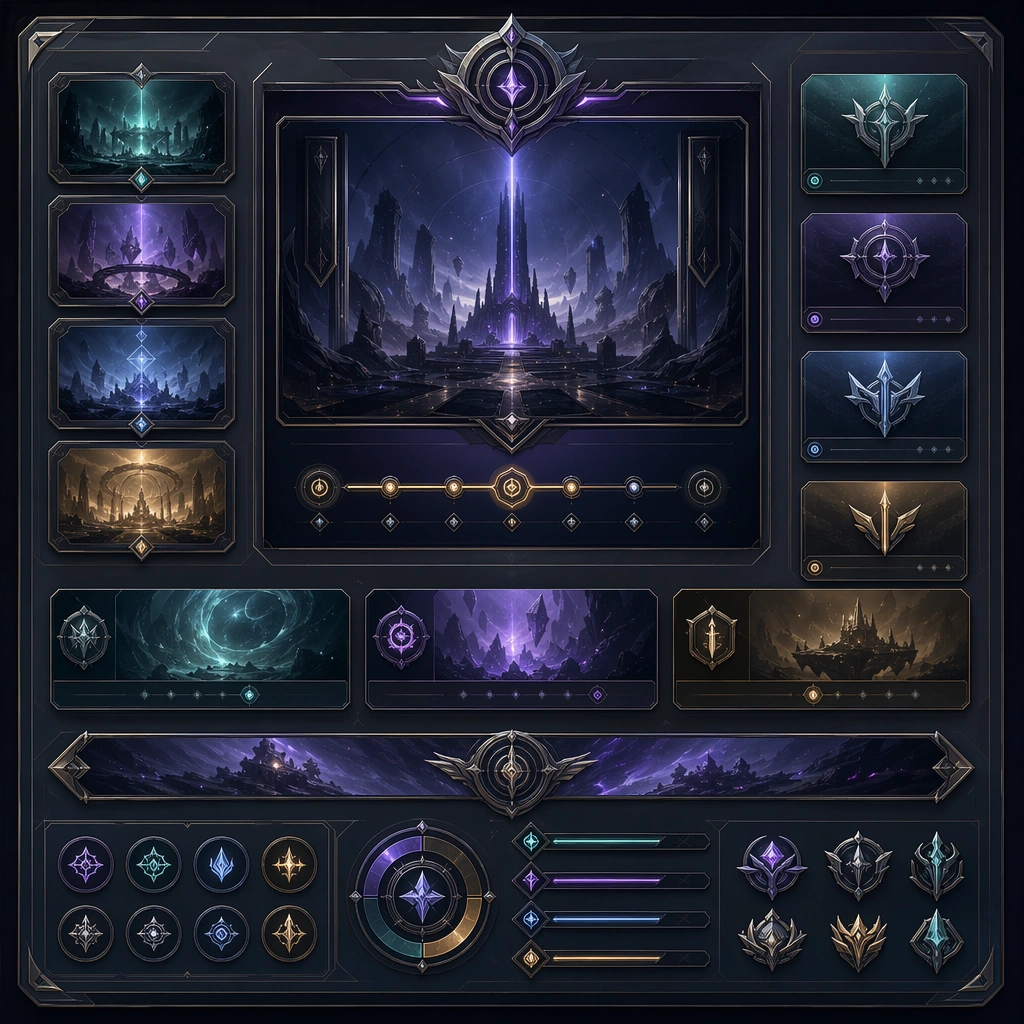
Scene: Create a square dependent image for Onboarding Empty State Premium Kit. Build a first controlled variation in the same system with a premium, production-ready finish. Use a polished modular board or campaign surface with clean spacing, premium game-UI finish, and clear focal hierarchy. The composition should feel intentional, clean, and reusable for gallery, research, campaign, or internal handoff contexts. Lighting must support readability first, with the main forms clearly separated from the background and enough breathing room for the system to stay legible at both hero scale and thumbnail scale. Subject: Center a coherent original game-art system built for premium production and marketing surfaces. For this image, focus on the intended support surface. Keep the same system logic stable across screenshots, cards, banners, and overview boards. Preserve exact identity or system logic from the reference image while changing only the intended variation axis. The viewer should immediately understand what role this surface plays inside a cohesive game-production asset pack. Important details: Lock framing, icon grammar, palette blocking, and surface hierarchy so the kit feels production-ready and consistent. Preserve the core silhouette, framing language, and material logic from the reference image while each variation changes function. Keep materials believable, edge hierarchy disciplined, and the visual language consistent with Onboarding Kit. Use abstract interface blocks or diagram accents when helpful, but avoid any readable language. The final result should feel like a deliberate production asset rather than a random illustration. Use case: Onboarding Empty State Premium Kit series study 2/9, designed as variant one within a cohesive asset pack. Constraints: No readable text, no watermark, no logos, preserve exact 1:1 aspect ratio, no unrelated objects, no broken visual hierarchy, no malformed anatomy or broken perspective, no random decorative clutter.


Example generated from “Onboarding Empty State Premium Kit — Variant Two”
GPT Image 2en

Scene: Create a square dependent image for Onboarding Empty State Premium Kit. Build a second controlled variation in the same system with a premium, production-ready finish. Use a polished modular board or campaign surface with clean spacing, premium game-UI finish, and clear focal hierarchy. The composition should feel intentional, clean, and reusable for gallery, research, campaign, or internal handoff contexts. Lighting must support readability first, with the main forms clearly separated from the background and enough breathing room for the system to stay legible at both hero scale and thumbnail scale. Subject: Center a coherent original game-art system built for premium production and marketing surfaces. For this image, focus on the intended support surface. Keep the same system logic stable across screenshots, cards, banners, and overview boards. Preserve exact identity or system logic from the reference image while changing only the intended variation axis. The viewer should immediately understand what role this surface plays inside a cohesive game-production asset pack. Important details: Lock framing, icon grammar, palette blocking, and surface hierarchy so the kit feels production-ready and consistent. Preserve the core silhouette, framing language, and material logic from the reference image while each variation changes function. Keep materials believable, edge hierarchy disciplined, and the visual language consistent with Onboarding Kit. Use abstract interface blocks or diagram accents when helpful, but avoid any readable language. The final result should feel like a deliberate production asset rather than a random illustration. Use case: Onboarding Empty State Premium Kit series study 3/9, designed as variant two within a cohesive asset pack. Constraints: No readable text, no watermark, no logos, preserve exact 1:1 aspect ratio, no unrelated objects, no broken visual hierarchy, no malformed anatomy or broken perspective, no random decorative clutter.
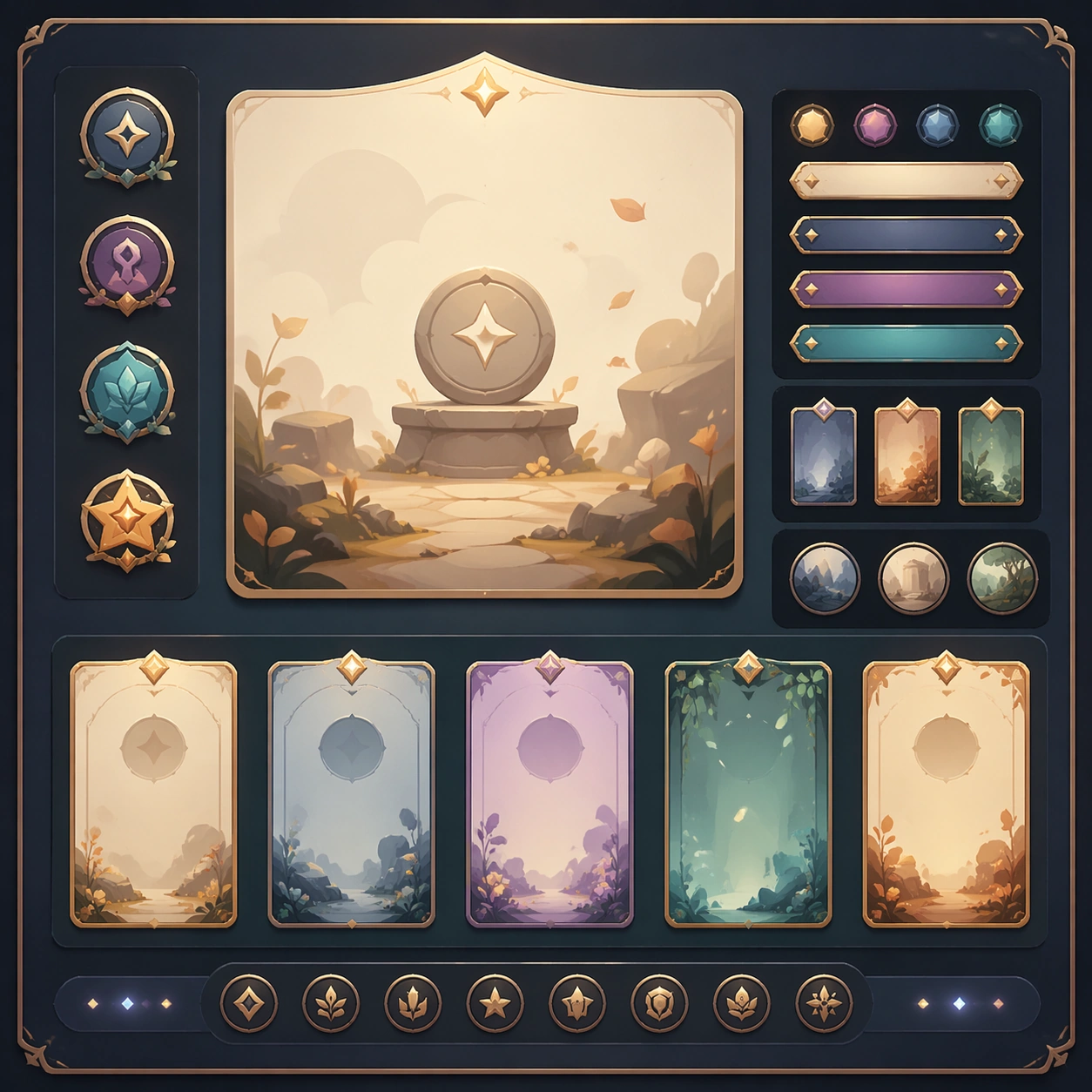
Example generated from “Onboarding Empty State Premium Kit — Variant Three”
GPT Image 2en

Scene: Create a square dependent image for Onboarding Empty State Premium Kit. Build a third controlled variation in the same system with a premium, production-ready finish. Use a polished modular board or campaign surface with clean spacing, premium game-UI finish, and clear focal hierarchy. The composition should feel intentional, clean, and reusable for gallery, research, campaign, or internal handoff contexts. Lighting must support readability first, with the main forms clearly separated from the background and enough breathing room for the system to stay legible at both hero scale and thumbnail scale. Subject: Center a coherent original game-art system built for premium production and marketing surfaces. For this image, focus on the intended support surface. Keep the same system logic stable across screenshots, cards, banners, and overview boards. Preserve exact identity or system logic from the reference image while changing only the intended variation axis. The viewer should immediately understand what role this surface plays inside a cohesive game-production asset pack. Important details: Lock framing, icon grammar, palette blocking, and surface hierarchy so the kit feels production-ready and consistent. Preserve the core silhouette, framing language, and material logic from the reference image while each variation changes function. Keep materials believable, edge hierarchy disciplined, and the visual language consistent with Onboarding Kit. Use abstract interface blocks or diagram accents when helpful, but avoid any readable language. The final result should feel like a deliberate production asset rather than a random illustration. Use case: Onboarding Empty State Premium Kit series study 4/9, designed as variant three within a cohesive asset pack. Constraints: No readable text, no watermark, no logos, preserve exact 1:1 aspect ratio, no unrelated objects, no broken visual hierarchy, no malformed anatomy or broken perspective, no random decorative clutter.
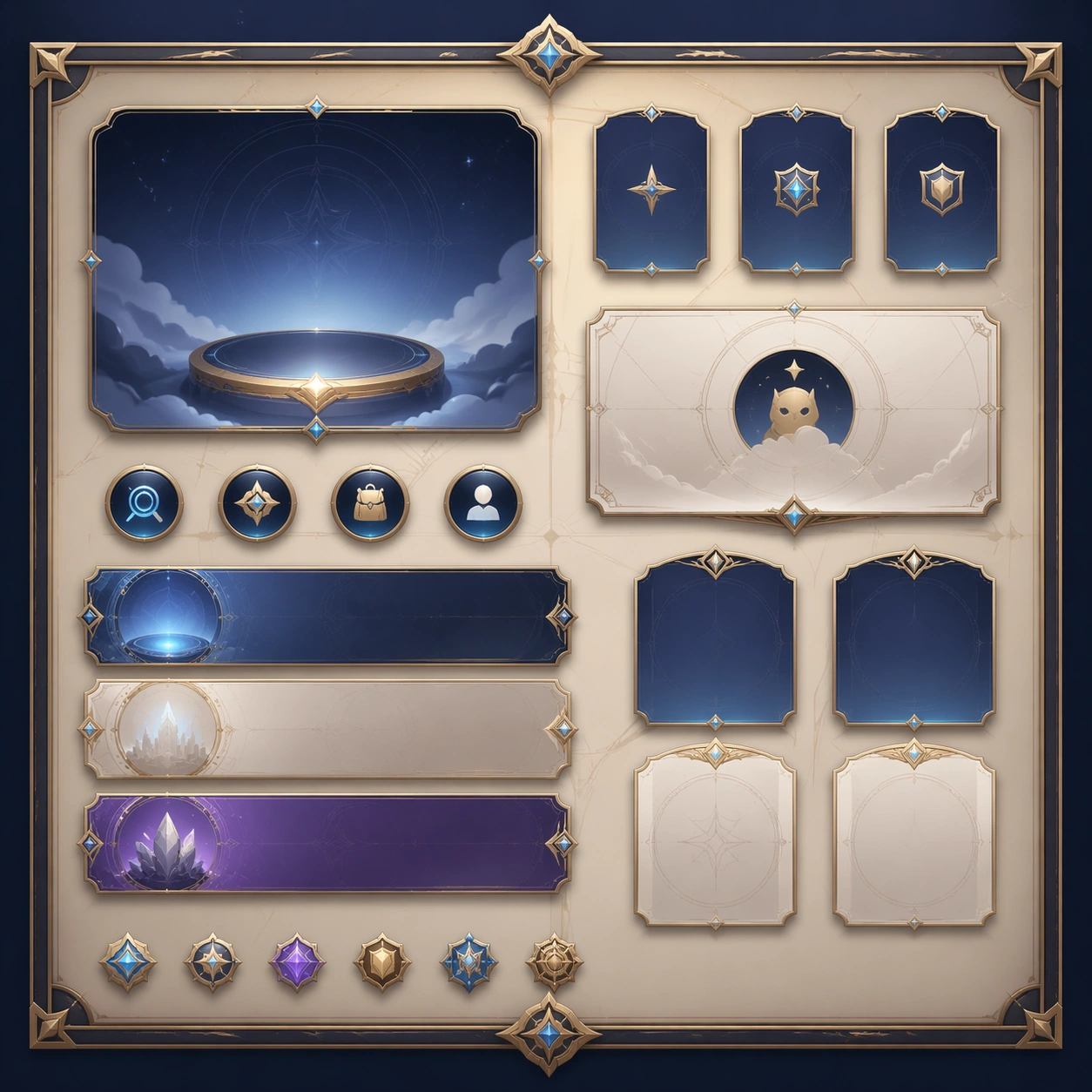
Example generated from “Onboarding Empty State Premium Kit — Support One”
GPT Image 2en

Scene: Create a square standalone support image for Onboarding Empty State Premium Kit. Build a support-surface study with a clear focal hierarchy and a finished professional surface. Use a polished modular board or campaign surface with clean spacing, premium game-UI finish, and clear focal hierarchy. The frame should feel self-contained and polished, with enough structure to explain the system even without the reference series, yet still obviously belonging to the same theme and production world. Subject: Show a coherent original game-art system built for premium production and marketing surfaces in a way that emphasizes the intended support surface. Keep the same system logic stable across screenshots, cards, banners, and overview boards. Even though this image is independent, the viewer should still recognize the same universe, same commercial logic, and same production intent as the core package. Important details: Lock framing, icon grammar, palette blocking, and surface hierarchy so the kit feels production-ready and consistent. Preserve the broader theme language through color, framing, material choices, and modular composition. Use clean panel rhythm, premium asset presentation, and believable detail density. The image should work equally well as a gallery study, research reference, and mock production deliverable. Use case: Onboarding Empty State Premium Kit single study 5/9, exploring support one as a support surface. Constraints: No readable text, no watermark, no logos, preserve exact 1:1 aspect ratio, no unrelated objects, no broken visual hierarchy, no visual noise that obscures the main surface, no accidental brand resemblance.

Example generated from “Onboarding Empty State Premium Kit — Support Two”
GPT Image 2en

Scene: Create a square standalone support image for Onboarding Empty State Premium Kit. Build a second support-surface study with a clear focal hierarchy and a finished professional surface. Use a polished modular board or campaign surface with clean spacing, premium game-UI finish, and clear focal hierarchy. The frame should feel self-contained and polished, with enough structure to explain the system even without the reference series, yet still obviously belonging to the same theme and production world. Subject: Show a coherent original game-art system built for premium production and marketing surfaces in a way that emphasizes the intended support surface. Keep the same system logic stable across screenshots, cards, banners, and overview boards. Even though this image is independent, the viewer should still recognize the same universe, same commercial logic, and same production intent as the core package. Important details: Lock framing, icon grammar, palette blocking, and surface hierarchy so the kit feels production-ready and consistent. Preserve the broader theme language through color, framing, material choices, and modular composition. Use clean panel rhythm, premium asset presentation, and believable detail density. The image should work equally well as a gallery study, research reference, and mock production deliverable. Use case: Onboarding Empty State Premium Kit single study 6/9, exploring support two as a support surface. Constraints: No readable text, no watermark, no logos, preserve exact 1:1 aspect ratio, no unrelated objects, no broken visual hierarchy, no visual noise that obscures the main surface, no accidental brand resemblance.

Example generated from “Onboarding Empty State Premium Kit — Support Three”
GPT Image 2en

Scene: Create a square standalone support image for Onboarding Empty State Premium Kit. Build a third support-surface study with a clear focal hierarchy and a finished professional surface. Use a polished modular board or campaign surface with clean spacing, premium game-UI finish, and clear focal hierarchy. The frame should feel self-contained and polished, with enough structure to explain the system even without the reference series, yet still obviously belonging to the same theme and production world. Subject: Show a coherent original game-art system built for premium production and marketing surfaces in a way that emphasizes the intended support surface. Keep the same system logic stable across screenshots, cards, banners, and overview boards. Even though this image is independent, the viewer should still recognize the same universe, same commercial logic, and same production intent as the core package. Important details: Lock framing, icon grammar, palette blocking, and surface hierarchy so the kit feels production-ready and consistent. Preserve the broader theme language through color, framing, material choices, and modular composition. Use clean panel rhythm, premium asset presentation, and believable detail density. The image should work equally well as a gallery study, research reference, and mock production deliverable. Use case: Onboarding Empty State Premium Kit single study 7/9, exploring support three as a support surface. Constraints: No readable text, no watermark, no logos, preserve exact 1:1 aspect ratio, no unrelated objects, no broken visual hierarchy, no visual noise that obscures the main surface, no accidental brand resemblance.

Example generated from “Onboarding Empty State Premium Kit — Support Four”
GPT Image 2en

Scene: Create a square standalone support image for Onboarding Empty State Premium Kit. Build a fourth support-surface study with a clear focal hierarchy and a finished professional surface. Use a polished modular board or campaign surface with clean spacing, premium game-UI finish, and clear focal hierarchy. The frame should feel self-contained and polished, with enough structure to explain the system even without the reference series, yet still obviously belonging to the same theme and production world. Subject: Show a coherent original game-art system built for premium production and marketing surfaces in a way that emphasizes the intended support surface. Keep the same system logic stable across screenshots, cards, banners, and overview boards. Even though this image is independent, the viewer should still recognize the same universe, same commercial logic, and same production intent as the core package. Important details: Lock framing, icon grammar, palette blocking, and surface hierarchy so the kit feels production-ready and consistent. Preserve the broader theme language through color, framing, material choices, and modular composition. Use clean panel rhythm, premium asset presentation, and believable detail density. The image should work equally well as a gallery study, research reference, and mock production deliverable. Use case: Onboarding Empty State Premium Kit single study 8/9, exploring support four as a support surface. Constraints: No readable text, no watermark, no logos, preserve exact 1:1 aspect ratio, no unrelated objects, no broken visual hierarchy, no visual noise that obscures the main surface, no accidental brand resemblance.

Example generated from “Harbor fisherman and resting dog”
GPT Image 2.6zh

拍摄一张竖幅纪实人像:一位虚构的年长渔民坐在海港修网棚门口,一只小型杂毛犬靠着他的靴子休息。阴天柔光,视线与人物平齐,自然皮肤纹理,衣服有盐渍与使用痕迹,色彩克制,轻微胶片颗粒,背景能看见虚焦的渔网。避免摆拍姿势和过度磨皮。

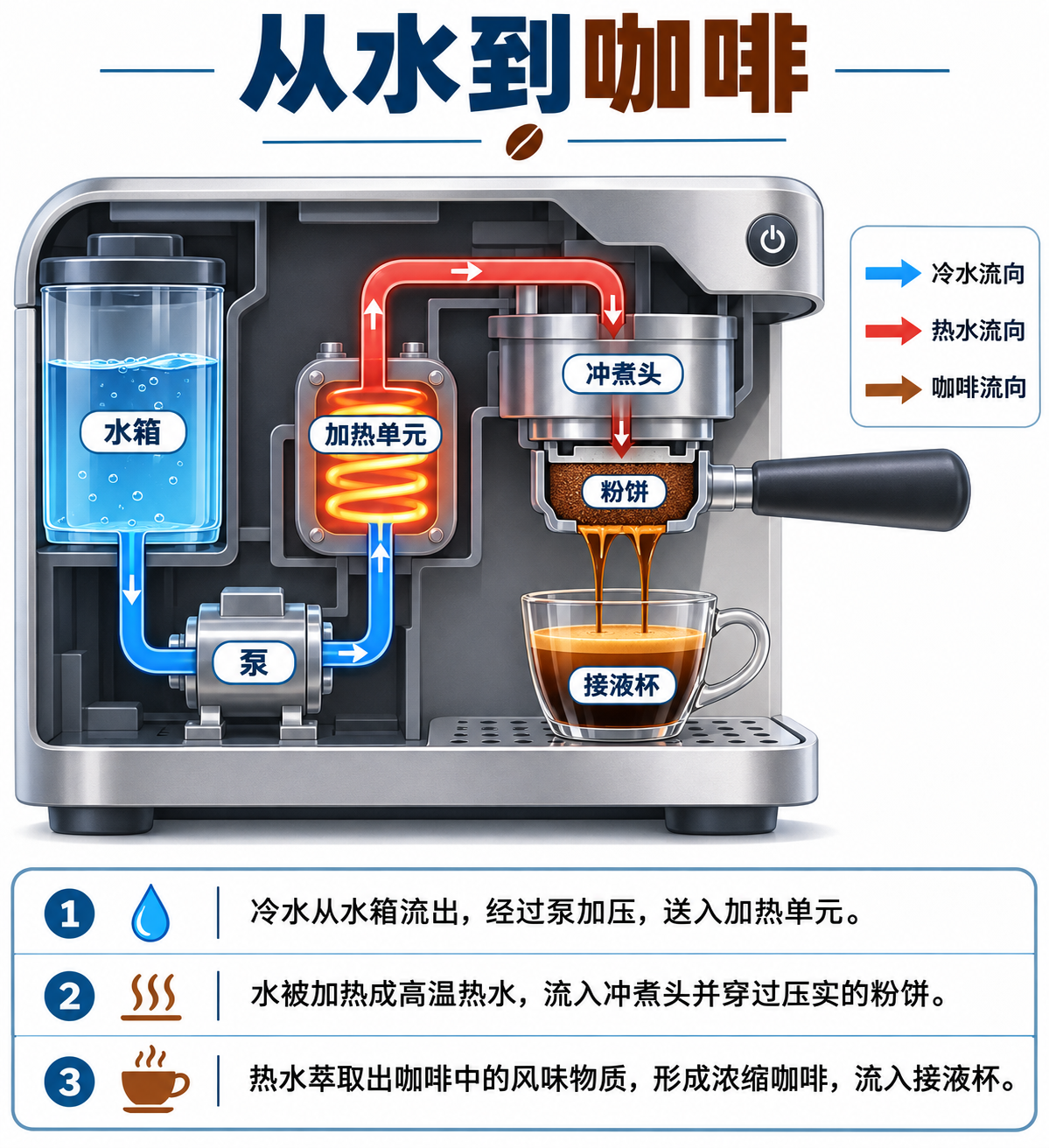
Example generated from “Chinese espresso-machine schematic”
GPT Image 2.6zh

设计一张竖版教育信息图,解释一台虚构家用浓缩咖啡机如何工作。以清楚的剖面结构展示水箱、泵、加热单元、冲煮头、粉饼和接液杯,用连续箭头区分冷水、热水和咖啡流向。每个部件只标一个简短中文名称。顶部标题为“从水到咖啡”,底部用三句话说明过程,网格整齐,白底,蓝色与咖啡棕配色。

Example generated from “THREAD MOVE YOUR WAY campaign”
GPT Image 2.6zh

设计一个虚构街头服装品牌的竖版广告。三位成年朋友站在城市天桥上,穿米白、炭灰和橄榄绿的宽松服装,自然互动,清晨侧光,摄影感。顶部准确显示“THREAD”,中间留出清晰的产品轮廓,底部准确显示“MOVE YOUR WAY”。只出现这两组文字,字号清晰,避免文字遮住人脸。

Example generated from “Field & Flour bread logo on transparency”
GPT Image 2.6zh

为虚构面包店“Field & Flour”设计一个简洁标志:一只圆面包与一根麦穗组成紧凑图形,搭配清晰的店名字标。采用暖棕单色,平面矢量视觉,适合印在小尺寸纸袋上。图形和字标置于透明背景,输出 PNG,不要店面效果图、纸张纹理或投影。

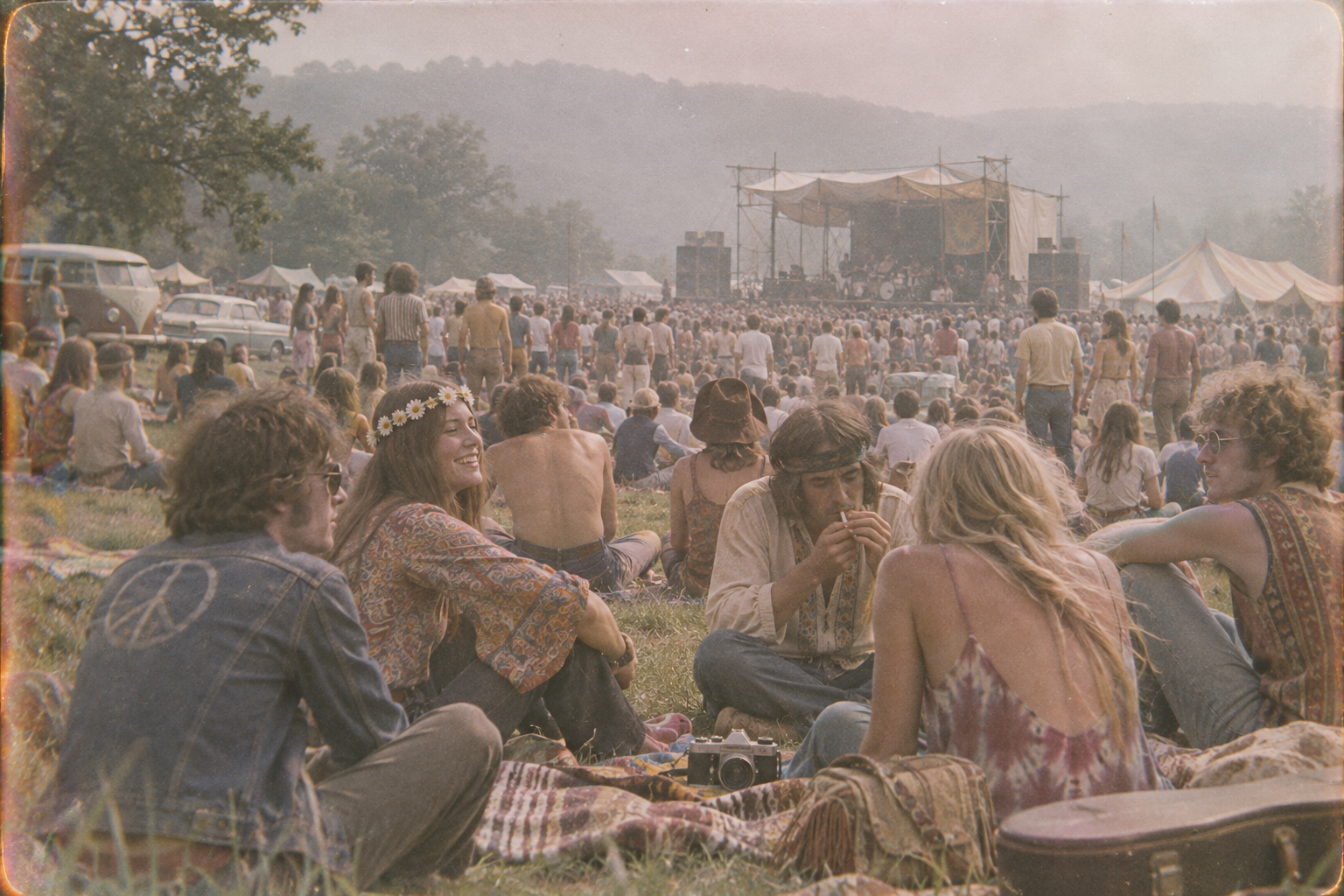
Example generated from “Fictional 1969 festival poster”
GPT Image 2.6zh

创作一张历史题材的虚构纪实照片,描绘 1969 年夏天美国户外音乐节的观众,广角视角,中景有坐在草地上的年轻成年人,远处是舞台与帐篷。服装、发型、相机和交通工具符合时代,避免智能手机和现代标识。午后薄雾、褪色胶片色彩,人物自然,不复制任何现存历史照片。

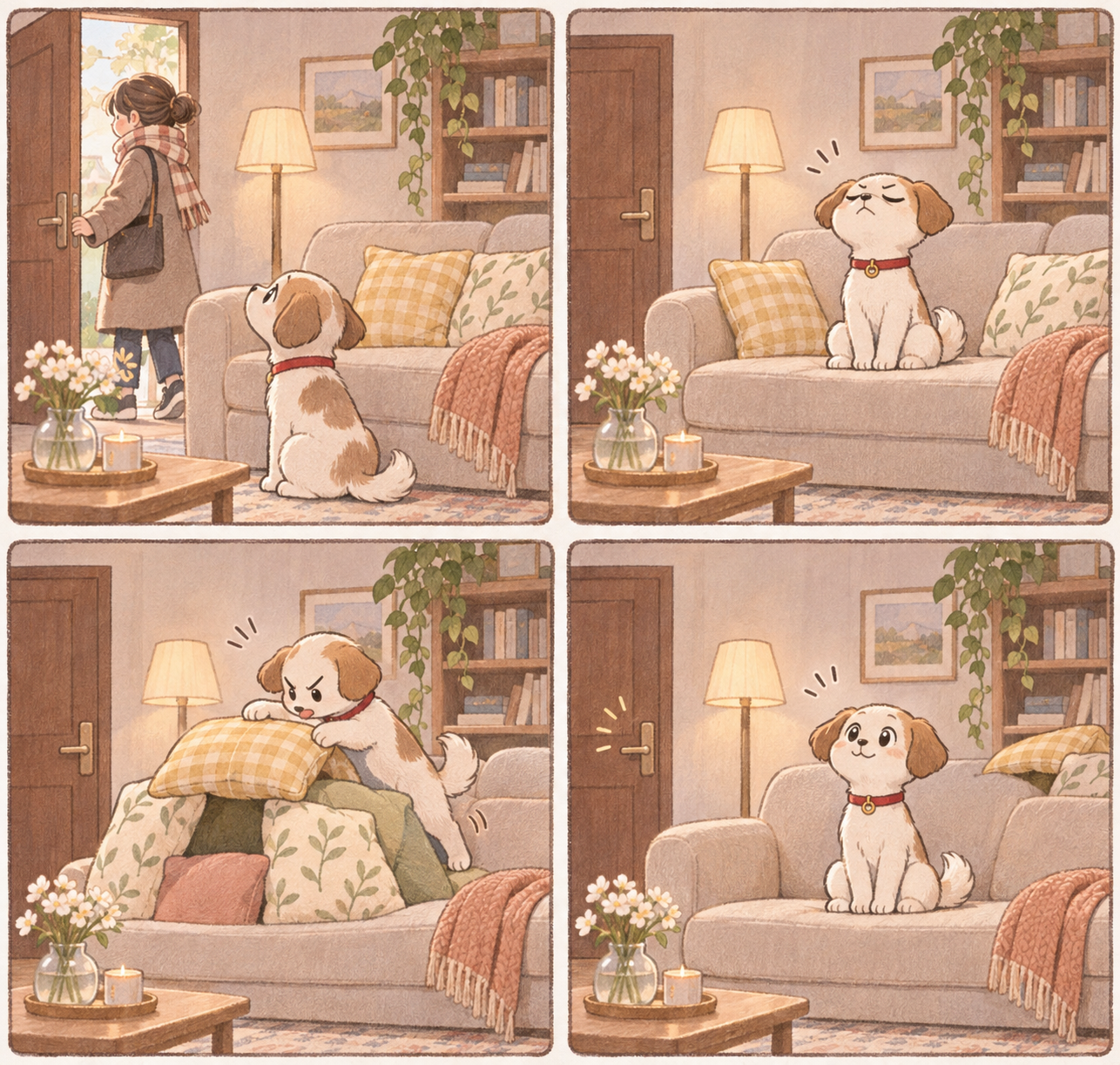
Example generated from “Four-panel dog and cardboard-fort comic”
GPT Image 2.6zh

画一张二乘二四格漫画,四格始终是同一只戴红项圈的小狗和同一间客厅。第一格主人穿外套离家;第二格小狗一本正经坐上沙发;第三格它把靠垫垒成堡垒;第四格门锁响起,小狗恢复乖巧坐姿,背后堡垒露出一角。柔和手绘风,每格边距一致,靠表情叙事,不加对白。

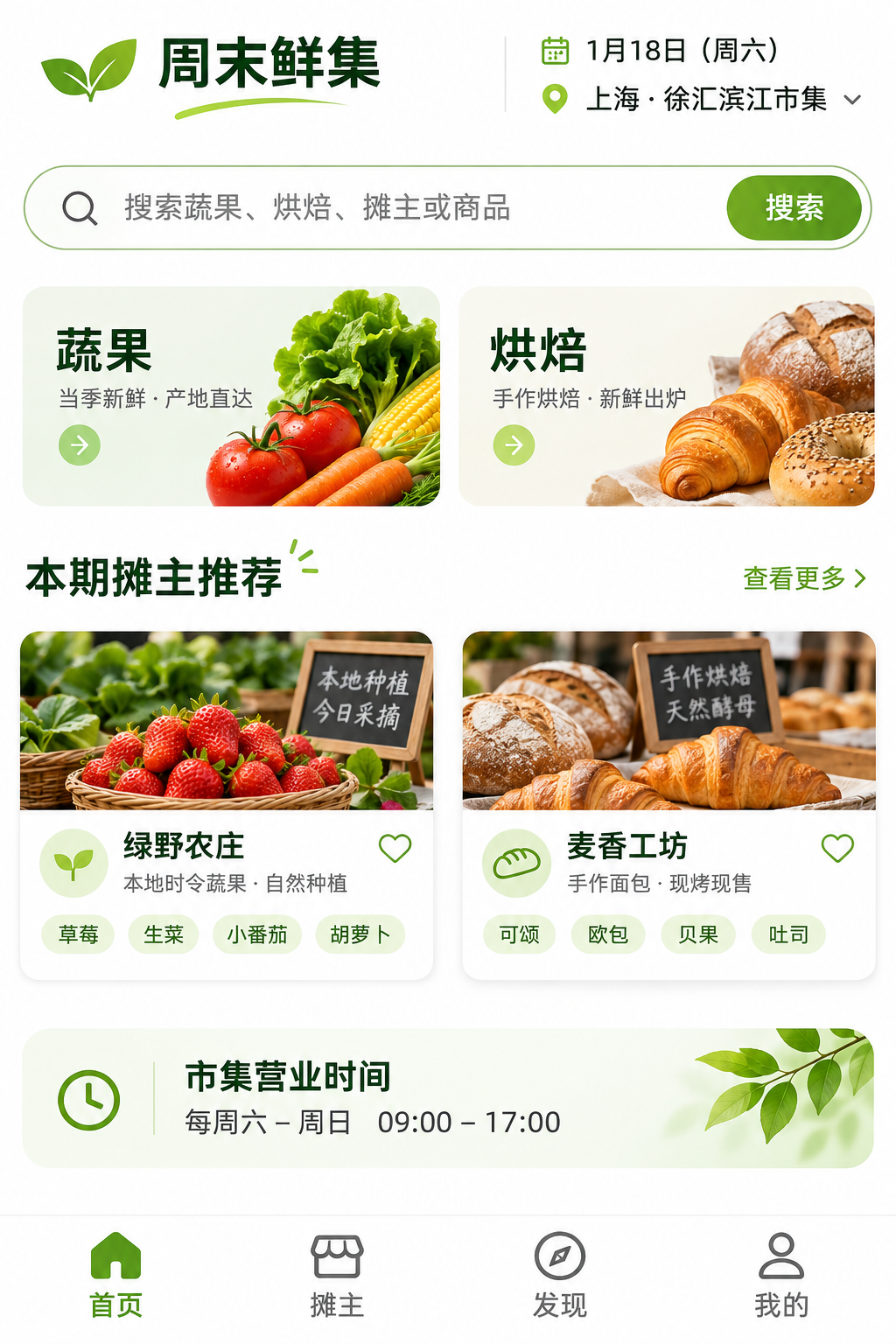
Example generated from “Weekend fresh market UI concept”
GPT Image 2.6zh

设计一张移动应用首页视觉稿,应用名“周末鲜集”。顶部显示日期与地点,主体有搜索栏、蔬果与烘焙分类、两张摊主卡片以及营业时间,底部四个清晰导航入口。中文可读,白色背景,叶绿色重点色,留白充足,真实食材缩略图。只展示平面界面,不放手机外壳,不伪装为已运行的应用。

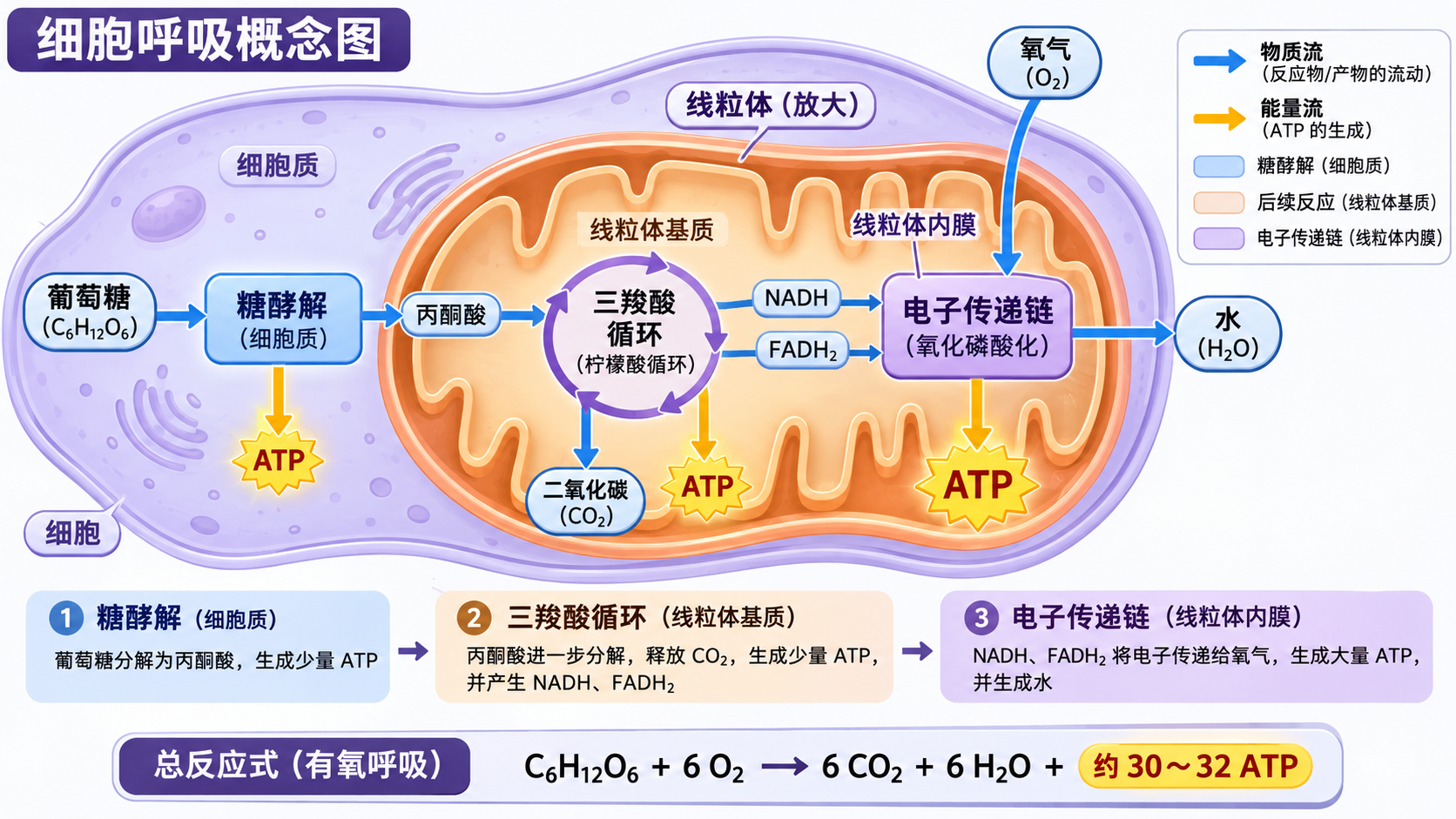
Example generated from “Cellular respiration overview concept”
GPT Image 2.6zh

为高中生设计横版细胞呼吸概念图。以细胞轮廓和放大的线粒体作为主体,区分细胞质中的糖酵解、线粒体基质中的后续反应及内膜上的电子传递过程。用不同色带表示物质流与能量流,标注葡萄糖、氧气、二氧化碳、水和 ATP。控制文字密度,中文术语清楚,配色一致,避免装饰遮挡流程。

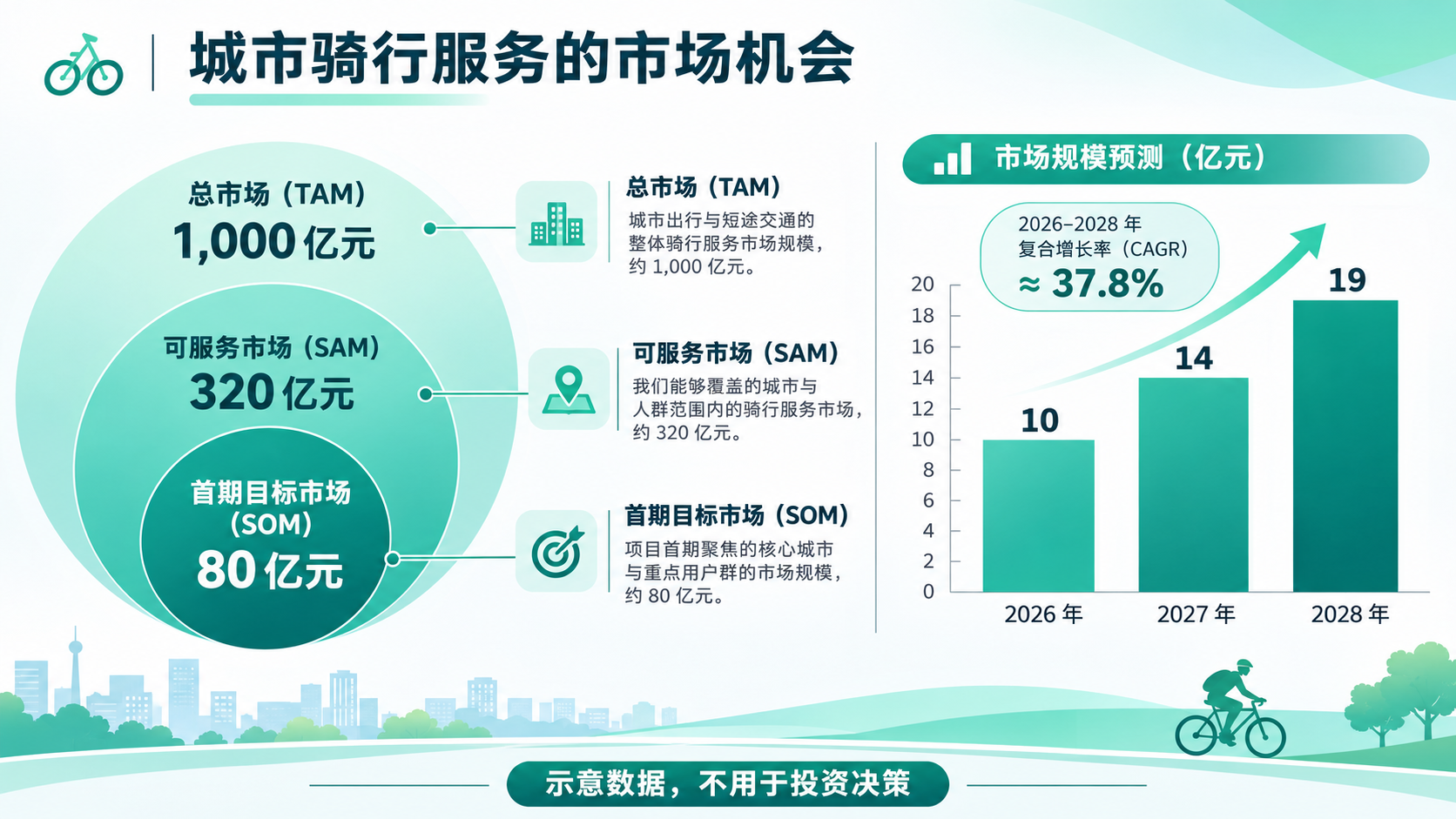
Example generated from “Fictional market-sizing slide”
GPT Image 2.6zh

设计一页横向 16:9 的虚构创业融资幻灯片,标题“城市骑行服务的市场机会”。左侧三层同心圆解释总市场、可服务市场与首期目标市场;右侧用三根柱形图展示演示数据 2026 年 10、2027 年 14、2028 年 19。统一蓝绿色,数字对齐,底部清晰注明“示意数据,不用于投资决策”。不要编造真实机构来源。

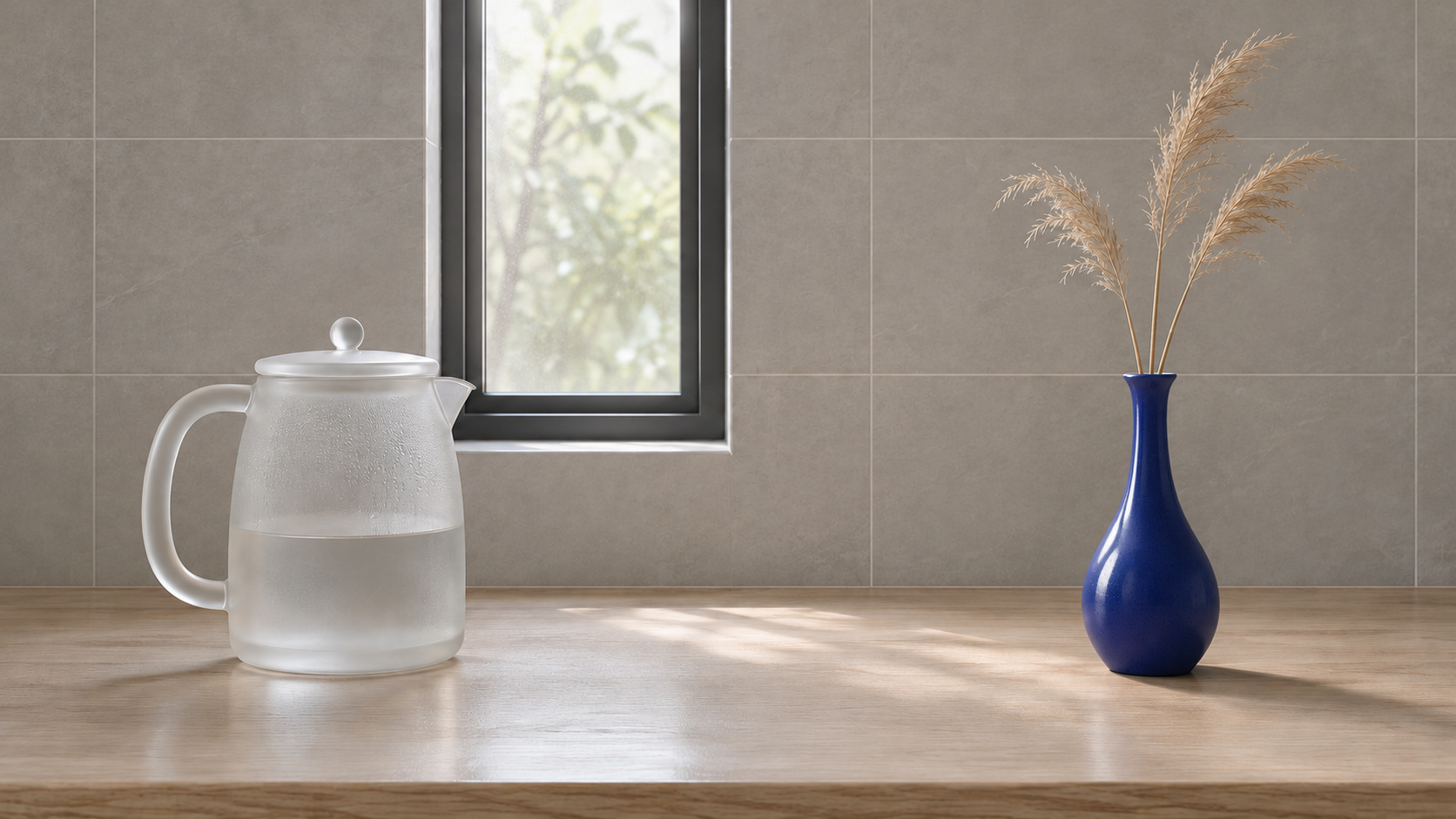
Example generated from “Cobalt vase reference edit”
GPT Image 2.6zh

依据输入照片和红色圈选标注,只把圈内陶瓷花瓶的釉色改成钴蓝色。保留花瓶的形状、反光、阴影和插花,不改变桌面、墙面及其他物件。最终成图移除红圈和所有标注,维持自然摄影质感。

Example generated from “Pixel-art motorcycle rider”
GPT Image 2.6zh

参考输入图的像素颗粒、有限色板、硬边轮廓和阴影方式,创作一位戴头盔的成年骑手驾驶复古摩托车的侧面全身图。主体完整居中,车轮均可见,白色背景,保持像素风,不照搬参考图人物和车辆,不加入文字、商标或渐变光效。

Example generated from “Pencil landscape with three pines and bridge”
GPT Image 2.6zh

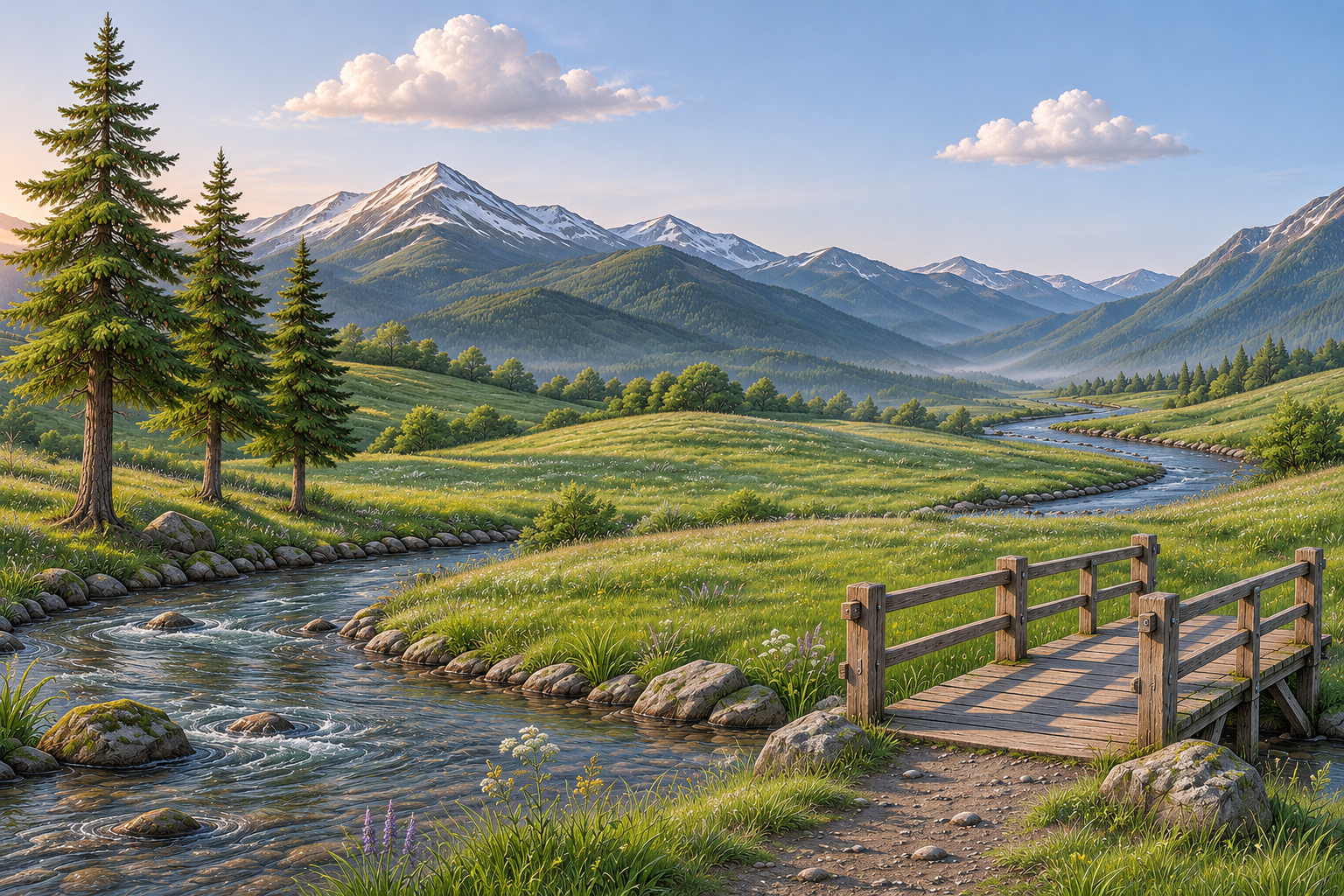
把输入河谷线稿转成可信的自然风景照片。严格沿用新线稿中的河道走向、木桥位置、松树数量与山脊比例,补充岩石、草地、河水和树皮的真实材质。采用清晨柔光,阴影方向一致。去除纸张和笔触,但不要重新设计构图或增加建筑。

Example generated from “Twelve Chinese office-cat stickers”
GPT Image 2.6zh

画一张三列四行的职场表情合集,角色统一为胖橘猫,佩戴深蓝领带,手绘蜡笔风,浅米色背景。十二格依次配短语“早上好”“开工了”“收到”“我想想”“马上来”“辛苦了”“午饭时间”“继续努力”“有点困”“完成了”“下班啦”“明天见”。动作与文字呼应,猫的脸型和颜色保持一致,文字清晰,格子间隔相同。

Example generated from “Pelican riding a red bicycle”
GPT Image 2.6zh

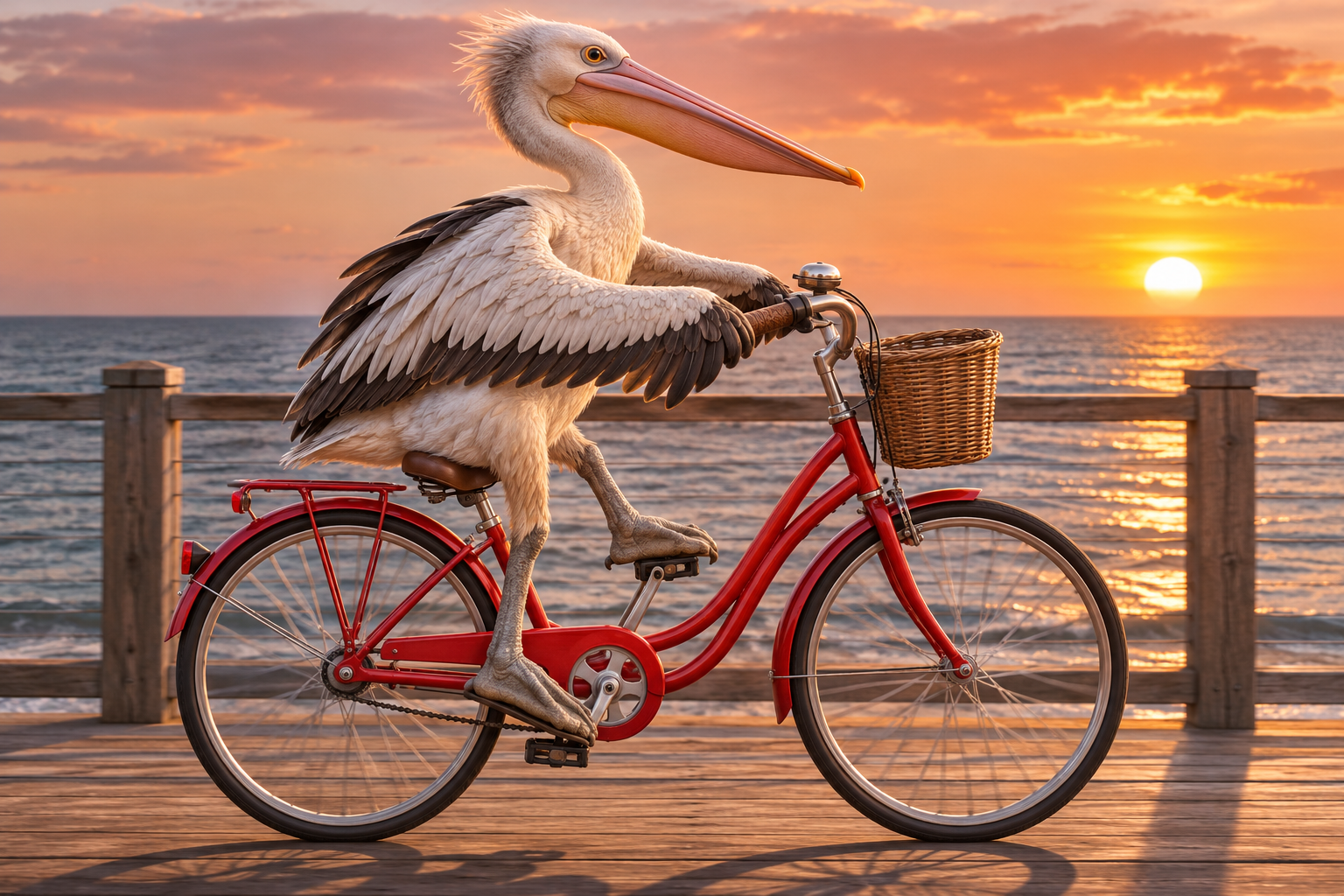
画一只写实又略带幽默感的鹈鹕骑着红色城市自行车,沿海边木栈道前进。侧面全身构图,两只爪子分别踩在踏板上,翅膀自然搭在车把附近,车架和两只车轮结构清楚。日落金光,海面在后方,水平线平直,鹈鹕喙完整可见,没有文字。

Prompt Seen · CC BY 4.0 · Animation assembled by Prompt Seen from six generated frames. Converted from GIF to MP4; original GIF and complete working prompt available in the linked source.

Winter monkey raising a lantern (six-frame sprite-sheet animation)

Prompt Seen · CC BY 4.0 · Animation assembled by Prompt Seen from six generated frames. Converted from GIF to MP4; original GIF and complete working prompt available in the linked source.

GPT Image 2.6zh

制作一张供后期裁帧合成 GIF 的动画精灵图,PNG 静态画布,宽 1536 高 1024 像素,精确三列两行,共六个等大的 512×512 正方形帧。每格是独立完整画面,按从左到右、从上到下依次播放。无外边距、无格线、无分隔条、无编号。角色不要跨越格子边界。所有格子中角色尺寸、脚下基线、镜头、背景与光照必须固定一致,只有动作姿态逐步变化。请把以下动画描述转成六个清晰不同的连续姿态;最后一格回到第一格姿态,以便循环。本次交付的是完整六格精灵图,不要只画一个姿势。使用输入小猴子图片保持角色、衣服、灯笼和环境一致。 动作与主题: 生成一段正方形无缝循环 GIF:一只穿绿色冬装的小猴子站在雪林里,身后远处有亮着暖灯的小木屋。它双手托着纸灯笼,缓慢举到脸旁,眨眼看向灯光,再把灯笼放回胸前。身体位置和镜头固定,灯笼始终握在手中,最后一帧回到起始姿势。动作简洁清晰,避免大幅飘雪和镜头移动。

Prompt Seen · CC BY 4.0 · Animation assembled by Prompt Seen from six generated frames. Converted from GIF to MP4; original GIF and complete working prompt available in the linked source.

Fictional falling-stock reaction (six-frame sprite-sheet animation)

Prompt Seen · CC BY 4.0 · Animation assembled by Prompt Seen from six generated frames. Converted from GIF to MP4; original GIF and complete working prompt available in the linked source.

GPT Image 2.6zh

制作一张供后期裁帧合成 GIF 的动画精灵图,PNG 静态画布,宽 1536 高 1024 像素,精确三列两行,共六个等大的 512×512 正方形帧。每格是独立完整画面,按从左到右、从上到下依次播放。无外边距、无格线、无分隔条、无编号。角色不要跨越格子边界。所有格子中角色尺寸、脚下基线、镜头、背景与光照必须固定一致,只有动作姿态逐步变化。请把以下动画描述转成六个清晰不同的连续姿态;最后一格回到第一格姿态,以便循环。本次交付的是完整六格精灵图,不要只画一个姿势。 动作与主题: 为 GIF 制作一张三列两行、共六格的连续动作分镜图。角色是一位原创成年 Q 版办公室职员,坐在同一张桌子和显示器前。六格动作依次为:期待地看屏幕、注意到向下的折线、瞪大眼睛、低头哭泣、擦泪、恢复起始坐姿。固定正面三分之四镜头,角色外形、服装、场景、光线和每格尺寸一致;不加文字、格号或格线。按从左到右、从上到下顺序排列,首尾姿势衔接。

Prompt Seen · CC BY 4.0 · Animation assembled by Prompt Seen from six generated frames. Converted from GIF to MP4; original GIF and complete working prompt available in the linked source.

Fictional rising-stock celebration (six-frame sprite-sheet animation)

Prompt Seen · CC BY 4.0 · Animation assembled by Prompt Seen from six generated frames. Converted from GIF to MP4; original GIF and complete working prompt available in the linked source.

GPT Image 2.6zh

制作一张供后期裁帧合成 GIF 的动画精灵图,PNG 静态画布,宽 1536 高 1024 像素,精确三列两行,共六个等大的 512×512 正方形帧。每格是独立完整画面,按从左到右、从上到下依次播放。无外边距、无格线、无分隔条、无编号。角色不要跨越格子边界。所有格子中角色尺寸、脚下基线、镜头、背景与光照必须固定一致,只有动作姿态逐步变化。请把以下动画描述转成六个清晰不同的连续姿态;最后一格回到第一格姿态,以便循环。本次交付的是完整六格精灵图,不要只画一个姿势。 动作与主题: 为 GIF 制作一张三列两行、共六格的连续动作分镜图。角色是一位原创成年 Q 版办公室职员,坐在同一张桌子和显示器前。六格动作依次为:平静地看屏幕、注意到向上的折线、露出笑容、站起举手、撒出少量无面额纸片、回到起始坐姿。固定正面三分之四镜头,角色外形、服装、场景、光线和每格尺寸一致;不加文字、格号或格线。按从左到右、从上到下顺序排列,首尾姿势衔接。

Prompt Seen · CC BY 4.0 · Animation assembled by Prompt Seen from six generated frames. Converted from GIF to MP4; original GIF and complete working prompt available in the linked source.

Dancing white chicken (six-frame sprite-sheet animation)

Prompt Seen · CC BY 4.0 · Animation assembled by Prompt Seen from six generated frames. Converted from GIF to MP4; original GIF and complete working prompt available in the linked source.

GPT Image 2.6zh

制作一张供后期裁帧合成 GIF 的动画精灵图,PNG 静态画布,宽 1536 高 1024 像素,精确三列两行,共六个等大的 512×512 正方形帧。每格是独立完整画面,按从左到右、从上到下依次播放。无外边距、无格线、无分隔条、无编号。角色不要跨越格子边界。所有格子中角色尺寸、脚下基线、镜头、背景与光照必须固定一致,只有动作姿态逐步变化。请把以下动画描述转成六个清晰不同的连续姿态;最后一格回到第一格姿态,以便循环。本次交付的是完整六格精灵图,不要只画一个姿势。 动作与主题: 生成一段方形循环 GIF:一只白羽鸡站在浅米色无缝背景中央,先向左踏一步、抬左翅,再向右踏一步、抬右翅,最后轻轻点头回到原位。完整身体和双脚始终在画面内,机位固定,红色鸡冠外形稳定,柔和落地阴影。动作俏皮,首尾衔接,不出现文字或镜头推拉。

Prompt Seen · CC BY 4.0 · Animation assembled by Prompt Seen from six generated frames. Converted from GIF to MP4; original GIF and complete working prompt available in the linked source.

Blue-haired rice reaction sticker (six-frame sprite-sheet animation)

Prompt Seen · CC BY 4.0 · Animation assembled by Prompt Seen from six generated frames. Converted from GIF to MP4; original GIF and complete working prompt available in the linked source.

GPT Image 2.6zh

制作一张供后期裁帧合成 GIF 的动画精灵图,PNG 静态画布,宽 1536 高 1024 像素,精确三列两行,共六个等大的 512×512 正方形帧。每格是独立完整画面,按从左到右、从上到下依次播放。无外边距、无格线、无分隔条、无编号。角色不要跨越格子边界。所有格子中角色尺寸、脚下基线、镜头、背景与光照必须固定一致,只有动作姿态逐步变化。请把以下动画描述转成六个清晰不同的连续姿态;最后一格回到第一格姿态,以便循环。本次交付的是完整六格精灵图,不要只画一个姿势。 动作与主题: 使用输入角色制作正方形循环动画,保持发型、服装与脸型。角色坐在桌前,端着一碗白米饭,舀起一小勺送入口中,满足地眯眼点头,再回到端碗姿势。画面上方固定显示“真香!”,文字全程不变。机位固定,米饭和餐具形状稳定,首尾可连续播放。

Prompt Seen · CC BY 4.0 · Animation assembled by Prompt Seen from six generated frames. Converted from GIF to MP4; original GIF and complete working prompt available in the linked source.

Chicken tai chi-inspired poses (six-frame sprite-sheet animation)

Prompt Seen · CC BY 4.0 · Animation assembled by Prompt Seen from six generated frames. Converted from GIF to MP4; original GIF and complete working prompt available in the linked source.

GPT Image 2.6zh

制作一张供后期裁帧合成 GIF 的动画精灵图,PNG 静态画布,宽 1536 高 1024 像素,精确三列两行,共六个等大的 512×512 正方形帧。每格是独立完整画面,按从左到右、从上到下依次播放。无外边距、无格线、无分隔条、无编号。角色不要跨越格子边界。所有格子中角色尺寸、脚下基线、镜头、背景与光照必须固定一致,只有动作姿态逐步变化。请把以下动画描述转成六个清晰不同的连续姿态;最后一格回到第一格姿态,以便循环。本次交付的是完整六格精灵图,不要只画一个姿势。 动作与主题: 生成一段循环 GIF:一只白羽鸡在简洁的庭院石地上缓慢打太极,双翅从胸前向两侧画弧,身体轻轻左右转移重心,然后双翅收回原位。正面全身、固定镜头、背景静止,鸡冠和脚的数量稳定,动作舒展,最后一帧与第一帧衔接。

Prompt Seen · CC BY 4.0 · Animation assembled by Prompt Seen from six generated frames. Converted from GIF to MP4; original GIF and complete working prompt available in the linked source.

Fictional 2005 family dinner (six-frame sprite-sheet animation)

Prompt Seen · CC BY 4.0 · Animation assembled by Prompt Seen from six generated frames. Converted from GIF to MP4; original GIF and complete working prompt available in the linked source.

GPT Image 2.6zh

制作一张供后期裁帧合成 GIF 的动画精灵图,PNG 静态画布,宽 1536 高 1024 像素,精确三列两行,共六个等大的 512×512 正方形帧。每格是独立完整画面,按从左到右、从上到下依次播放。无外边距、无格线、无分隔条、无编号。角色不要跨越格子边界。所有格子中角色尺寸、脚下基线、镜头、背景与光照必须固定一致,只有动作姿态逐步变化。请把以下动画描述转成六个清晰不同的连续姿态;最后一格回到第一格姿态,以便循环。本次交付的是完整六格精灵图,不要只画一个姿势。 动作与主题: 生成一段写实循环 GIF,表现 2005 年中国普通家庭的晚饭时刻。四位家庭成员围坐木质方桌,桌上是家常菜、瓷碗和筷子,背景有当时常见的木柜与老式挂历。固定中景,一人轻轻夹菜,另一人点头,其他人只做自然呼吸和小幅动作。保持人数、手指和餐具稳定,暖色室内灯光,没有智能手机,首尾自然衔接。

Prompt Seen · CC BY 4.0 · Animation assembled by Prompt Seen from six generated frames. Converted from GIF to MP4; original GIF and complete working prompt available in the linked source.

Mint fish with yellow hat nodding (six-frame sprite-sheet animation)

Prompt Seen · CC BY 4.0 · Animation assembled by Prompt Seen from six generated frames. Converted from GIF to MP4; original GIF and complete working prompt available in the linked source.

GPT Image 2.6zh

制作一张供后期裁帧合成 GIF 的动画精灵图,PNG 静态画布,宽 1536 高 1024 像素,精确三列两行,共六个等大的 512×512 正方形帧。每格是独立完整画面,按从左到右、从上到下依次播放。无外边距、无格线、无分隔条、无编号。角色不要跨越格子边界。所有格子中角色尺寸、脚下基线、镜头、背景与光照必须固定一致,只有动作姿态逐步变化。请把以下动画描述转成六个清晰不同的连续姿态;最后一格回到第一格姿态,以便循环。本次交付的是完整六格精灵图,不要只画一个姿势。 动作与主题: 使用输入圆鱼角色制作一个“开心点头”的循环 GIF。保持帽子、体型、配色和鱼鳍一致,角色先微笑,轻轻点头两次,再摆一下尾鳍并回到正面起始姿势。白色背景,完整角色居中,固定镜头,不新增手脚或道具,不加文字,首尾动作衔接。

Prompt Seen · CC BY 4.0 · Animation assembled by Prompt Seen from six generated frames. Converted from GIF to MP4; original GIF and complete working prompt available in the linked source.

Gymnast flip in six coarse poses (six-frame sprite-sheet animation)

Prompt Seen · CC BY 4.0 · Animation assembled by Prompt Seen from six generated frames. Converted from GIF to MP4; original GIF and complete working prompt available in the linked source.

GPT Image 2.6zh

制作一张供后期裁帧合成 GIF 的动画精灵图,PNG 静态画布,宽 1536 高 1024 像素,精确三列两行,共六个等大的 512×512 正方形帧。每格是独立完整画面,按从左到右、从上到下依次播放。无外边距、无格线、无分隔条、无编号。角色不要跨越格子边界。所有格子中角色尺寸、脚下基线、镜头、背景与光照必须固定一致,只有动作姿态逐步变化。请把以下动画描述转成六个清晰不同的连续姿态;最后一格回到第一格姿态,以便循环。本次交付的是完整六格精灵图,不要只画一个姿势。 动作与主题: 生成一段固定侧面机位的循环 GIF:一位虚构的成年体操运动员站在宽阔浅灰训练垫中央,屈膝蓄力,完成一次原地后空翻,双脚落回原来位置,再站直回到起始姿势。全身始终可见,训练服颜色固定,背景无其他人物,动作节奏连贯,落地有短暂停顿,避免肢体重复和身体穿过地面。

Prompt Seen · CC BY 4.0 · Animation assembled by Prompt Seen from six generated frames. Converted from GIF to MP4; original GIF and complete working prompt available in the linked source.

Green and orange robots greeting (six-frame sprite-sheet animation)

Prompt Seen · CC BY 4.0 · Animation assembled by Prompt Seen from six generated frames. Converted from GIF to MP4; original GIF and complete working prompt available in the linked source.

GPT Image 2.6zh

制作一张供后期裁帧合成 GIF 的动画精灵图,PNG 静态画布,宽 1536 高 1024 像素,精确三列两行,共六个等大的 512×512 正方形帧。每格是独立完整画面,按从左到右、从上到下依次播放。无外边距、无格线、无分隔条、无编号。角色不要跨越格子边界。所有格子中角色尺寸、脚下基线、镜头、背景与光照必须固定一致,只有动作姿态逐步变化。请把以下动画描述转成六个清晰不同的连续姿态;最后一格回到第一格姿态,以便循环。本次交付的是完整六格精灵图,不要只画一个姿势。 动作与主题: 让输入图中的两个机器人跳一段同步循环舞。保持左绿右橙、体型与颜色一致,两者先向外侧踏步并挥手,再向内侧踏步拍手,最后回到初始站姿。固定正面镜头,完整身体可见,彼此保持间距,不交换位置,不融合肢体。白色背景,落地阴影稳定,不加文字。

Prompt Seen · CC BY 4.0 · Animation assembled by Prompt Seen from six generated frames. Converted from GIF to MP4; original GIF and complete working prompt available in the linked source.

Pelican cycling at sunset (six-frame sprite-sheet animation)

Prompt Seen · CC BY 4.0 · Animation assembled by Prompt Seen from six generated frames. Converted from GIF to MP4; original GIF and complete working prompt available in the linked source.

GPT Image 2.6zh

制作一张供后期裁帧合成 GIF 的动画精灵图,PNG 静态画布,宽 1536 高 1024 像素,精确三列两行,共六个等大的 512×512 正方形帧。每格是独立完整画面,按从左到右、从上到下依次播放。无外边距、无格线、无分隔条、无编号。角色不要跨越格子边界。所有格子中角色尺寸、脚下基线、镜头、背景与光照必须固定一致,只有动作姿态逐步变化。请把以下动画描述转成六个清晰不同的连续姿态;最后一格回到第一格姿态,以便循环。本次交付的是完整六格精灵图,不要只画一个姿势。 动作与主题: 使用输入图片中的鹈鹕、红色自行车和海边木栈道,制作一个侧面跟拍循环 GIF。鹈鹕持续平稳踩踏,车轮转动,身体轻微上下起伏,主体保持画面中央。让木板与背景以可循环方式缓慢移动,保持自行车结构和鸟喙长度稳定,机位高度不变,不加入其他角色,结尾接回开头。

Prompt Seen · CC BY 4.0 · Animation assembled by Prompt Seen from six generated frames. Converted from GIF to MP4; original GIF and complete working prompt available in the linked source.

Pencil owl blinking on notebook (six-frame sprite-sheet animation)

Prompt Seen · CC BY 4.0 · Animation assembled by Prompt Seen from six generated frames. Converted from GIF to MP4; original GIF and complete working prompt available in the linked source.

GPT Image 2.6zh

制作一张供后期裁帧合成 GIF 的动画精灵图,PNG 静态画布,宽 1536 高 1024 像素,精确三列两行,共六个等大的 512×512 正方形帧。每格是独立完整画面,按从左到右、从上到下依次播放。无外边距、无格线、无分隔条、无编号。角色不要跨越格子边界。所有格子中角色尺寸、脚下基线、镜头、背景与光照必须固定一致,只有动作姿态逐步变化。请把以下动画描述转成六个清晰不同的连续姿态;最后一格回到第一格姿态,以便循环。本次交付的是完整六格精灵图,不要只画一个姿势。 动作与主题: 使用输入笔记本照片,让纸上的猫头鹰铅笔涂鸦轻轻动起来。先眨眼,再把两侧翅膀各抬起一点,最后恢复起始姿势。只改变涂鸦内部的线条姿态,保持纸张、桌面、笔触风格、光线和机位不变,不变成三维实体,不飞离纸面,不新增文字。输出短循环 GIF。

Example generated from “Fungal Kingdom Microcosm — Beetle Path Overview”
GPT Image 2en

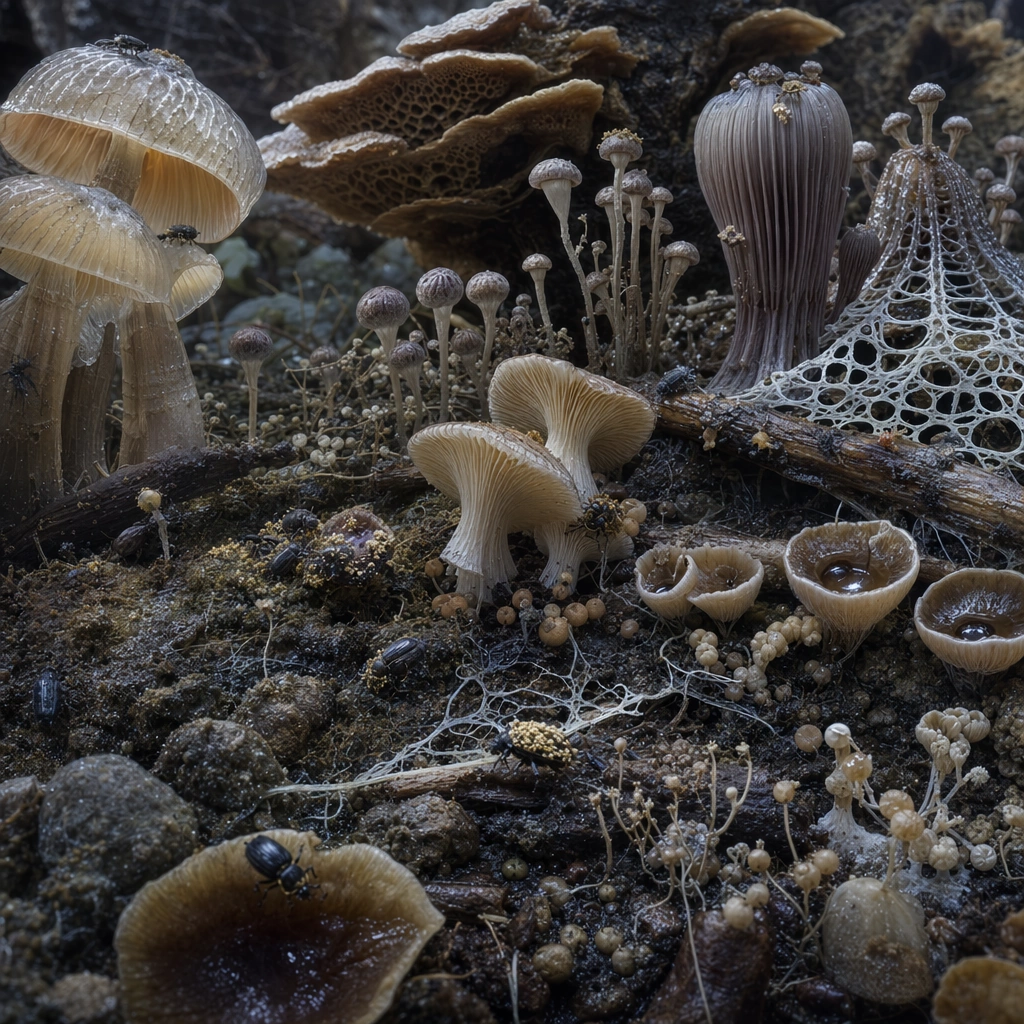
Scene: Place the camera at beetle height on a damp forest-floor path just after rain, with leaf litter, bark splinters, and pebbles reading as large terrain. The square frame should feel crowded with dozens of mushroom species rising overhead in soft cool light filtered through unseen canopy shadow. Build the frame as a square natural history study with disciplined composition, believable lighting, and enough environmental evidence to explain how this organism or system functions without any caption. Keep the image polished, observational, and suitable for a research gallery rather than pulp fantasy spectacle. Subject: Feature varied fungal architectures: translucent lantern caps, ribbed towers, cup forms storing dew, mesh fungi bridging twigs, and broad mycelial mats stitching soil islands together. Tiny beetle-like animals should navigate the scene as farmers, grazers, or pollinators of spores. Show the anatomy, habitat interaction, and scale cues clearly so the viewer can infer locomotion, feeding, reproduction, or ecological role from the visual alone. Every visible structure should feel evolved for a purpose, with layered foreground, midground, and background information that rewards close inspection. Important details: Treat the forest floor as a dense biological city where moisture, decay, and spore traffic drive form. Caps, gills, stalks, hyphal mats, and insect partnerships should all look evolved to manage shade, humidity, nutrient exchange, and reproduction. Texture is critical: wet cuticle, velvety cap bloom, threadlike hyphae, and mineral-rich mud must feel touchable. Keep species distinct yet ecologically related, with each form suggesting a niche in moisture retention, light capture, spore dispersal, or symbiosis. Favor coherent biology over decorative excess: tissues, shells, membranes, spores, tendrils, fins, silica lattices, or atmospheric sacs should all follow one material logic. Preserve a convincing relationship between the environment and the body plan, use restrained color hierarchy, and make the image feel like a serious speculative field record rather than a random monster concept. Use case: Fungal Kingdom Microcosm single study 1/9. Constraints: No readable text, no watermark, no logos, preserve exact 1:1 aspect ratio, no fairy-house cliches, no cartoon gnomes, no oversized human objects, no bright fantasy magic glow, no accidental brand resemblance, no direct copy of known terrestrial species, no cartoon simplification.

Example generated from “Fungal Kingdom Microcosm — Translucent Spore Cathedral”
GPT Image 2en

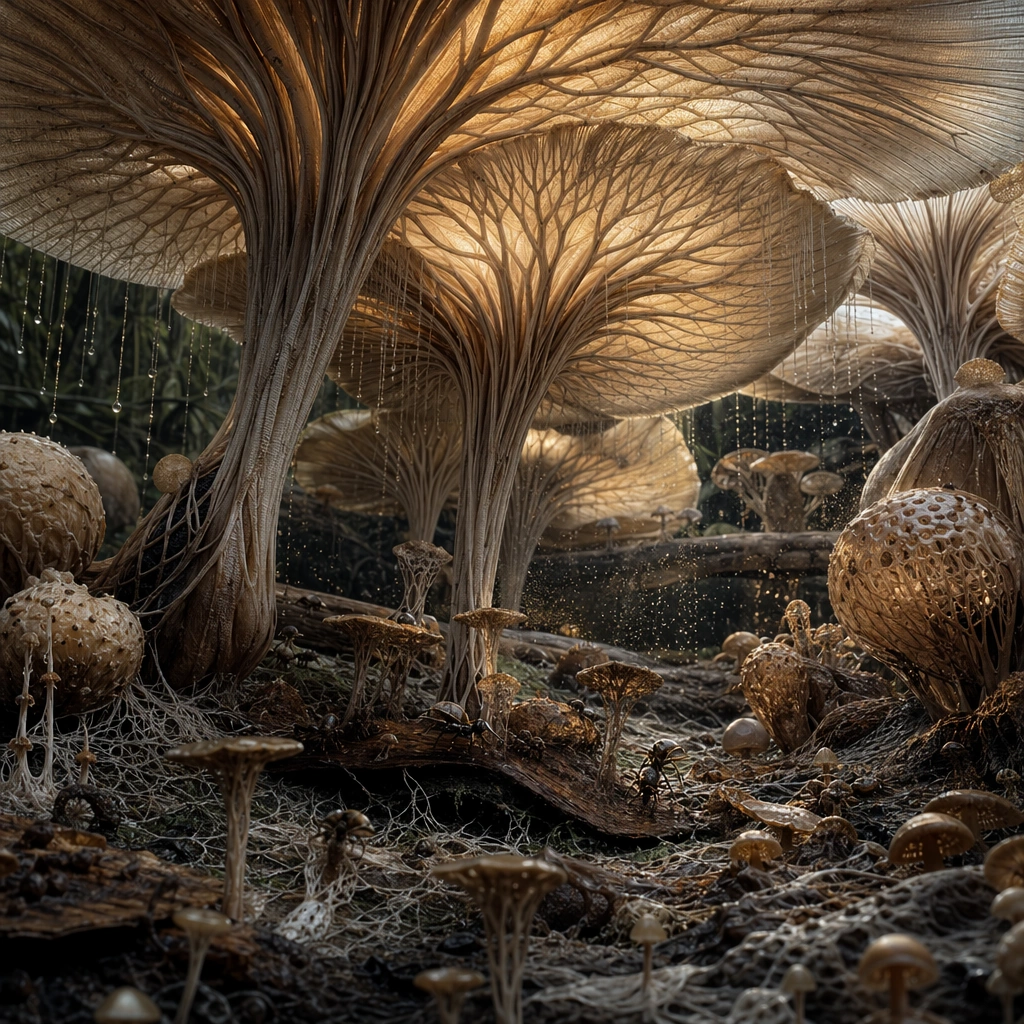
Scene: Create a low-angle view beneath a cluster of towering translucent caps whose undersides turn the forest floor into a pale amber and ivory chamber. Moist air, thin spores, and dew threads should give the square frame a humid sacred stillness without becoming fantasy architecture. Build the frame as a square natural history study with disciplined composition, believable lighting, and enough environmental evidence to explain how this organism or system functions without any caption. Keep the image polished, observational, and suitable for a research gallery rather than pulp fantasy spectacle. Subject: Focus on the canopy effect created by layered caps, semi-transparent ribs, and dangling condensation organs that release spores in slow pulses. Smaller understory fungi and cautious insects should occupy the shadow zone beneath the caps, demonstrating how one species engineers habitat for others. Show the anatomy, habitat interaction, and scale cues clearly so the viewer can infer locomotion, feeding, reproduction, or ecological role from the visual alone. Every visible structure should feel evolved for a purpose, with layered foreground, midground, and background information that rewards close inspection. Important details: Treat the forest floor as a dense biological city where moisture, decay, and spore traffic drive form. Caps, gills, stalks, hyphal mats, and insect partnerships should all look evolved to manage shade, humidity, nutrient exchange, and reproduction. Keep the anatomy fungal rather than floral: membrane veining, gill branching, and support stalk tension should all feel mechanically plausible. The beauty of the image should come from structure, moisture, and filtered light, not from arbitrary ornament. Favor coherent biology over decorative excess: tissues, shells, membranes, spores, tendrils, fins, silica lattices, or atmospheric sacs should all follow one material logic. Preserve a convincing relationship between the environment and the body plan, use restrained color hierarchy, and make the image feel like a serious speculative field record rather than a random monster concept. Use case: Fungal Kingdom Microcosm single study 2/9. Constraints: No readable text, no watermark, no logos, preserve exact 1:1 aspect ratio, no church windows, no human candles, no fantasy runes, no plastic-looking translucency, no accidental brand resemblance, no direct copy of known terrestrial species, no cartoon simplification.

Example generated from “Fungal Kingdom Microcosm — Mycelial Highway Crossing”
GPT Image 2en

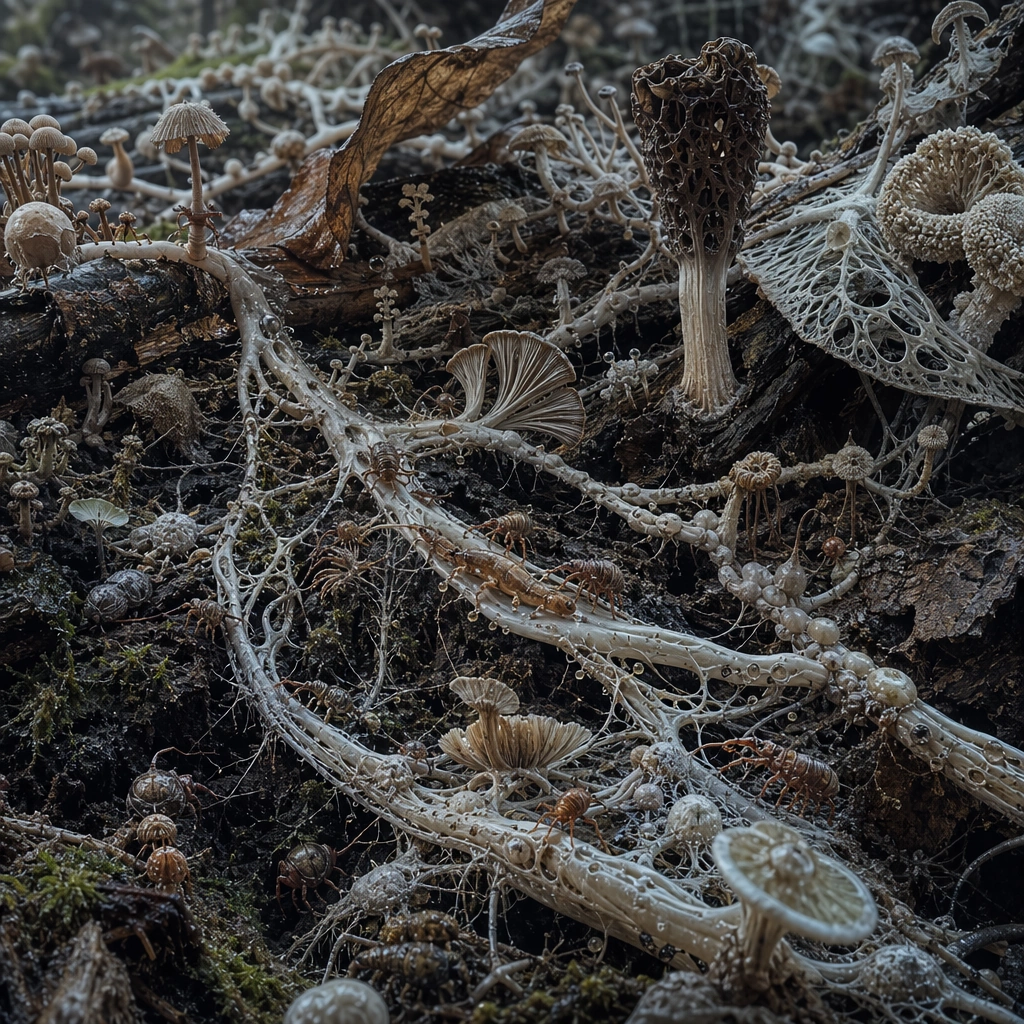
Scene: Compose a square macro landscape where bright mycelial cords cross damp soil like elevated highways, weaving beneath leaves and over fallen bark. The light should be overcast and cool, with tiny reflective droplets tracing the routes and revealing traffic density. Build the frame as a square natural history study with disciplined composition, believable lighting, and enough environmental evidence to explain how this organism or system functions without any caption. Keep the image polished, observational, and suitable for a research gallery rather than pulp fantasy spectacle. Subject: Show thick transport bundles, feeder rootlets, exchange nodules, and small arthropod analogs using the hyphal roads as protected corridors. Nearby fungi should plug into the network at different scales, some as mature fruiting towers and others as low nutrient stations. Show the anatomy, habitat interaction, and scale cues clearly so the viewer can infer locomotion, feeding, reproduction, or ecological role from the visual alone. Every visible structure should feel evolved for a purpose, with layered foreground, midground, and background information that rewards close inspection. Important details: Treat the forest floor as a dense biological city where moisture, decay, and spore traffic drive form. Caps, gills, stalks, hyphal mats, and insect partnerships should all look evolved to manage shade, humidity, nutrient exchange, and reproduction. Treat the mycelium as infrastructure rather than decoration. Thickness, branching logic, and contact points should imply nutrient movement, moisture buffering, and communication across the substrate. Keep the frame biologically busy but visually ordered so the road system reads clearly. Favor coherent biology over decorative excess: tissues, shells, membranes, spores, tendrils, fins, silica lattices, or atmospheric sacs should all follow one material logic. Preserve a convincing relationship between the environment and the body plan, use restrained color hierarchy, and make the image feel like a serious speculative field record rather than a random monster concept. Use case: Fungal Kingdom Microcosm single study 3/9. Constraints: No readable text, no watermark, no logos, preserve exact 1:1 aspect ratio, no human road markings, no sci-fi circuitry, no neon cyberpunk palette, no sterile studio background, no accidental brand resemblance, no direct copy of known terrestrial species, no cartoon simplification.

Example generated from “Fungal Kingdom Microcosm — Dew Cap Broadcast”
GPT Image 2en

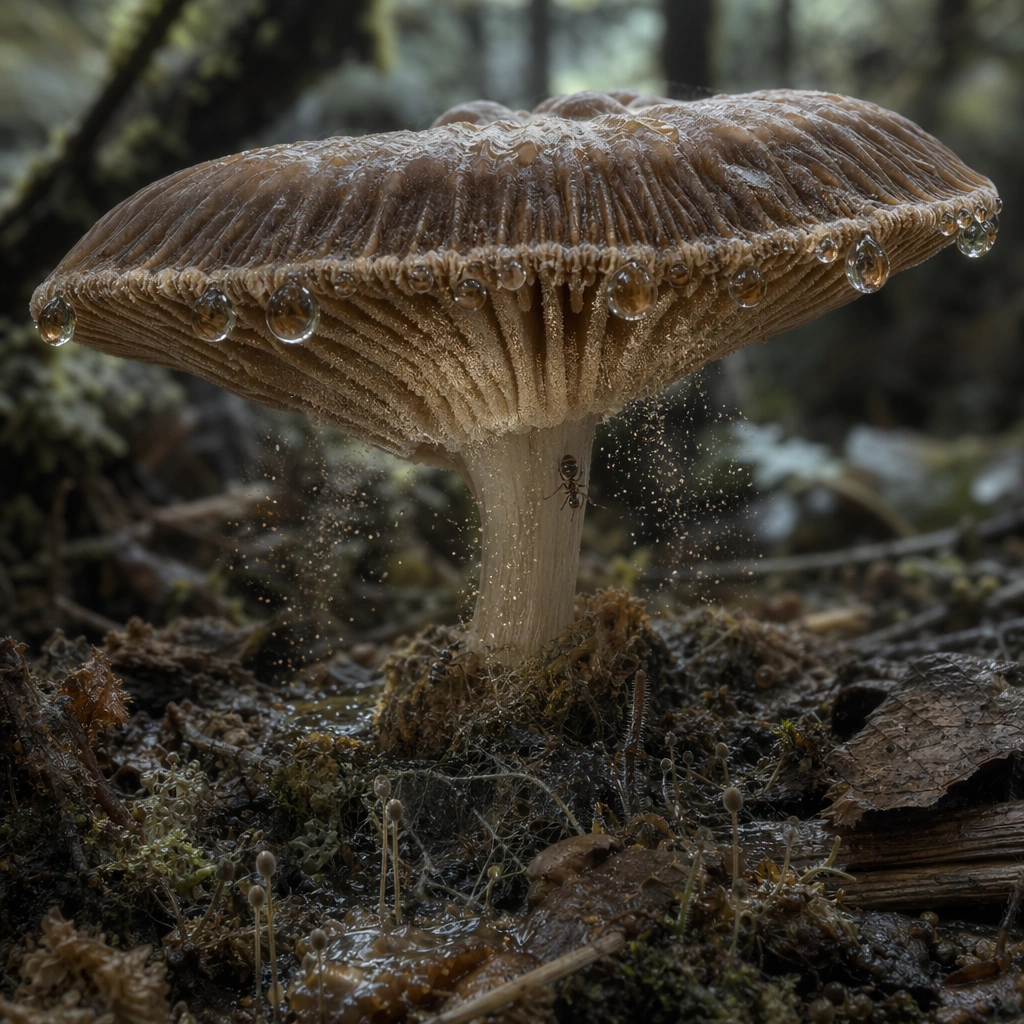
Scene: Build an intimate close study of one broad cap at dawn-like forest light, with large dew droplets hanging from its rim and reflecting the miniature world around it. The square crop should feel near enough to study individual gills, spore dust, and insect footprints. Build the frame as a square natural history study with disciplined composition, believable lighting, and enough environmental evidence to explain how this organism or system functions without any caption. Keep the image polished, observational, and suitable for a research gallery rather than pulp fantasy spectacle. Subject: Center on the cap and its spore-release mechanism: taut gill combs, moisture channels, and a slight tremor pattern that shakes loaded droplets loose to carry spores farther than dry release alone. Include one or two small insects responding to the moisture but do not let them dominate the frame. Show the anatomy, habitat interaction, and scale cues clearly so the viewer can infer locomotion, feeding, reproduction, or ecological role from the visual alone. Every visible structure should feel evolved for a purpose, with layered foreground, midground, and background information that rewards close inspection. Important details: Treat the forest floor as a dense biological city where moisture, decay, and spore traffic drive form. Caps, gills, stalks, hyphal mats, and insect partnerships should all look evolved to manage shade, humidity, nutrient exchange, and reproduction. The image should teach a function through form. Show where water collects, how tension is managed, and why the cap geometry supports that behavior. Surfaces must read as organic and perishable, with exquisite micro-texture rather than glossy product polish. Favor coherent biology over decorative excess: tissues, shells, membranes, spores, tendrils, fins, silica lattices, or atmospheric sacs should all follow one material logic. Preserve a convincing relationship between the environment and the body plan, use restrained color hierarchy, and make the image feel like a serious speculative field record rather than a random monster concept. Use case: Fungal Kingdom Microcosm single study 4/9. Constraints: No readable text, no watermark, no logos, preserve exact 1:1 aspect ratio, no flower petals, no gem-like crystals, no artificial symmetry, no oversized insects blocking the mechanism, no accidental brand resemblance, no direct copy of known terrestrial species, no cartoon simplification.

Example generated from “Fungal Kingdom Microcosm — Spore Farmer Nest”
GPT Image 2en

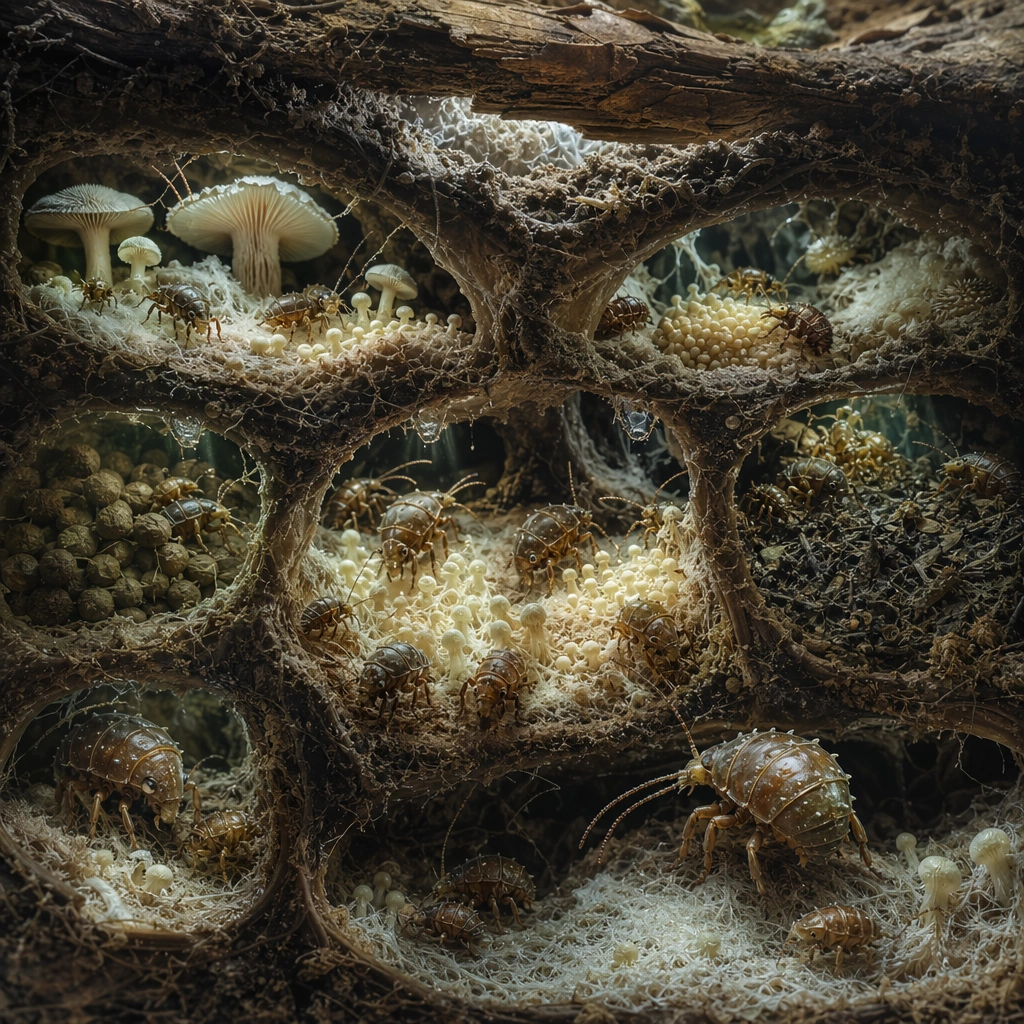
Scene: Cut into a hidden cavity beneath bark and leaf litter where a small colony of forest-floor arthropods farms fungi under controlled humidity. The square frame should feel like a discovered biological workshop lit by soft reflected glow from pale spore beds and filtered daylight leaking through cracks. Build the frame as a square natural history study with disciplined composition, believable lighting, and enough environmental evidence to explain how this organism or system functions without any caption. Keep the image polished, observational, and suitable for a research gallery rather than pulp fantasy spectacle. Subject: Show nursery combs of cultivated fungus, pellet storage, grooming behavior, and guarded pathways between brood chamber, refuse pile, and fresh substrate. The fungal strains should look deliberately selected by the animals for texture, nutrition, or spore timing. Show the anatomy, habitat interaction, and scale cues clearly so the viewer can infer locomotion, feeding, reproduction, or ecological role from the visual alone. Every visible structure should feel evolved for a purpose, with layered foreground, midground, and background information that rewards close inspection. Important details: Treat the forest floor as a dense biological city where moisture, decay, and spore traffic drive form. Caps, gills, stalks, hyphal mats, and insect partnerships should all look evolved to manage shade, humidity, nutrient exchange, and reproduction. Keep the nest believable and ecological, not anthropomorphic. Chamber walls should be packed soil and fiber, the insects should look specialized for grooming and transport, and the fungal crop should show multiple growth stages tied to colony behavior. Favor coherent biology over decorative excess: tissues, shells, membranes, spores, tendrils, fins, silica lattices, or atmospheric sacs should all follow one material logic. Preserve a convincing relationship between the environment and the body plan, use restrained color hierarchy, and make the image feel like a serious speculative field record rather than a random monster concept. Use case: Fungal Kingdom Microcosm single study 5/9. Constraints: No readable text, no watermark, no logos, preserve exact 1:1 aspect ratio, no human tools, no ant-farm plastic look, no cute cartoon colony faces, no readable symbols, no accidental brand resemblance, no direct copy of known terrestrial species, no cartoon simplification.

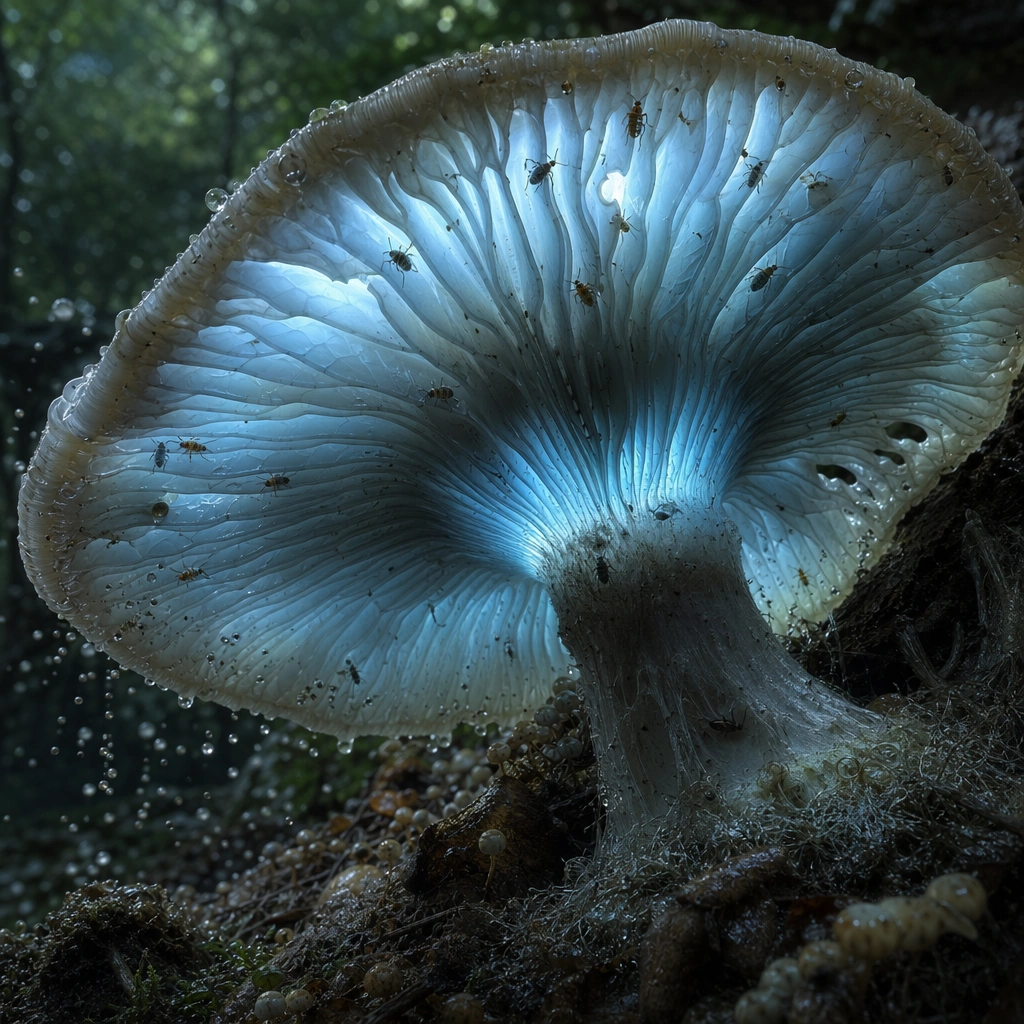
Example generated from “Fungal Kingdom Microcosm — Glow Gill Underside”
GPT Image 2en

Scene: Use an extreme low-angle macro view from directly beneath a luminous fungal cap, letting the gill structure fill most of the frame like a vaulted radial ceiling. The ambient forest should recede into blur while cool blue-white light from the cap reveals moisture and airborne spores. Build the frame as a square natural history study with disciplined composition, believable lighting, and enough environmental evidence to explain how this organism or system functions without any caption. Keep the image polished, observational, and suitable for a research gallery rather than pulp fantasy spectacle. Subject: Focus on the gill architecture, nutrient channels, and tiny feeding insects carefully navigating between rib lines. The cap should feel large and alive, with soft translucency at the edges and denser structural tissue near the stalk attachment point. Show the anatomy, habitat interaction, and scale cues clearly so the viewer can infer locomotion, feeding, reproduction, or ecological role from the visual alone. Every visible structure should feel evolved for a purpose, with layered foreground, midground, and background information that rewards close inspection. Important details: Treat the forest floor as a dense biological city where moisture, decay, and spore traffic drive form. Caps, gills, stalks, hyphal mats, and insect partnerships should all look evolved to manage shade, humidity, nutrient exchange, and reproduction. Prioritize believable fungal engineering: repeating rib geometry, spore loading density, and subtle damage from grazing should all be visible. Light must be emitted by tissue with internal depth, not by a generic glowing outline. Favor coherent biology over decorative excess: tissues, shells, membranes, spores, tendrils, fins, silica lattices, or atmospheric sacs should all follow one material logic. Preserve a convincing relationship between the environment and the body plan, use restrained color hierarchy, and make the image feel like a serious speculative field record rather than a random monster concept. Use case: Fungal Kingdom Microcosm single study 6/9. Constraints: No readable text, no watermark, no logos, preserve exact 1:1 aspect ratio, no abstract kaleidoscope look, no perfect radial symmetry, no LED-like glow strips, no harsh flash photography, no accidental brand resemblance, no direct copy of known terrestrial species, no cartoon simplification.

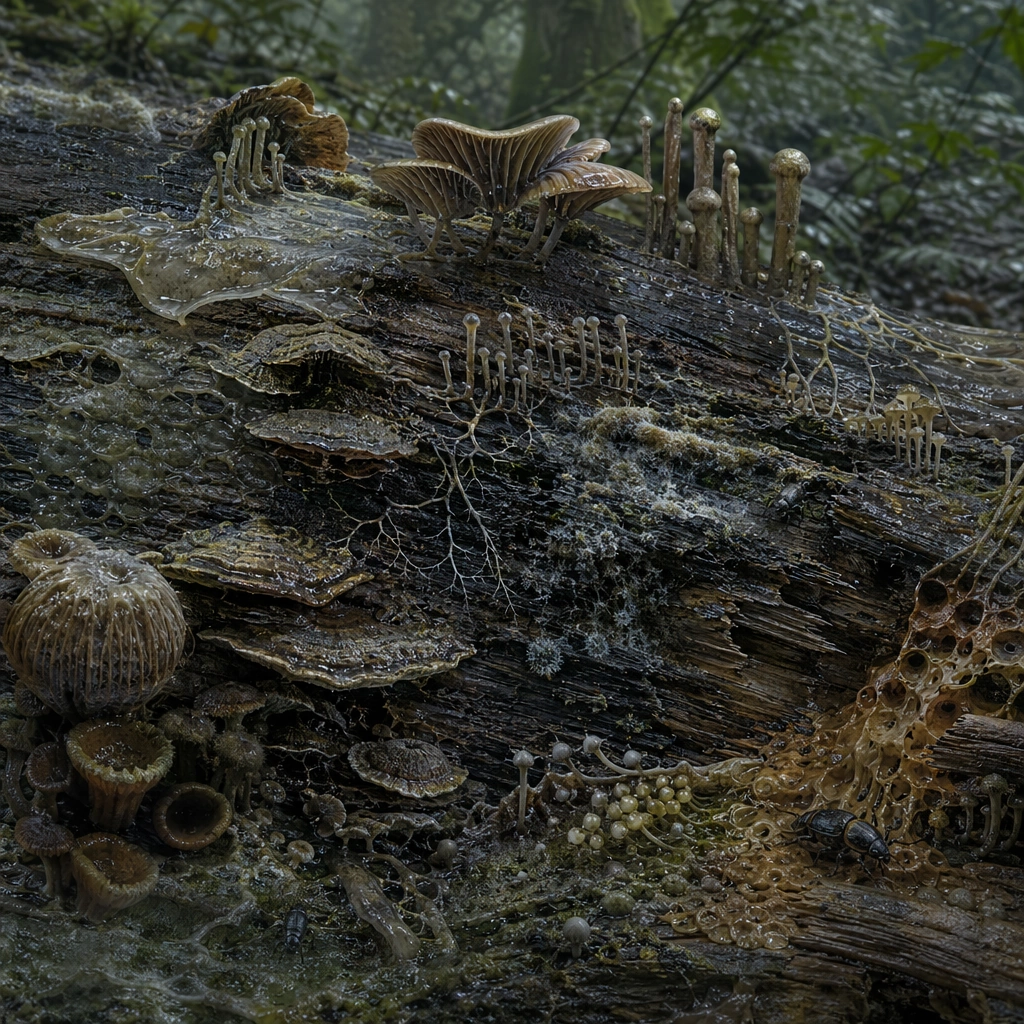
Example generated from “Fungal Kingdom Microcosm — Rot Log Crownscape”
GPT Image 2en

Scene: Set the scene on top of a decaying log whose surface reads like a mountain ridge at insect scale. Across the square frame, layered shelf fungi, stalk towers, slime films, and spore plumes should build a crownscape under cool forest shade and beads of recent rain. Build the frame as a square natural history study with disciplined composition, believable lighting, and enough environmental evidence to explain how this organism or system functions without any caption. Keep the image polished, observational, and suitable for a research gallery rather than pulp fantasy spectacle. Subject: Show succession on rot: pioneer fuzzes, mature fruiting bodies, and late-stage recyclers all sharing the same substrate. A few beetle-like decomposers should tunnel or graze at the margins, making the log feel inhabited and dynamic. Show the anatomy, habitat interaction, and scale cues clearly so the viewer can infer locomotion, feeding, reproduction, or ecological role from the visual alone. Every visible structure should feel evolved for a purpose, with layered foreground, midground, and background information that rewards close inspection. Important details: Treat the forest floor as a dense biological city where moisture, decay, and spore traffic drive form. Caps, gills, stalks, hyphal mats, and insect partnerships should all look evolved to manage shade, humidity, nutrient exchange, and reproduction. Wood grain, rot softness, and fungal colonization patterns must feel chemically and mechanically linked. Keep colors earthy with occasional restrained luminescent accents, and make the image read as a living decomposition engine rather than a fantasy mushroom garden. Favor coherent biology over decorative excess: tissues, shells, membranes, spores, tendrils, fins, silica lattices, or atmospheric sacs should all follow one material logic. Preserve a convincing relationship between the environment and the body plan, use restrained color hierarchy, and make the image feel like a serious speculative field record rather than a random monster concept. Use case: Fungal Kingdom Microcosm single study 7/9. Constraints: No readable text, no watermark, no logos, preserve exact 1:1 aspect ratio, no fairy circle tropes, no bright candy colors, no polished wood furniture look, no decorative sparkles, no accidental brand resemblance, no direct copy of known terrestrial species, no cartoon simplification.

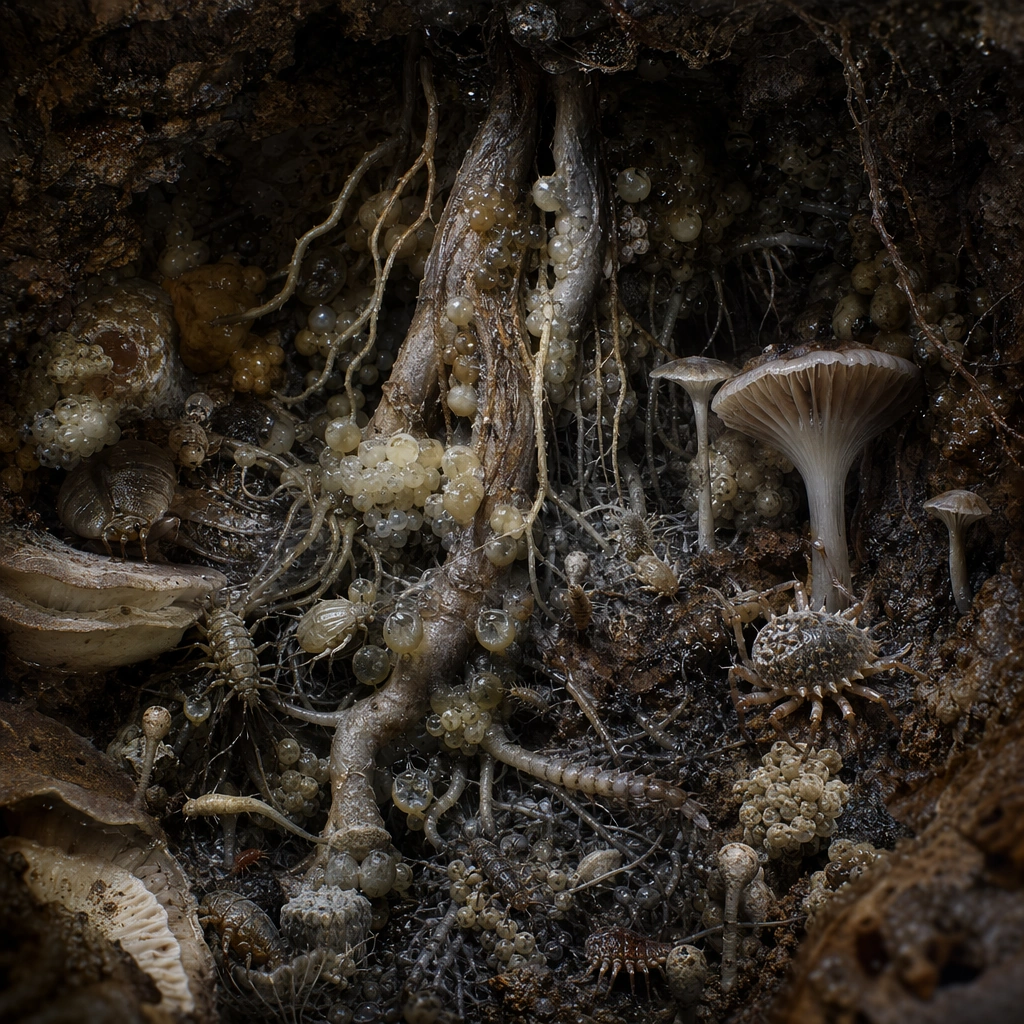
Example generated from “Fungal Kingdom Microcosm — Root Vault Symbiosis”
GPT Image 2en

Scene: Create a partially exposed under-litter vault where plant roots descend into a fungal chamber packed with moisture and nutrient exchange nodules. The square composition should balance earthy darkness with pale biotic surfaces and a few warm hints of decomposing organic matter. Build the frame as a square natural history study with disciplined composition, believable lighting, and enough environmental evidence to explain how this organism or system functions without any caption. Keep the image polished, observational, and suitable for a research gallery rather than pulp fantasy spectacle. Subject: Feature intertwined roots, sheath fungi, nutrient bulbs, and microfauna threading through the spaces between them. The interaction should feel mutualistic and competitive at once, with some structures clearly benefiting both partners while others look parasitic or contested. Show the anatomy, habitat interaction, and scale cues clearly so the viewer can infer locomotion, feeding, reproduction, or ecological role from the visual alone. Every visible structure should feel evolved for a purpose, with layered foreground, midground, and background information that rewards close inspection. Important details: Treat the forest floor as a dense biological city where moisture, decay, and spore traffic drive form. Caps, gills, stalks, hyphal mats, and insect partnerships should all look evolved to manage shade, humidity, nutrient exchange, and reproduction. Use material contrast to tell the story: fibrous roots, velvety fungal skins, gelatinous junctions, and mineral-stained soil. Everything should feel below ground, humid, and slightly pressurized by surrounding earth, not like an open cave display. Favor coherent biology over decorative excess: tissues, shells, membranes, spores, tendrils, fins, silica lattices, or atmospheric sacs should all follow one material logic. Preserve a convincing relationship between the environment and the body plan, use restrained color hierarchy, and make the image feel like a serious speculative field record rather than a random monster concept. Use case: Fungal Kingdom Microcosm single study 8/9. Constraints: No readable text, no watermark, no logos, preserve exact 1:1 aspect ratio, no clean botanical textbook cross section, no synthetic tubes, no gemstone cave aesthetics, no glowing fantasy roots, no accidental brand resemblance, no direct copy of known terrestrial species, no cartoon simplification.

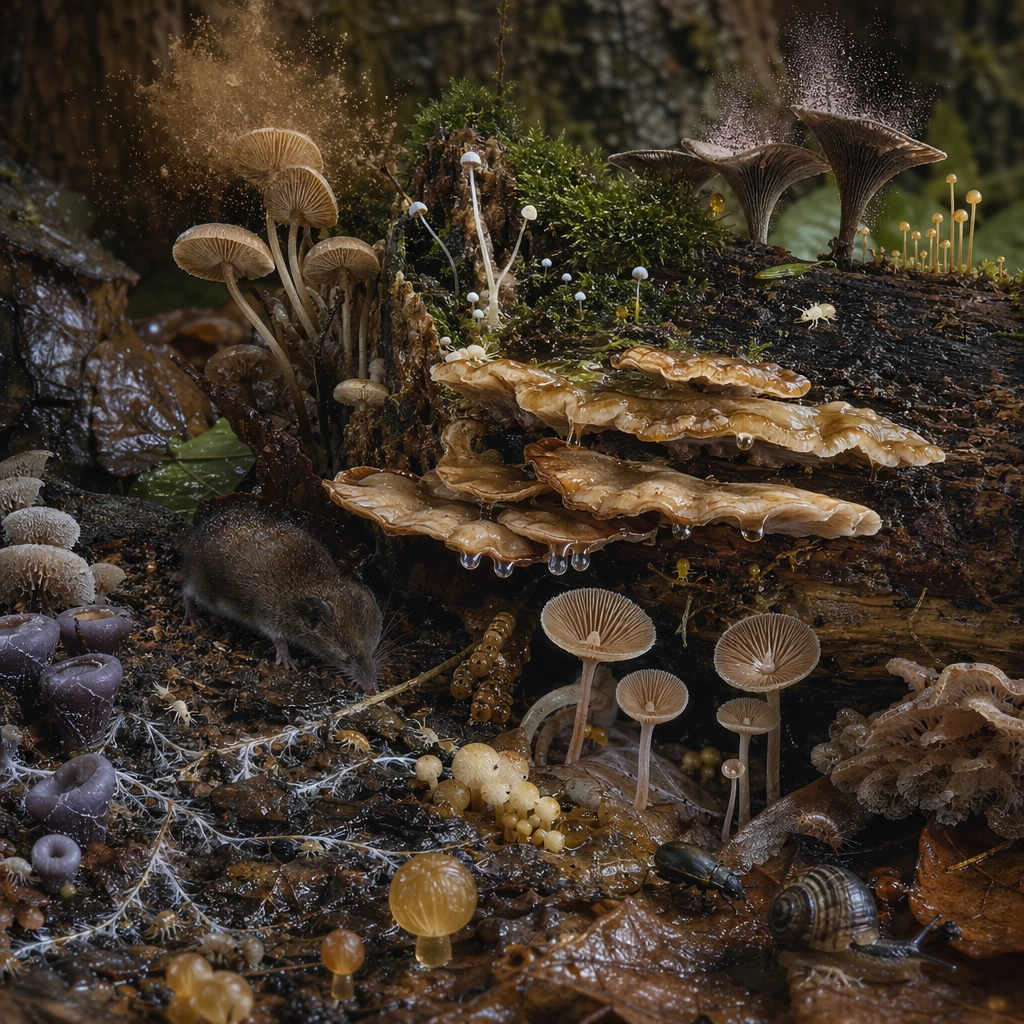
Example generated from “Fungal Kingdom Microcosm — Field Guide Overview”
GPT Image 2en

Scene: Compose a finished field-guide overview of the forest-floor biome, keeping the environment continuous rather than flattening it into icons. The square frame should feel like one exceptionally rich patch of habitat containing representative cap forms, shelf forms, mycelial roads, and spore activity. Build the frame as a square natural history study with disciplined composition, believable lighting, and enough environmental evidence to explain how this organism or system functions without any caption. Keep the image polished, observational, and suitable for a research gallery rather than pulp fantasy spectacle. Subject: Arrange multiple fungal species so the viewer can compare height, texture, and ecological role at a glance. Include a few tiny animals for scale and interaction, but let the fungi remain the undisputed protagonists of the scene. Show the anatomy, habitat interaction, and scale cues clearly so the viewer can infer locomotion, feeding, reproduction, or ecological role from the visual alone. Every visible structure should feel evolved for a purpose, with layered foreground, midground, and background information that rewards close inspection. Important details: Treat the forest floor as a dense biological city where moisture, decay, and spore traffic drive form. Caps, gills, stalks, hyphal mats, and insect partnerships should all look evolved to manage shade, humidity, nutrient exchange, and reproduction. This synthesis image should be clear, richly textured, and ecologically coherent. Maintain believable moisture gradients, decomposition stages, and spore pathways so the microcosm reads as a functioning system rather than a random collection of pretty mushrooms. Favor coherent biology over decorative excess: tissues, shells, membranes, spores, tendrils, fins, silica lattices, or atmospheric sacs should all follow one material logic. Preserve a convincing relationship between the environment and the body plan, use restrained color hierarchy, and make the image feel like a serious speculative field record rather than a random monster concept. Use case: Fungal Kingdom Microcosm single study 9/9. Constraints: No readable text, no watermark, no logos, preserve exact 1:1 aspect ratio, no specimen cutout collage, no flat poster background, no text labels, no fantasy castle silhouettes, no accidental brand resemblance, no direct copy of known terrestrial species, no cartoon simplification.

Example generated from “Future City Layered Transport World — Transit Stack Anchor”
GPT Image 2en

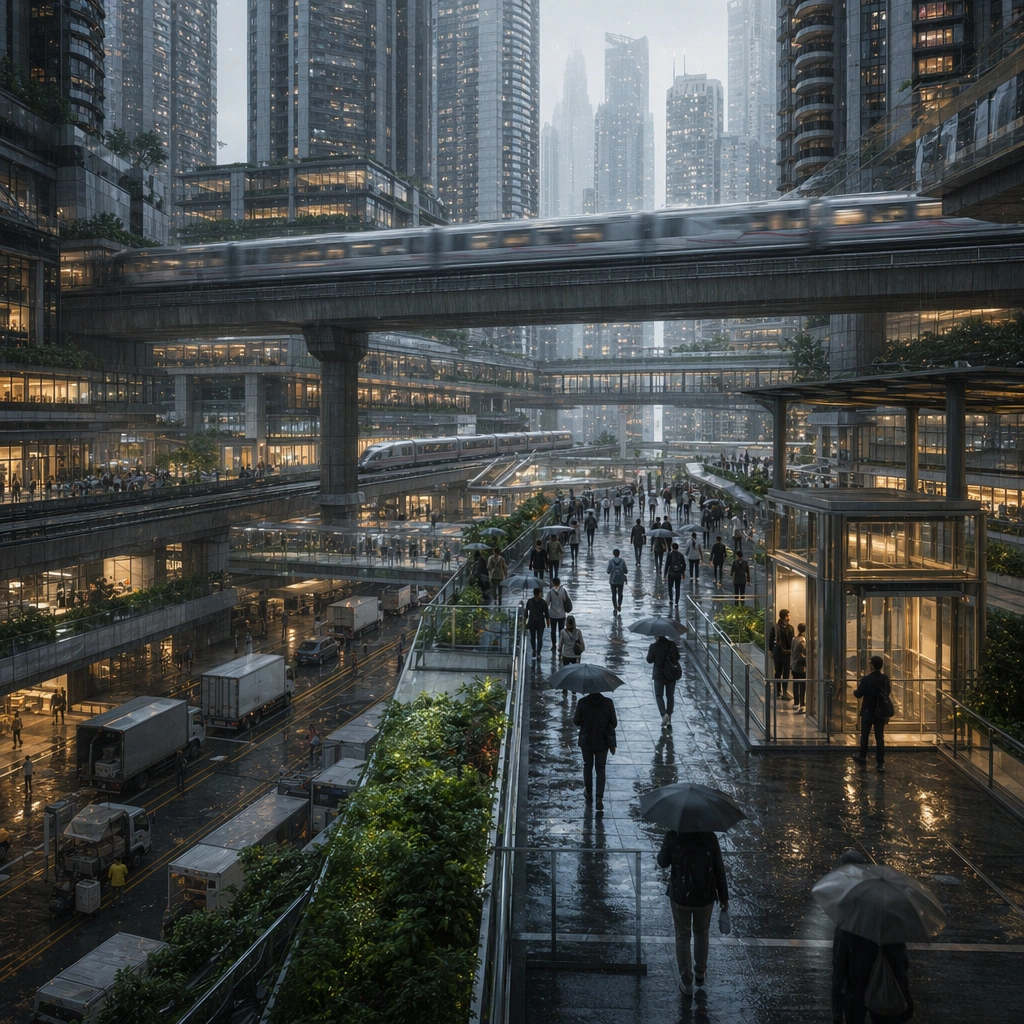
Scene: Create a square future-city key visual where transport layers, housing density, and skyline depth are all legible in one controlled composition. The camera should sit at mid-to-high elevation so the viewer can read arterial rails, pedestrian decks, service lanes, and the inhabited mass of the city at once. Favor rainy or hazy atmospheric perspective that enhances depth without hiding structural logic. Frame several transport levels at once: a fast rail cutting across mid-frame, pedestrian decks below, and dense housing towers rising behind in damp morning light. Subject: Center the image on a dense but coherent urban stack: rail viaducts, skybridges, delivery lanes, tower podiums, residential blocks, and public circulation surfaces all working together. The city should feel designed around movement, commerce, and real occupancy rather than as a pile of disconnected towers. Establish the reference city language with one primary transit viaduct, one secondary skywalk web, mixed residential density, and compact commercial podiums. Important details: Hierarchy is critical. Distinguish fast transit, local walking, freight access, and private shelter zones through lighting, material changes, and depth organization. Use disciplined steel, concrete, glass, and muted light accents so the city feels like a credible urban product surface rather than generic cyberpunk spectacle. The first image must lock the proportions between transit infrastructure and housing mass so later variants can preserve the same urban DNA. Resolve the anchor rules that later reference-dependent variants must inherit, especially the stacked transit decks, bridge proportions, mixed residential density, and cool rain-surface lighting. Use case: Future City series study 1/4, designed as a reusable core-system image for this topic. Constraints: No readable text, no watermark, no logos, preserve exact 1:1 aspect ratio, no empty streets, no retro cars, no generic neon gibberish billboards, no impossible lane geometry, no giant hologram clutter.
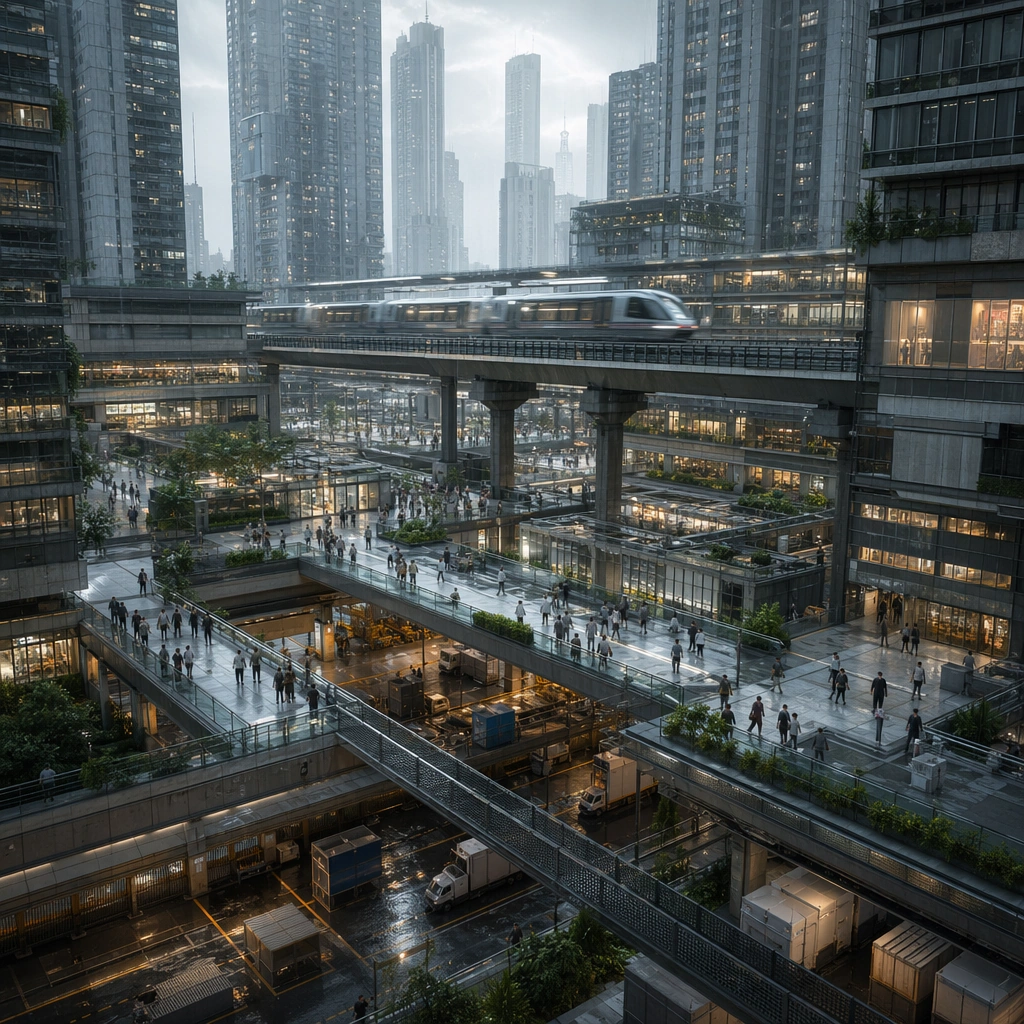
Example generated from “Future City Layered Transport World — Rain Commuter Deck”
GPT Image 2en

Scene: Create a square future-city key visual where transport layers, housing density, and skyline depth are all legible in one controlled composition. The camera should sit at mid-to-high elevation so the viewer can read arterial rails, pedestrian decks, service lanes, and the inhabited mass of the city at once. Favor rainy or hazy atmospheric perspective that enhances depth without hiding structural logic. Move closer to a rain-slick commuter deck with layered trains and sheltered walkways crossing beneath the same tower cluster from the reference. Subject: Center the image on a dense but coherent urban stack: rail viaducts, skybridges, delivery lanes, tower podiums, residential blocks, and public circulation surfaces all working together. The city should feel designed around movement, commerce, and real occupancy rather than as a pile of disconnected towers. Show umbrellas, transit queues, elevator cores, and illuminated transfer points while preserving the reference bridge spans, residential density, and platform language. Important details: Hierarchy is critical. Distinguish fast transit, local walking, freight access, and private shelter zones through lighting, material changes, and depth organization. Use disciplined steel, concrete, glass, and muted light accents so the city feels like a credible urban product surface rather than generic cyberpunk spectacle. Use rain reflections and soft mist to deepen atmosphere, but keep traffic logic and urban structure clearer than mood alone. Preserve the exact structural language established by the reference image, especially the stacked transit decks, bridge proportions, mixed residential density, and cool rain-surface lighting. Use case: Future City series study 2/4, designed as a reusable core-system image for this topic. Constraints: No readable text, no watermark, no logos, preserve exact 1:1 aspect ratio, no empty streets, no retro cars, no generic neon gibberish billboards, no impossible lane geometry, no traffic jam chaos, no private flying car swarm.

Example generated from “Future City Layered Transport World — Market Transfer Stack”
GPT Image 2en

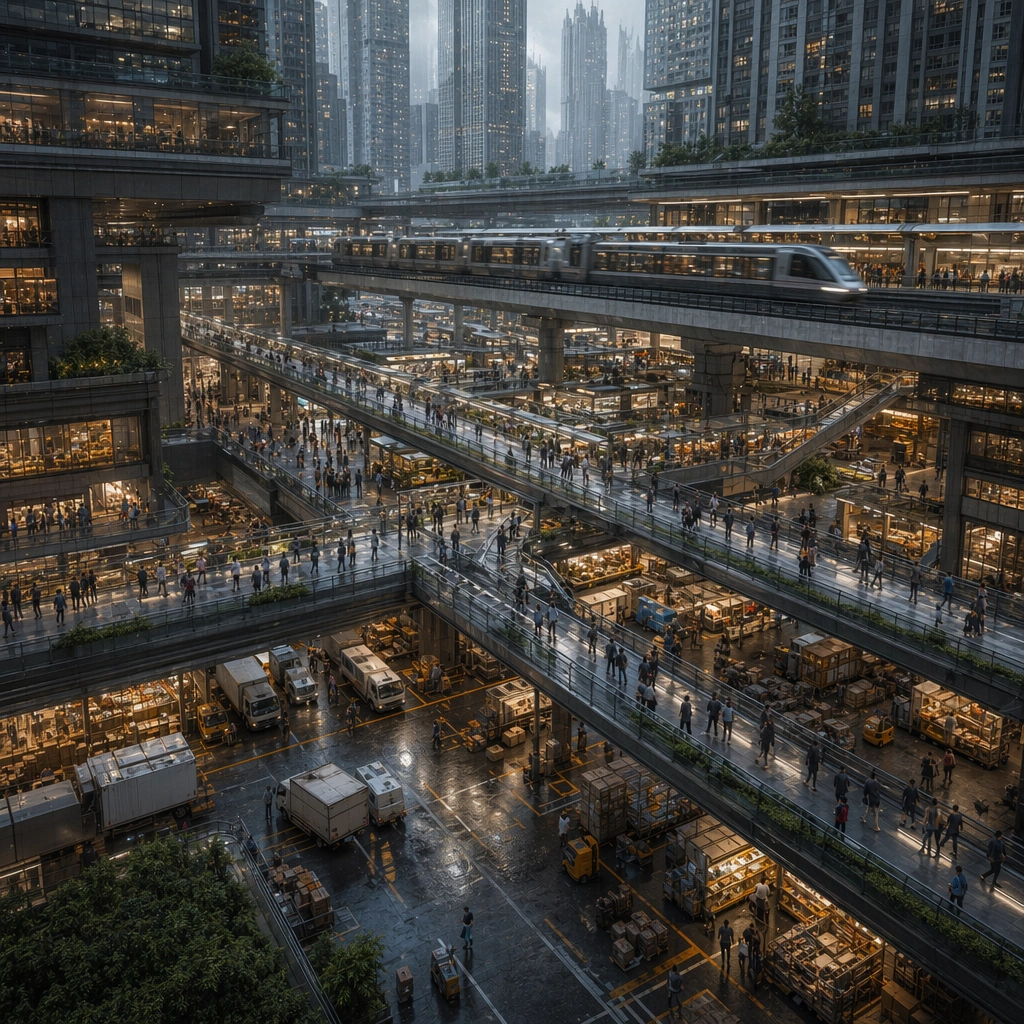
Scene: Create a square future-city key visual where transport layers, housing density, and skyline depth are all legible in one controlled composition. The camera should sit at mid-to-high elevation so the viewer can read arterial rails, pedestrian decks, service lanes, and the inhabited mass of the city at once. Favor rainy or hazy atmospheric perspective that enhances depth without hiding structural logic. Stage the same city family around a busy transfer market where escalated walkways, food kiosks, and rail platforms overlap in an orderly vertical knot. Subject: Center the image on a dense but coherent urban stack: rail viaducts, skybridges, delivery lanes, tower podiums, residential blocks, and public circulation surfaces all working together. The city should feel designed around movement, commerce, and real occupancy rather than as a pile of disconnected towers. The same transit skeleton must remain recognizable while the emphasis shifts toward mixed-use commerce, platform interfaces, and short-distance circulation. Important details: Hierarchy is critical. Distinguish fast transit, local walking, freight access, and private shelter zones through lighting, material changes, and depth organization. Use disciplined steel, concrete, glass, and muted light accents so the city feels like a credible urban product surface rather than generic cyberpunk spectacle. Crowd energy should feel dense but organized, using repeated canopies, rails, and platform lighting to clarify hierarchy rather than create noise. Preserve the exact structural language established by the reference image, especially the stacked transit decks, bridge proportions, mixed residential density, and cool rain-surface lighting. Use case: Future City series study 3/4, designed as a reusable core-system image for this topic. Constraints: No readable text, no watermark, no logos, preserve exact 1:1 aspect ratio, no empty streets, no retro cars, no generic neon gibberish billboards, no impossible lane geometry, no carnival styling, no giant ad billboards.

Example generated from “Future City Layered Transport World — Night Emergency Lane”
GPT Image 2en

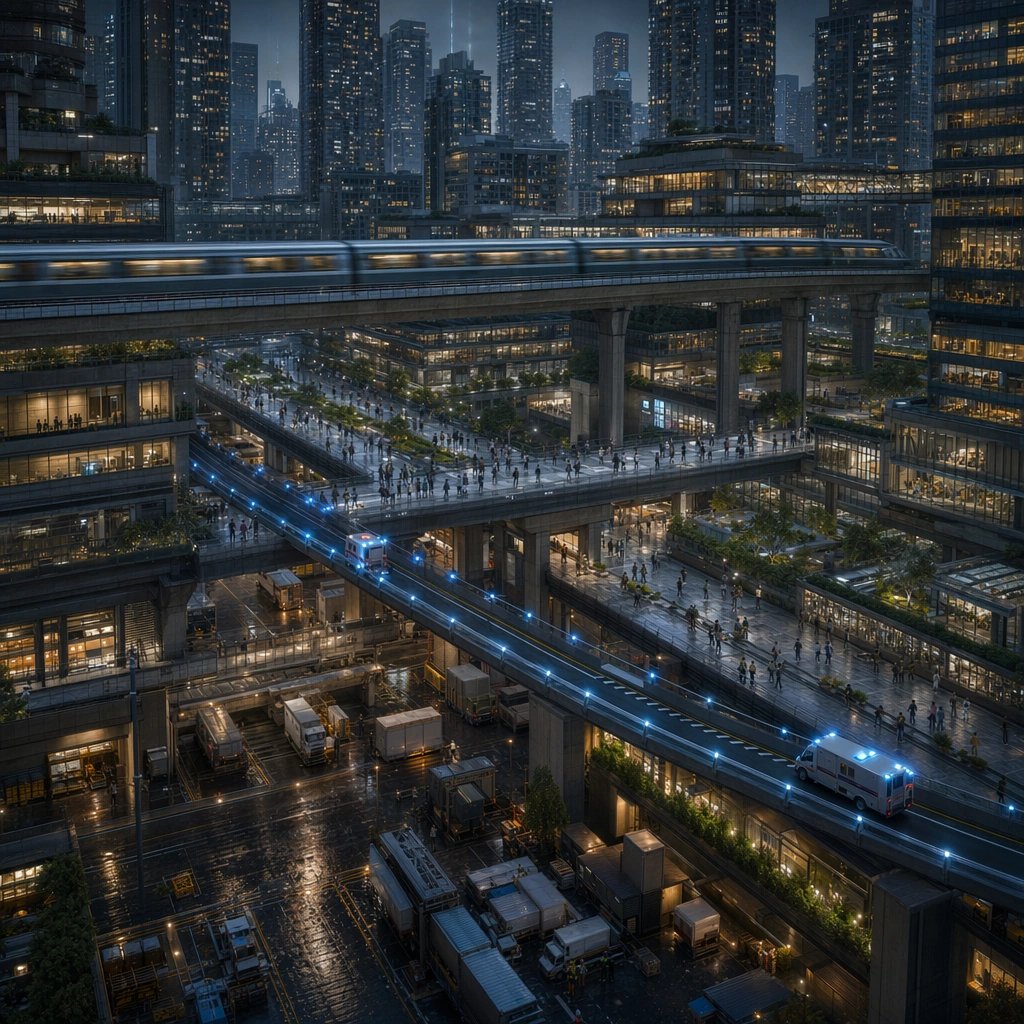
Scene: Create a square future-city key visual where transport layers, housing density, and skyline depth are all legible in one controlled composition. The camera should sit at mid-to-high elevation so the viewer can read arterial rails, pedestrian decks, service lanes, and the inhabited mass of the city at once. Favor rainy or hazy atmospheric perspective that enhances depth without hiding structural logic. Render the district at night after rain with one elevated emergency lane lit sharply as it threads through the same transport stack and tower base network. Subject: Center the image on a dense but coherent urban stack: rail viaducts, skybridges, delivery lanes, tower podiums, residential blocks, and public circulation surfaces all working together. The city should feel designed around movement, commerce, and real occupancy rather than as a pile of disconnected towers. Keep the anchor skyline and transit deck geometry intact while highlighting emergency routing, service bays, and safe public circulation under stress. Important details: Hierarchy is critical. Distinguish fast transit, local walking, freight access, and private shelter zones through lighting, material changes, and depth organization. Use disciplined steel, concrete, glass, and muted light accents so the city feels like a credible urban product surface rather than generic cyberpunk spectacle. This should feel resilient and civic, not apocalyptic, using selective blue-white lighting and disciplined wet-surface reflections to reveal infrastructure logic. Preserve the exact structural language established by the reference image, especially the stacked transit decks, bridge proportions, mixed residential density, and cool rain-surface lighting. Use case: Future City series study 4/4, designed as a reusable core-system image for this topic. Constraints: No readable text, no watermark, no logos, preserve exact 1:1 aspect ratio, no empty streets, no retro cars, no generic neon gibberish billboards, no impossible lane geometry, no riots, no fireballs, no collapse imagery.

Example generated from “Future City Layered Transport World — Waterfront Ferry Tower”
GPT Image 2en

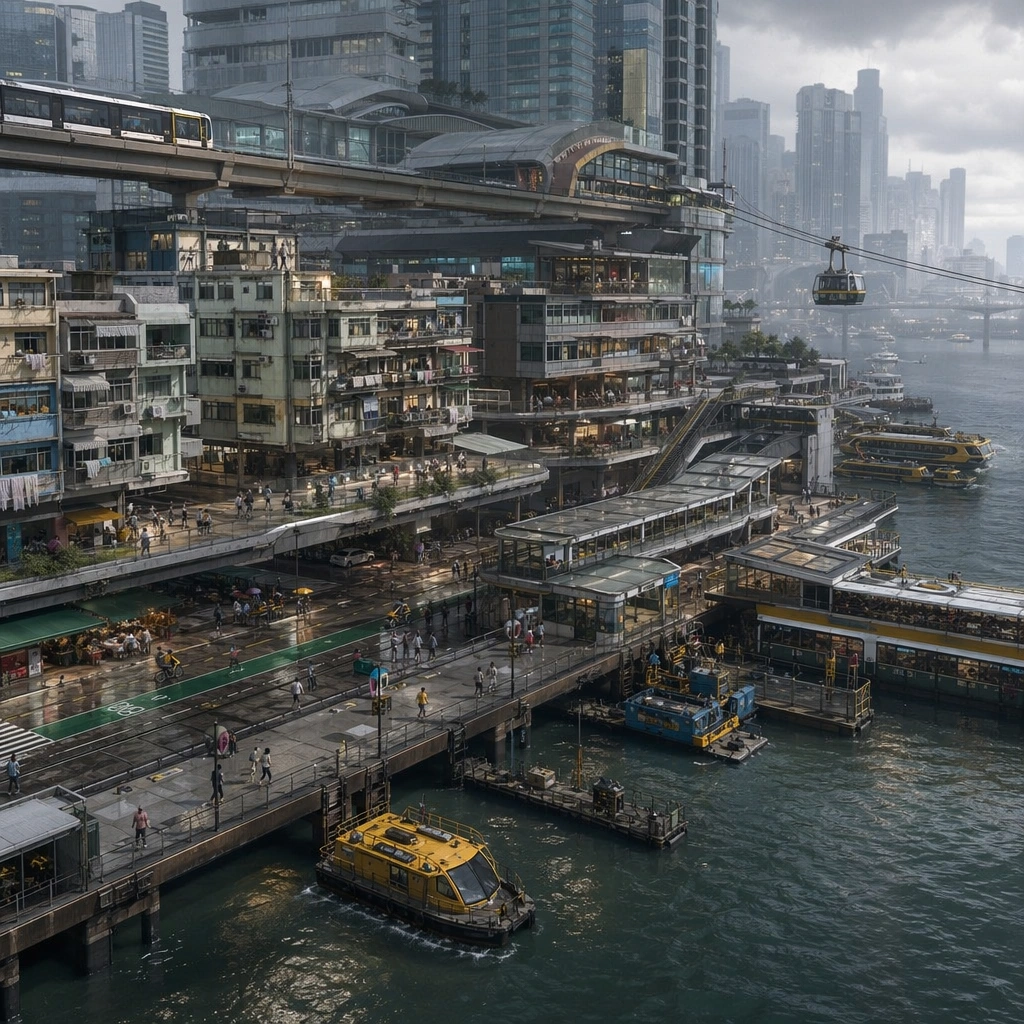
Scene: Design a square urban concept image that sells one future-city mobility idea clearly enough for an editorial spread, launch visual, or worldbuilding board. The framing should always reveal at least two transport layers and one strong lived-in density cue. Compose a square view over a humid waterfront with ferry piers below, tower bases above, and an aerial mobility line crossing the harbor edge. Subject: Show a complete district-scale mobility ecosystem with believable housing, transit, commerce, and utility access. Human presence can appear as tiny commuters, riders, or maintenance workers, but the main protagonist is the city system itself. Focus on intermodal exchange between water, land, and elevated movement while keeping residential life visibly integrated into the same district. Important details: Use depth layering, disciplined architecture families, and just enough weather or atmosphere to create mood without erasing the logic of roads, bridges, lines, and occupancy. The result should feel specific to a place and function, not like an all-purpose neon metropolis. Let humidity, reflective water, and dense shoreline infrastructure create atmosphere without turning the scene into a luxury postcard. Preserve credible circulation between transport levels so every district reads as somewhere people could actually move through and inhabit. Use case: Future City single study 2/5, designed as a self-contained support image for this topic. Constraints: No readable text, no watermark, no logos, preserve exact 1:1 aspect ratio, no superhero chase scenes, no floating random platforms without support, no unreadable giant signage, no sterile empty plazas, no cruise-ship tourism fantasy.