원본 문서
GPT Image 2 · en
Scene:
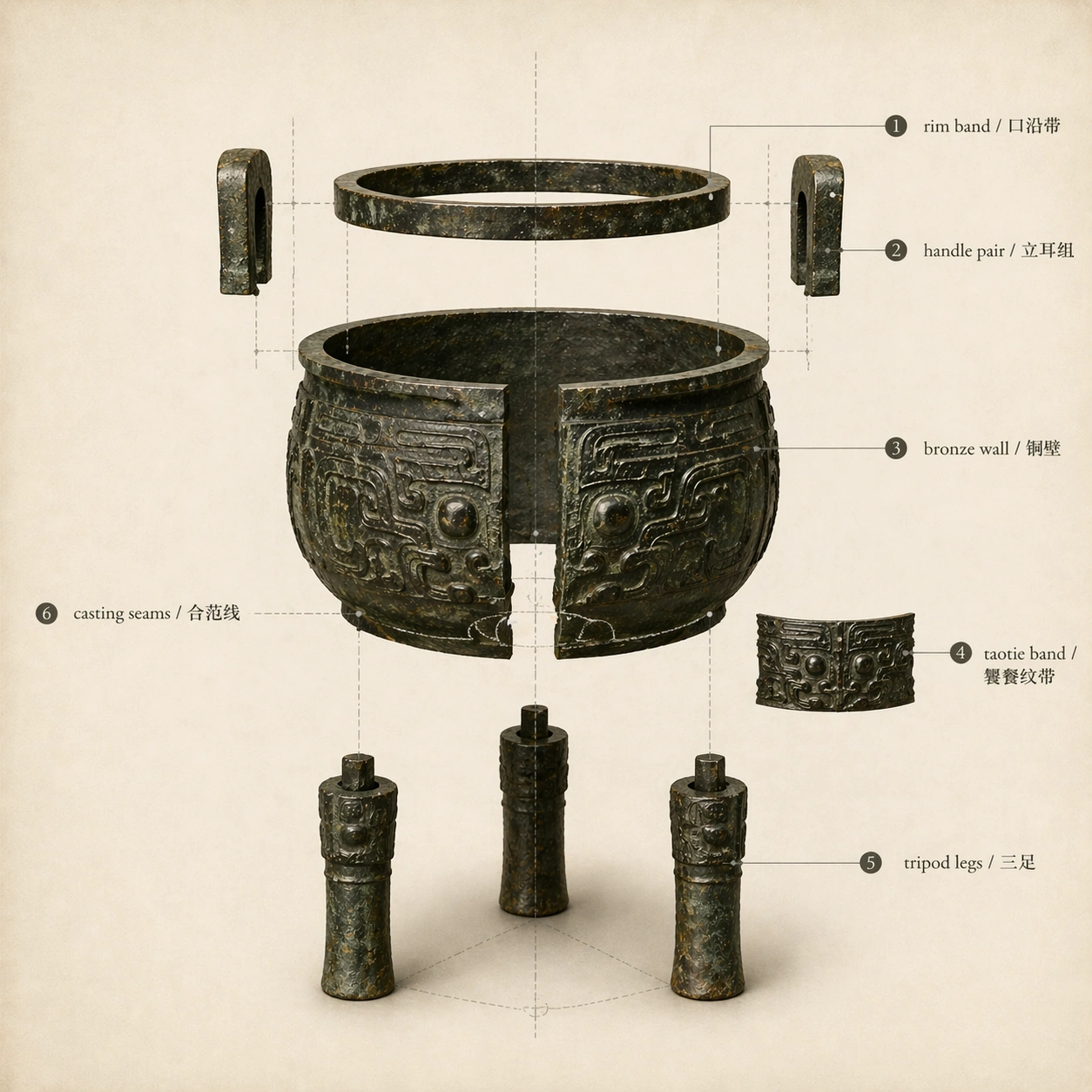
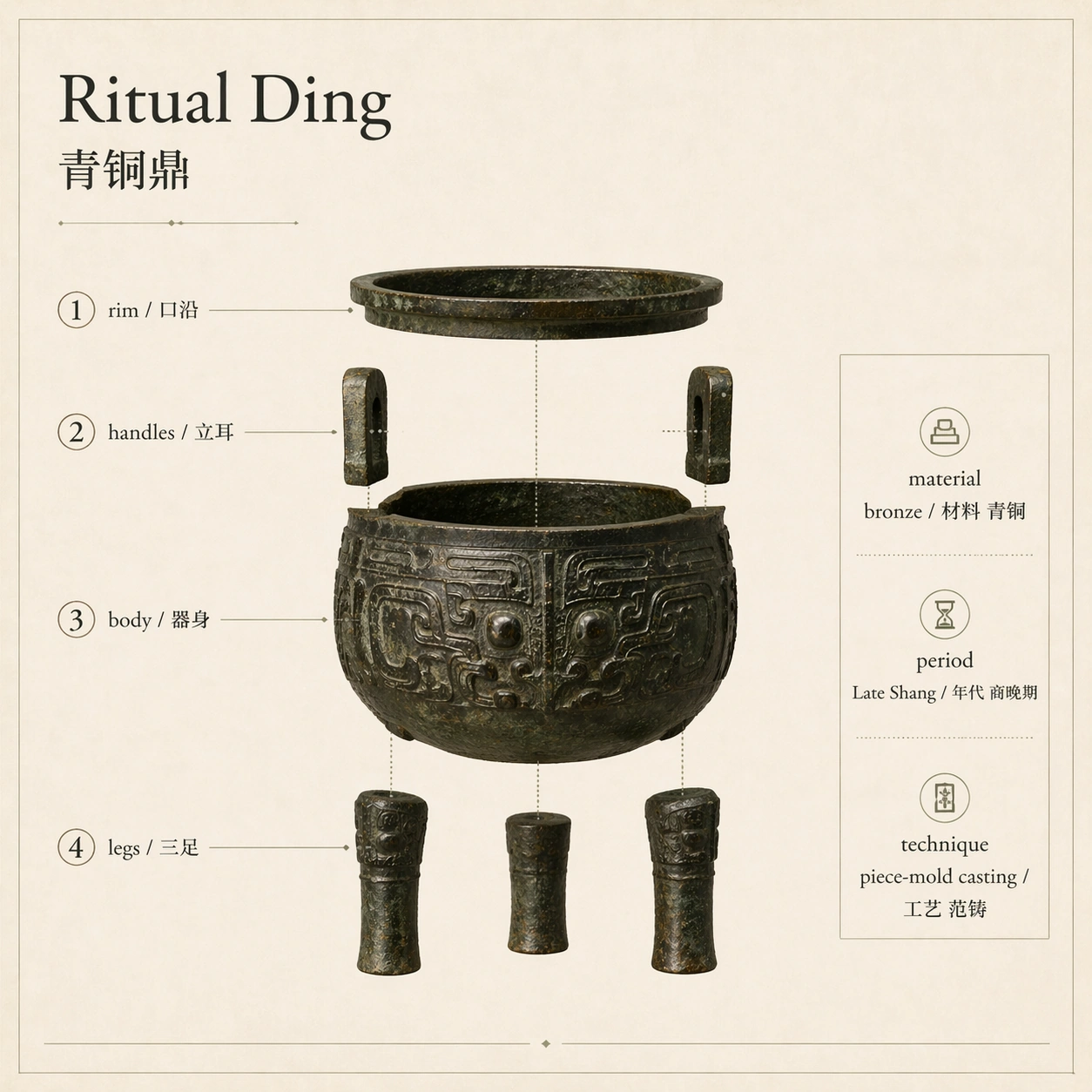
Use the reference bronze ding as the source and produce a finished square museum exhibition plate that combines exploded object, conservation notes, and bilingual captions. The layout is precise and calm: object diagram in the center, numbered callout column on the left, material and period panel on the right, and a thin ruled footer. Use warm ivory paper, graphite lines, muted bronze greens, and museum-quality typography.

Subject:
Show the same bronze ding in a compact exploded presentation with numbered callouts. Include only these readable bilingual labels: 1 rim / 口沿, 2 handles / 立耳, 3 body / 器身, 4 legs / 三足, material bronze / 材料 青铜, period Late Shang / 年代 商晚期, technique piece-mold casting / 工艺 范铸. The layout should make the object, labels, and information panels feel like one finished gallery interpretive graphic.

Important details:
This image tests complex multi-region composition. Keep numbered markers near the correct parts, preserve the artifact silhouette from image 01, and make the text hierarchy clear: object name largest, callouts medium, material panel smaller but readable. Avoid visual competition between labels and ornament. The diagram must look professionally typeset, not like scattered annotations.

Use case:
Museum Exploded View series study 4/8, creating a bilingual museum plate from the reference artifact and exploded-view logic.

Constraints:
No readable text except the specified bilingual labels, no watermark, no logos, preserve exact 1:1 aspect ratio, no fake accession number, no extra paragraphs, no incorrect numbering, no garbled Chinese, no crowded callout collisions.
사용 방법
- 매개변수를 포함한 전체 원본 프롬프트를 복사하세요.
- 주제, 문구, 구도를 자신의 요구에 맞게 바꾸세요.
- 호환되는 외부 도구에서 사용하고 이용 조건과 결과를 확인하세요.
시작 전 확인
- 참조 이미지가 필요한지 확인하세요. 호환 표시는 해당 모델로 이 예시를 생성했다는 뜻이 아닙니다.
- 이름, 수치, 이미지 속 문구를 확인하세요. 모델 버전에 따라 결과가 다를 수 있습니다.