Oryginalny dokument
GPT Image 2 · en
Scene:
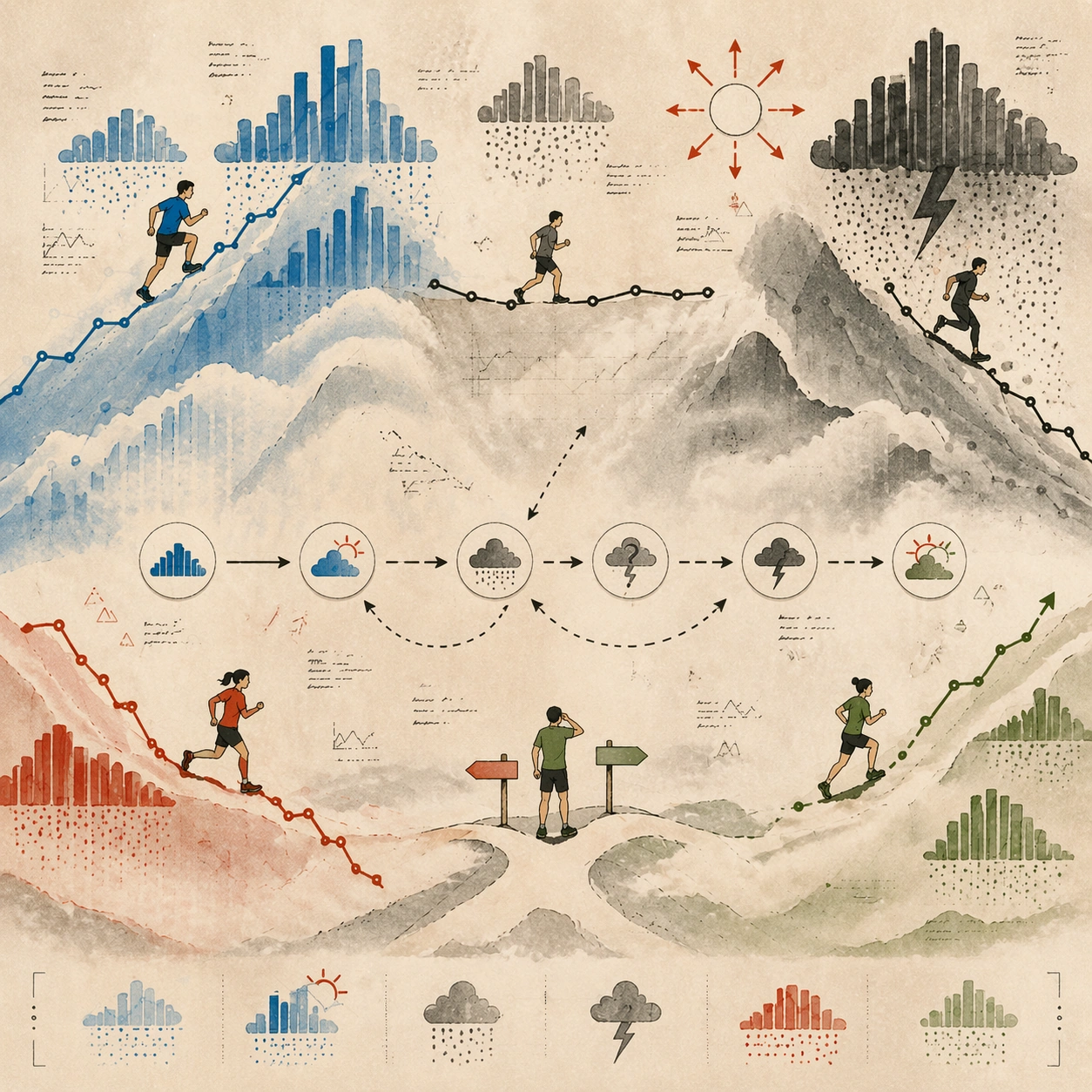
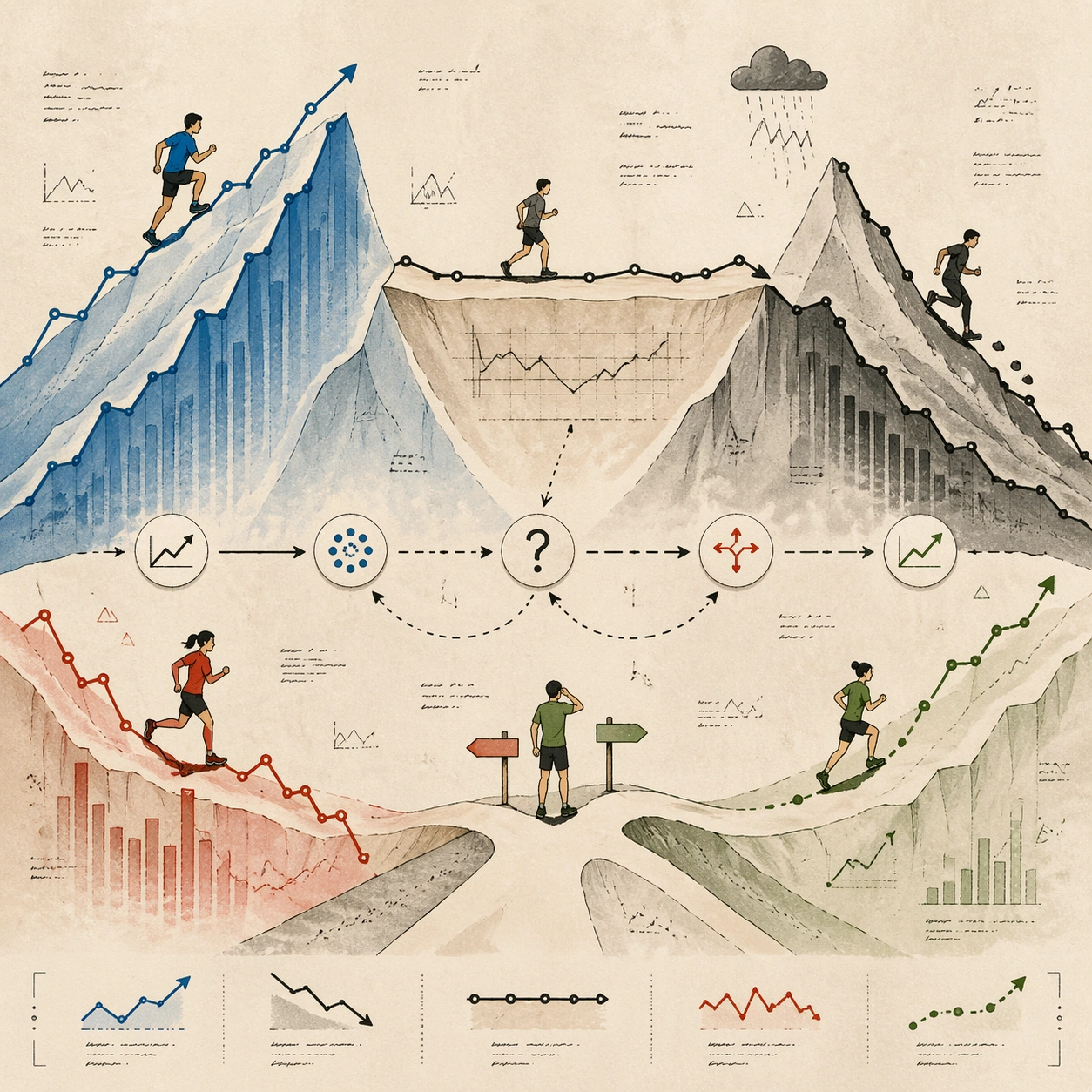
A square editorial illustration in a refined magazine style, viewed straight-on like a finished art board. The scene is a stylized mountain range made from layered trend lines, small chart paths, and paper-cut ridges. The background is warm off-white newsprint with subtle ink grain, quiet margins, and a few tiny non-readable hand-drawn annotation marks.

Subject:
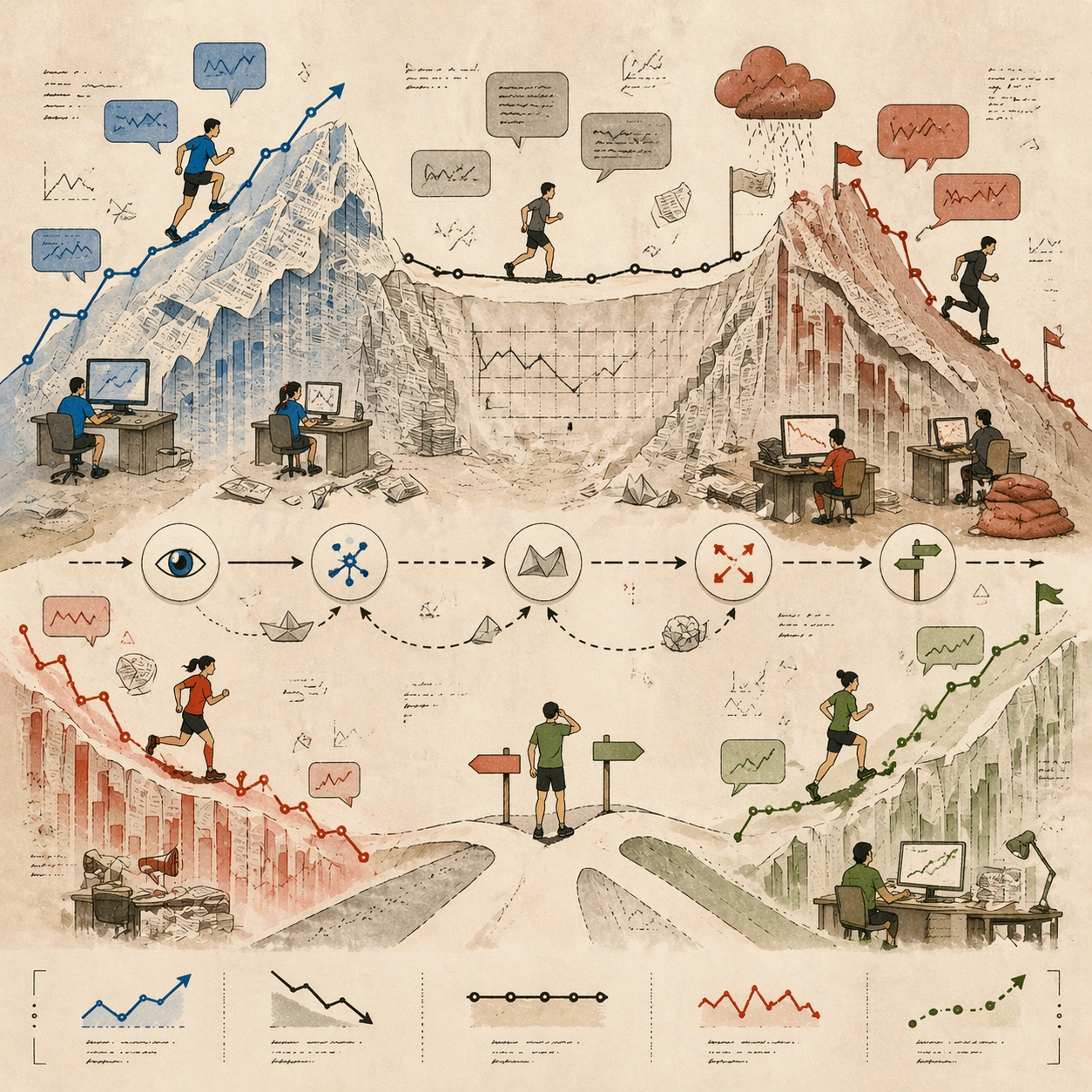
Five small runner characters move across the trend mountains, each representing a different abstract market signal rather than a real company. One runner climbs a steep blue ridge, one slides down a graphite slope, one crosses a flat plateau, one pauses at a fork, and one follows a dotted forecast trail. A central reasoning path connects the runners through cause, uncertainty, and outcome using arrows, dashed lines, and simple icons.

Important details:
Structured visual reasoning, clear editorial hierarchy, New Yorker-inspired hand-drawn sophistication without copying a specific artist, muted blue, graphite, tomato red, moss green, and cream palette. The image must feel like an intelligent data essay: chart structure, characters, annotations, and visual metaphors are all legible as a system. Use tiny pseudo-writing only; no readable real stock names, numbers, dates, or claims.

Use case:
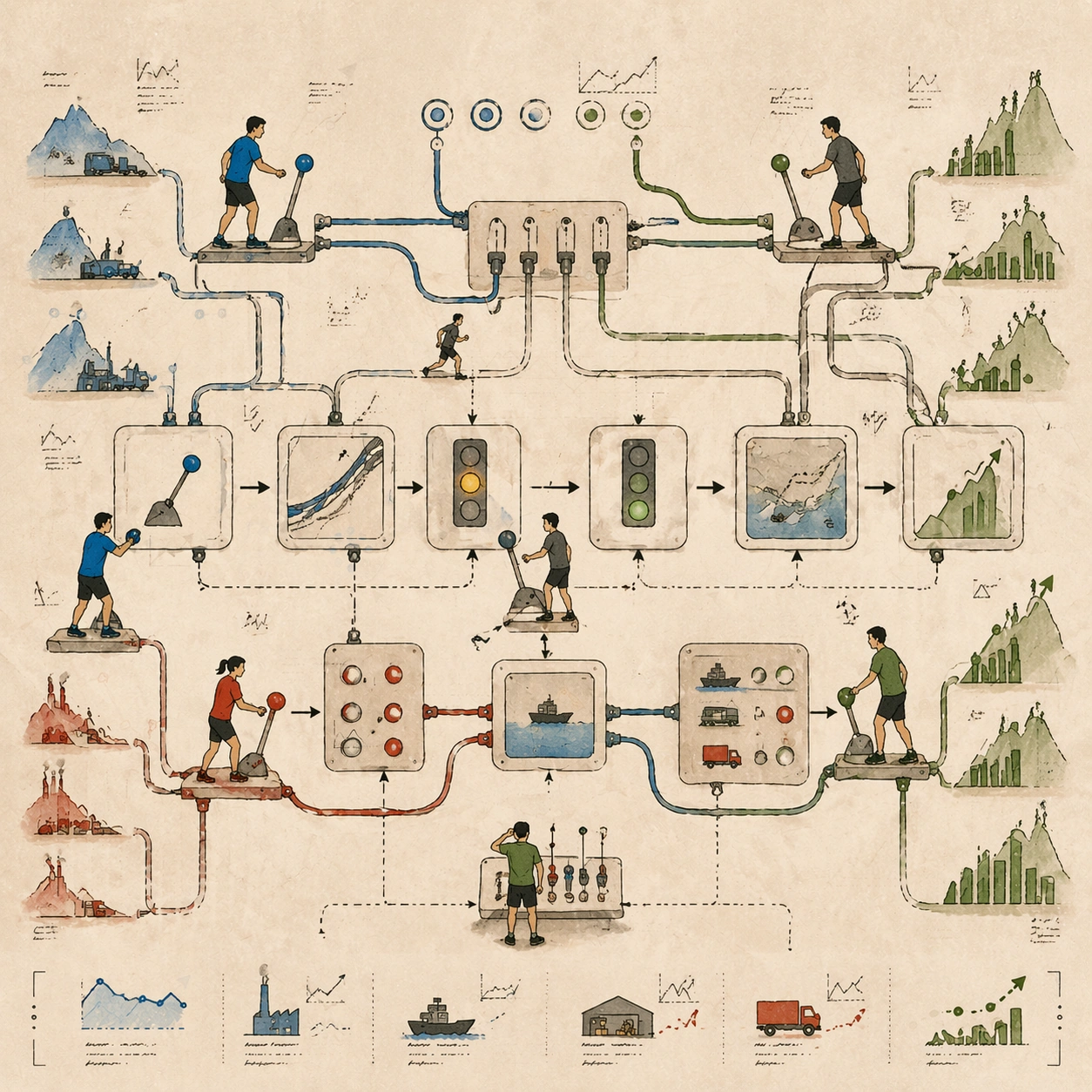
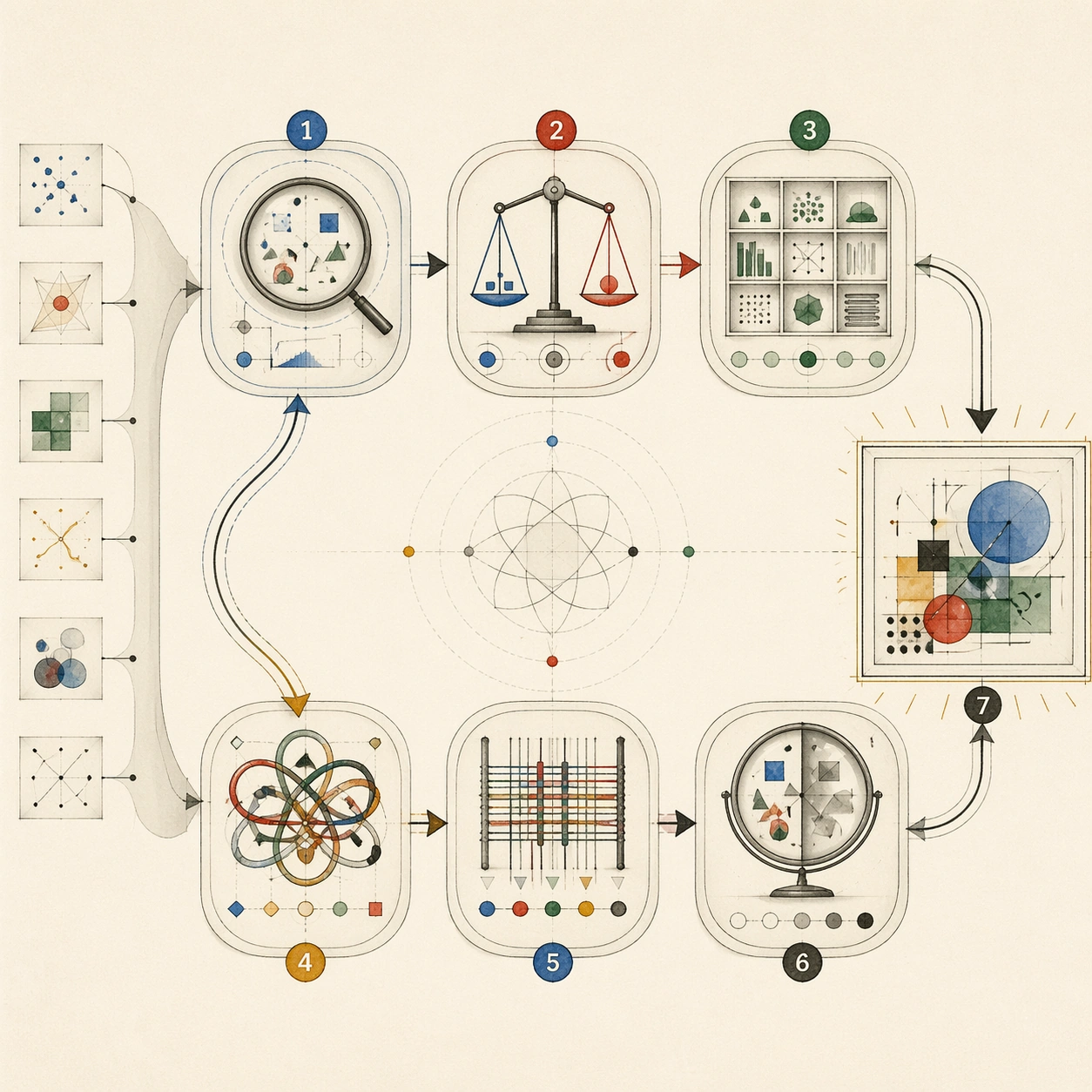
Reference image for a Thinking Mode series. Later images should preserve this editorial chart-mountain language, character scale, annotation style, color restraint, and square composition while changing the reasoning layer.

Constraints:
No readable text, no real company names, no real ticker symbols, no logos, no watermark, no literal financial advice, no photorealistic computer screens, no chaotic infographic clutter, preserve exact 1:1 aspect ratio.
Jak używać
- Skopiuj cały oryginalny prompt wraz z parametrami.
- Dostosuj temat, tekst i kompozycję do swoich potrzeb.
- Użyj zgodnego narzędzia zewnętrznego; sprawdź warunki dostępu i wynik.
Przed rozpoczęciem
- Sprawdź, czy potrzebny jest obraz referencyjny. Zgodność nie potwierdza modelu użytego do przykładu.
- Sprawdź nazwy, liczby i napisy; wyniki zależą od wersji modelu.