Oryginalny dokument
GPT Image 2 · en
Scene:
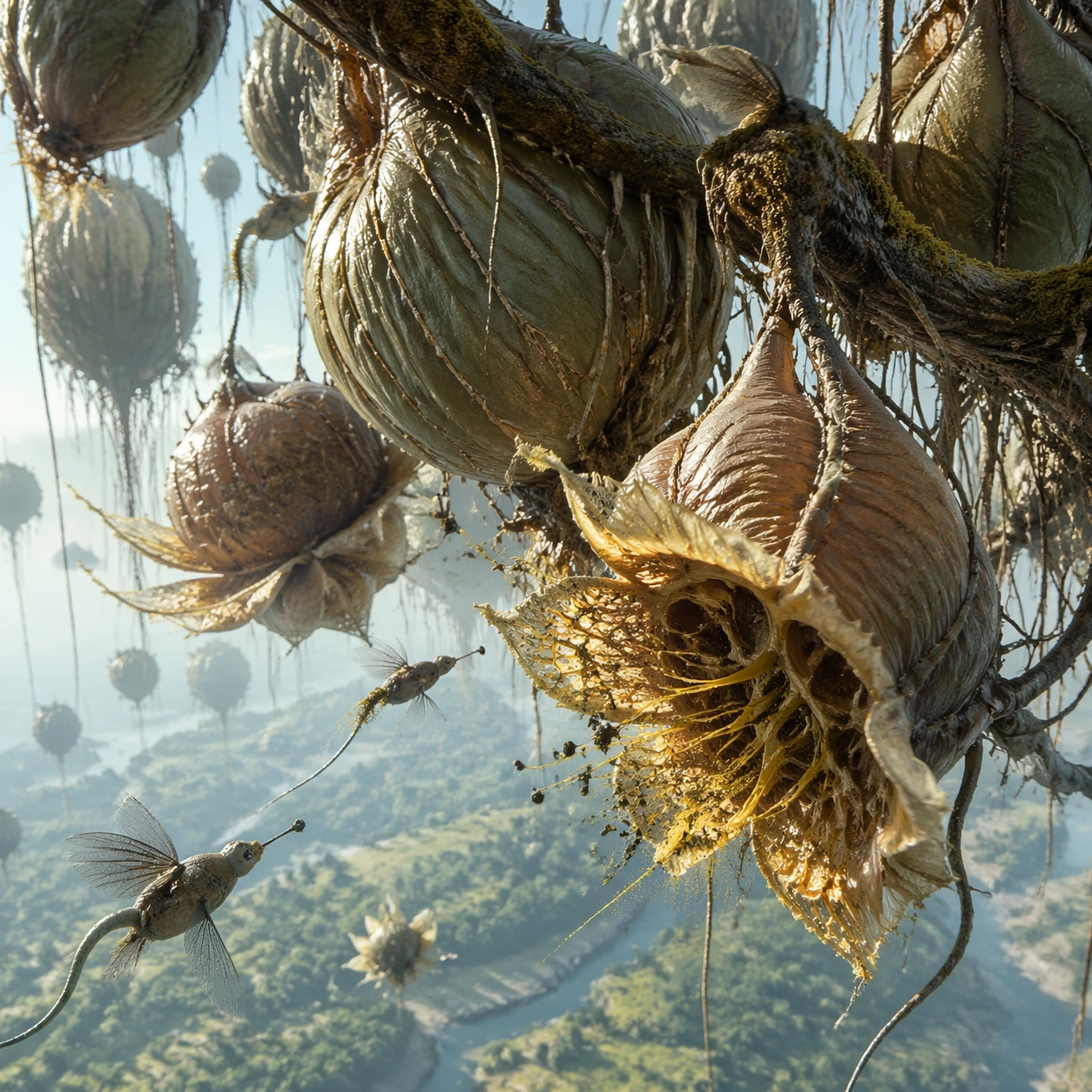
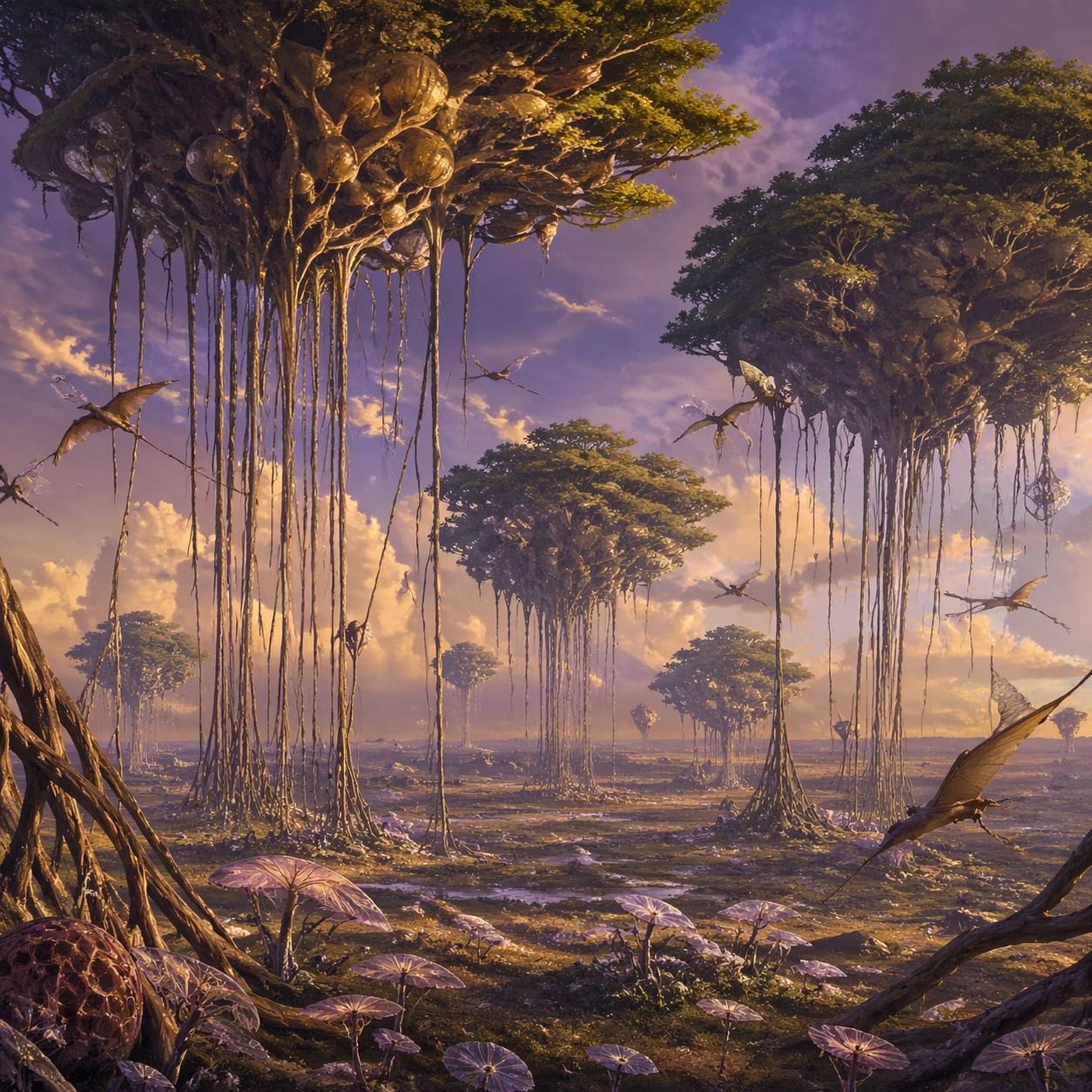
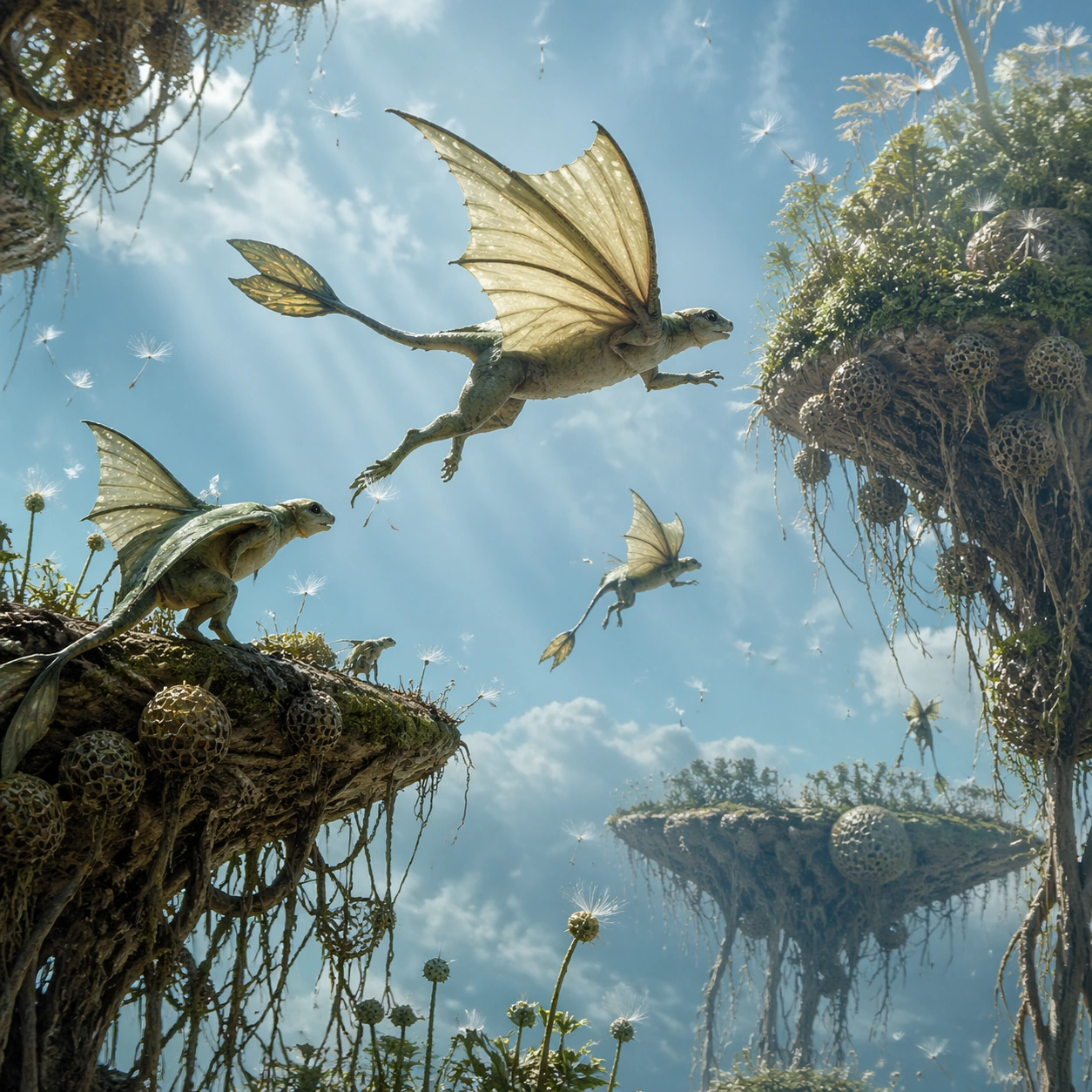
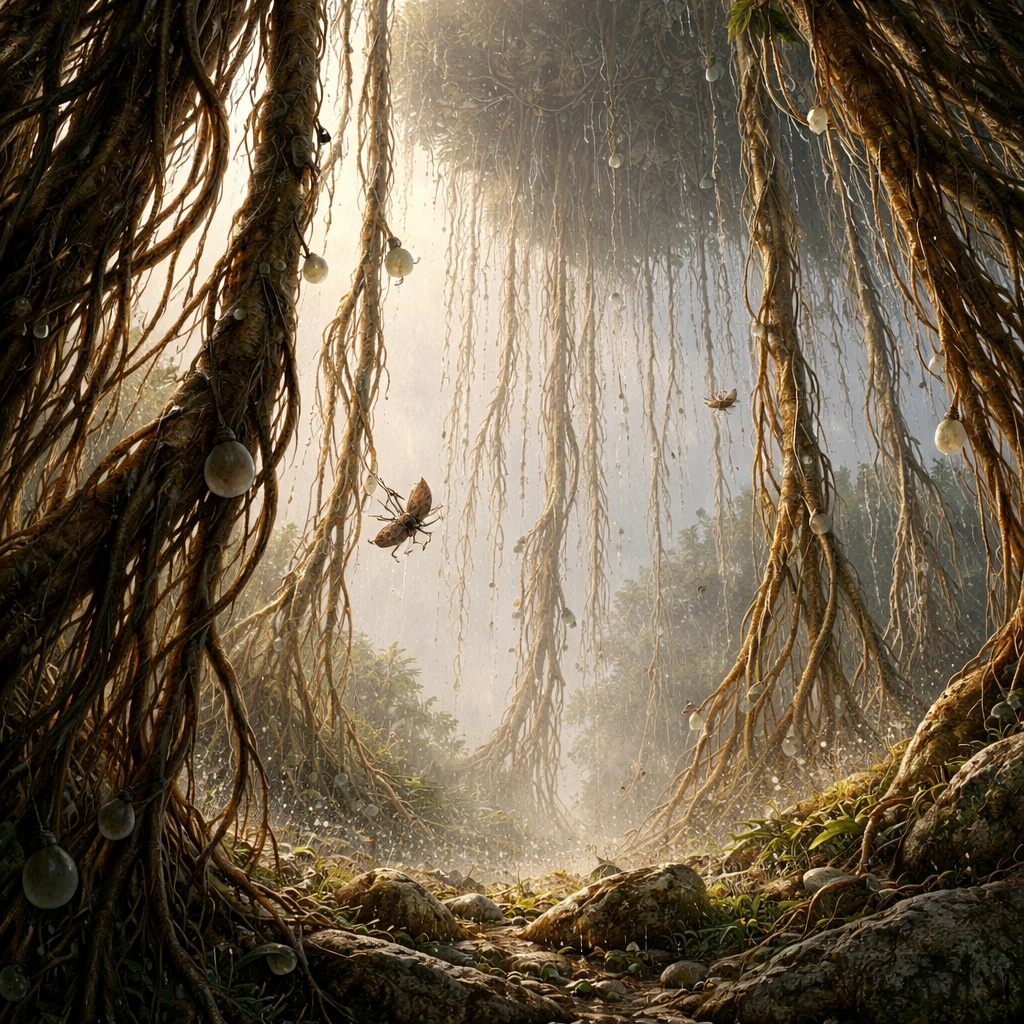
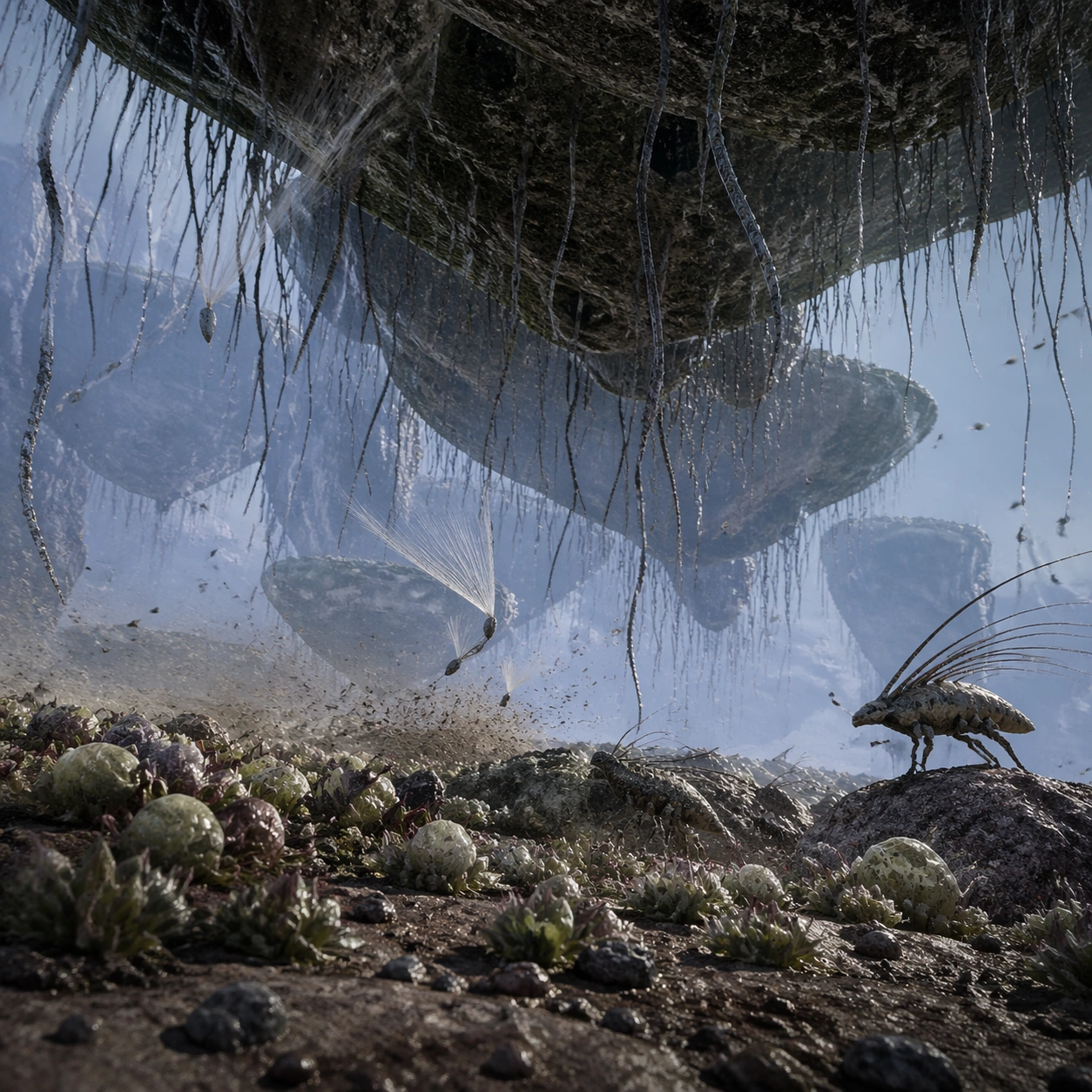
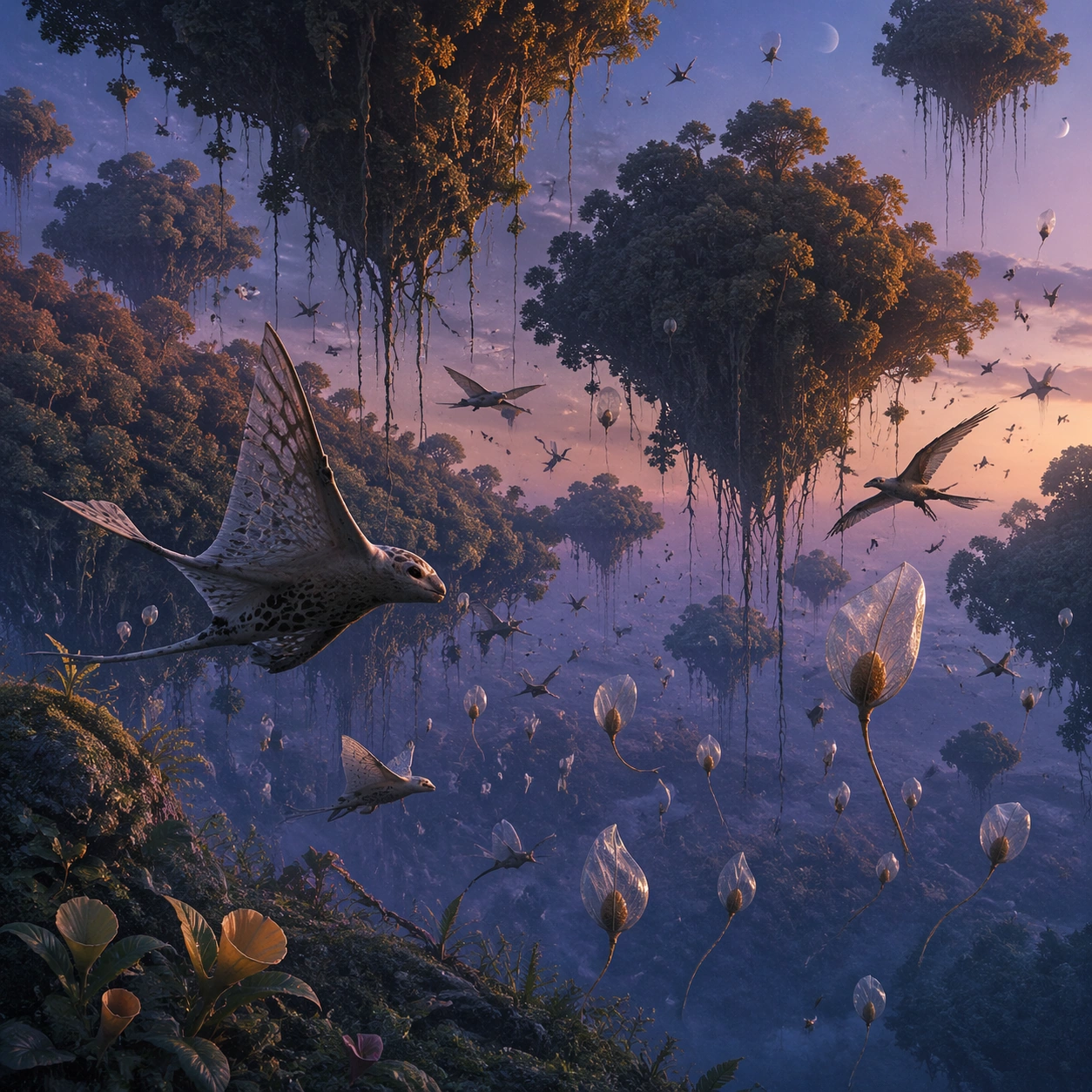
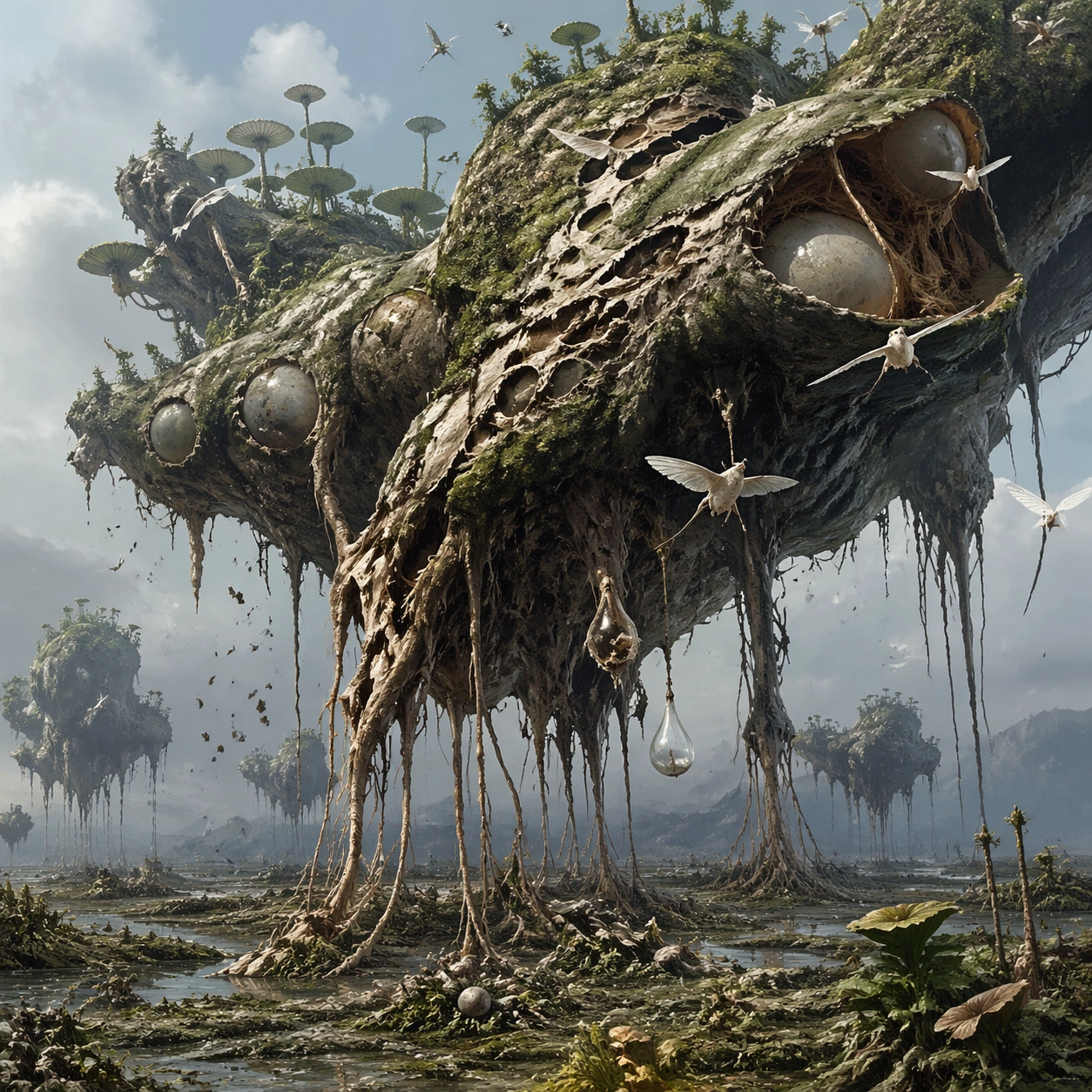
Show a recently storm-damaged canopy island in post-event light, with calmer skies but visible torn root bundles, debris drift, and exposed buoyant tissue. The square frame should feel observational and slightly uneasy, like a field note of ecosystem stress. Build the frame as a square natural history study with disciplined composition, believable lighting, and enough environmental evidence to explain how this organism or system functions without any caption. Keep the image polished, observational, and suitable for a research gallery rather than pulp fantasy spectacle.

Subject:
Focus on damaged yet surviving structures: sealed trunk chambers, emergency droop roots reaching groundward, and resident animals adapting to the changed geometry. Regrowth buds and scar tissue should suggest an evolved resilience to wind shear. Show the anatomy, habitat interaction, and scale cues clearly so the viewer can infer locomotion, feeding, reproduction, or ecological role from the visual alone. Every visible structure should feel evolved for a purpose, with layered foreground, midground, and background information that rewards close inspection.

Important details:
Assume low gravity, persistent updrafts, and buoyant tissues let mature canopy masses hover while root tendrils still harvest minerals and moisture from the ground. Organisms should visibly respond to vertical distance, drifting substrates, and unstable aerial habitat. Damage must follow believable material logic. Tears, bends, and weight redistribution should show how a living suspended mass fails and heals under stress, not how a fantasy island breaks for drama. Favor coherent biology over decorative excess: tissues, shells, membranes, spores, tendrils, fins, silica lattices, or atmospheric sacs should all follow one material logic. Preserve a convincing relationship between the environment and the body plan, use restrained color hierarchy, and make the image feel like a serious speculative field record rather than a random monster concept.

Use case:
Exoplanet Floating Forest single study 8/9.

Constraints:
No readable text, no watermark, no logos, preserve exact 1:1 aspect ratio, no disaster-movie explosion, no fire, no falling human vehicles, no magical repair glow, no accidental brand resemblance, no direct copy of known terrestrial species, no cartoon simplification.
Jak używać
- Skopiuj cały oryginalny prompt wraz z parametrami.
- Dostosuj temat, tekst i kompozycję do swoich potrzeb.
- Użyj zgodnego narzędzia zewnętrznego; sprawdź warunki dostępu i wynik.
Przed rozpoczęciem
- Sprawdź, czy potrzebny jest obraz referencyjny. Zgodność nie potwierdza modelu użytego do przykładu.
- Sprawdź nazwy, liczby i napisy; wyniki zależą od wersji modelu.