Oryginalny dokument
GPT Image 2 · en
Scene:
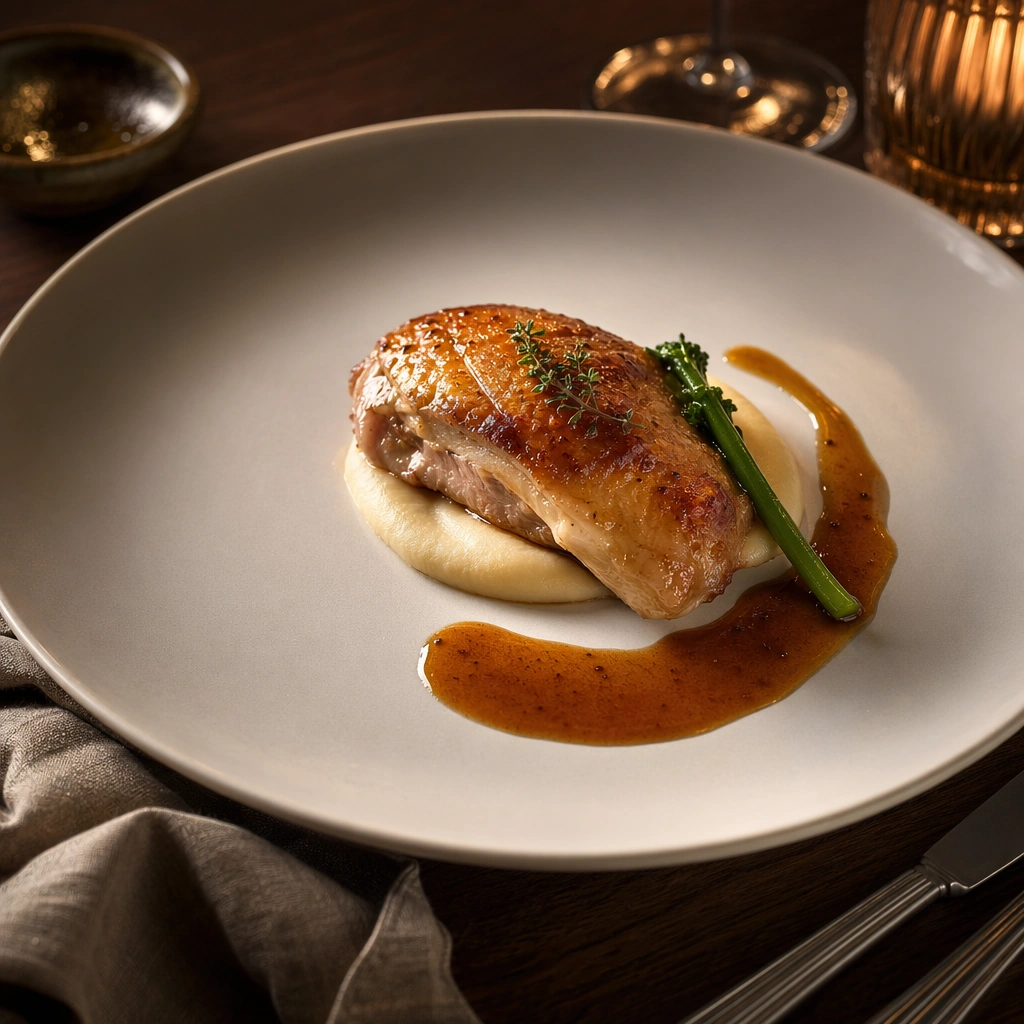
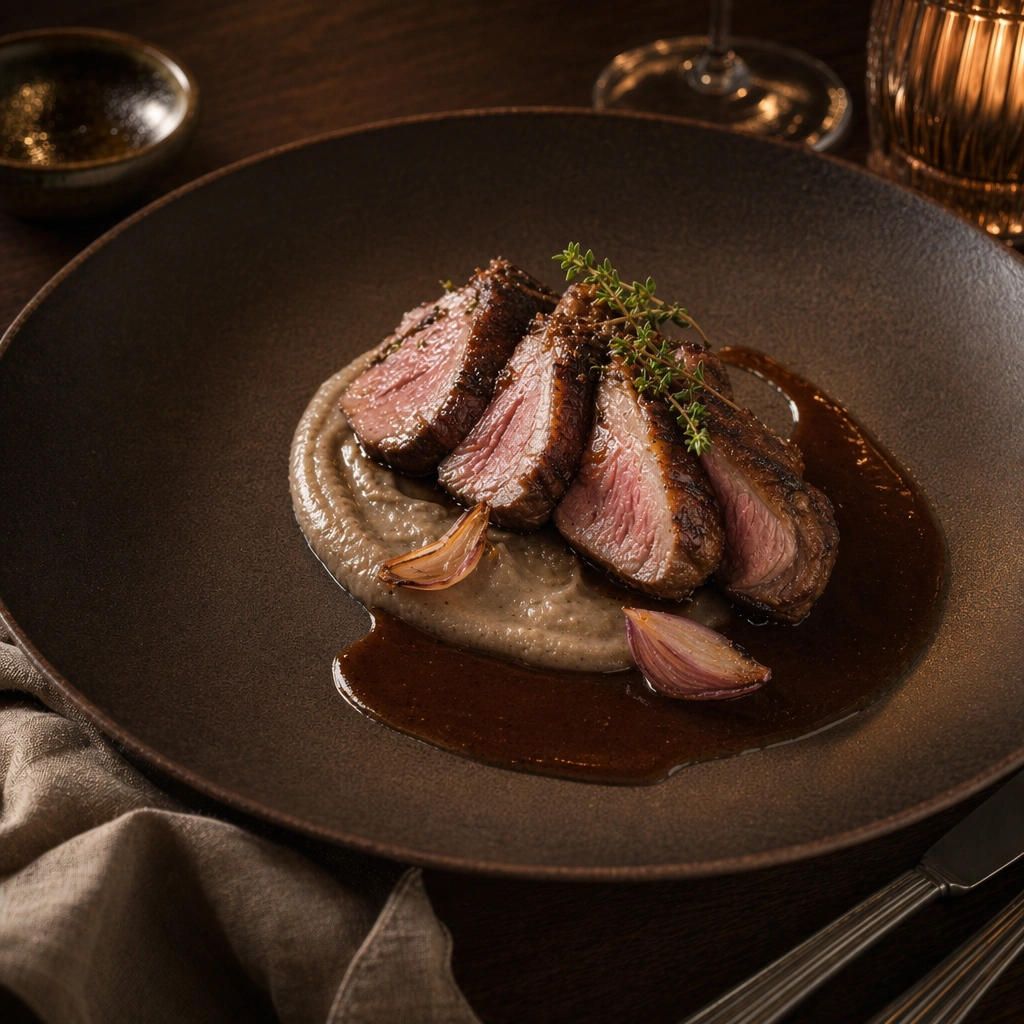
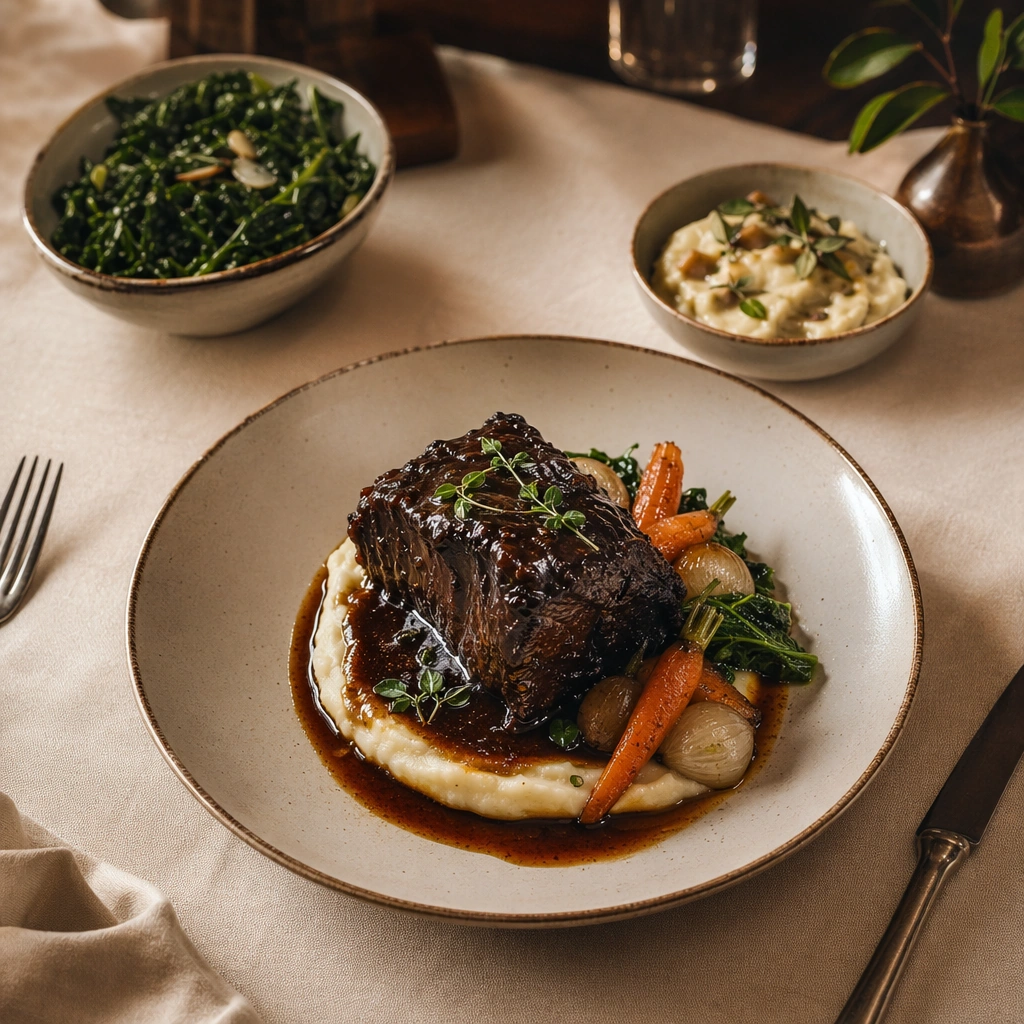
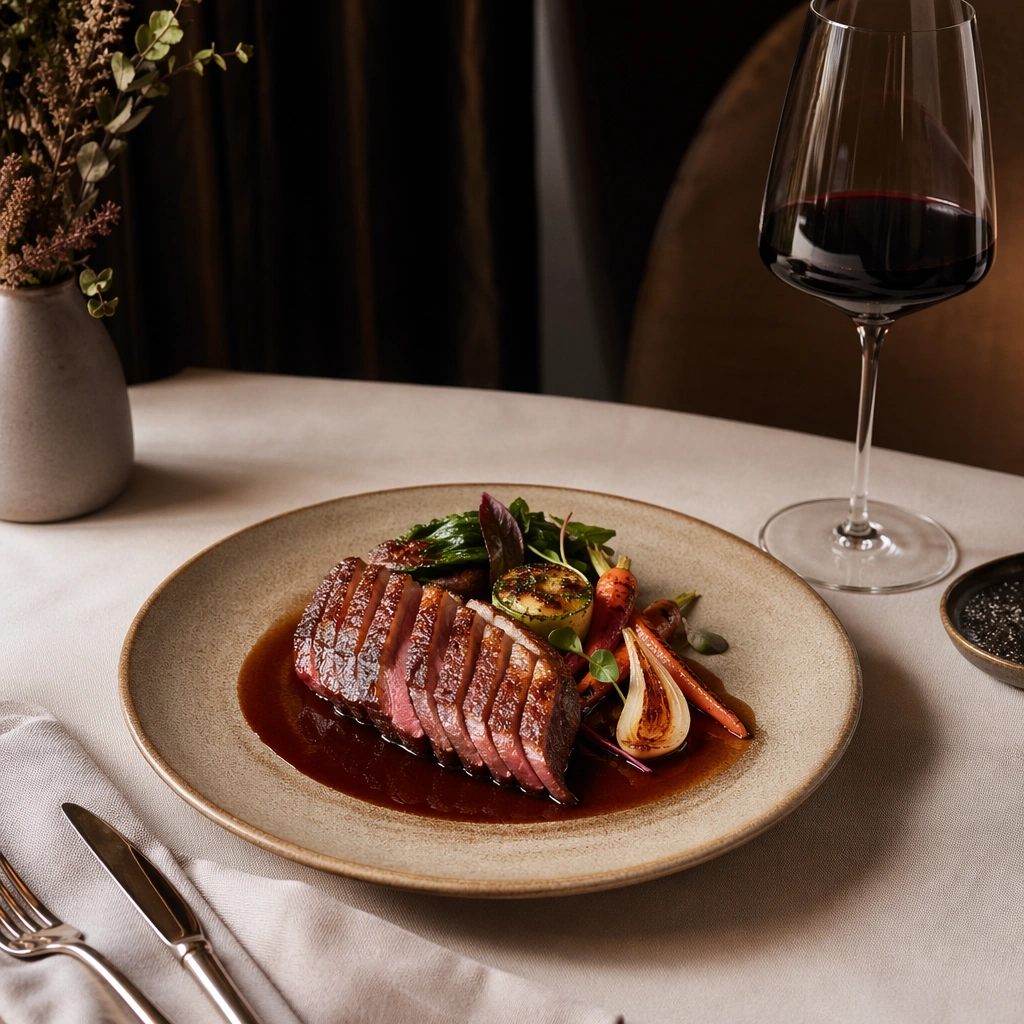
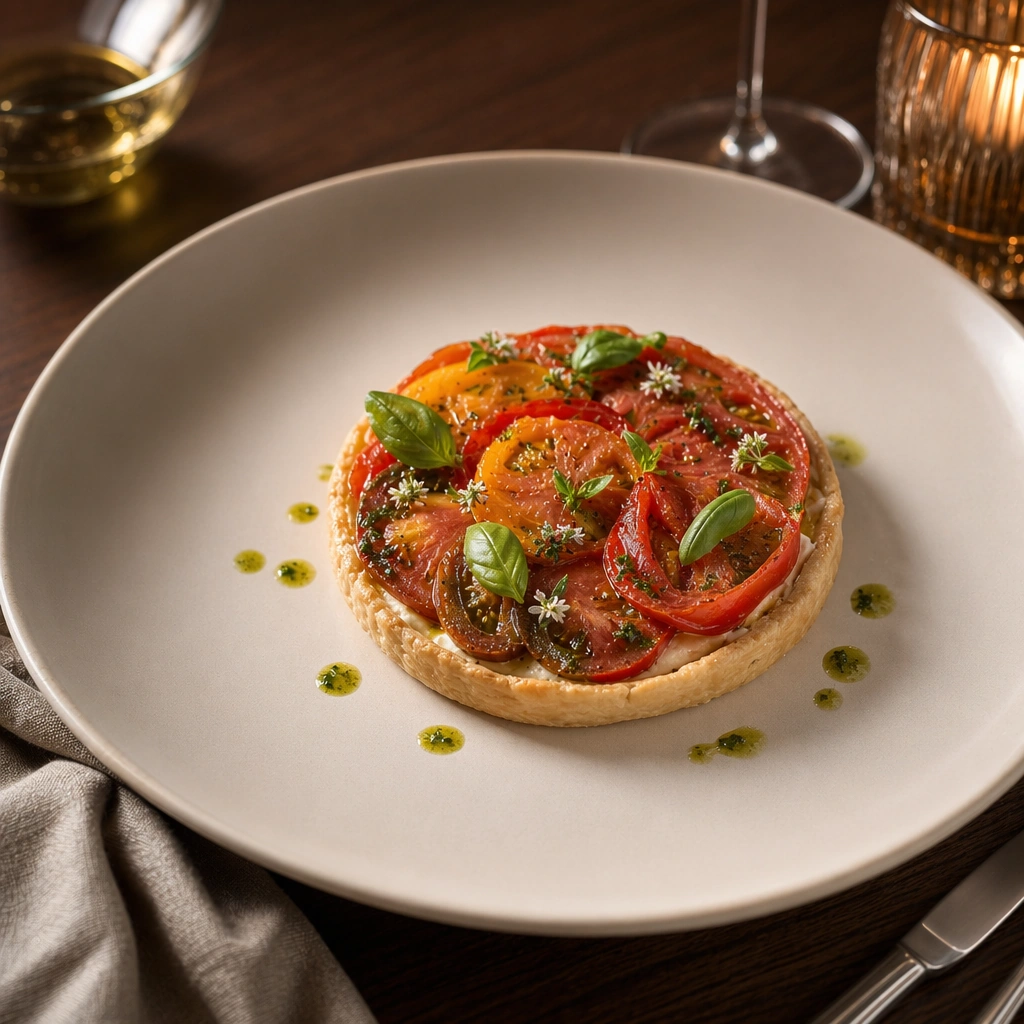
Compose a square restaurant editorial food photograph with a controlled three-quarter camera angle, tactile linen, brushed metal cutlery used sparingly at the edge of frame, and lighting that feels like a real dining room service captured by a magazine photographer. Keep the tonal range warm, dimensional, and refined, with enough negative space around the plate for the image to function as a hero asset rather than a crowded snapshot. Retain the same tabletop and lens relationship while increasing daylight freshness through tomato reds, pale pastry gold, and a cleaner summer brightness.

Subject:
The food must read as a true signature dish developed by a serious kitchen: precise portions, believable sauce behavior, carefully considered garnish, and a table context that suggests a coherent restaurant identity instead of generic luxury styling. Center a delicate savory tart with layered heritage tomato slices, whipped cheese, basil oil droplets, and tiny herb blossoms arranged with fine-dining control.

Important details:
Restaurant credibility matters more than spectacle. Preserve appetizing moisture, plausible ingredient hierarchy, and disciplined prop styling. Every crumb, herb leaf, ceramic reflection, and fold in the table linen should support the editorial story while keeping the dish unmistakably central. Preserve the exact camera height, lens feel, prop family, tabletop scale, palette discipline, and brand logic established by 01-chef-table-anchor. The reference system must remain visible in the spacing, plate diameter, and calm restaurant context, even as the ingredients move toward a lighter seasonal register.

Use case:
Signature Dishes series study 4/9, built for Prompt Atlas coverage of a food and beverage commercial visual system.

Constraints:
No readable text, no watermark, no logos, preserve exact 1:1 aspect ratio, no plastic-looking food, no overloaded garnish, no sloppy sauce smears, no cartoon color saturation, no stock-photo posing, no messy background clutter, no picnic cues, no pizza resemblance, no oversized salad garnish.
Jak używać
- Skopiuj cały oryginalny prompt wraz z parametrami.
- Dostosuj temat, tekst i kompozycję do swoich potrzeb.
- Użyj zgodnego narzędzia zewnętrznego; sprawdź warunki dostępu i wynik.
Przed rozpoczęciem
- Sprawdź, czy potrzebny jest obraz referencyjny. Zgodność nie potwierdza modelu użytego do przykładu.
- Sprawdź nazwy, liczby i napisy; wyniki zależą od wersji modelu.