Oryginalny dokument
GPT Image 2 · en
Scene:
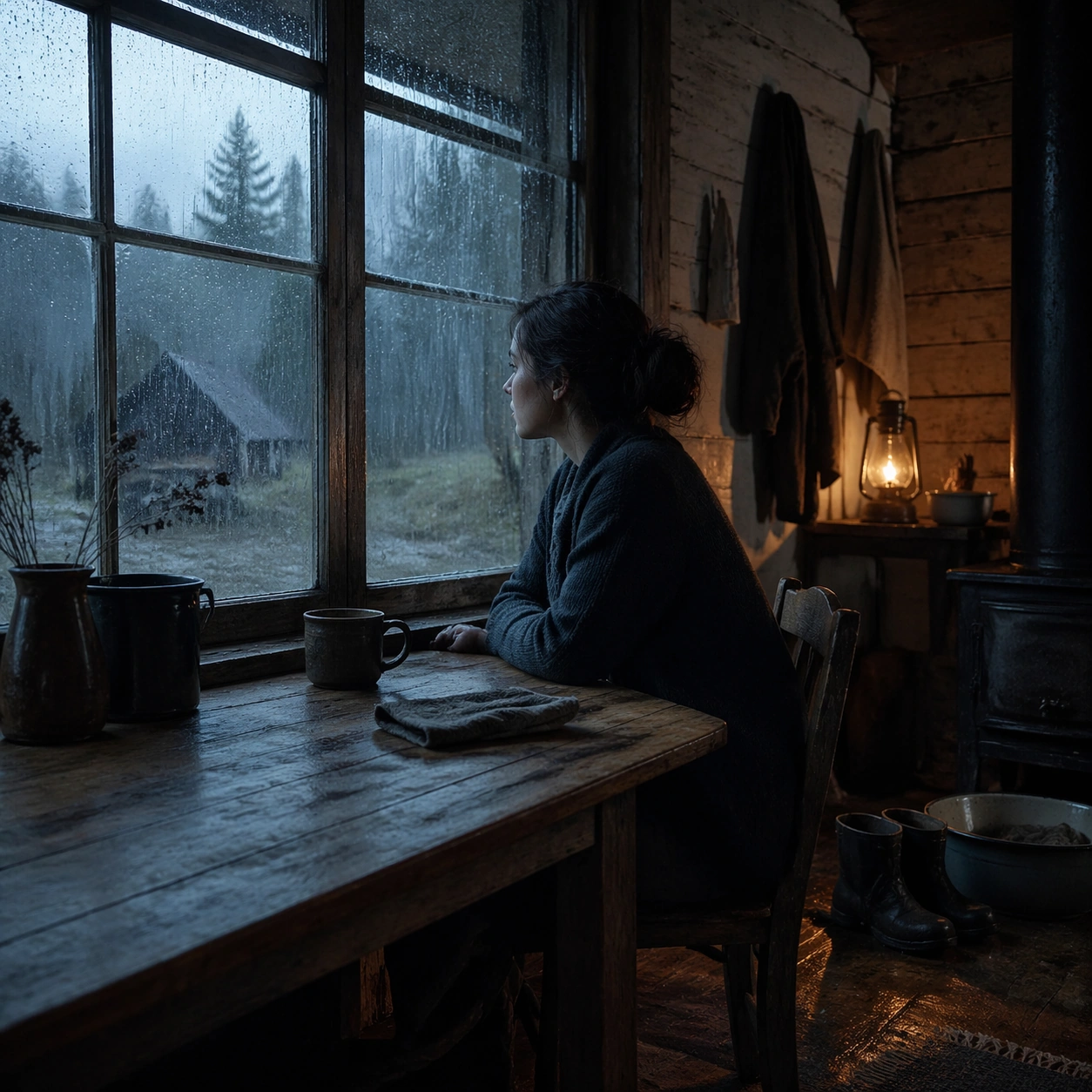
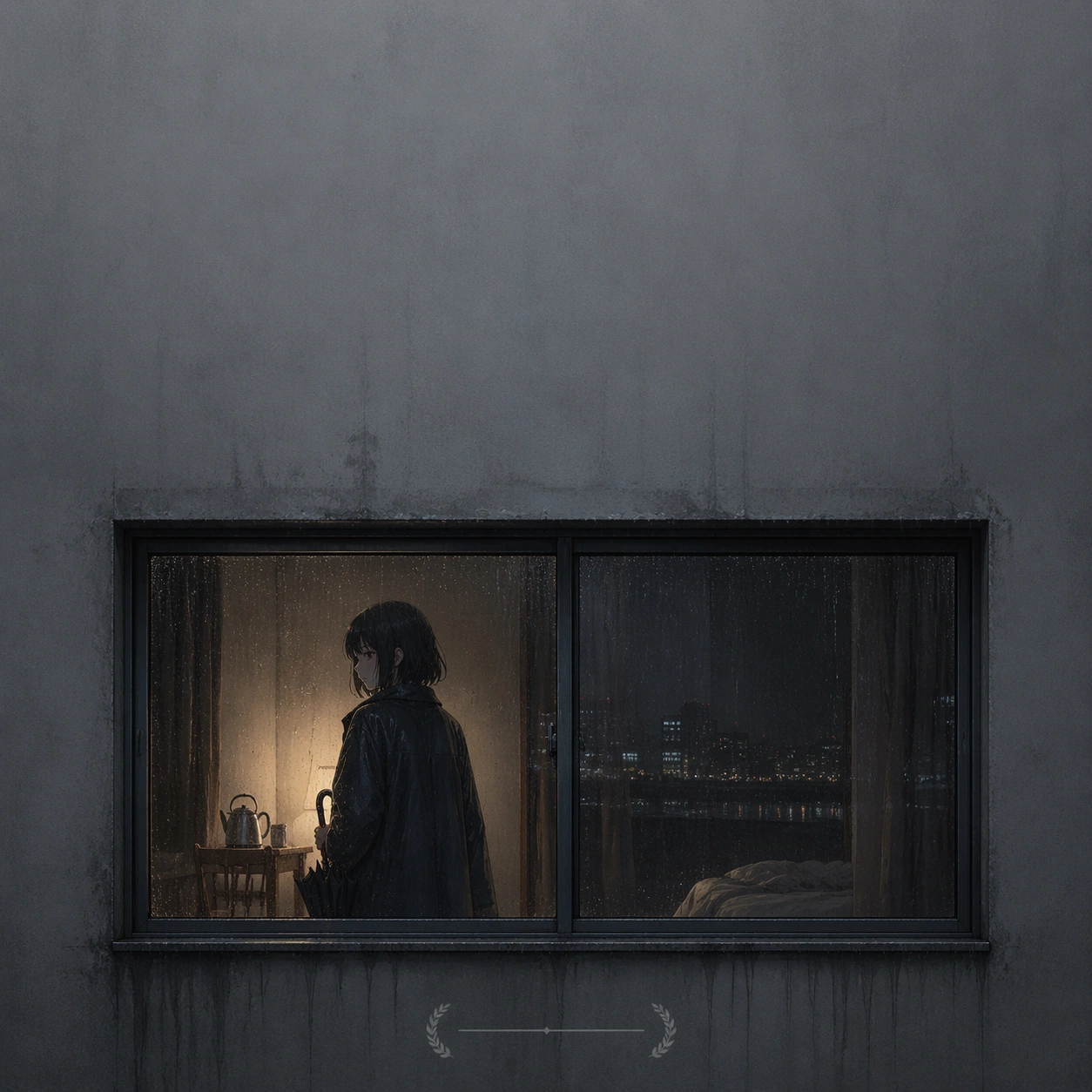
A square festival-poster composition with a vast pale gray field and a single rain-streaked apartment window occupying the lower middle third. The framing is static, calm, and slightly distant, like a prestigious arthouse one-sheet photographed for a museum wall. Light is dim blue-gray with one warm tungsten glow behind the glass. Large untouched negative space must dominate the upper half, reserving natural blank zones where title and credits would normally sit without showing readable text.

Subject:
Behind the window stands an anime-coded young woman with a short black bob, slim shoulders, and a dark coat still wet from rain. She is seen in three-quarter profile, not facing camera, holding a folded umbrella at her side. Her silhouette remains simple and immediately legible, while the tiny room behind her carries selective clues: a chair, a kettle, one unmade bed corner, and a narrow strip of city lights reflected on the pane. The character should feel specific and emotionally recognizable without looking like a direct copy of any existing IP.

Important details:
This must behave like a premium Cannes or A24-adjacent one-sheet. Keep the layout sparse, the color palette limited to wet concrete gray, muted navy, tobacco amber, and a trace of pale skin tone. Use very fine rain texture and subtle glass reflections, but avoid busy detail. Preserve a disciplined poster hierarchy with one visual anchor, one blank title zone, and a thin understated block where festival laurels or credits might belong as abstract marks only.

Use case:
Arthouse One-Sheet Anime Remake single study 1/9, focused on melancholy urban restraint and negative-space control.

Constraints:
No readable text, no watermark, no logos, preserve exact 1:1 aspect ratio, no crowded collage, no glossy blockbuster lighting, no oversized eyes, no extra floating graphic elements.
Jak używać
- Skopiuj cały oryginalny prompt wraz z parametrami.
- Dostosuj temat, tekst i kompozycję do swoich potrzeb.
- Użyj zgodnego narzędzia zewnętrznego; sprawdź warunki dostępu i wynik.
Przed rozpoczęciem
- Sprawdź, czy potrzebny jest obraz referencyjny. Zgodność nie potwierdza modelu użytego do przykładu.
- Sprawdź nazwy, liczby i napisy; wyniki zależą od wersji modelu.