Oryginalny dokument
GPT Image 2 · en
Scene:
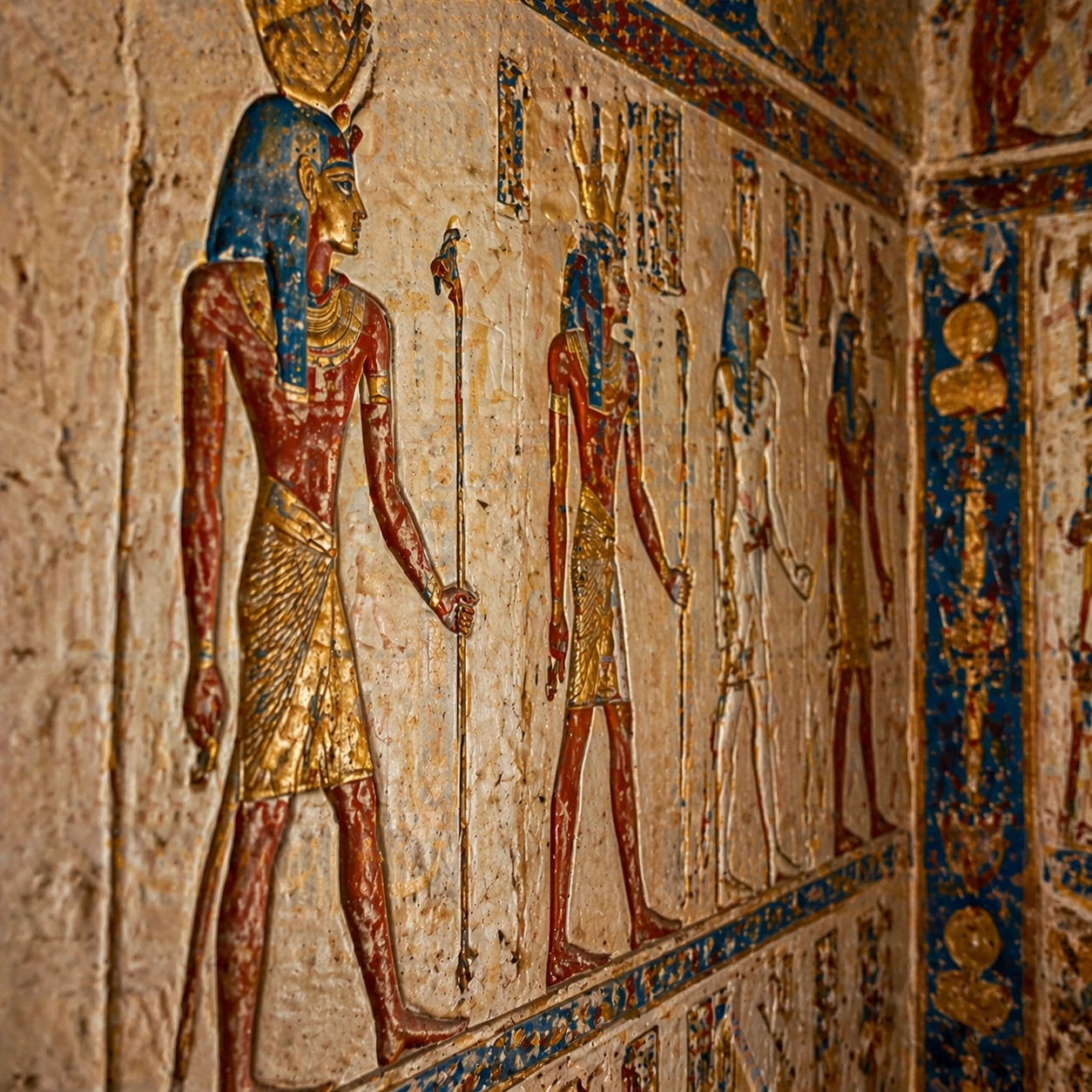
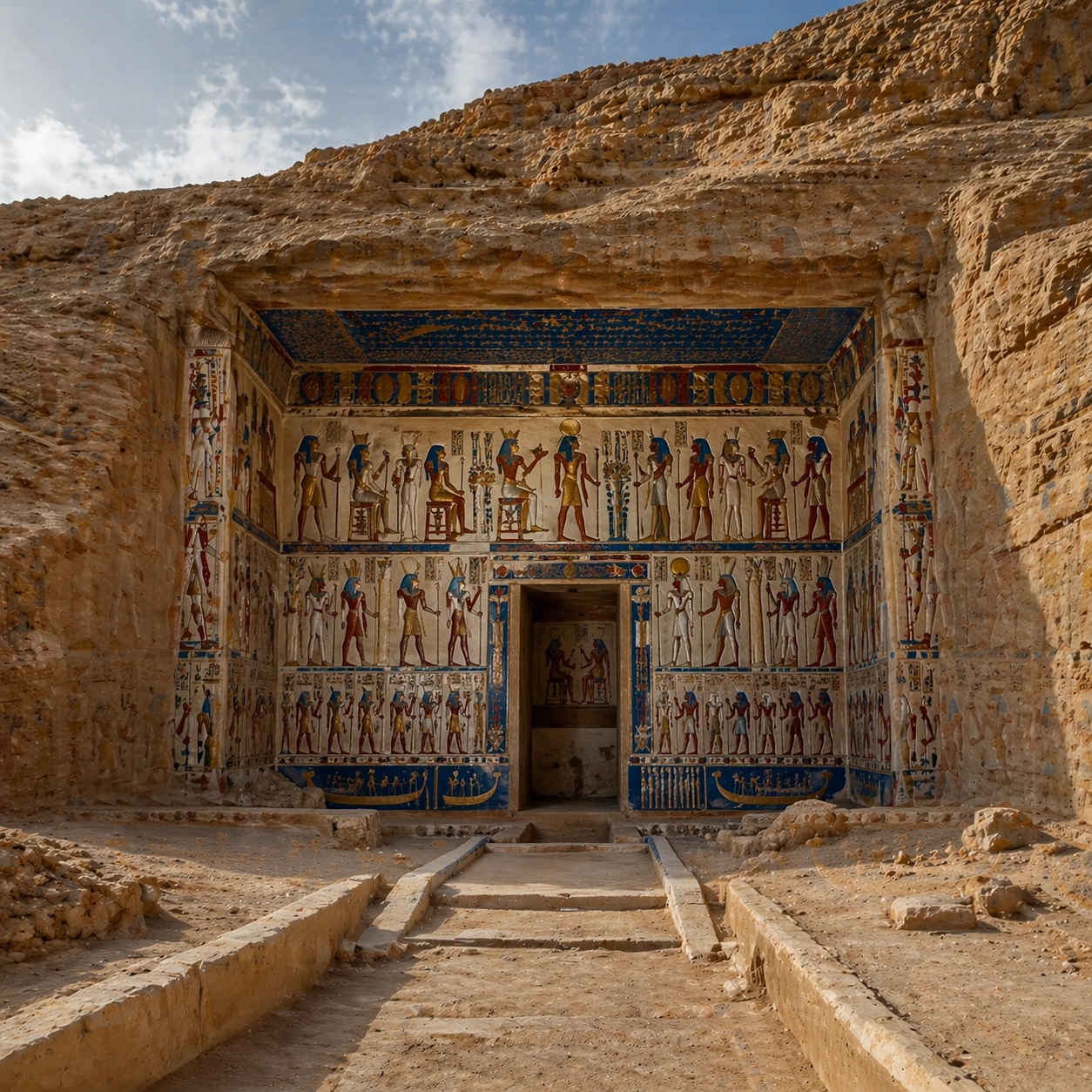
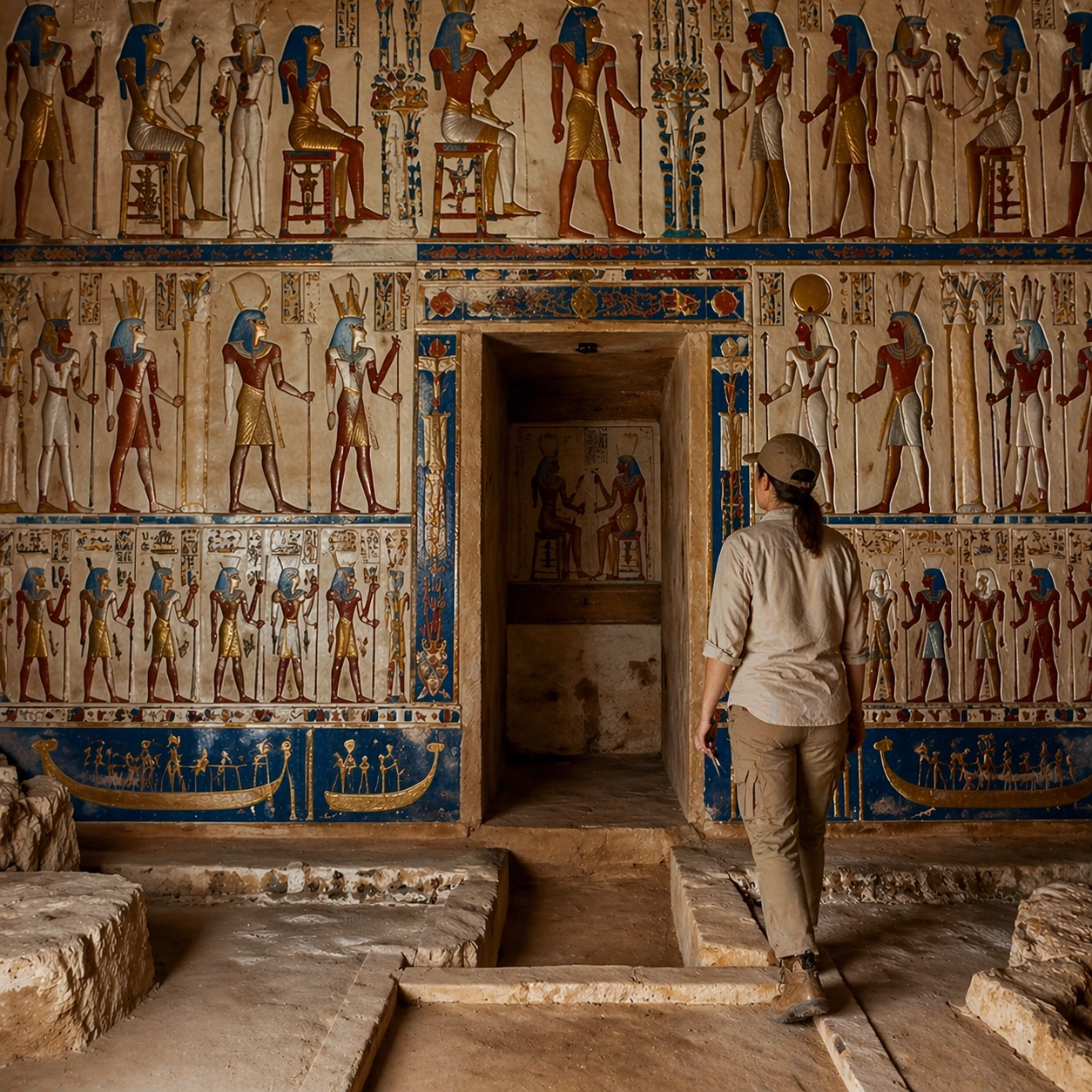
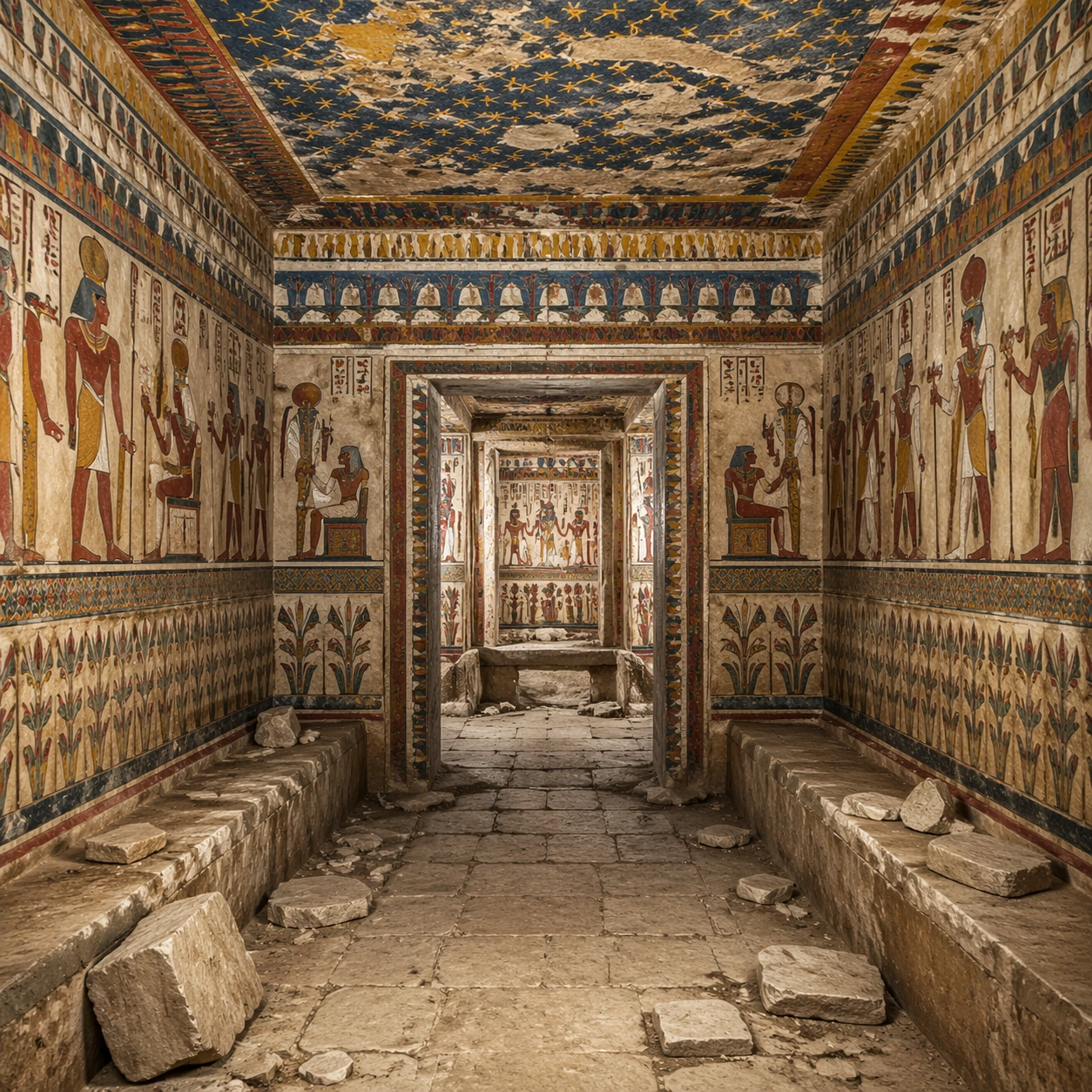
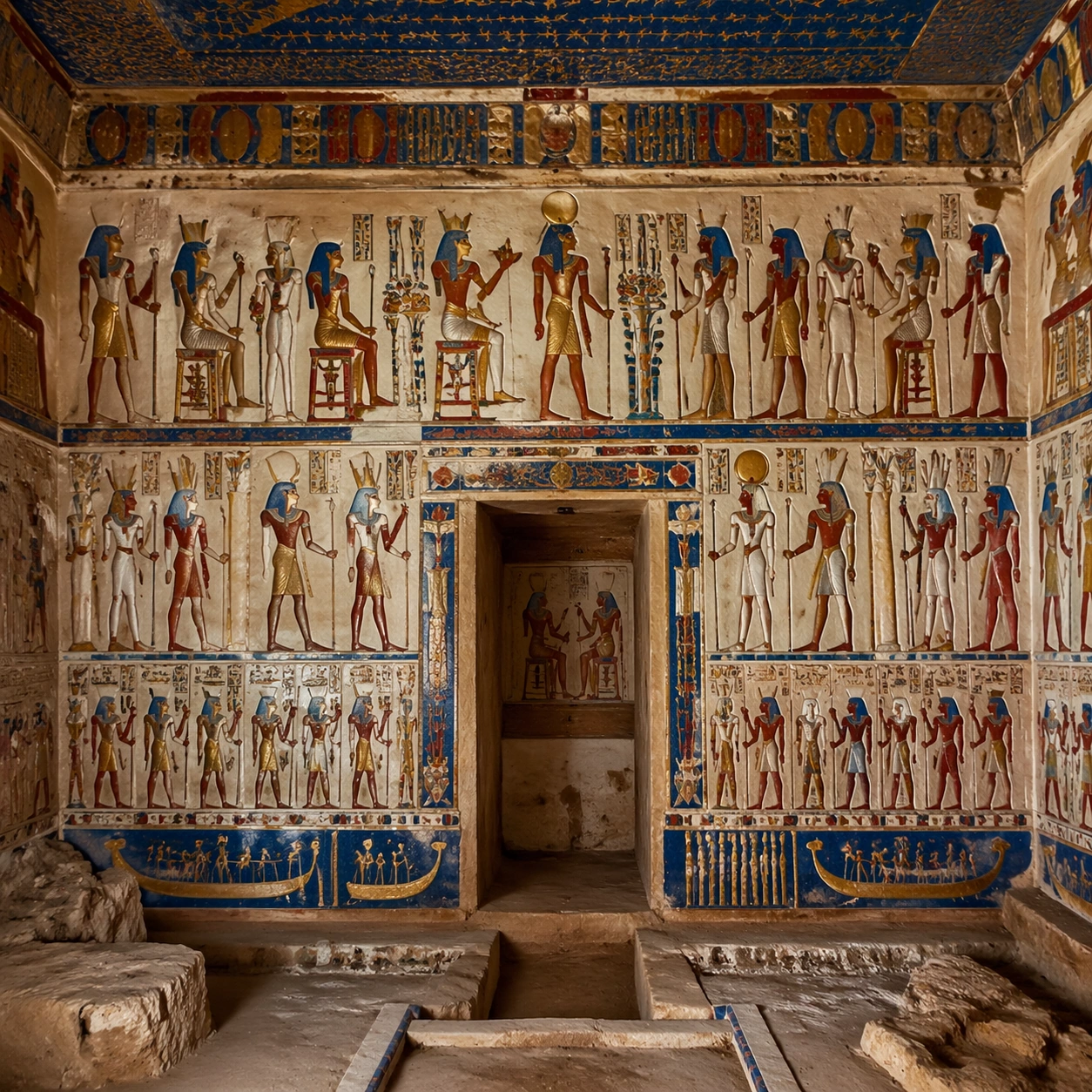
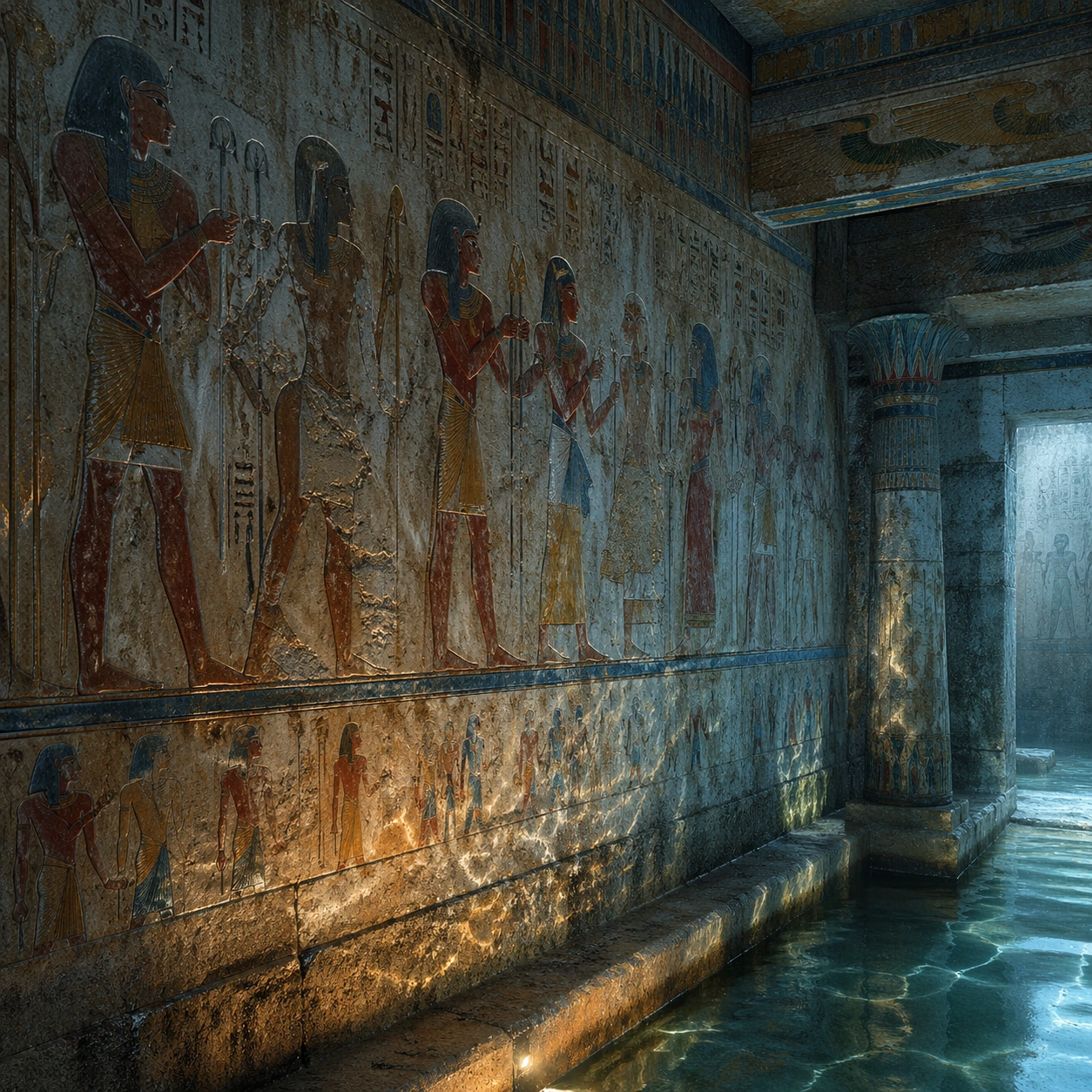
A square mood variation from the same civilization theme, built around cool conservation lighting mixed with a small amount of warm reflected lamp glow across the same painted surface. The image should stay grounded in field realism while testing how different illumination changes material reading, atmosphere, and emotional register. Keep the frame self-contained and coherent, as if photographed during a second visit under altered conditions.

Subject:
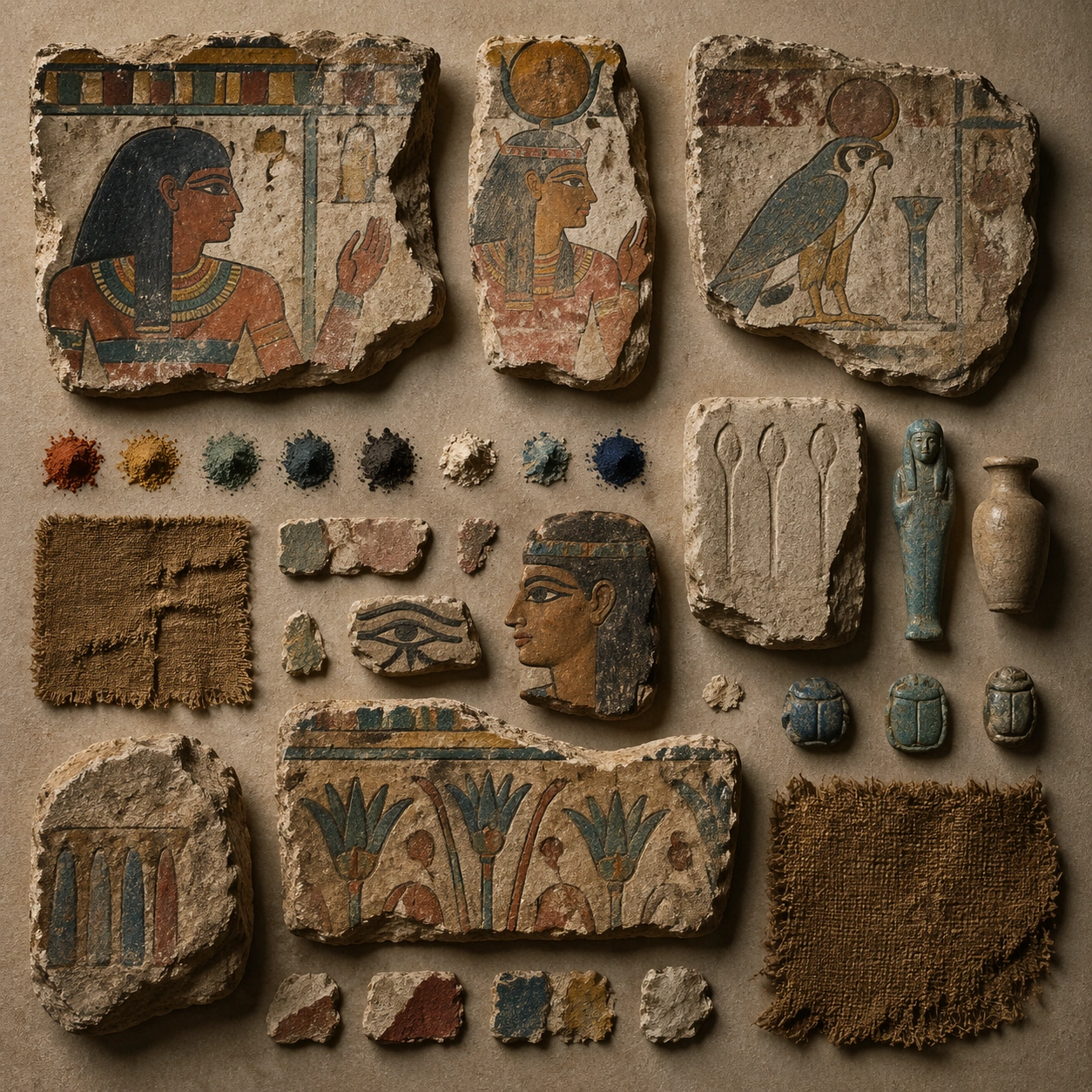
Show a culturally accurate site or interior connected to the same world as the main topic, but not as a direct dependency on the series reference. The focus should be on how light transforms relief, color, moisture, water, dust, or vegetation while preserving archaeological credibility. Architectural forms, objects, and setting must still belong to the same civilization with no cross-cultural contamination.

Important details:
Keep the wall system recognizably Egyptian, with disciplined horizontal registers, profile figures, symbolic proportions, and pigment behavior that feels mineral and hand-applied rather than digitally printed. Use the shift in light to reveal different evidence than the other studies: pigment glow, root sheen, caustics, wet stone, canyon shadow, marine haze, terrace depth, or quarry moisture. Keep the result serious and observational rather than romanticized. Non-readable motifs are acceptable, but there should be no signs, captions, or modern display devices. The image should feel like a rigorous visual experiment in historical atmosphere.

Use case:
Egyptian Polychrome Wall Reconstruction single study 7/9.

Constraints:
No readable text, no watermark, no logos, preserve exact 1:1 aspect ratio, no horror tropes, no movie traps, no laser beams, no undead figures, no theatrical color filters, no supernatural effects, no montage composition, no glossy concept-art exaggeration.
Jak używać
- Skopiuj cały oryginalny prompt wraz z parametrami.
- Dostosuj temat, tekst i kompozycję do swoich potrzeb.
- Użyj zgodnego narzędzia zewnętrznego; sprawdź warunki dostępu i wynik.
Przed rozpoczęciem
- Sprawdź, czy potrzebny jest obraz referencyjny. Zgodność nie potwierdza modelu użytego do przykładu.
- Sprawdź nazwy, liczby i napisy; wyniki zależą od wersji modelu.