
Oryginalny dokument
GPT Image 2 · en
Scene:
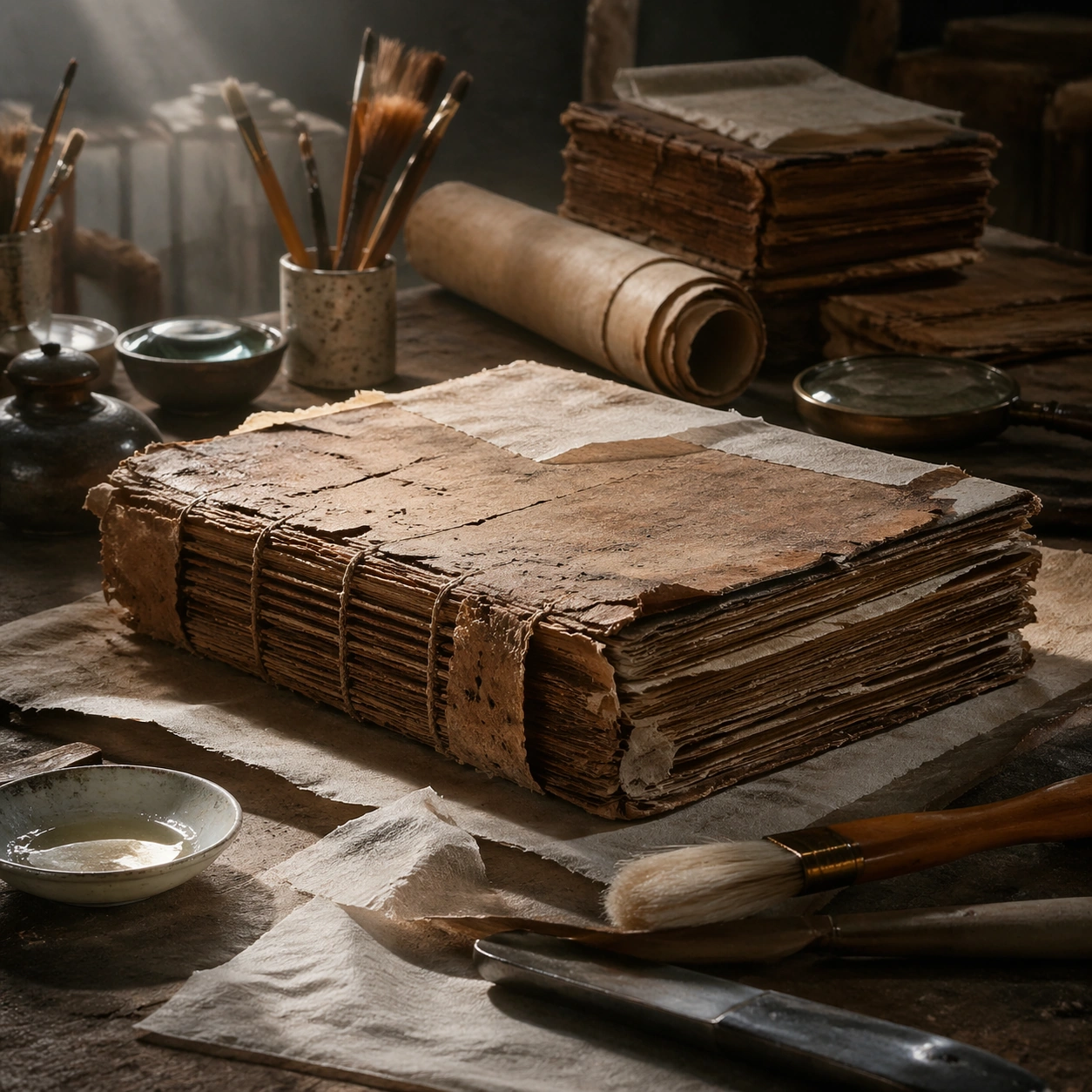
A square material-focused image where lighting, scale, and surface behavior are the main event. Build the frame around the material placed into a broader environment without losing tactile priority. Keep the lighting, camera distance, and spatial organization tuned for a high-signal research image rather than a casual snapshot. The image belongs to the Ancient Book Restoration theme and should feel immediately legible as a prompt atlas theme for ancient book restoration, testing world-knowledge, editing-workflow with gpt image 2..

Subject:
Center the study on the material placed into a broader environment without losing tactile priority. Translate the theme into a concrete visual statement instead of an abstract mood board: the viewer should understand what kind of image this is, what is being tested, and why the composition is difficult. Use the slug idea of ancient book restoration as a literal guide for subject matter, materials, and staging.

Important details:
Microstructure matters: refraction, fibers, scratches, pores, edge wear, translucency, and dust should all feel physically specific. Preserve a disciplined square composition, clear focal hierarchy, and enough secondary information to make the image feel complete rather than underspecified. The image should look polished, novel, and exhibition-ready, with topic-specific credibility coming from the way surfaces, structure, and visual language reinforce Ancient Book Restoration. Avoid generic filler elements that do not serve the main concept.

Use case:
Ancient Book Restoration single study 6/8, testing world-knowledge, editing-workflow through the 氛围场景 variation.

Constraints:
No readable text, no watermark, no logos, preserve exact 1:1 aspect ratio, no generic stock macro, no broken scale cues, no plastic-looking texture when it should feel natural, no meaningless blur, no watermark, no fake labels.
Jak używać
- Skopiuj cały oryginalny prompt wraz z parametrami.
- Dostosuj temat, tekst i kompozycję do swoich potrzeb.
- Użyj zgodnego narzędzia zewnętrznego; sprawdź warunki dostępu i wynik.
Przed rozpoczęciem
- Sprawdź, czy potrzebny jest obraz referencyjny. Zgodność nie potwierdza modelu użytego do przykładu.
- Sprawdź nazwy, liczby i napisy; wyniki zależą od wersji modelu.