Oryginalny dokument
GPT Image 2 · en
Scene:
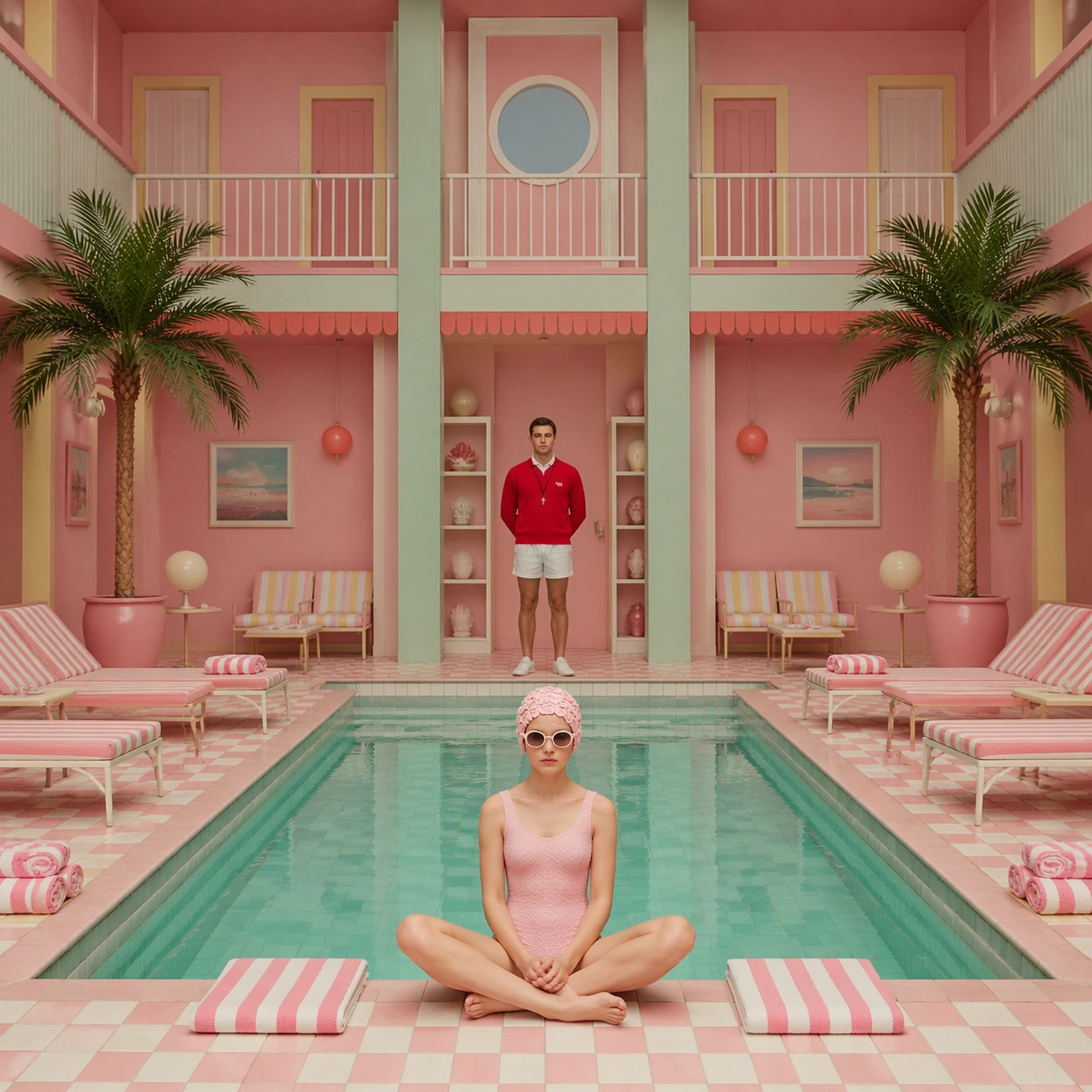
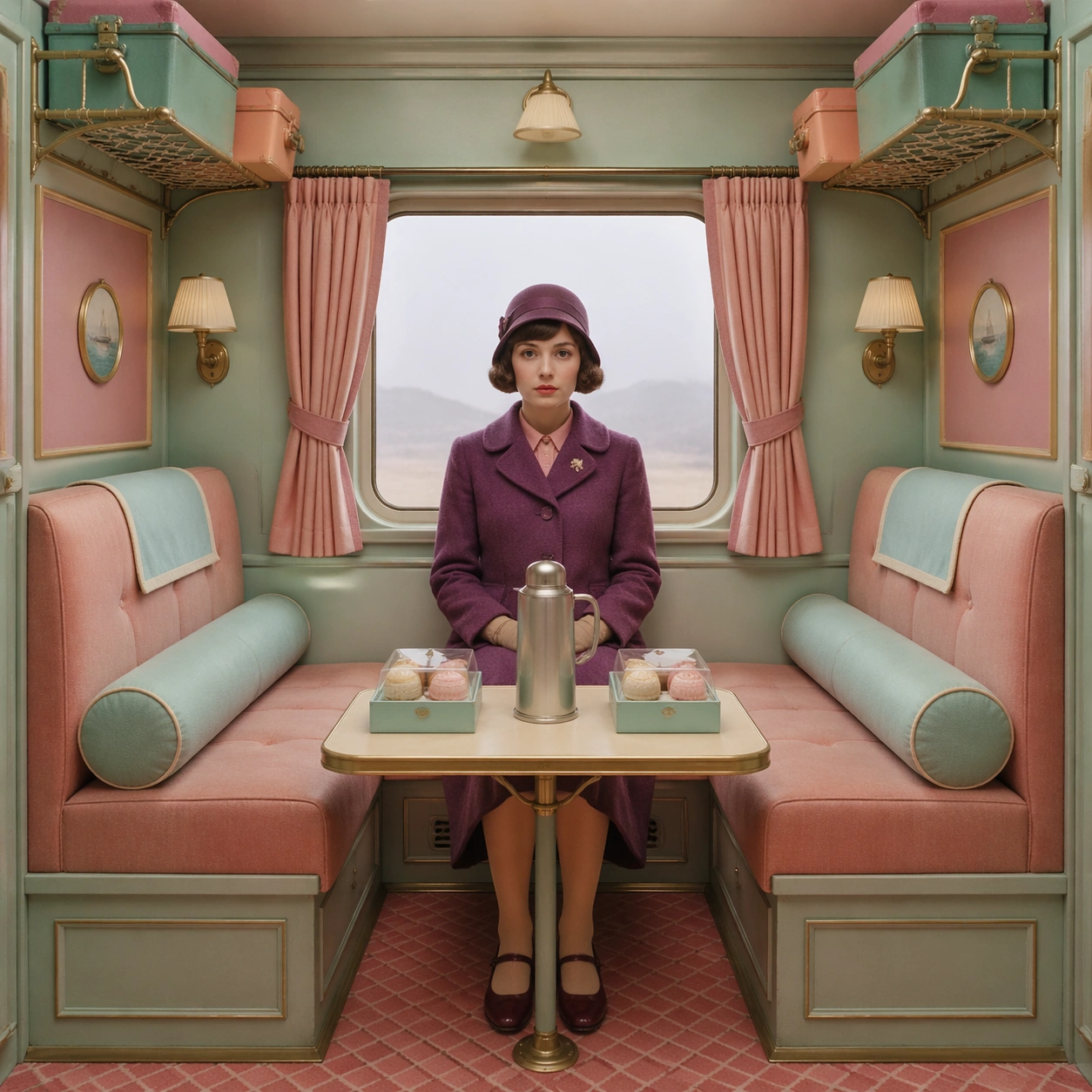
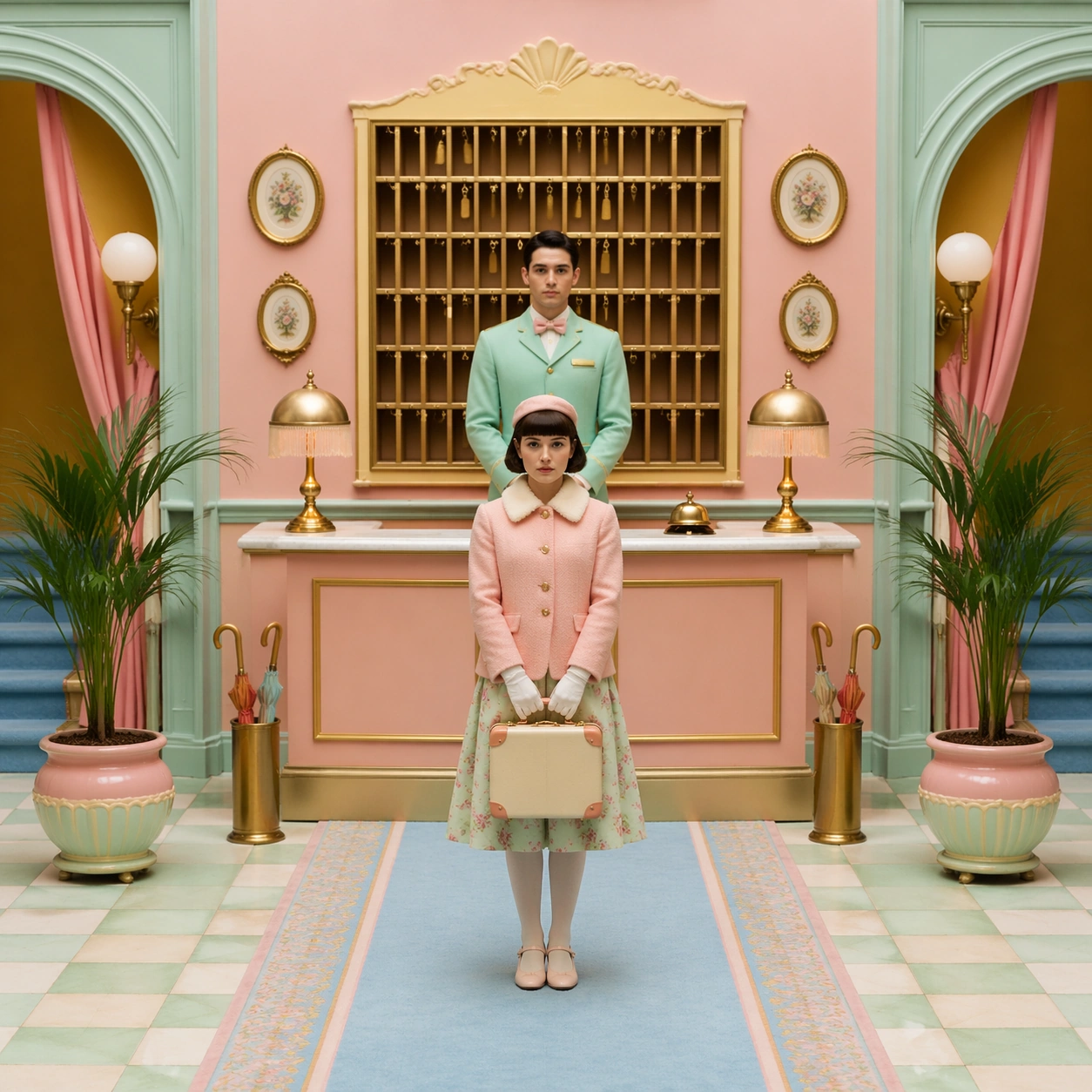
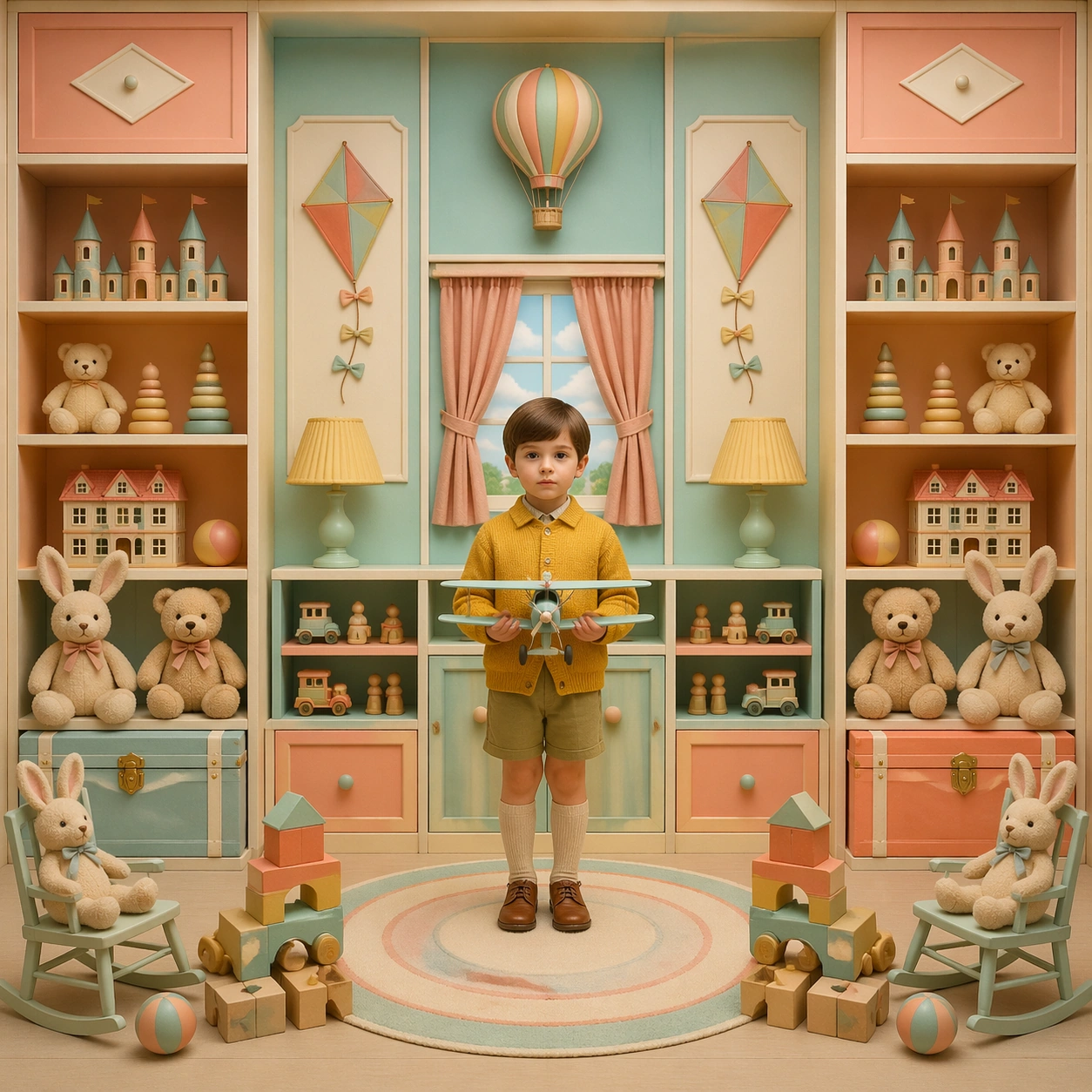
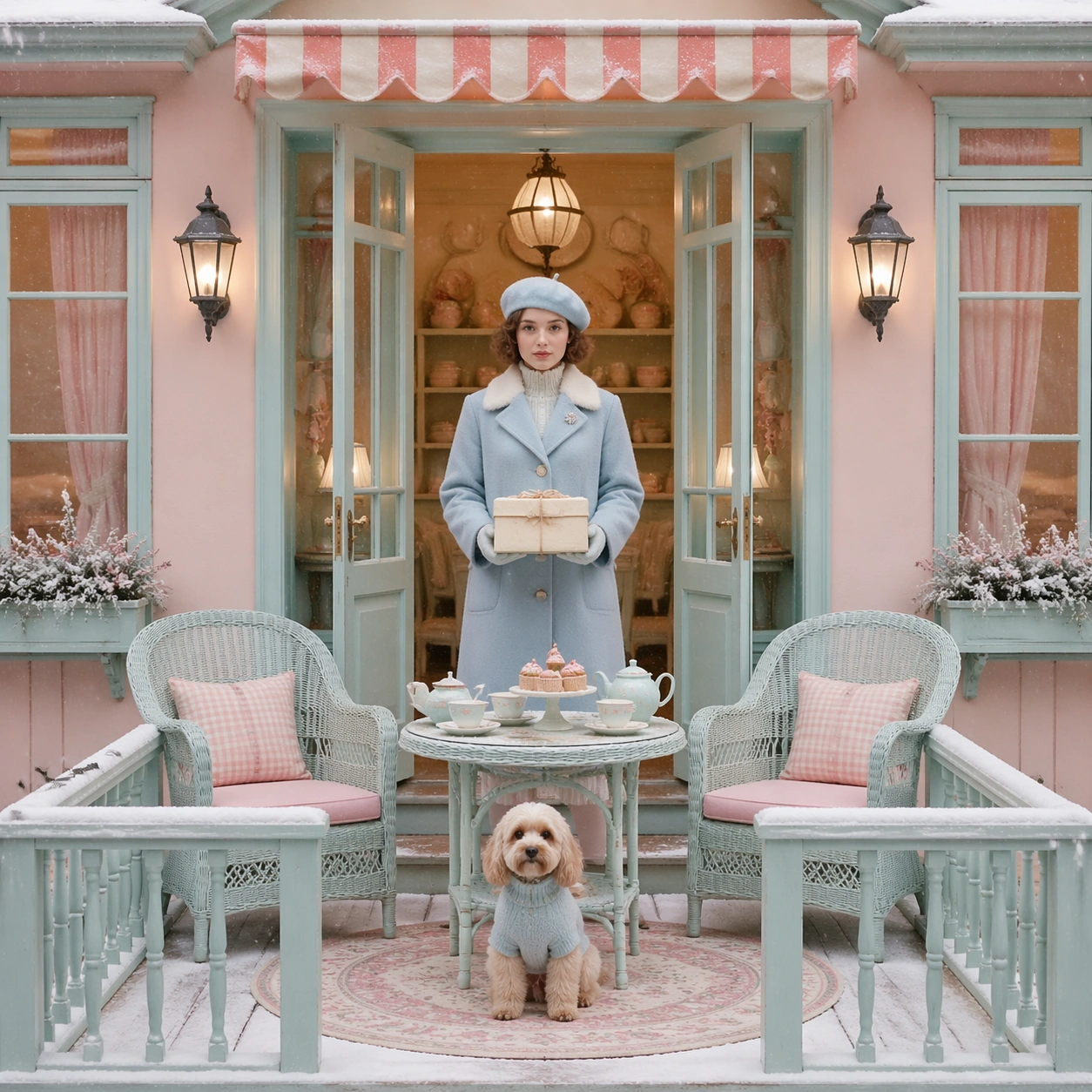
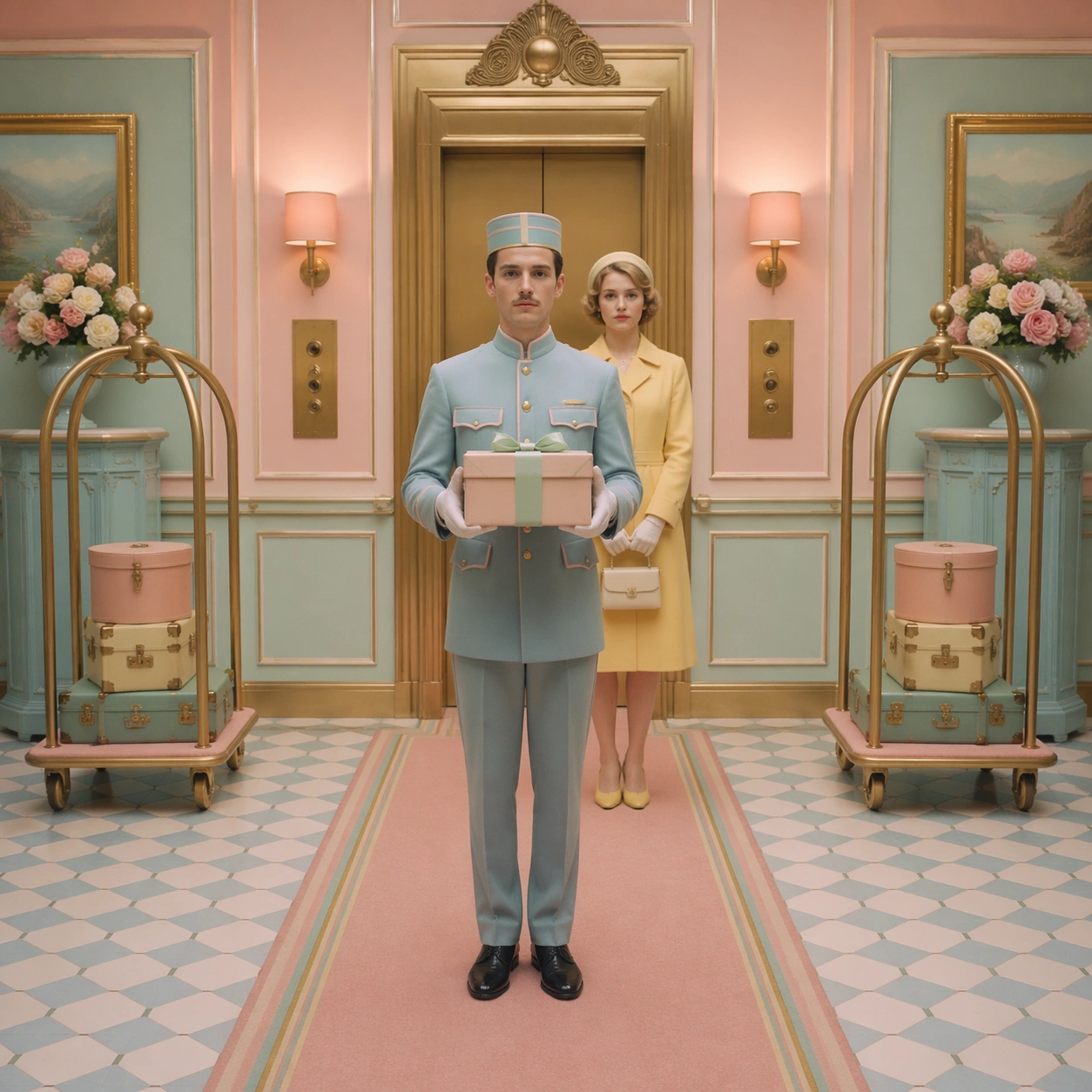
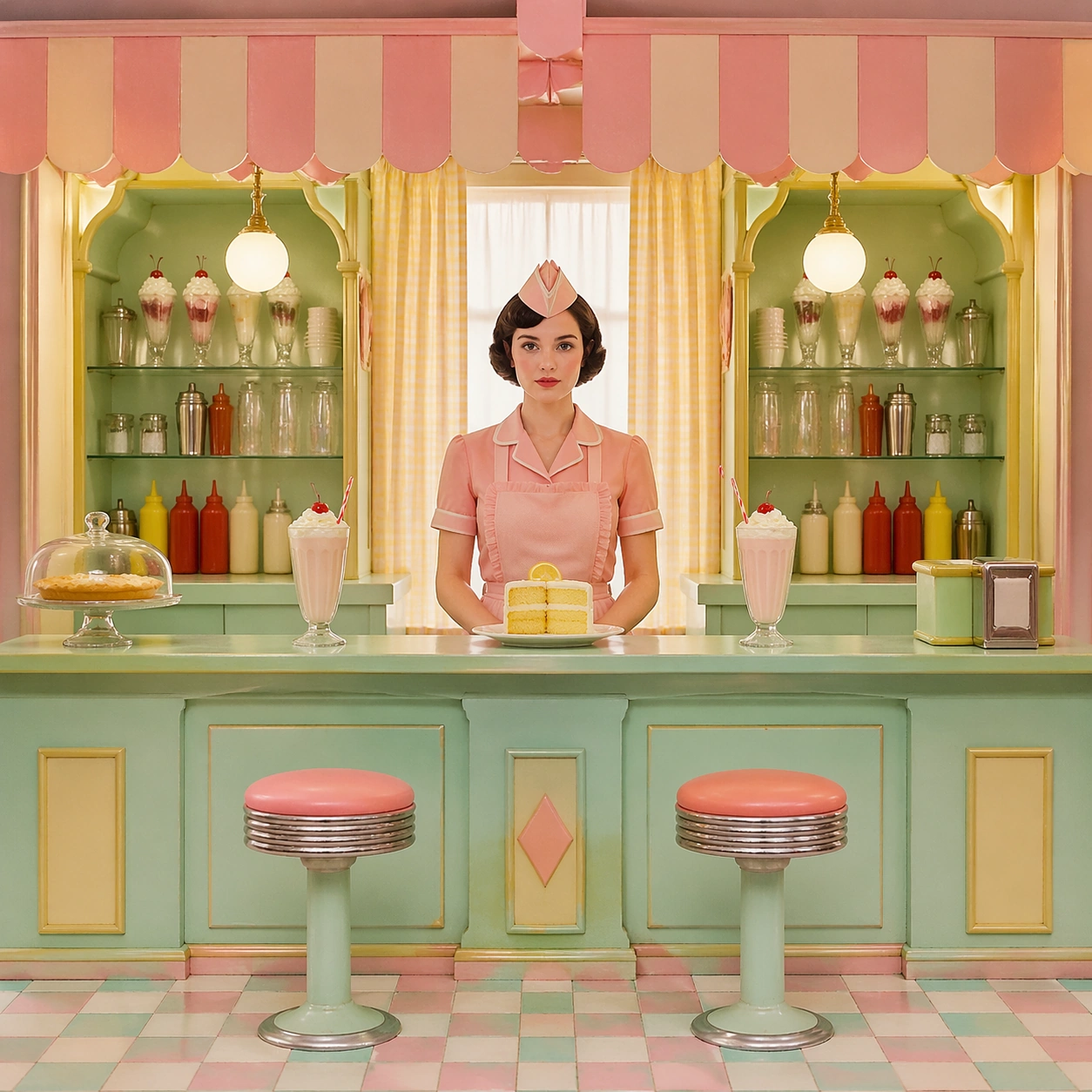
A square cinematic frame built with absolute left-right symmetry and a straight-on camera at human height. The palette is powder pink, mint, butter yellow, pale blue, and faded coral, with soft daylight and a miniature dollhouse clarity. The architecture should feel handcrafted, tidy, slightly theatrical, and emotionally precise rather than casual or naturalistic. Set the frame inside a compact luncheonette with a mint counter at the exact midpoint, a striped awning indoors, and mirrored condiment shelves on both sides under buttery afternoon light.

Subject:
Place one or two front-facing figures exactly on the central axis, with costumes, props, and furnishings arranged like curated museum pieces. The people should feel composed and deadpan, never candid, and the room must read as a cutaway stage set where every shelf, lamp, chair, and curtain participates in the symmetry. A server in a pink apron stands centered behind a plate of lemon cake, while two empty stools and two untouched milkshakes create an almost ceremonial sense of waiting.

Important details:
The signature rules are central balance, flat frontal staging, pastel temperature control, crisp prop spacing, and a charming handmade scale. Preserve clean rectangles, color-coded rooms, disciplined eye-line, and the sense that the camera is respectfully observing an invented world. Avoid messy realism, loose camera motion, asymmetrical clutter, and dramatic lens distortion. Preserve a toy-like scale in the stools, pastry dome, cash tray, and counter trim so the image reads like a collectible diorama rather than a busy restaurant.

Use case:
Symmetrical Pastel Dollhouse Cinematography single study 4/9.

Constraints:
No readable text, no watermark, no logos, preserve exact 1:1 aspect ratio, no dutch angle, no chaotic crowd, no gritty grime, no harsh neon, no visible brand packaging, no broken anatomy, no low-detail background, no accidental text fragments.
Jak używać
- Skopiuj cały oryginalny prompt wraz z parametrami.
- Dostosuj temat, tekst i kompozycję do swoich potrzeb.
- Użyj zgodnego narzędzia zewnętrznego; sprawdź warunki dostępu i wynik.
Przed rozpoczęciem
- Sprawdź, czy potrzebny jest obraz referencyjny. Zgodność nie potwierdza modelu użytego do przykładu.
- Sprawdź nazwy, liczby i napisy; wyniki zależą od wersji modelu.