Oryginalny dokument
GPT Image 2 · en
Scene:
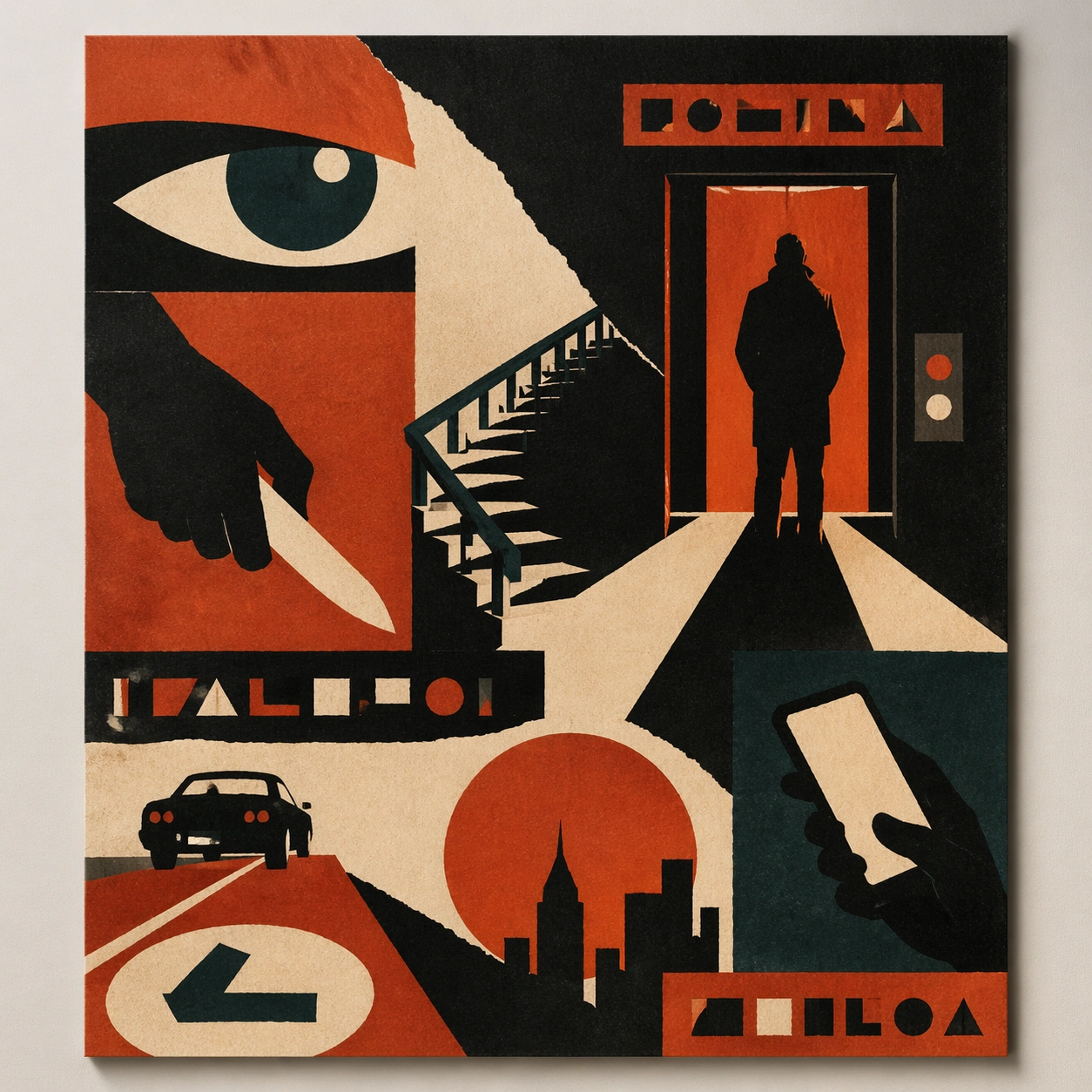
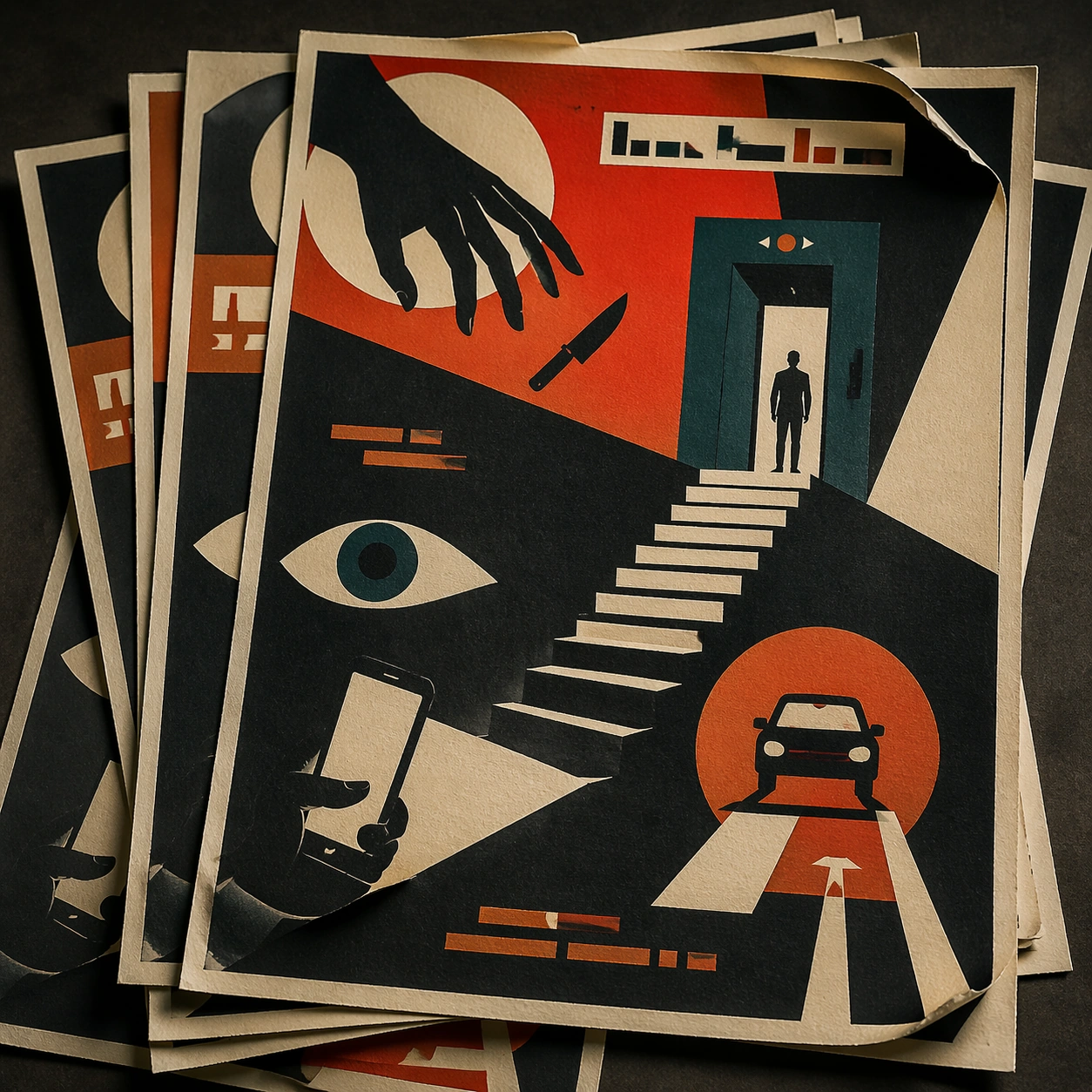
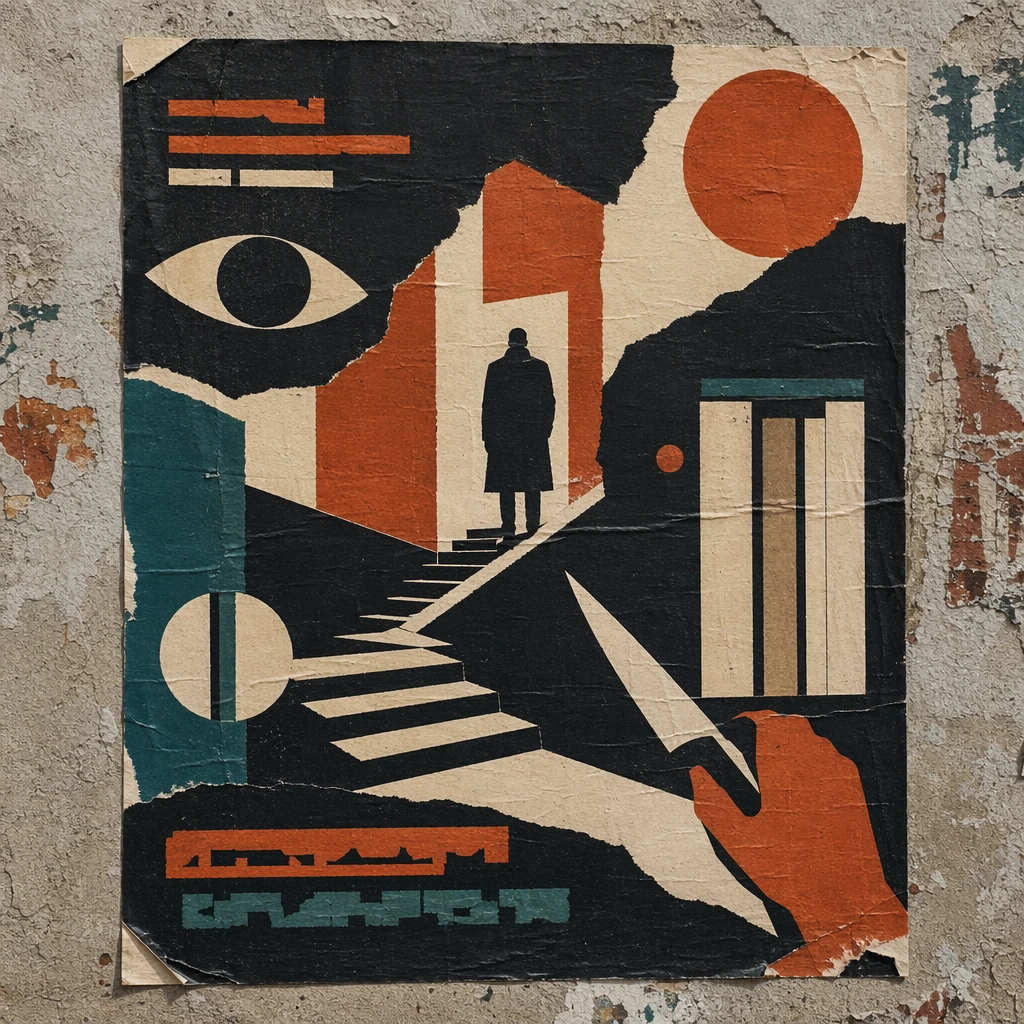
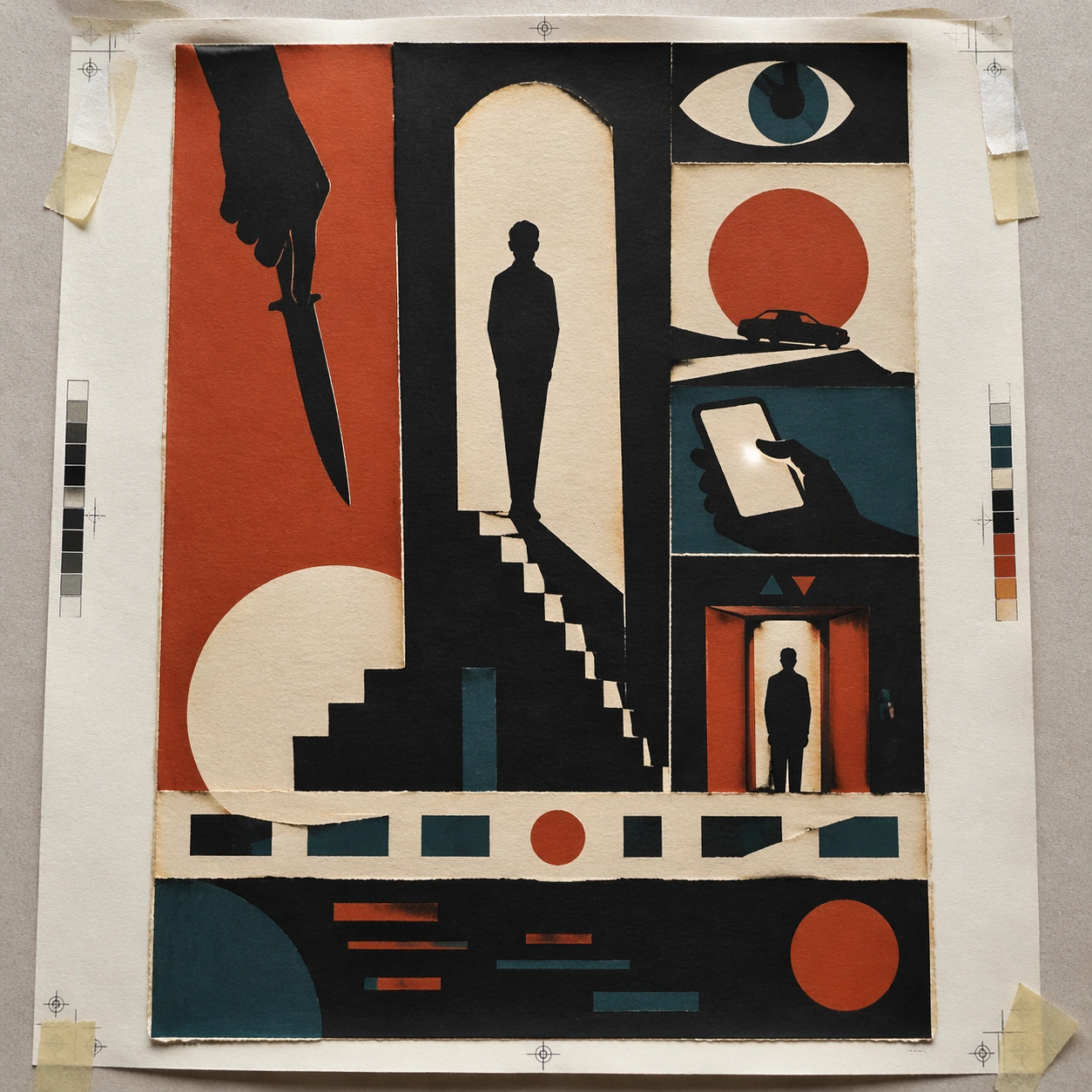
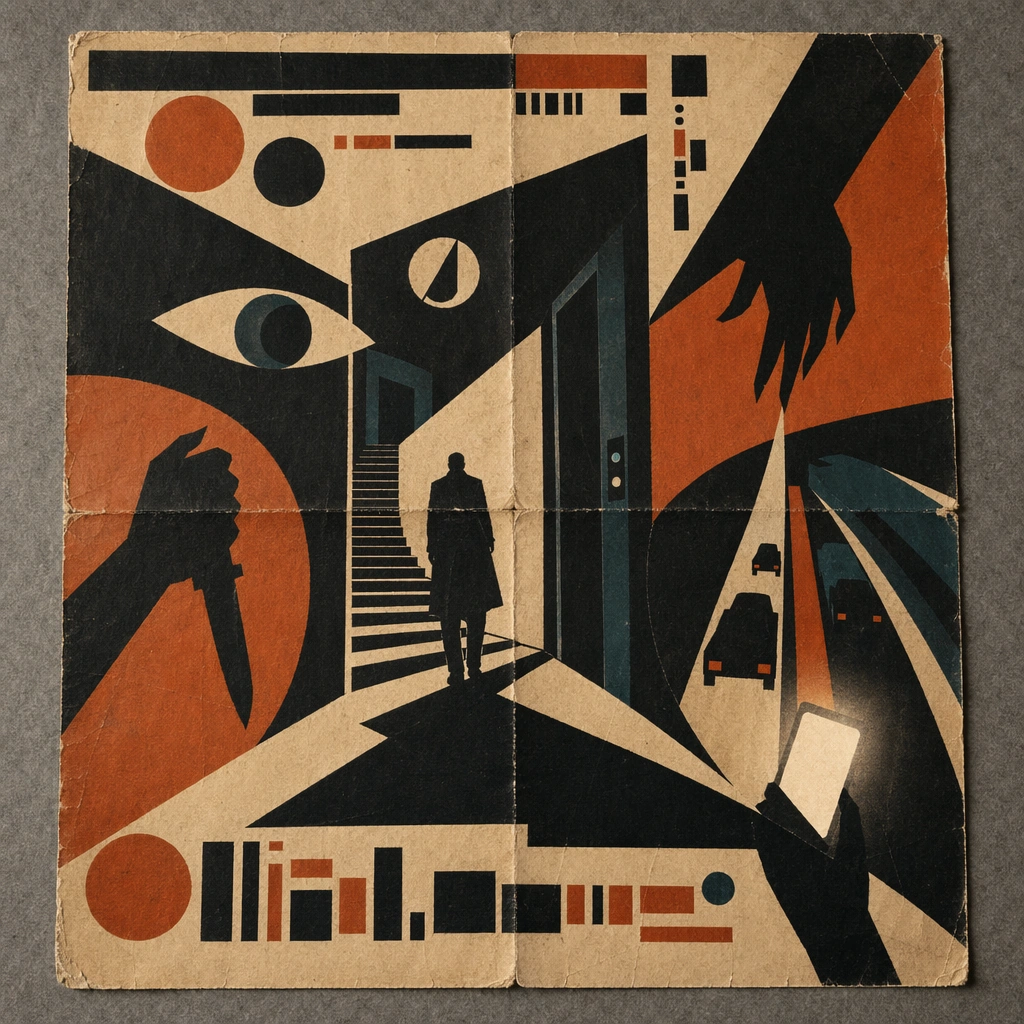
A square conservation-table view of a vintage poster laid on gray felt under raking light, with visible fold lines, softened corners, and subtle aging that still preserves the integrity of the image. The poster should express mid-century minimalist paper-cut poster language driven by torn shapes, narrative negative space, and three-color restraint, using matte black, rust orange, cream, and a very limited dark teal accent and a tactile surface appropriate to the medium.

Subject:
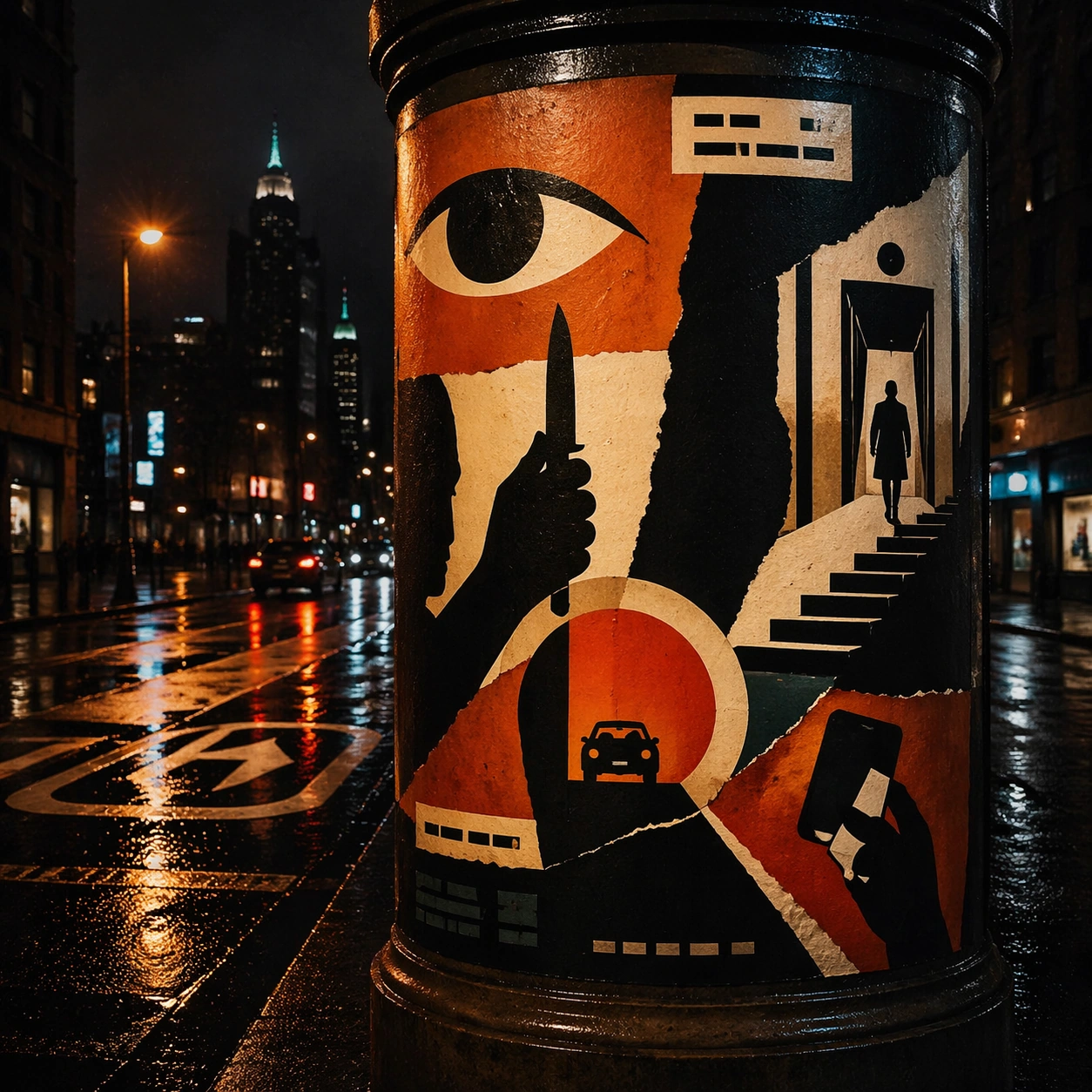
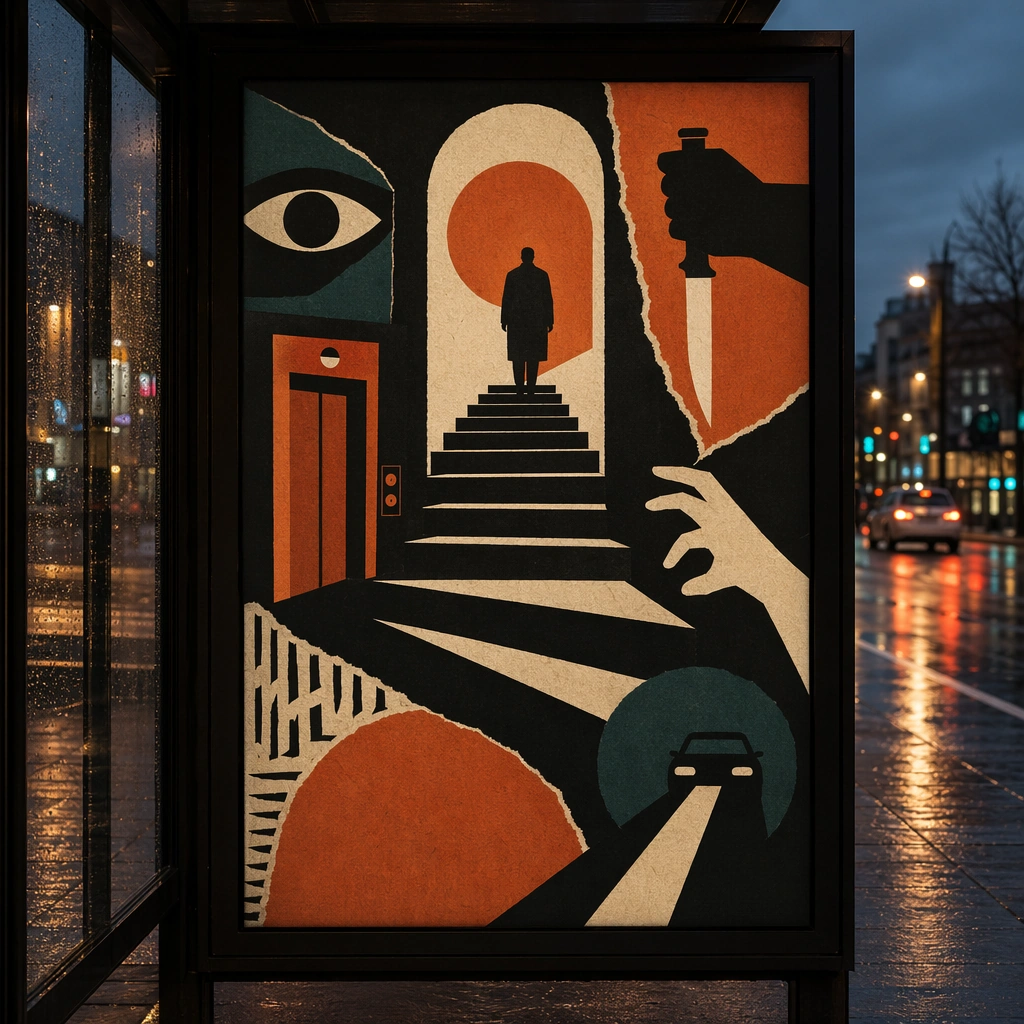
Present the poster as an archive copy that has been stored, unfolded, and carefully documented, letting age and handling reveal how the design holds up across time. Use single silhouettes, staircases, hands, knives, eyes, circles, doorways, and dramatic shadows as the main visual ingredients, and organize them with simple cut-paper title bars and glyph fragments kept abstract and unreadable. For the contemporary-subject axis, thread in ride-share lanes, phone glare, and elevator doors converted into severe paper-cut suspense. The poster must feel like an original design object rather than a reproduction of any known work.

Important details:
Aging must stay believable rather than theatrical: slight yellowing, fold memory, edge wear, and pigment variation should support the historical or crafted feeling of the style. Preserve deliberate imbalance, clean cut contours, visible paper fibers, and story told through absence as much as presence. Keep every letterform abstract and non-readable, as if it were a typographic texture rather than language. Make the style unmistakable through composition, palette, surface behavior, and symbolic compression. no glossy gradients, no tiny fiddly detail, no photoreal rendering, no ornamental clutter.

Use case:
Paper-Cut Film single study 5/9, testing archival endurance and age character.

Constraints:
No readable text, no watermark, no logos, preserve exact 1:1 aspect ratio, no copyrighted characters, no real brand marks, no QR codes, no interface chrome, no accidental gibberish lettering.
Jak używać
- Skopiuj cały oryginalny prompt wraz z parametrami.
- Dostosuj temat, tekst i kompozycję do swoich potrzeb.
- Użyj zgodnego narzędzia zewnętrznego; sprawdź warunki dostępu i wynik.
Przed rozpoczęciem
- Sprawdź, czy potrzebny jest obraz referencyjny. Zgodność nie potwierdza modelu użytego do przykładu.
- Sprawdź nazwy, liczby i napisy; wyniki zależą od wersji modelu.