
Oryginalny dokument
GPT Image 2 · en
Scene:
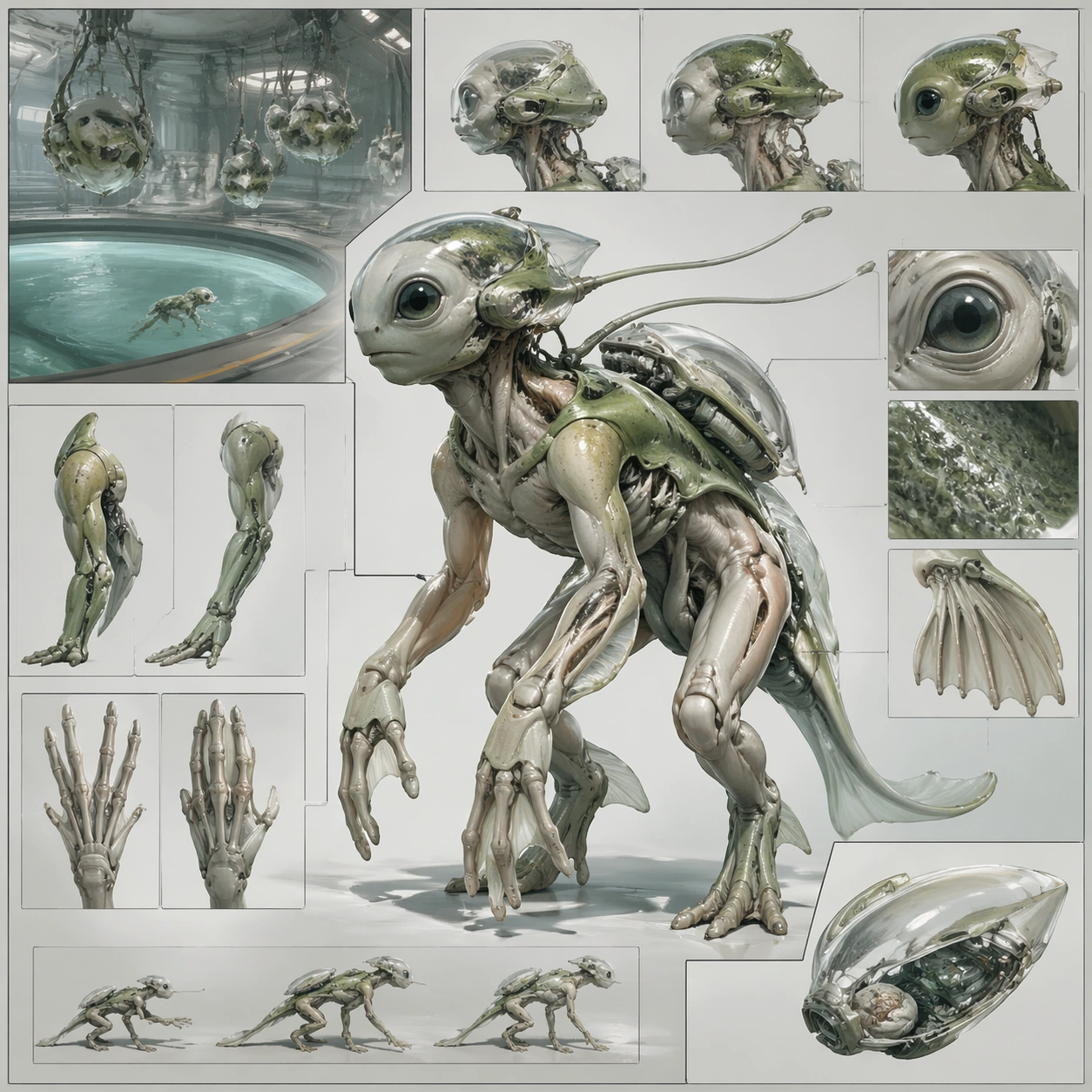
Design a square biomechanical concept plate that reads clearly from a distance and rewards close inspection. Use one strong main pose or view supported by carefully placed detail windows, component callouts, or environment cues. Build a structured board around a juvenile-scale scout with growth chamber context, limb studies, and sensory anatomy panels.

Subject:
Show a complete biomechanical entity or subsystem with clear task identity: guard, carrier, swimmer, scout, ritual host, or similar. The fusion between body logic and engineering should feel intentional and load-bearing. Make the entity feel designed for agility, learning, and environmental reading rather than combat.

Important details:
Favor anatomical structure, movement plausibility, and material discipline over surface noise. The result should feel buildable within its fictional world, not like a random accumulation of tubes and spikes. Use material softness and developmental cues to differentiate it from finished military machines. Preserve readable biomechanics so joints, muscles, shells, and machines all seem to cooperate under one functional design logic.

Use case:
Biomech Board single study 3/5, designed as a self-contained support image for this topic.

Constraints:
No readable text, no watermark, no logos, preserve exact 1:1 aspect ratio, no horror torture imagery, no generic robot soldier clichés, no comic-book posing, no logo insignia, no cute mascot look.
Jak używać
- Skopiuj cały oryginalny prompt wraz z parametrami.
- Dostosuj temat, tekst i kompozycję do swoich potrzeb.
- Użyj zgodnego narzędzia zewnętrznego; sprawdź warunki dostępu i wynik.
Przed rozpoczęciem
- Sprawdź, czy potrzebny jest obraz referencyjny. Zgodność nie potwierdza modelu użytego do przykładu.
- Sprawdź nazwy, liczby i napisy; wyniki zależą od wersji modelu.