Oryginalny dokument
GPT Image 2 · en
Scene:
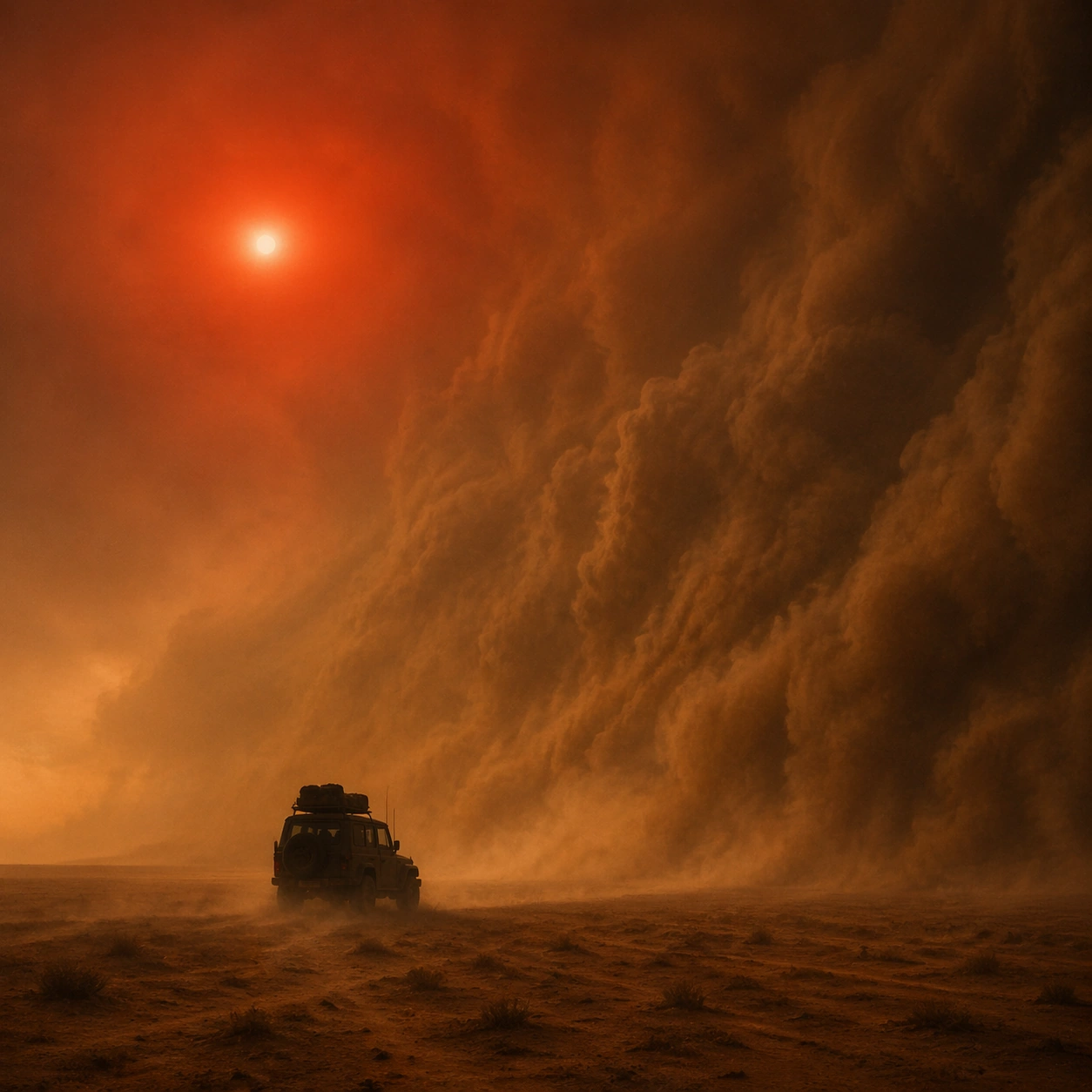
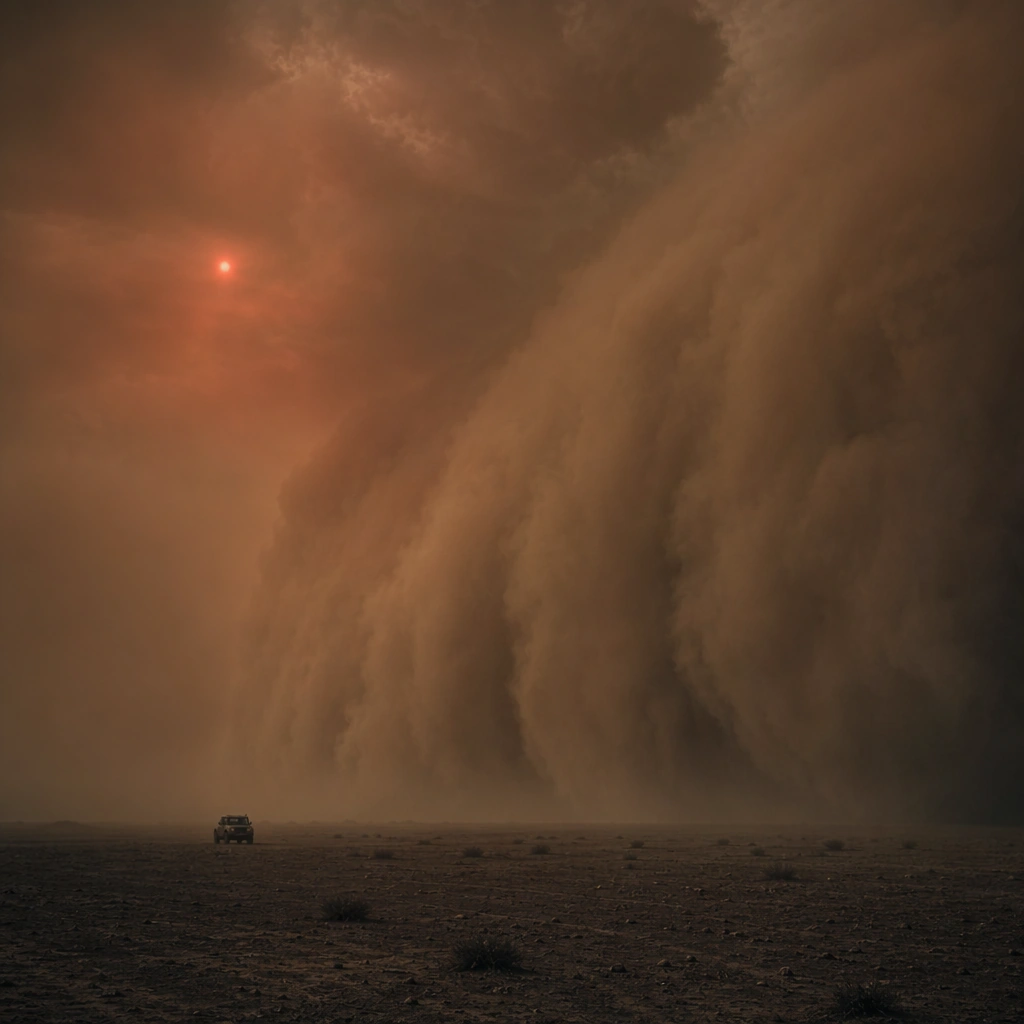
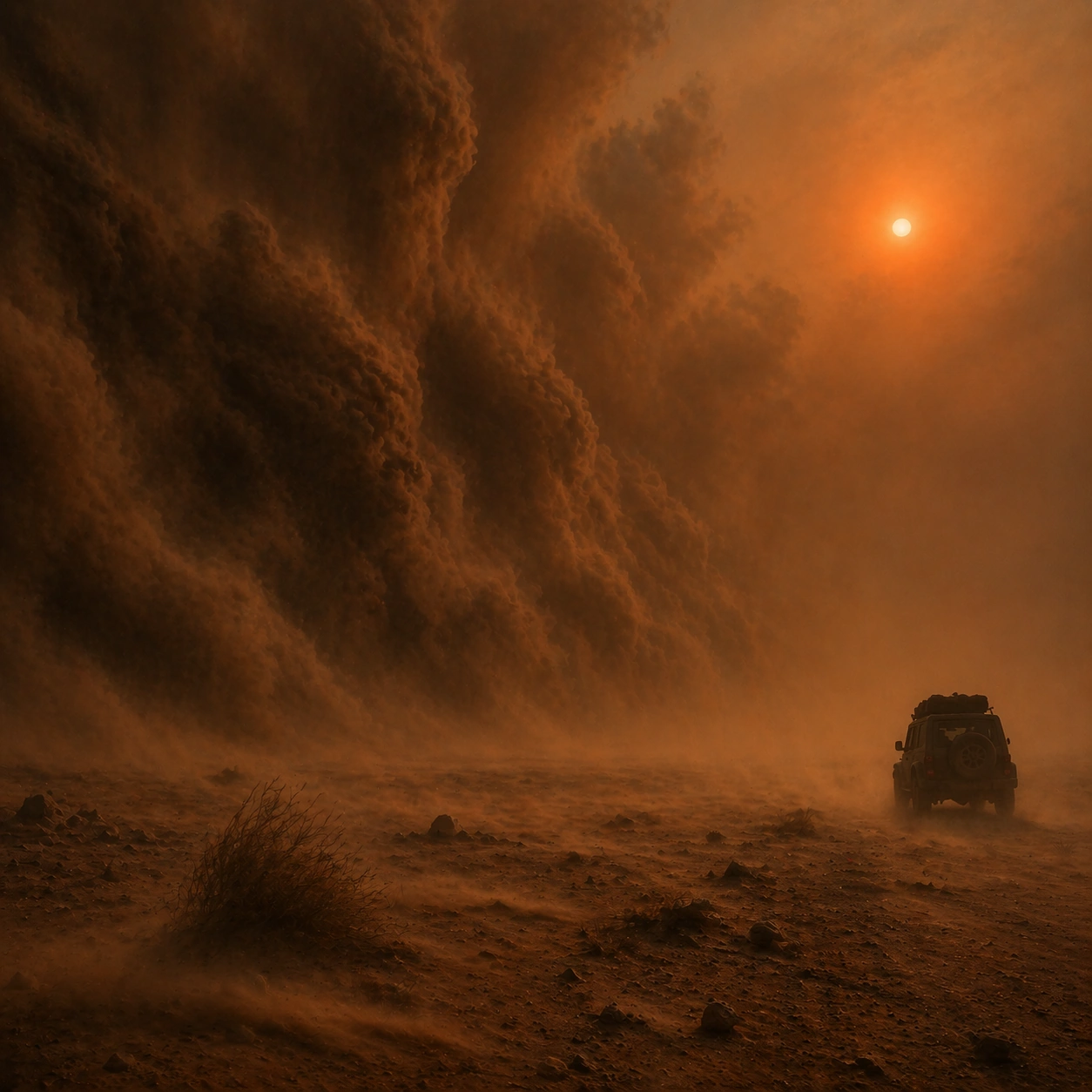
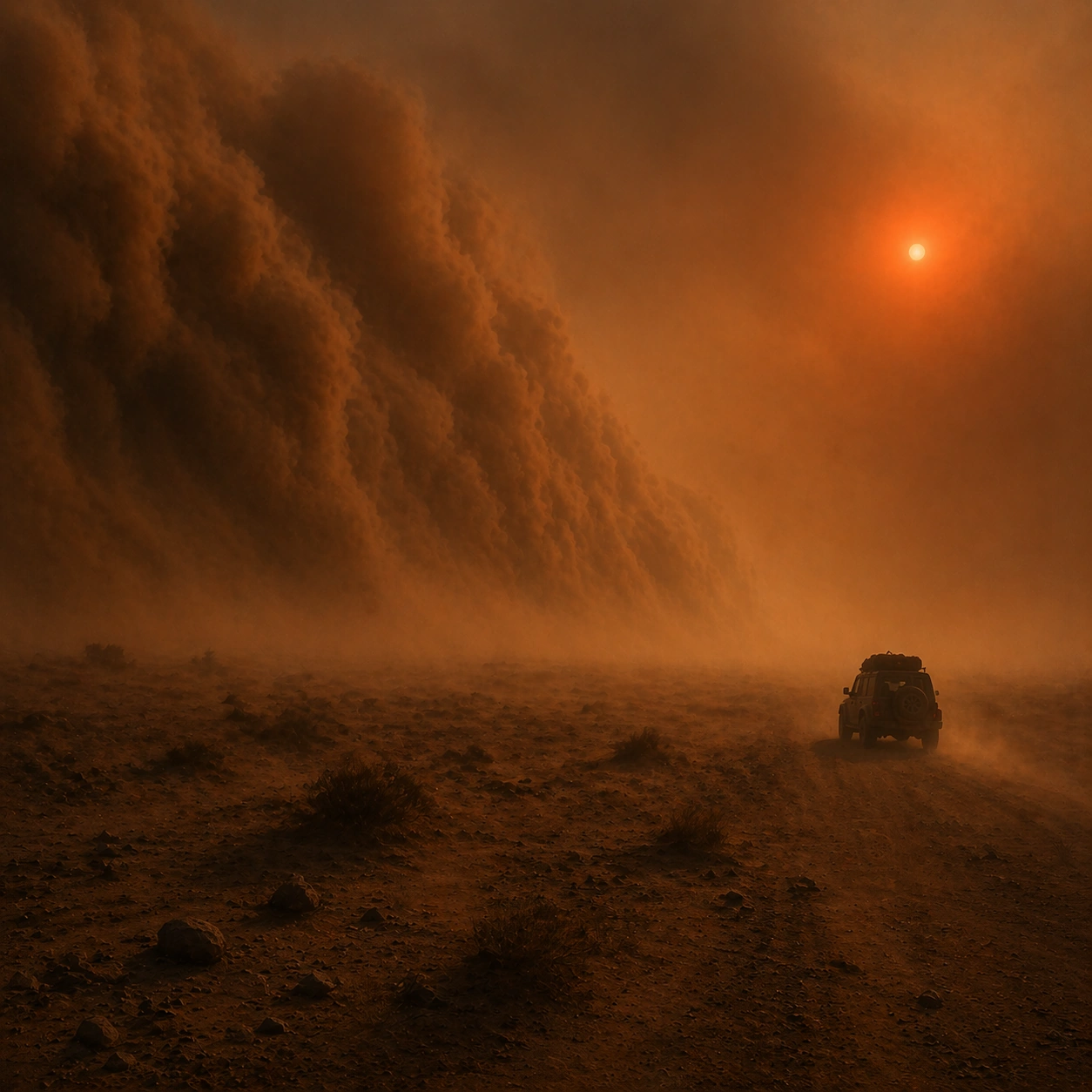
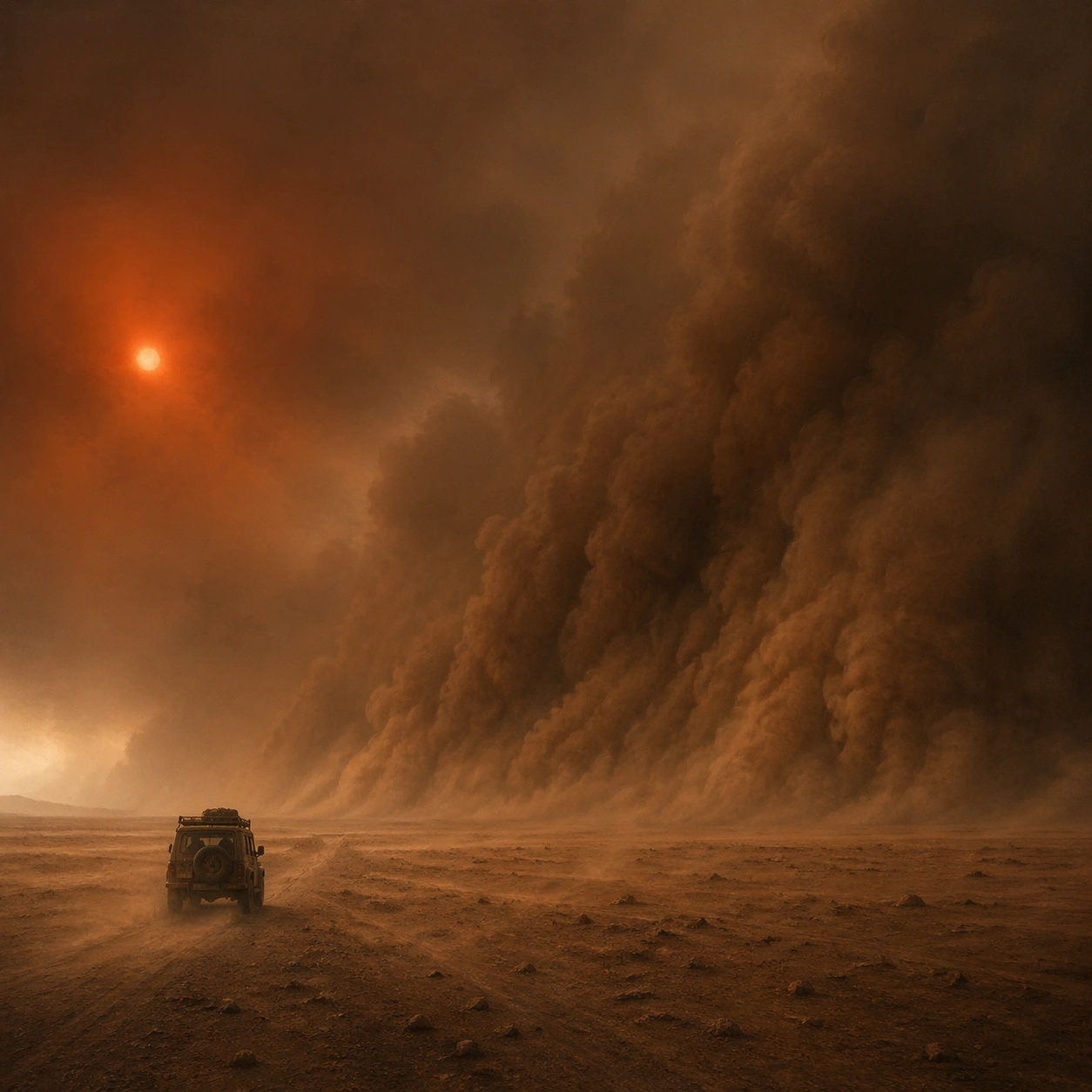
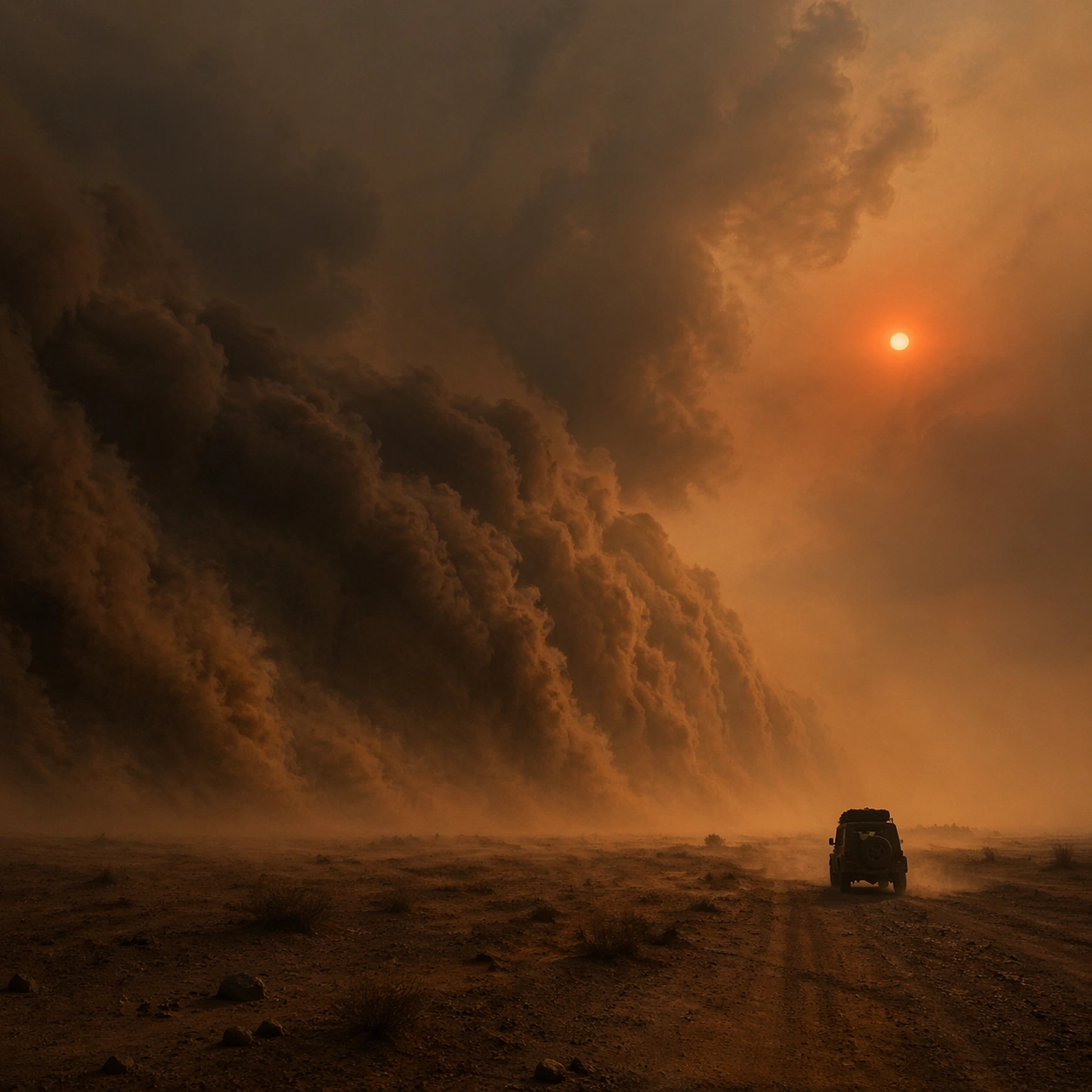
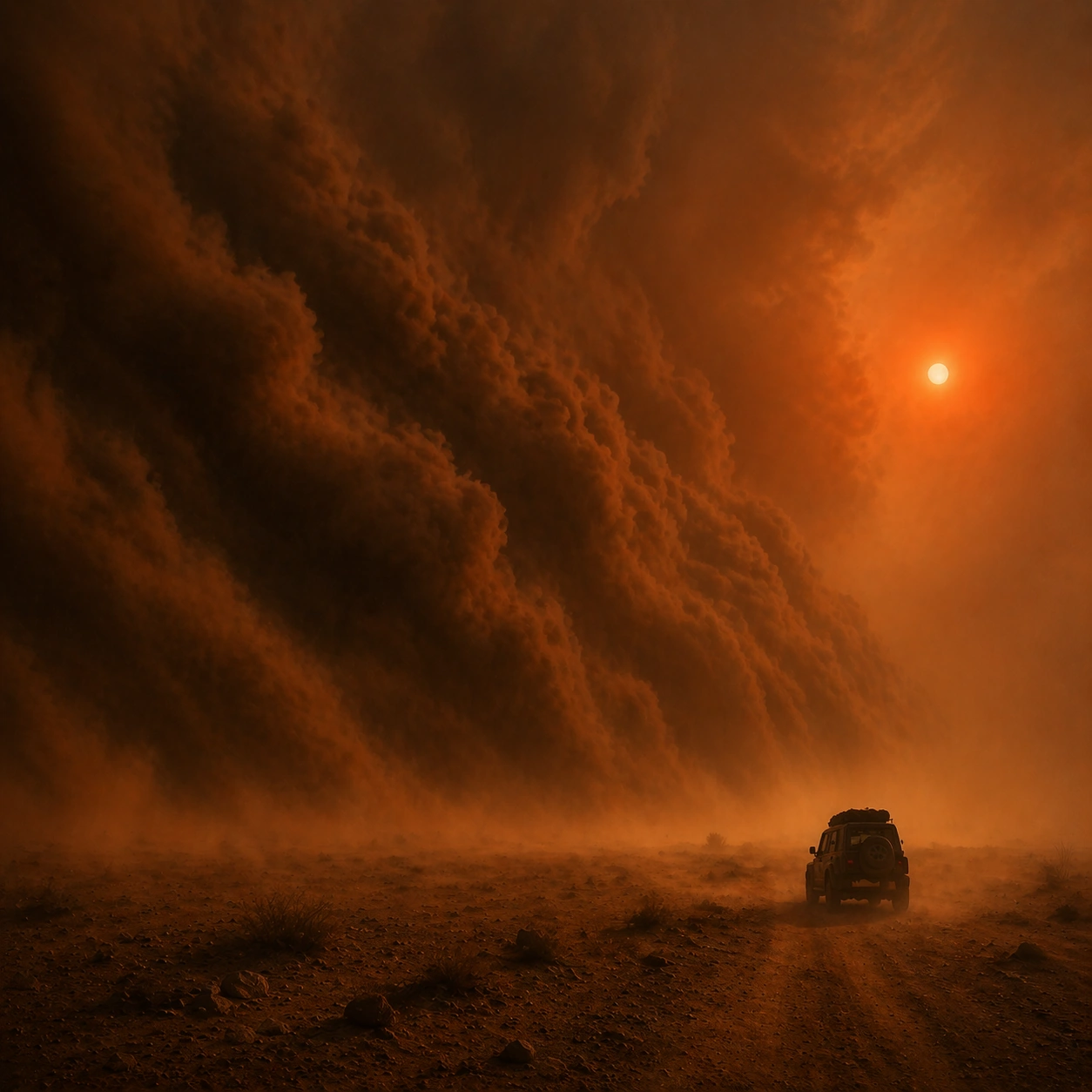
Create a square cinematic still for Sandstorm Apocalypse Sun. Use production-grade photoreal lighting, disciplined lens behavior, and a composition that feels like a finished key frame from an original film rather than a casual snapshot. A colossal wall of sand advances across an open plain under a dim blood-red sun, with the air turning ochre and gray, horizon contrast collapsing, and the ground scoured by wind-driven dust. Push the composition toward the emotional peak of the same setup, with the most dramatic balance of brightness, shadow, or atmospheric density inside the established world.

Subject:
Build a coherent original scene whose emotional center comes from atmosphere, light physics, and spatial clarity. Avoid relying on celebrity likeness, franchise iconography, or stylized illustration shortcuts. One jeep or utility vehicle in silhouette should provide a simple scale cue, while the real subject remains the storm front, the compressed sky, and the sense of irreversible movement across the land. Everything should still read as the same location and same event, but framed for maximum narrative force and visual closure.

Important details:
Preserve a believable physical world with strong depth layering, careful color separation, and premium image discipline. Make the airborne dust granular and directional, with partial visibility, layered turbulence, and a sun disc that feels filtered by dense particulate atmosphere rather than pasted in as a graphic symbol. Make it feel like the strongest hero frame of the sequence without breaking continuity or introducing a new design language.

Use case:
Sandstorm Sun series study 4/9.

Constraints:
No readable text, no watermark, no logos, preserve exact 1:1 aspect ratio, no city ruins, no readable license plates, no zombies, no science-fiction armor, no clean air clarity.
Jak używać
- Skopiuj cały oryginalny prompt wraz z parametrami.
- Dostosuj temat, tekst i kompozycję do swoich potrzeb.
- Użyj zgodnego narzędzia zewnętrznego; sprawdź warunki dostępu i wynik.
Przed rozpoczęciem
- Sprawdź, czy potrzebny jest obraz referencyjny. Zgodność nie potwierdza modelu użytego do przykładu.
- Sprawdź nazwy, liczby i napisy; wyniki zależą od wersji modelu.