Oryginalny dokument
GPT Image 2 · en
Scene:
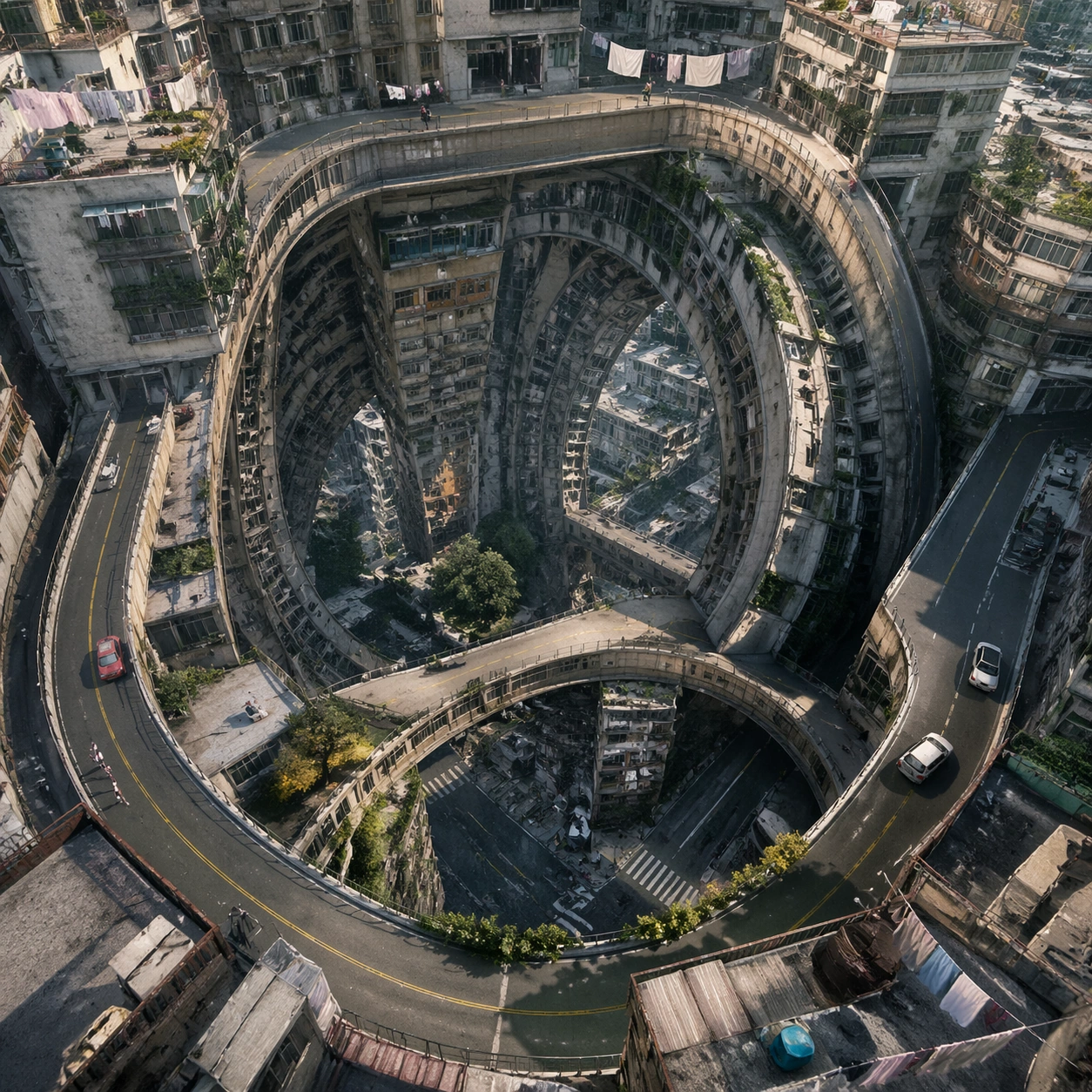
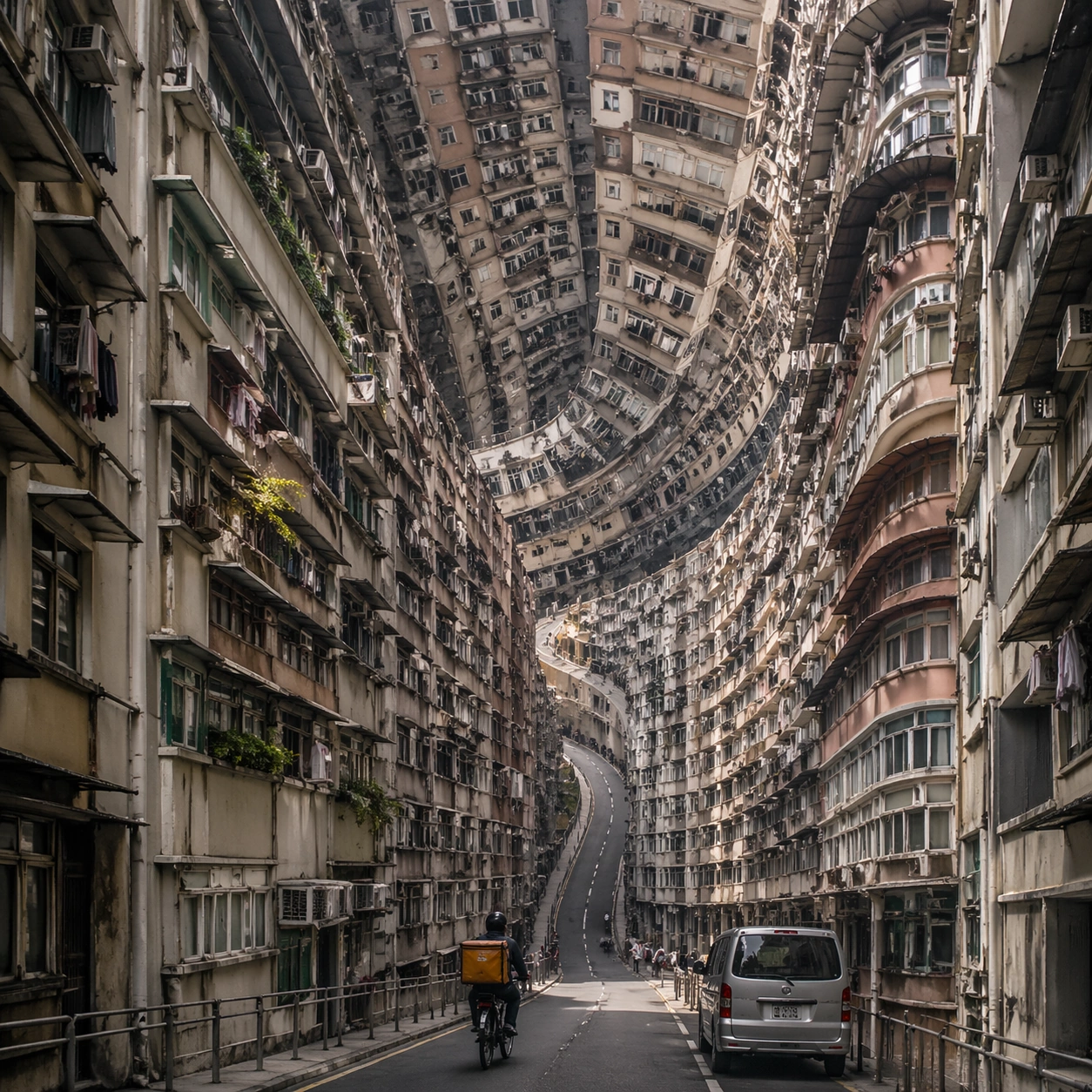
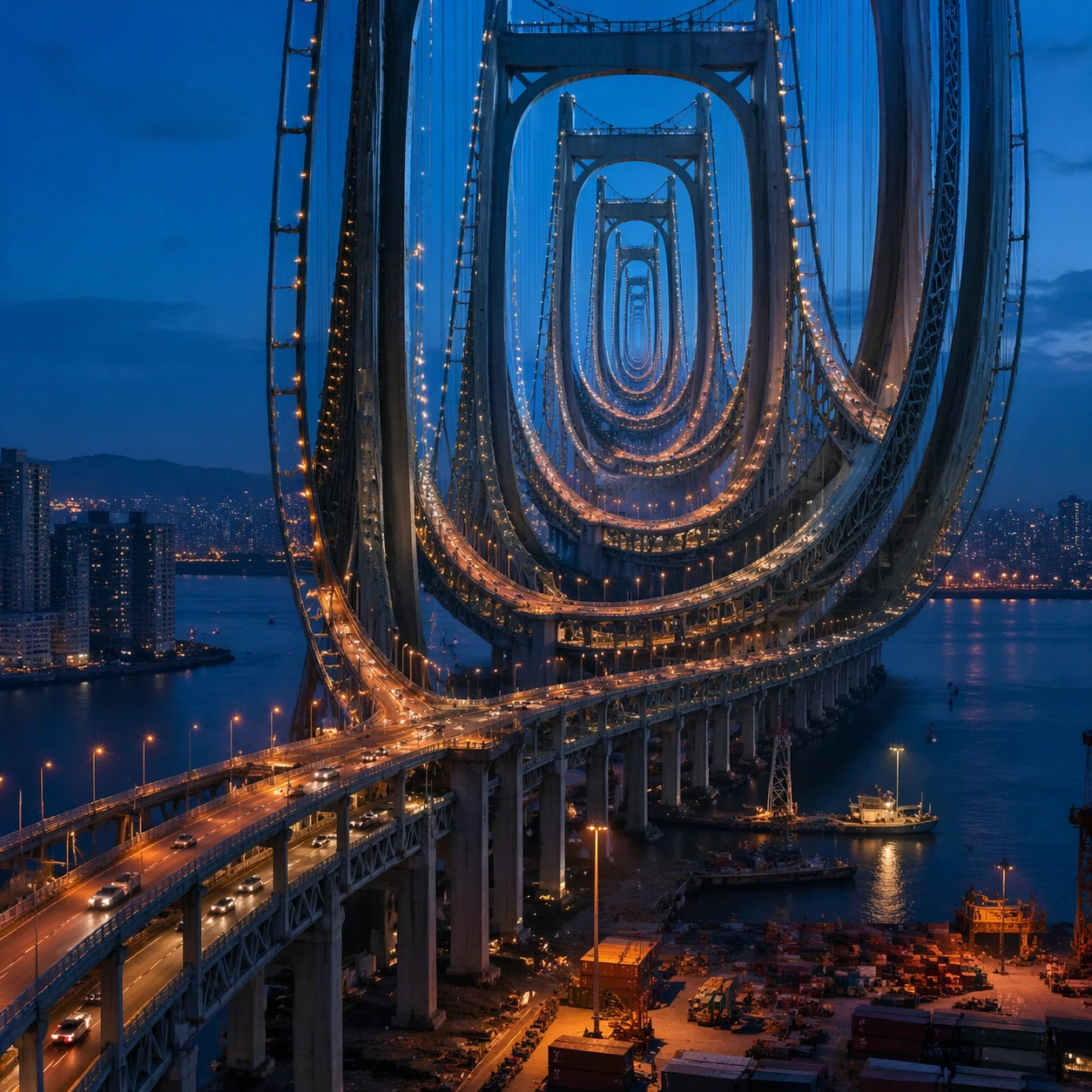
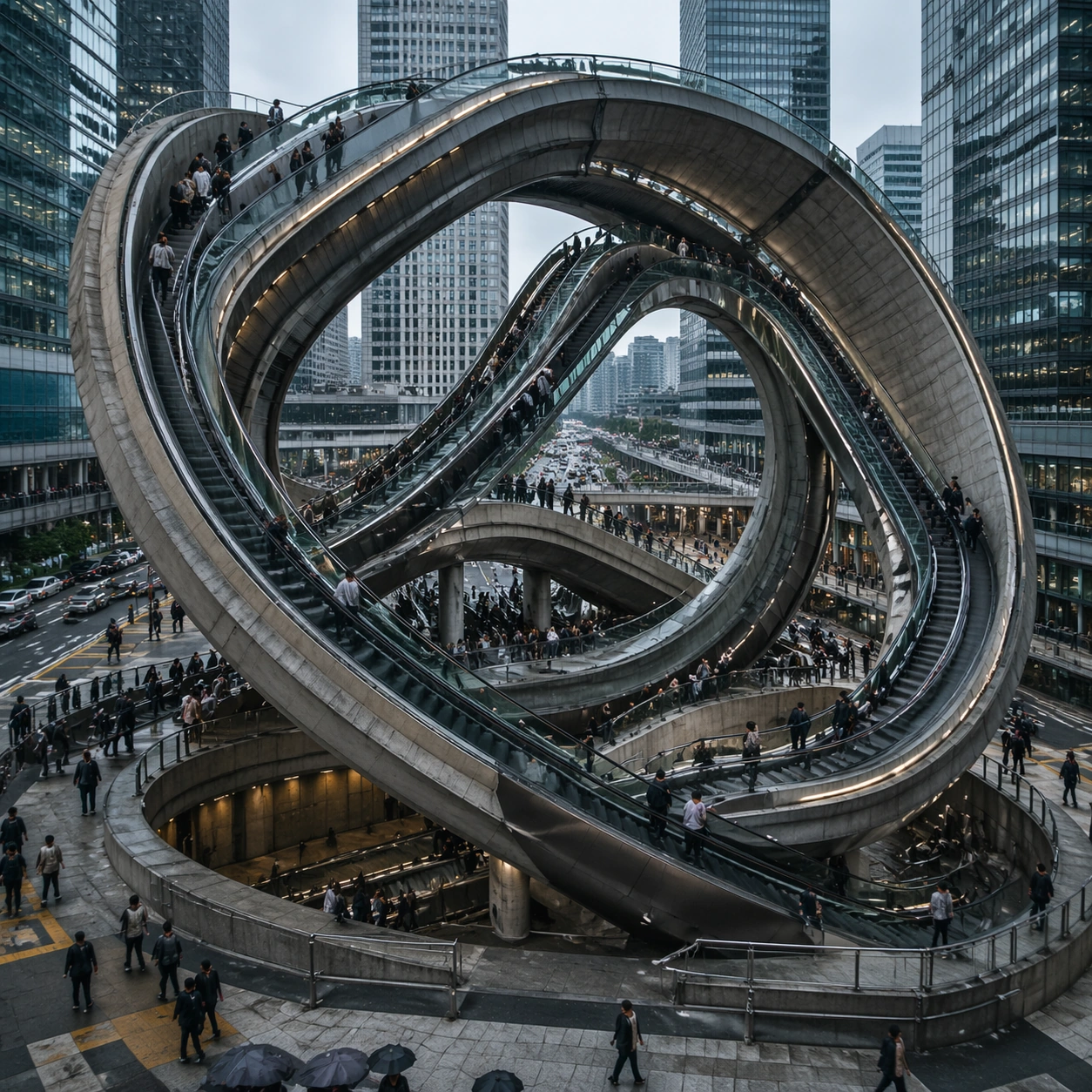
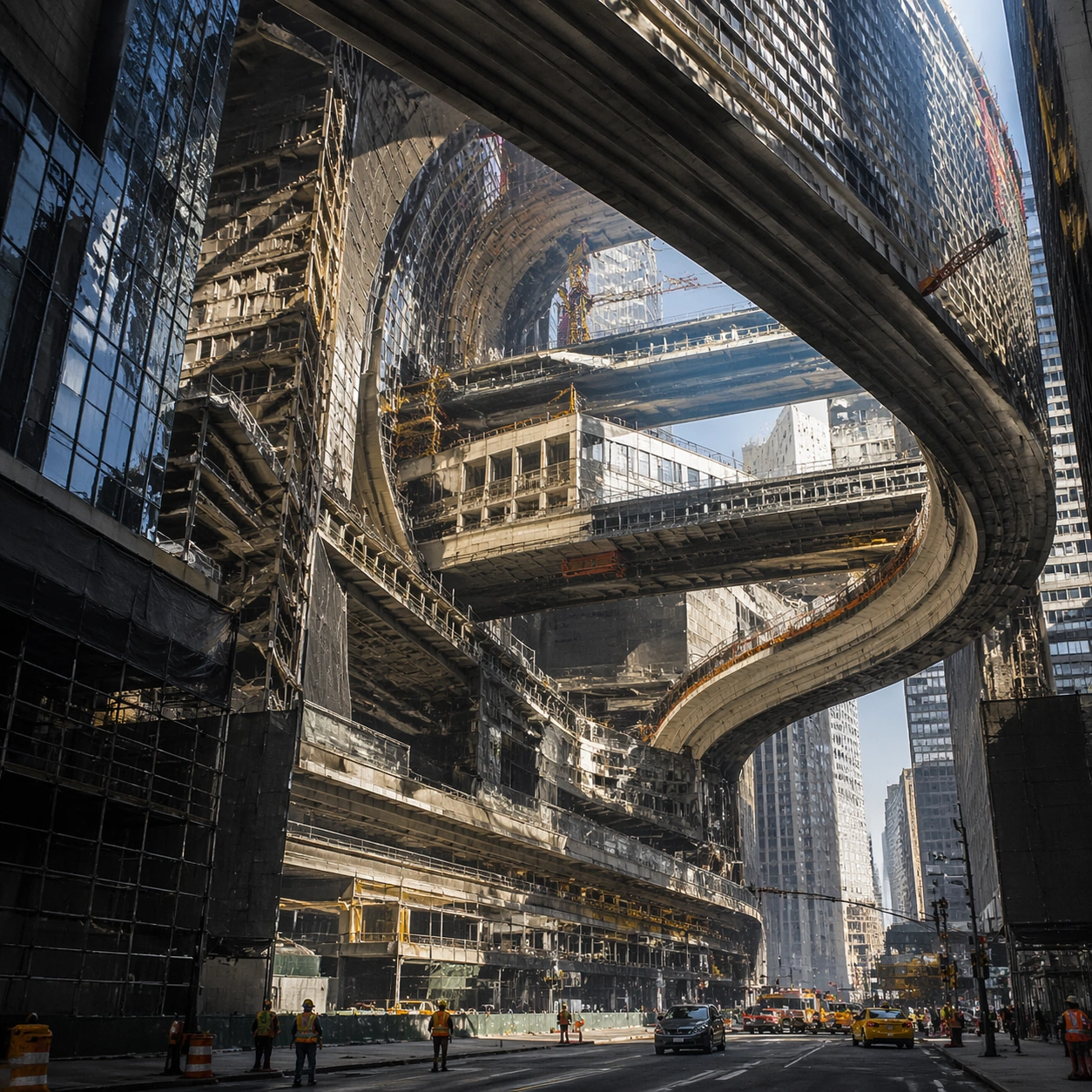
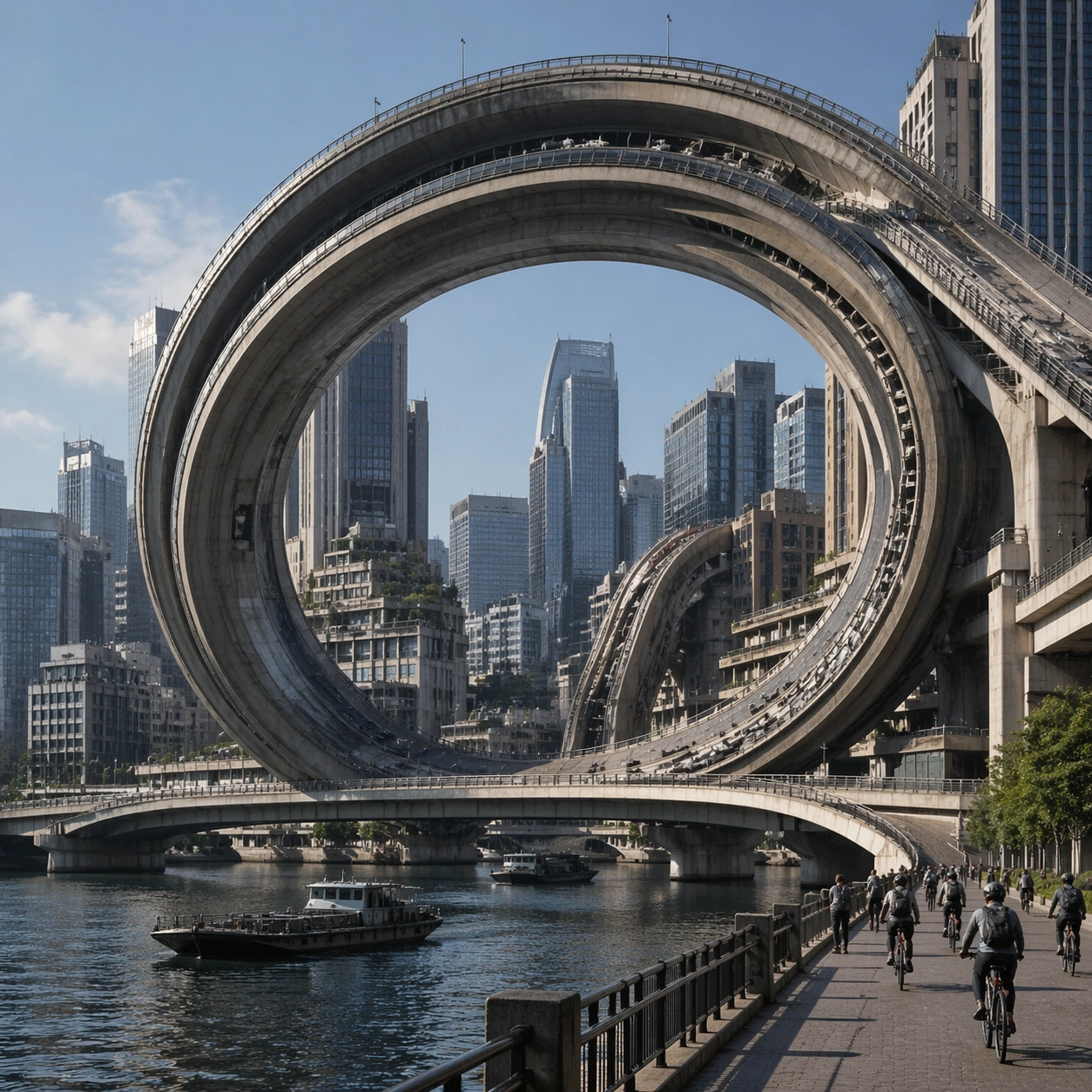
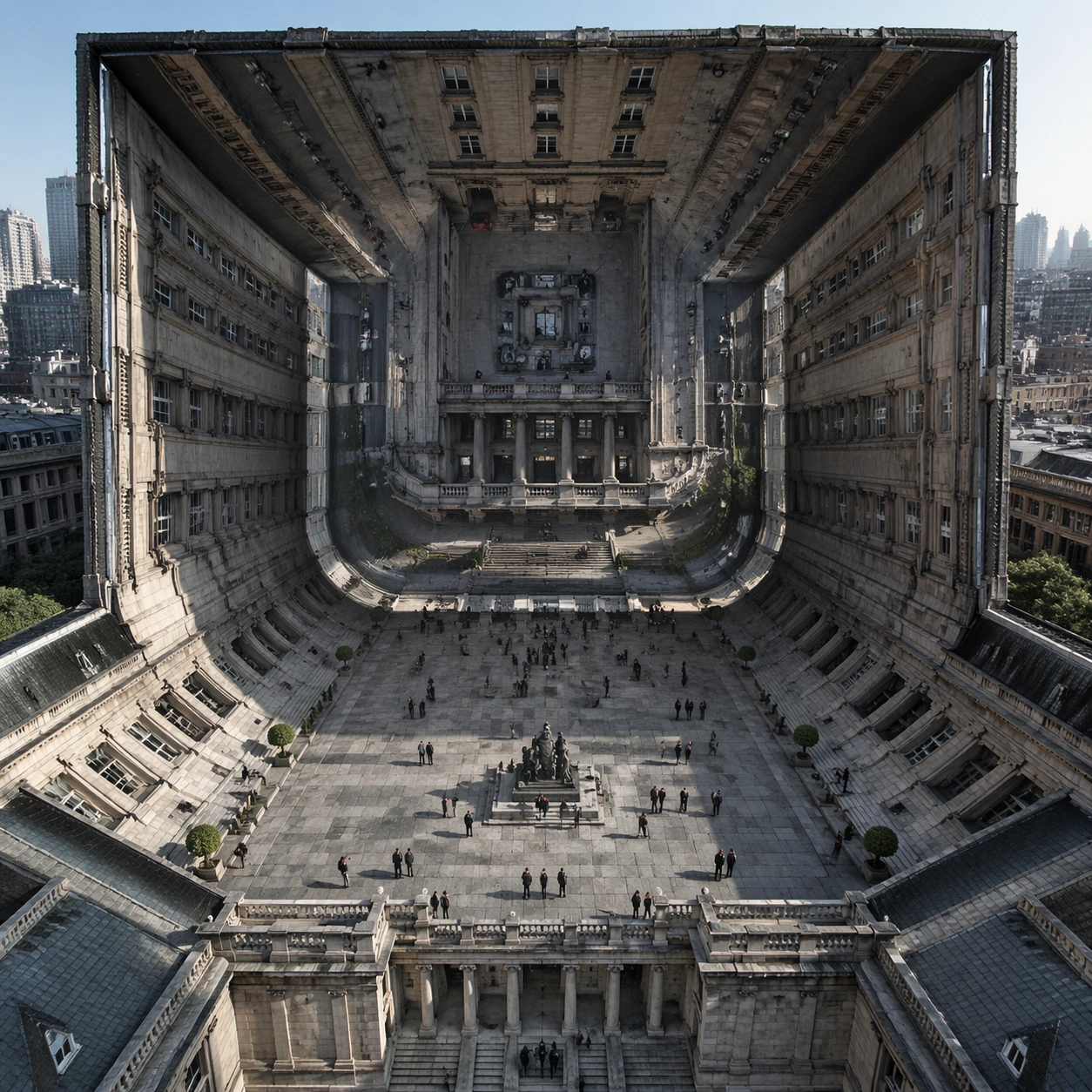
A square large-format city spectacle where architecture bends, folds, loops, or stacks while remaining physically convincing enough to feel like a photographed event. Use broad daylight or clear night atmosphere, dense urban material detail, and a sense of immense scale achieved through believable streets, facades, traffic patterns, and tiny witnesses. Compose a stone museum courtyard whose four sides hinge upward into a partial cube, leaving the central paving exposed like a lidless box.

Subject:
The subject is the city itself as a time-distorted machine, with roads, bridges, towers, or plazas curling into impossible but coherent formations. Human figures should remain small, secondary, and practical, acting only as scale markers for the urban transformation. Visitors stand around a sculpture plinth at the bottom center, appearing minute beneath the lifted walls.

Important details:
The signature rule is to make the impossible read as engineered reality rather than fantasy painting. Preserve concrete, glass, asphalt, railings, shadows, and structural rhythm with enough discipline that the folded geometry feels like a captured phenomenon. Avoid cartoon simplification, magical particles, or decorative sci-fi ornament. Keep the stone cornices, windows, and shadow angles consistent so the upward hinge reads as one continuous architectural event.

Use case:
Time-Folded Urban Spectacle single study 5/9.

Constraints:
No readable text, no watermark, no logos, preserve exact 1:1 aspect ratio, no fantasy castle shapes, no random levitating debris without structure, no superhero cues, no branded billboards, no unreadable poster text, no broken anatomy, no low-detail background, no accidental text fragments.
Jak używać
- Skopiuj cały oryginalny prompt wraz z parametrami.
- Dostosuj temat, tekst i kompozycję do swoich potrzeb.
- Użyj zgodnego narzędzia zewnętrznego; sprawdź warunki dostępu i wynik.
Przed rozpoczęciem
- Sprawdź, czy potrzebny jest obraz referencyjny. Zgodność nie potwierdza modelu użytego do przykładu.
- Sprawdź nazwy, liczby i napisy; wyniki zależą od wersji modelu.