Oryginalny dokument
GPT Image 2 · en
Scene:
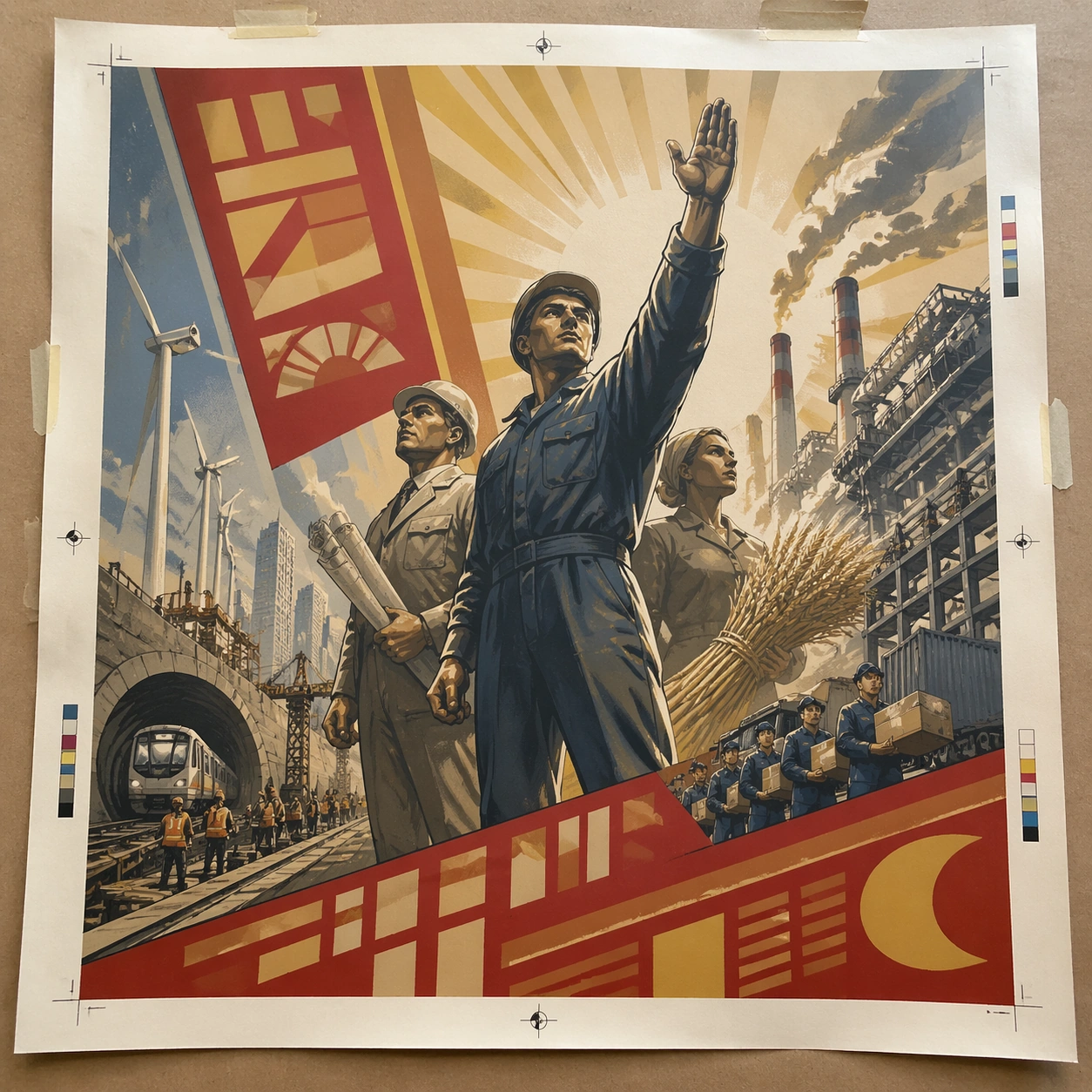
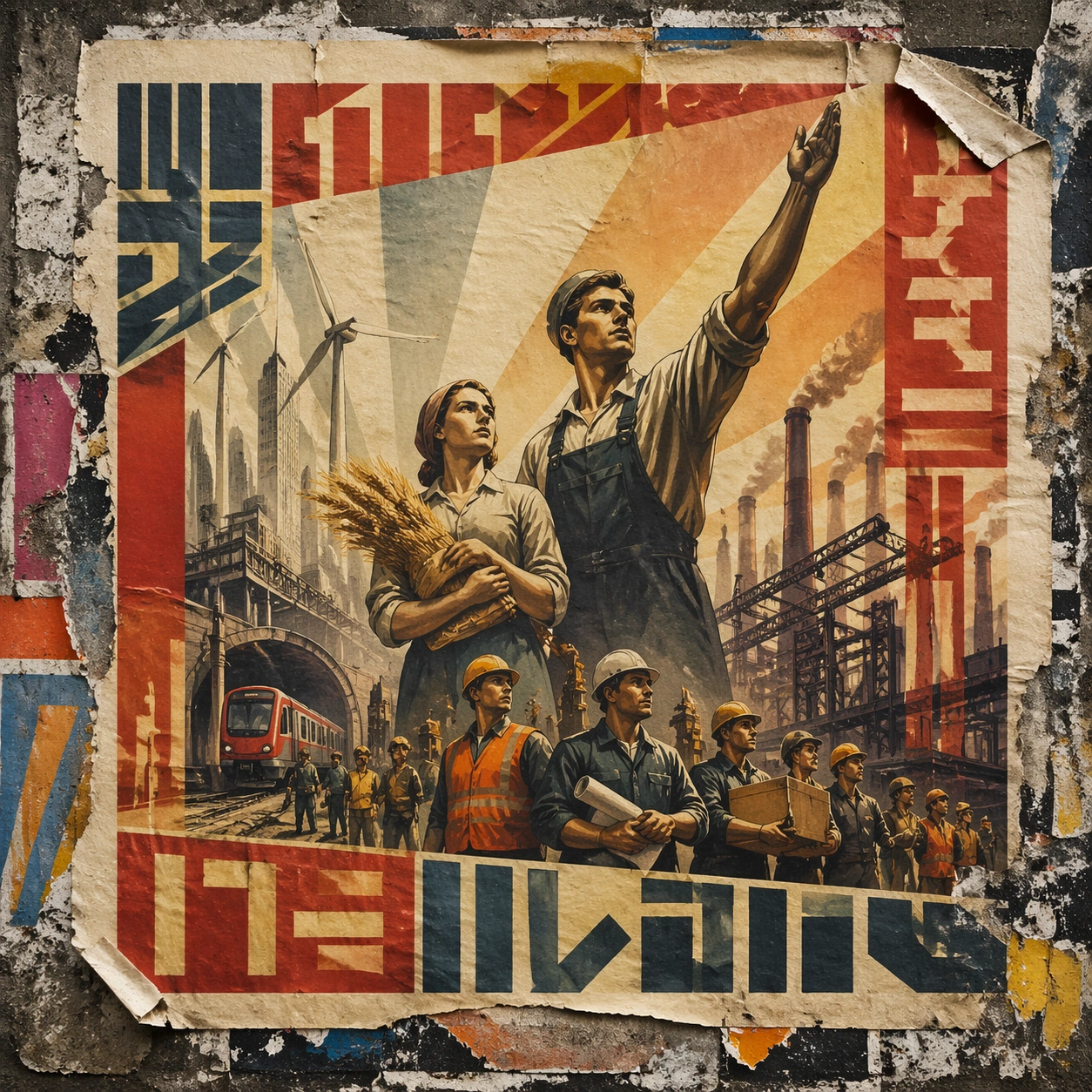
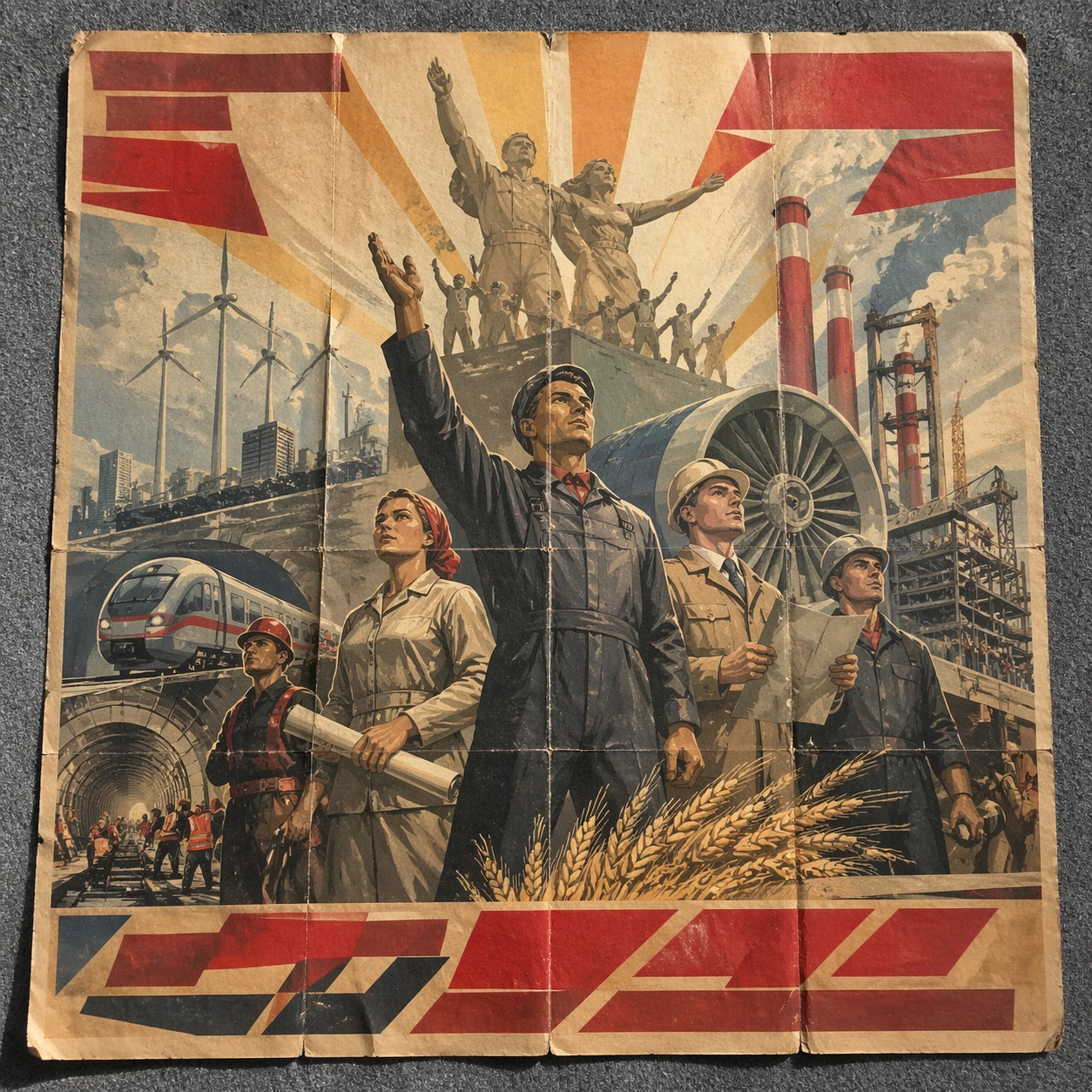
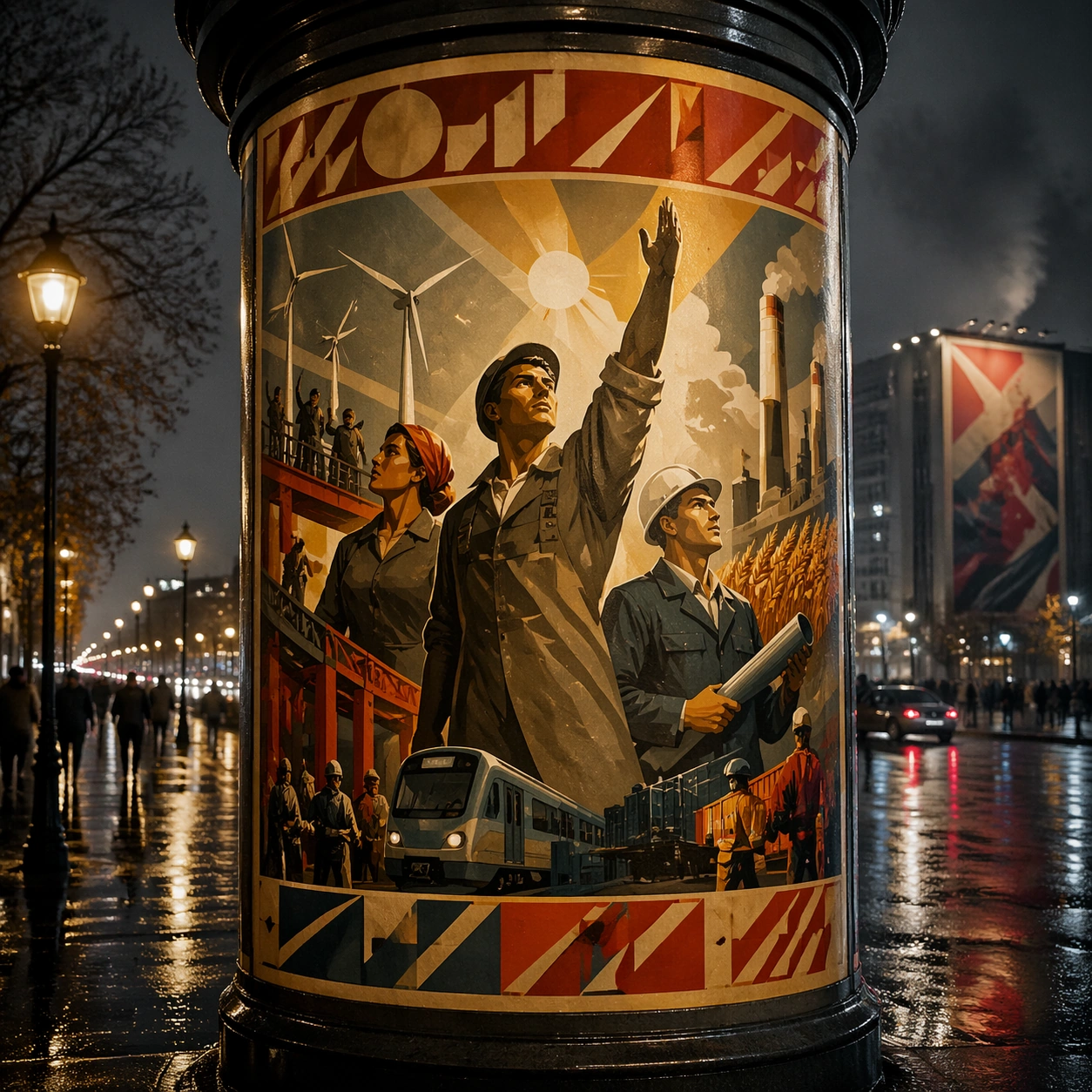
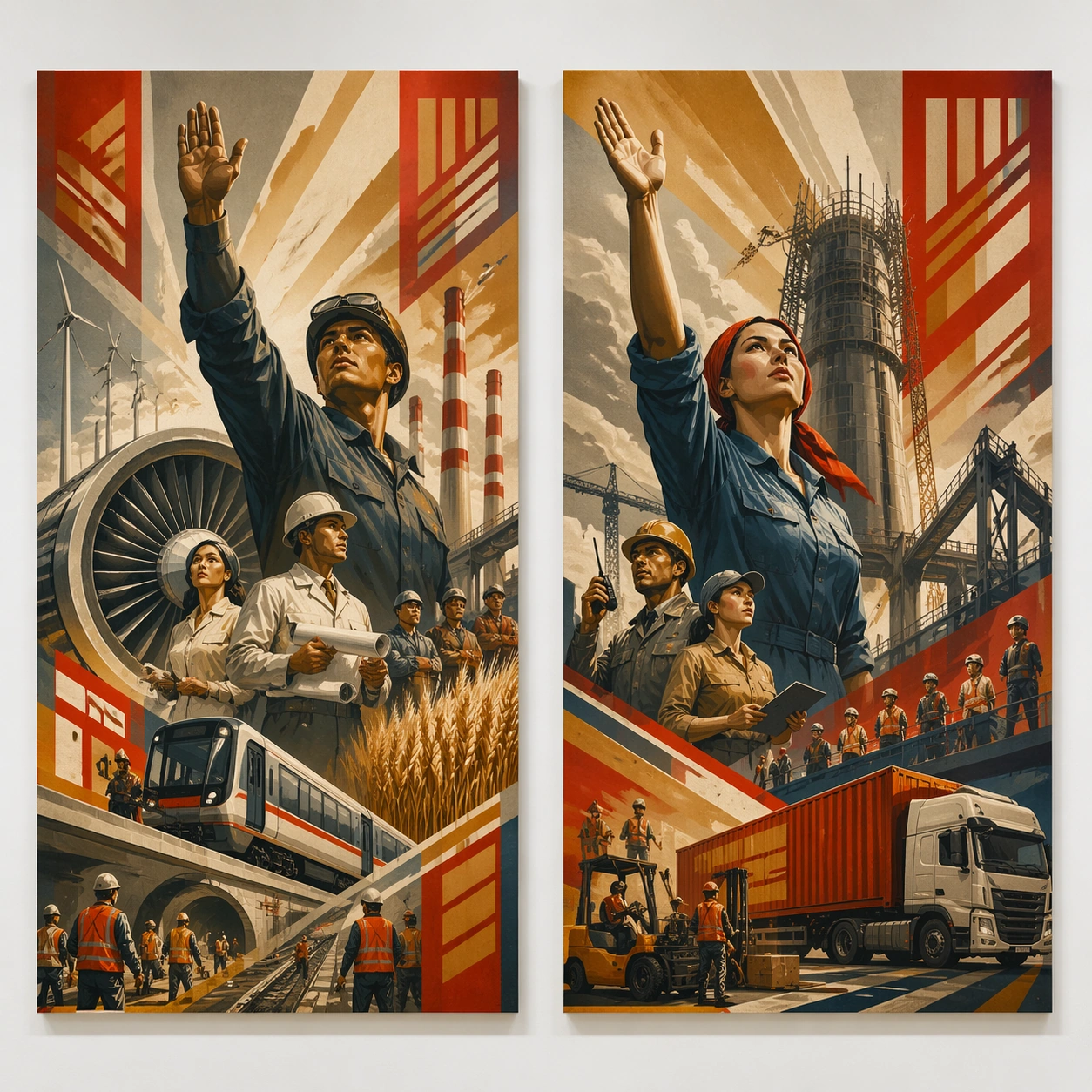
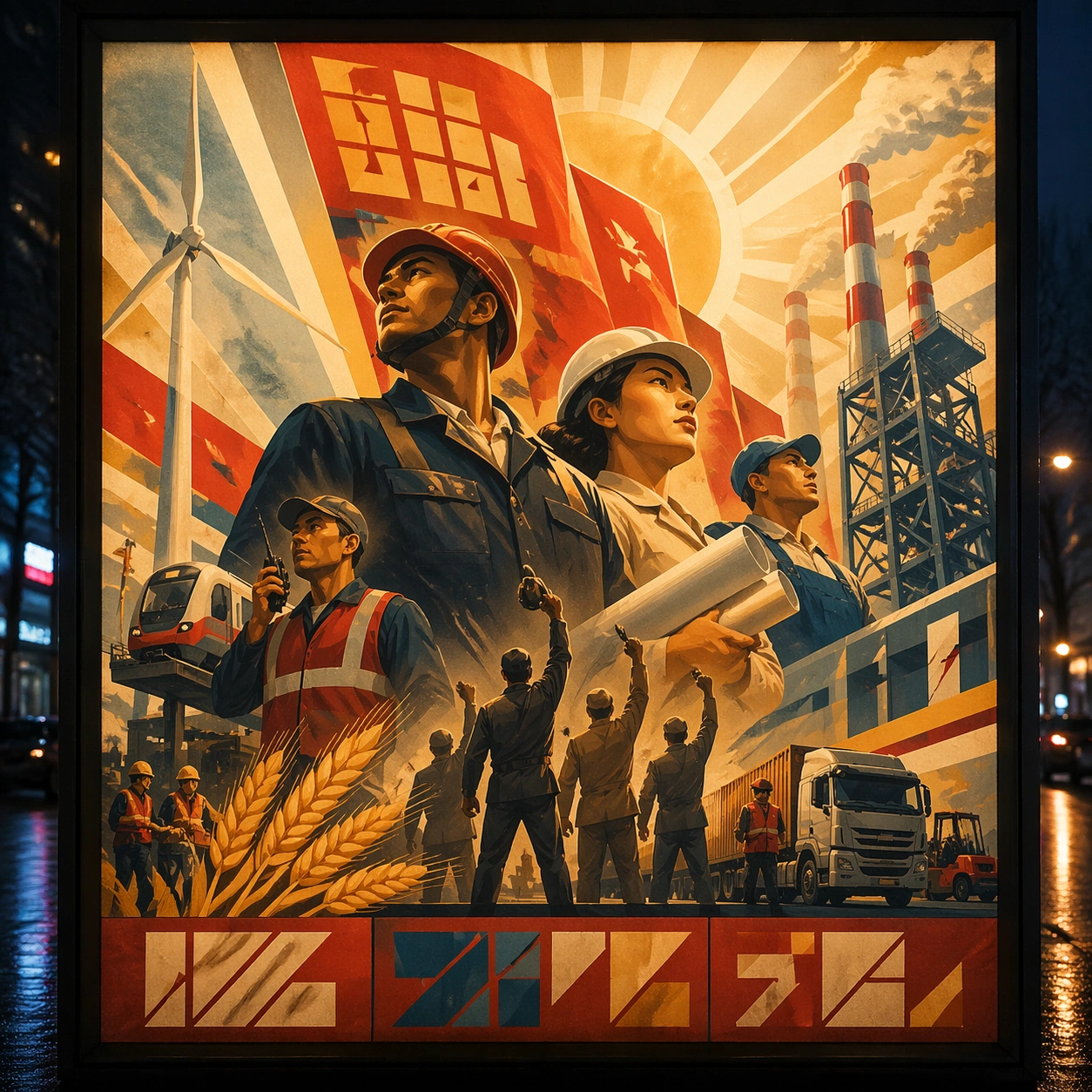
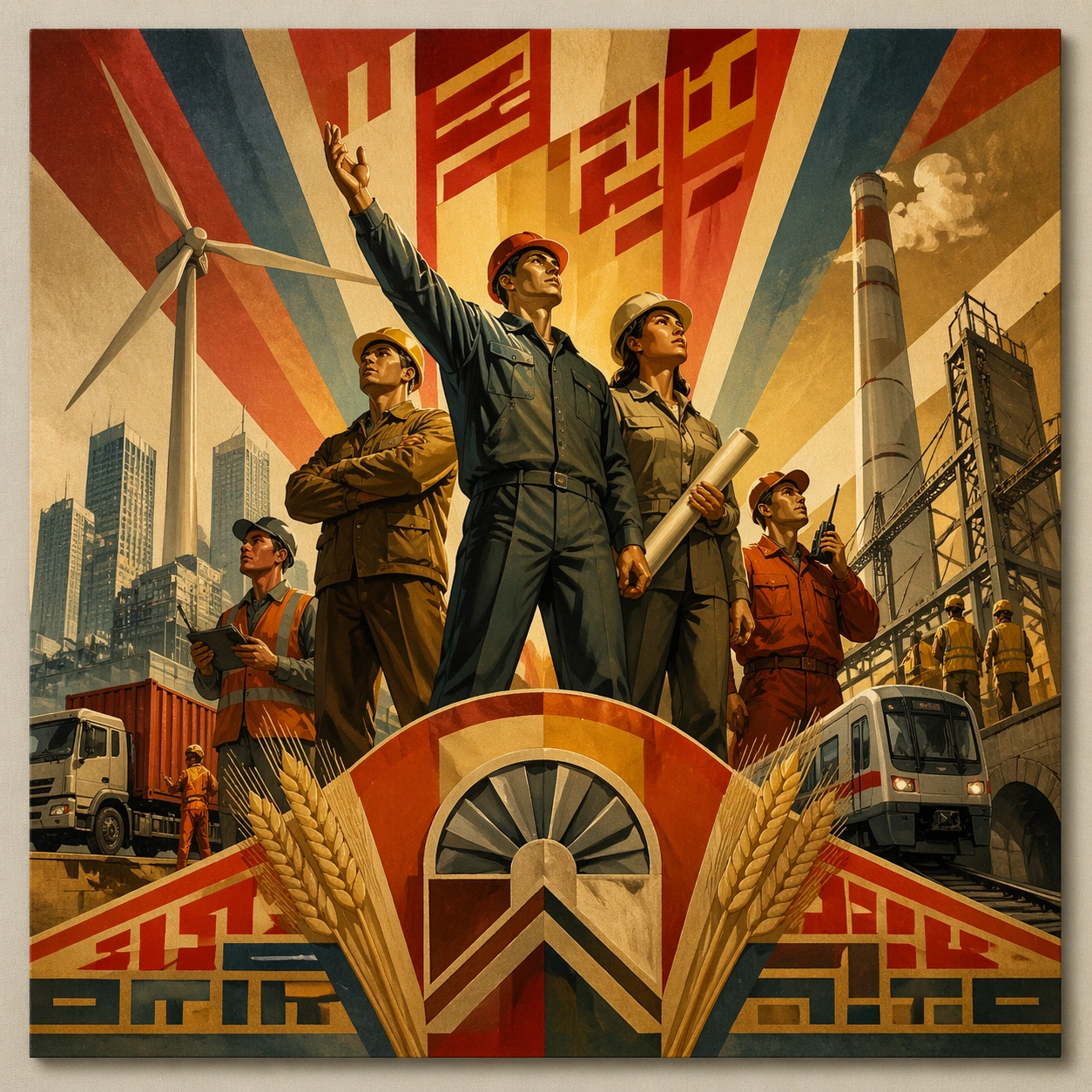
A square front-facing poster presentation on a clean neutral wall, lit like a premium print test, with crisp edges and a polished but still tactile finish appropriate to the style. The poster should express heroic monumental realism with low-angle figures, sunrise shafts, sculptural drapery, and industrial optimism, using red, ochre, cream, steel blue, and warm industrial smoke gray and a tactile surface appropriate to the medium.

Subject:
Apply the historical poster language to a contemporary urban subject so the old visual grammar proves it can carry present-day themes without losing authenticity or formal discipline. Use workers, engineers, turbines, wheat, chimneys, steel beams, and raised-arm silhouettes as the main visual ingredients, and organize them with bold banner-like glyph panels used as abstract propaganda blocks without readable wording. For the contemporary-subject axis, thread in renewable-energy towers, metro construction, and logistics workers recast through monumental heroic framing. The poster must feel like an original design object rather than a reproduction of any known work.

Important details:
This is not parody. The contemporary subject should feel genuinely absorbed into the style through palette, composition, symbolic compression, and non-readable lettering treatment. Preserve upward gaze, idealized anatomy, broad light geometry, and poster clarity at large scale. Keep every letterform abstract and non-readable, as if it were a typographic texture rather than language. Make the style unmistakable through composition, palette, surface behavior, and symbolic compression. no specific leaders, no state emblems, no satire, no gritty collapse imagery.

Use case:
Soviet Monumental single study 9/9, testing historical grammar on a present-day subject.

Constraints:
No readable text, no watermark, no logos, preserve exact 1:1 aspect ratio, no copyrighted characters, no real brand marks, no QR codes, no interface chrome, no accidental gibberish lettering.
Jak używać
- Skopiuj cały oryginalny prompt wraz z parametrami.
- Dostosuj temat, tekst i kompozycję do swoich potrzeb.
- Użyj zgodnego narzędzia zewnętrznego; sprawdź warunki dostępu i wynik.
Przed rozpoczęciem
- Sprawdź, czy potrzebny jest obraz referencyjny. Zgodność nie potwierdza modelu użytego do przykładu.
- Sprawdź nazwy, liczby i napisy; wyniki zależą od wersji modelu.