Oryginalny dokument
GPT Image 2 · en
Scene:
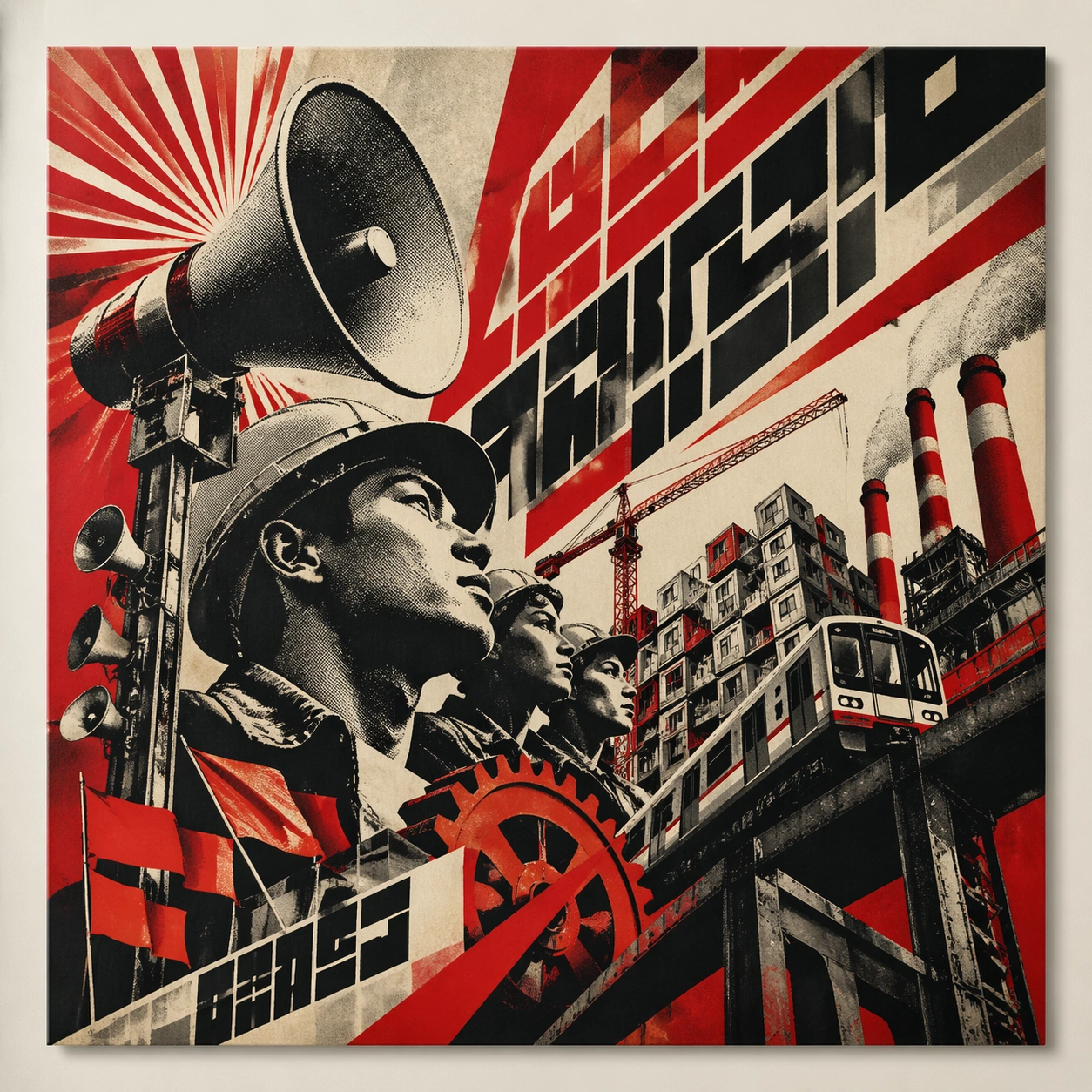
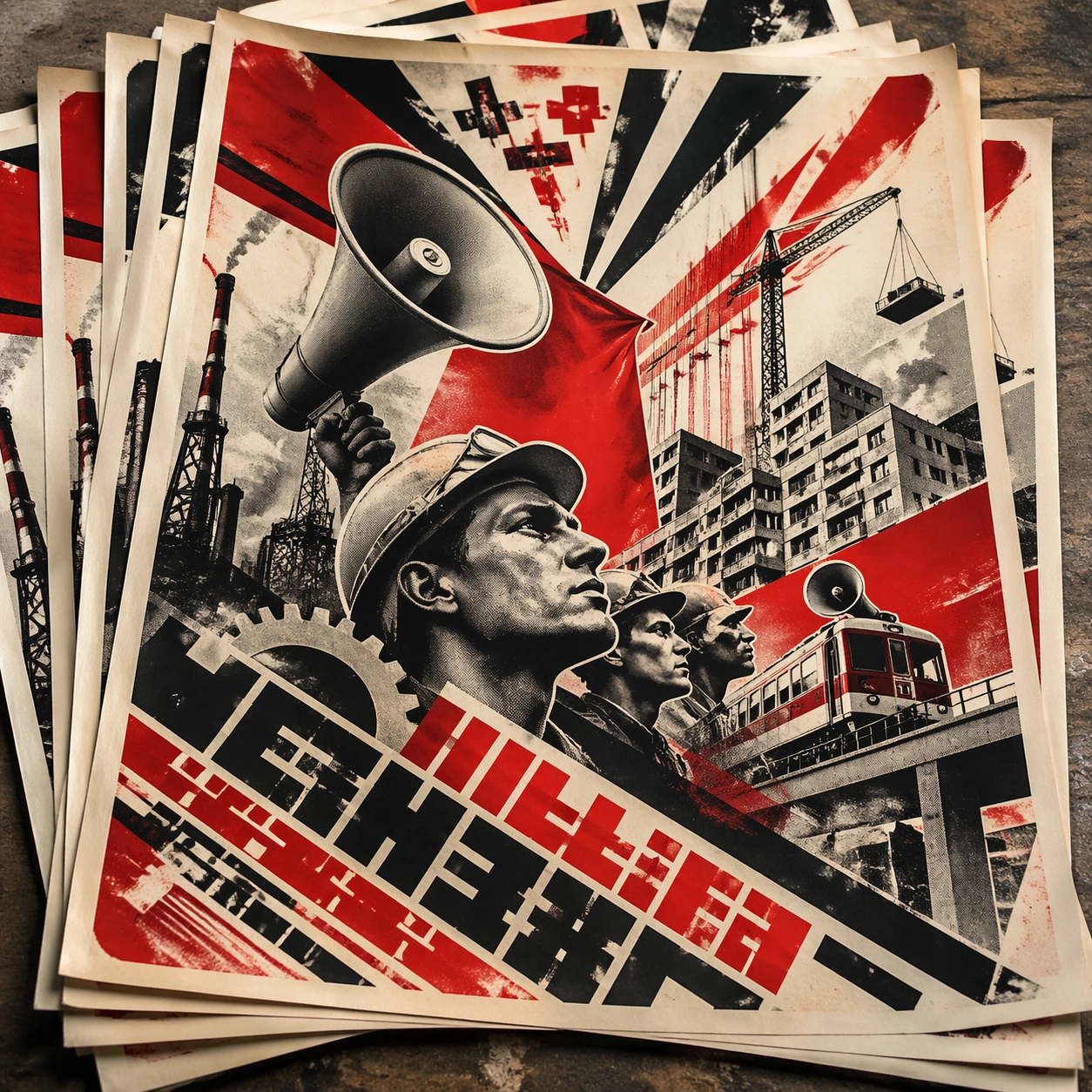
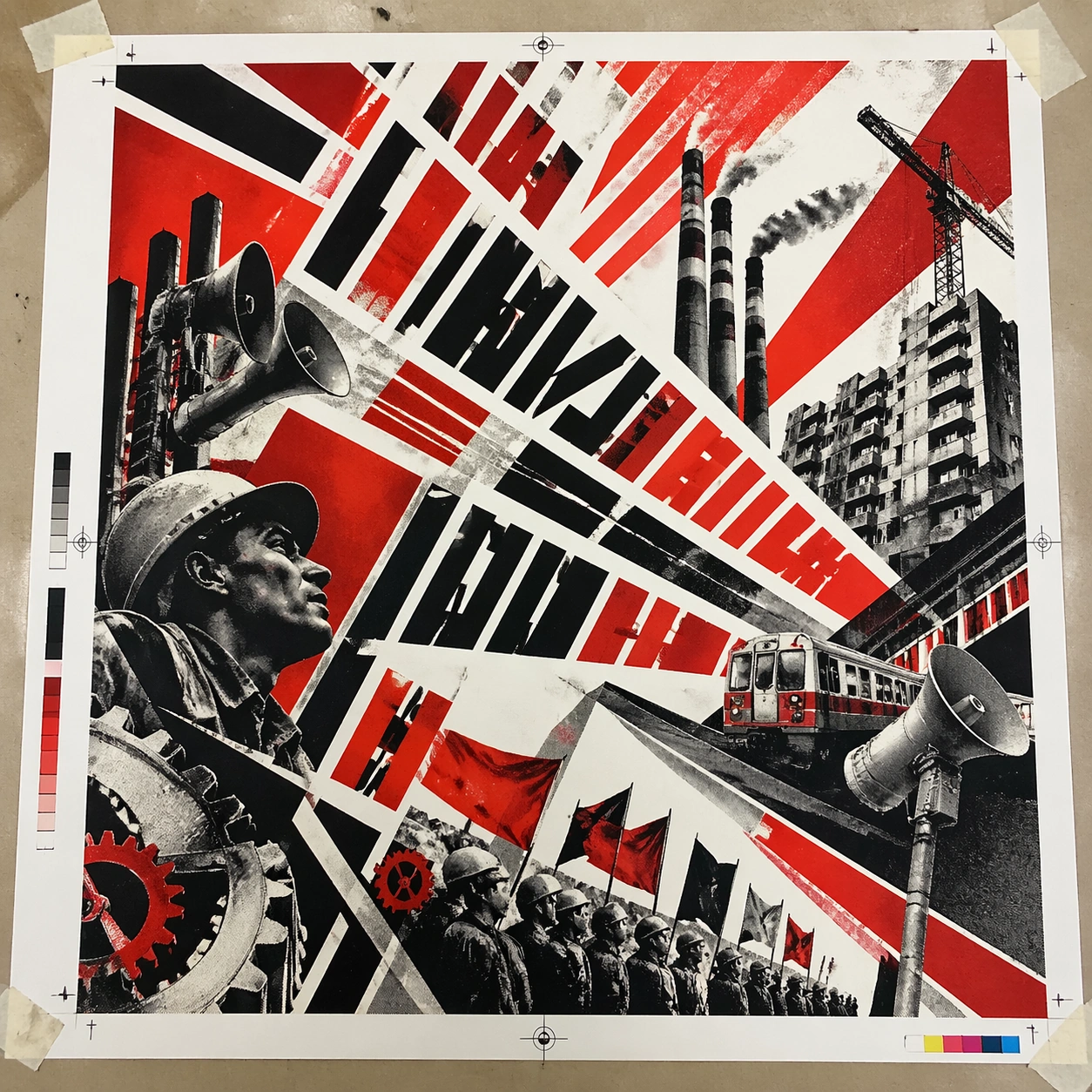
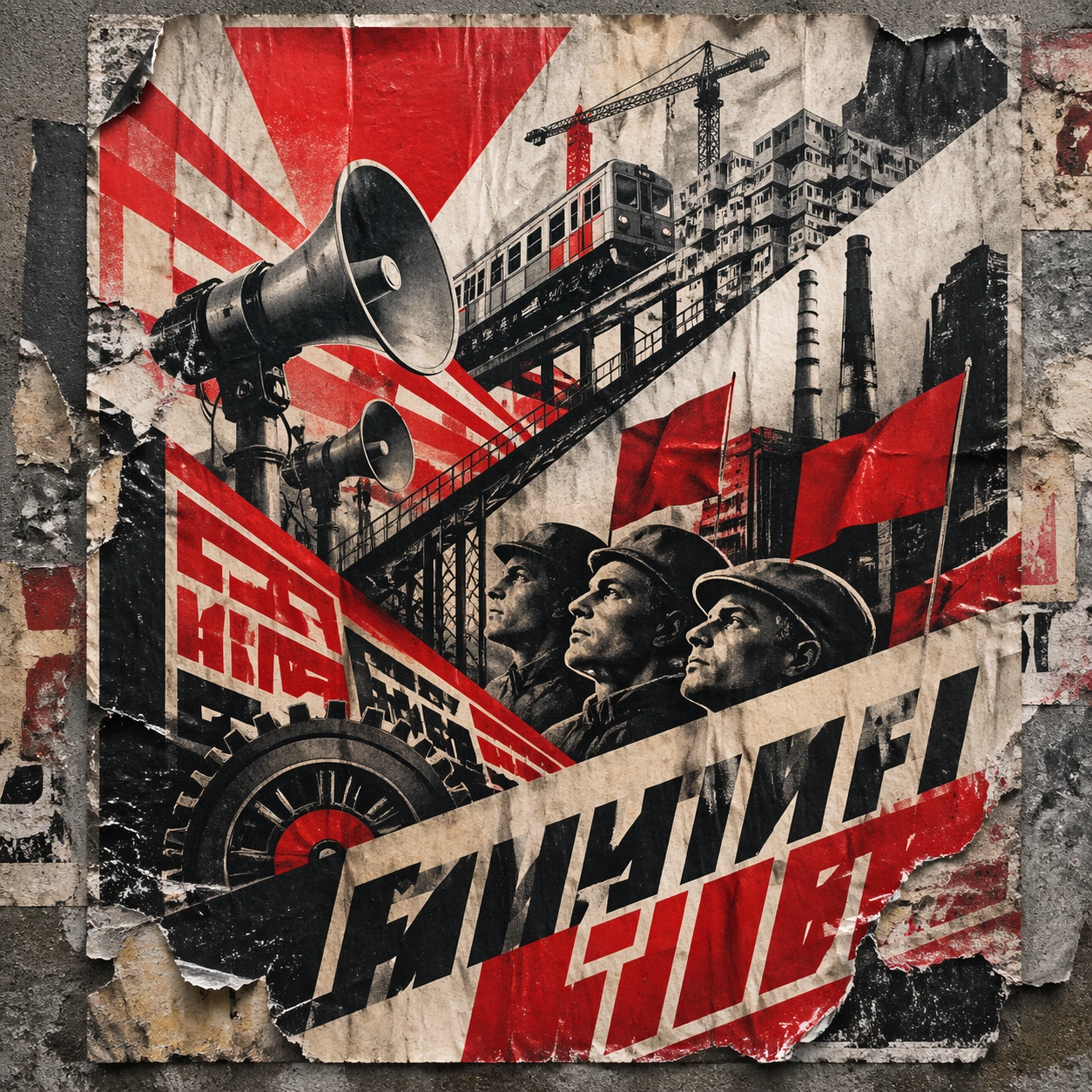
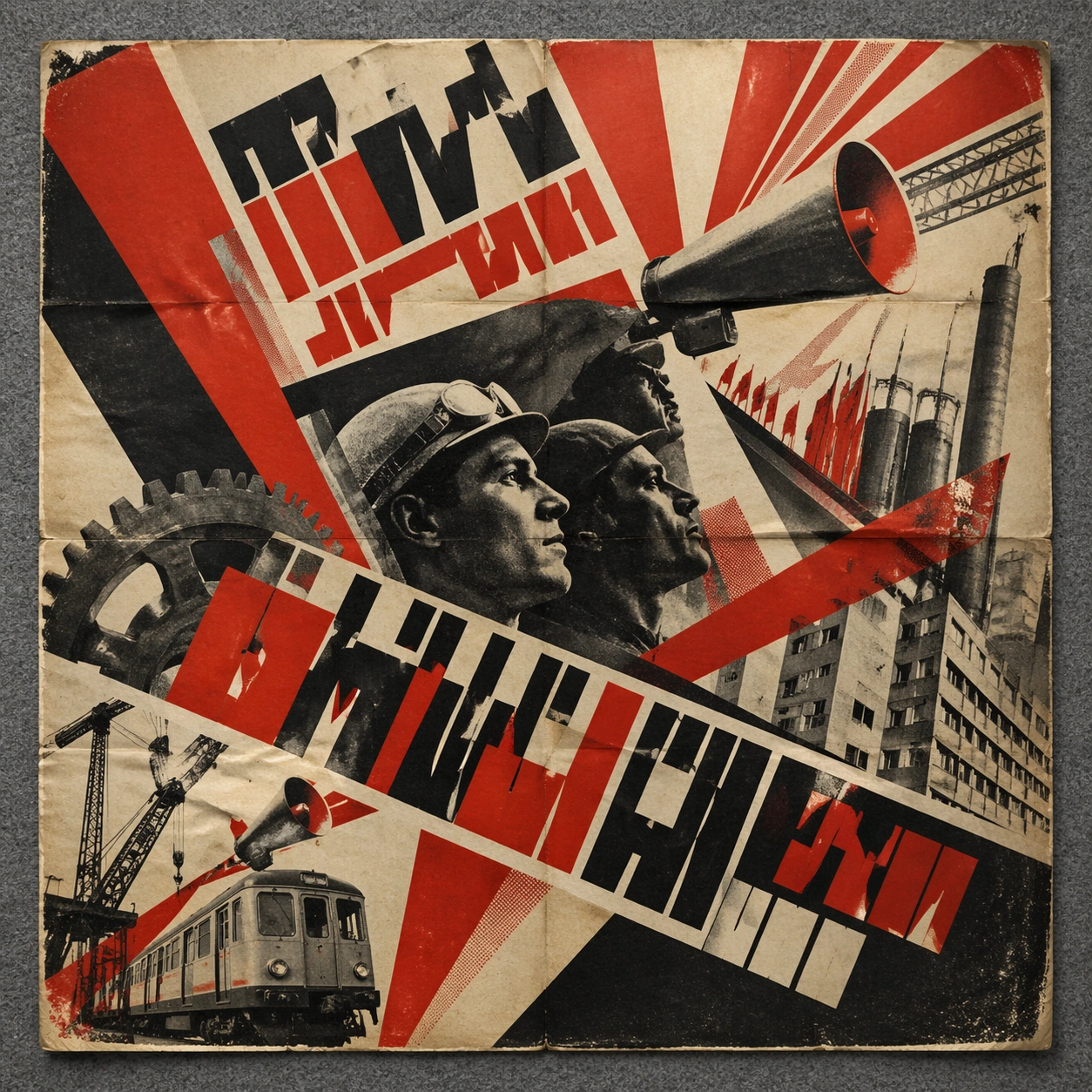
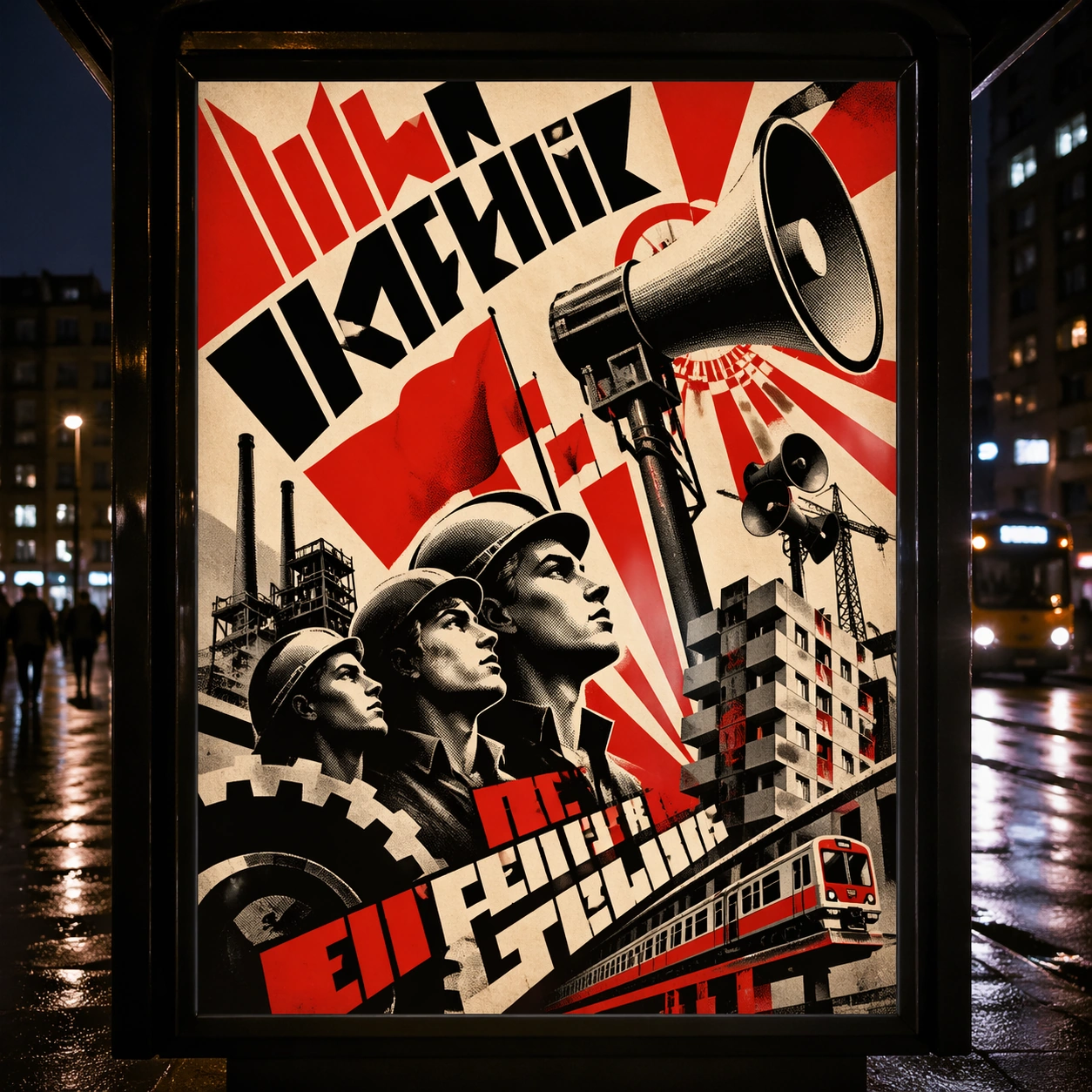
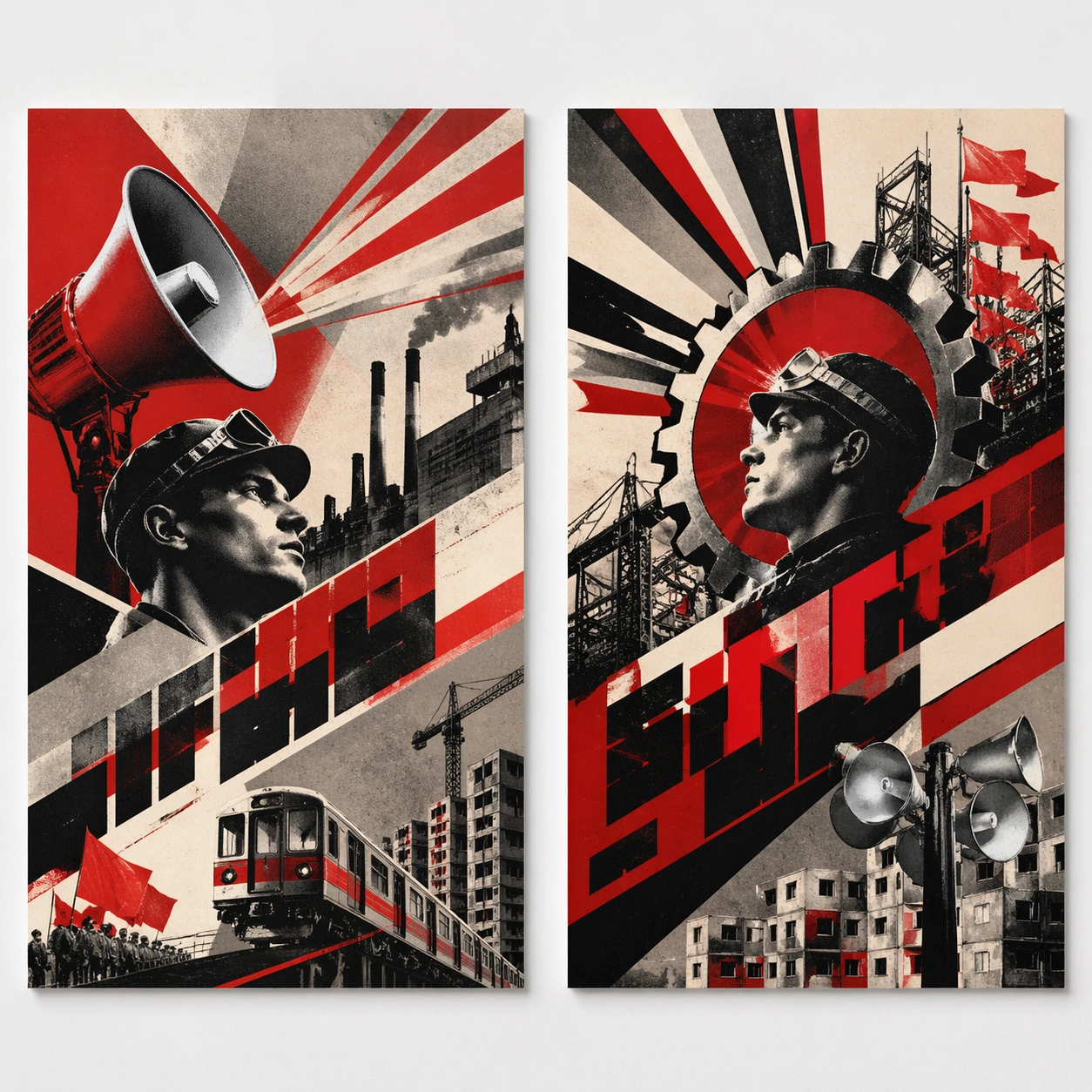
A square white-wall installation showing two companion posters hung side by side with equal spacing, photographed frontally so the pair reads as a designed conversation rather than two unrelated sheets. The poster should express agitated constructivist geometry driven by diagonals, wedges, ray bursts, and halftone photomontage fragments, using revolutionary red, bone white, black, and steel gray with sharp contrast and a tactile surface appropriate to the medium.

Subject:
Compose a matched diptych: two posters sharing one style system while splitting the narrative across paired motifs, mirrored masses, or complementary color emphasis. Use megaphones, gears, worker profiles, factory towers, flags, and industrial beams as the main visual ingredients, and organize them with heavy angular pseudo-Cyrillic slogan blocks kept abstract and non-readable. For the contemporary-subject axis, thread in public transit megaphones, cranes, and modular housing blocks pushed into militant diagonal rhythm. The poster must feel like an original design object rather than a reproduction of any known work.

Important details:
Both halves should feel distinct yet inseparable. Preserve one coherent visual language, but let each sheet carry its own focal symbol and rhythm without readable wording. Preserve diagonal force, abrupt scale shifts, posterized cutout shadows, and coarse print grain. Keep every letterform abstract and non-readable, as if it were a typographic texture rather than language. Make the style unmistakable through composition, palette, surface behavior, and symbolic compression. no soft curves, no pastel palette, no decorative nostalgia, no polished luxury finish.

Use case:
Constructivist single study 6/9, testing system flexibility across a paired set.

Constraints:
No readable text, no watermark, no logos, preserve exact 1:1 aspect ratio, no copyrighted characters, no real brand marks, no QR codes, no interface chrome, no accidental gibberish lettering.
Jak używać
- Skopiuj cały oryginalny prompt wraz z parametrami.
- Dostosuj temat, tekst i kompozycję do swoich potrzeb.
- Użyj zgodnego narzędzia zewnętrznego; sprawdź warunki dostępu i wynik.
Przed rozpoczęciem
- Sprawdź, czy potrzebny jest obraz referencyjny. Zgodność nie potwierdza modelu użytego do przykładu.
- Sprawdź nazwy, liczby i napisy; wyniki zależą od wersji modelu.