Oryginalny dokument
GPT Image 2 · en
Scene:
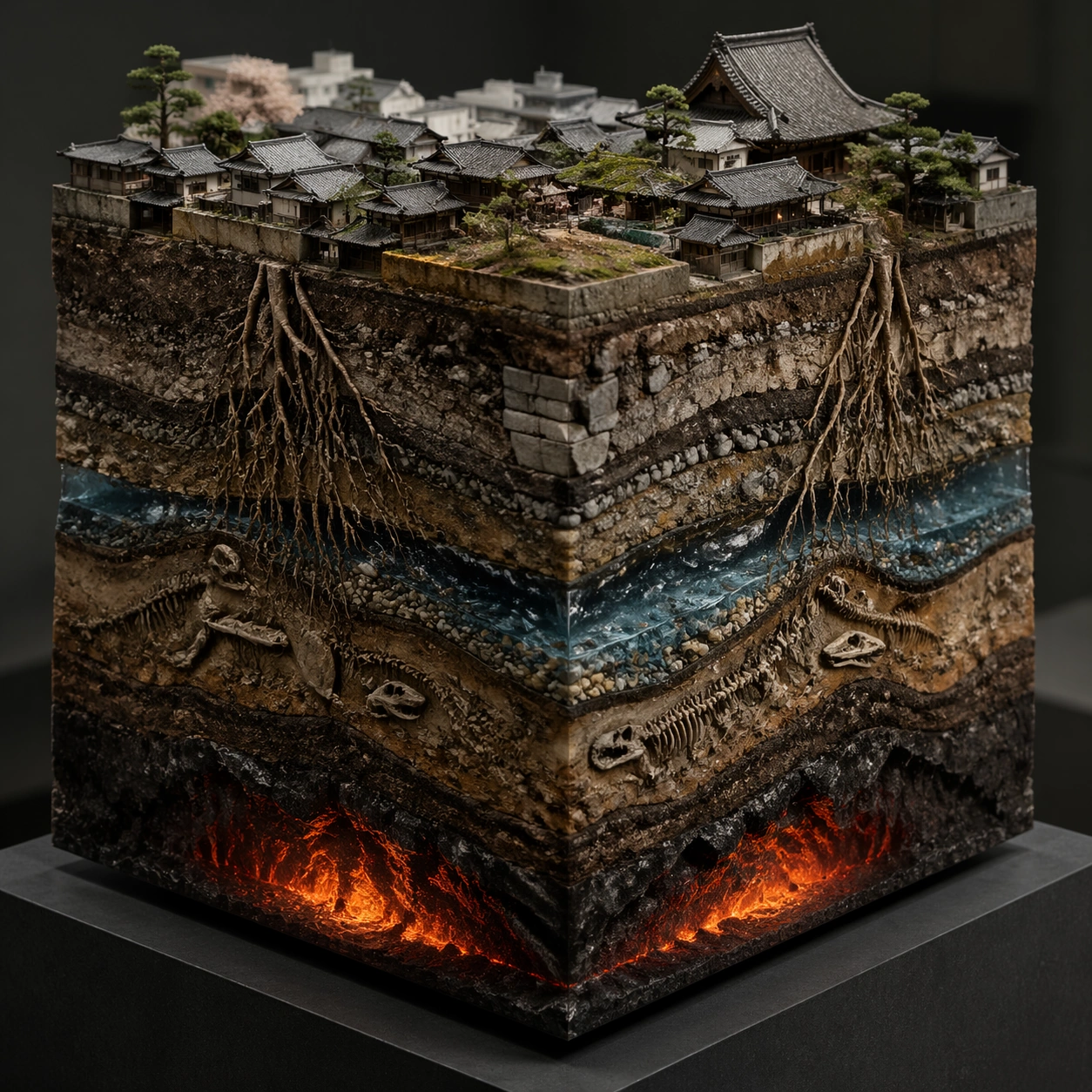
A square studio photograph of a hyperreal diorama cube floating above a matte charcoal plinth, lit with soft museum lighting and a crisp three-quarter view. The cube is about the size of a shoebox, with the top face visible and all four vertical faces cut away like a scientific specimen. Use natural colors, fine dust, tiny shadows, and shallow depth of field without hiding the cube edges.

Subject:
The top surface is a miniature Kyoto rooftop district with clay tile roofs, a small temple gable, narrow alleys, moss, rain gutters, and tiny garden trees. The four side faces expose different hidden layers: compact city fill and stone foundations, tangled tree roots descending from courtyard pines, a blue-gray aquifer seam with pebbles and wet sand, dinosaur fossil fragments embedded in older strata, and a warm lava chamber glowing far below.

Important details:
The cube must read as one coherent object, not separate panels. Each side face should align with the top surface and show believable stratigraphy, material boundaries, roots crossing layers, water pockets, fossil cavities, and glowing volcanic depth. Keep the cut edges sharp and physically plausible. The image should feel both collectible and scientific, like an impossible museum display with precise information hierarchy.

Use case:
Hyperreal Diorama Cube single study 1/8, testing a Kyoto rooftop surface combined with geological, biological, fossil, aquifer, and lava cutaway layers.

Constraints:
No readable text, no watermark, no logos, preserve exact 1:1 aspect ratio, no floating labels, no disconnected slices, no muddy layer boundaries, no cartoon miniature style, no impossible shadows, no oversized people, no cropped cube corners.
Jak używać
- Skopiuj cały oryginalny prompt wraz z parametrami.
- Dostosuj temat, tekst i kompozycję do swoich potrzeb.
- Użyj zgodnego narzędzia zewnętrznego; sprawdź warunki dostępu i wynik.
Przed rozpoczęciem
- Sprawdź, czy potrzebny jest obraz referencyjny. Zgodność nie potwierdza modelu użytego do przykładu.
- Sprawdź nazwy, liczby i napisy; wyniki zależą od wersji modelu.