Oryginalny dokument
GPT Image 2 · en
Scene:
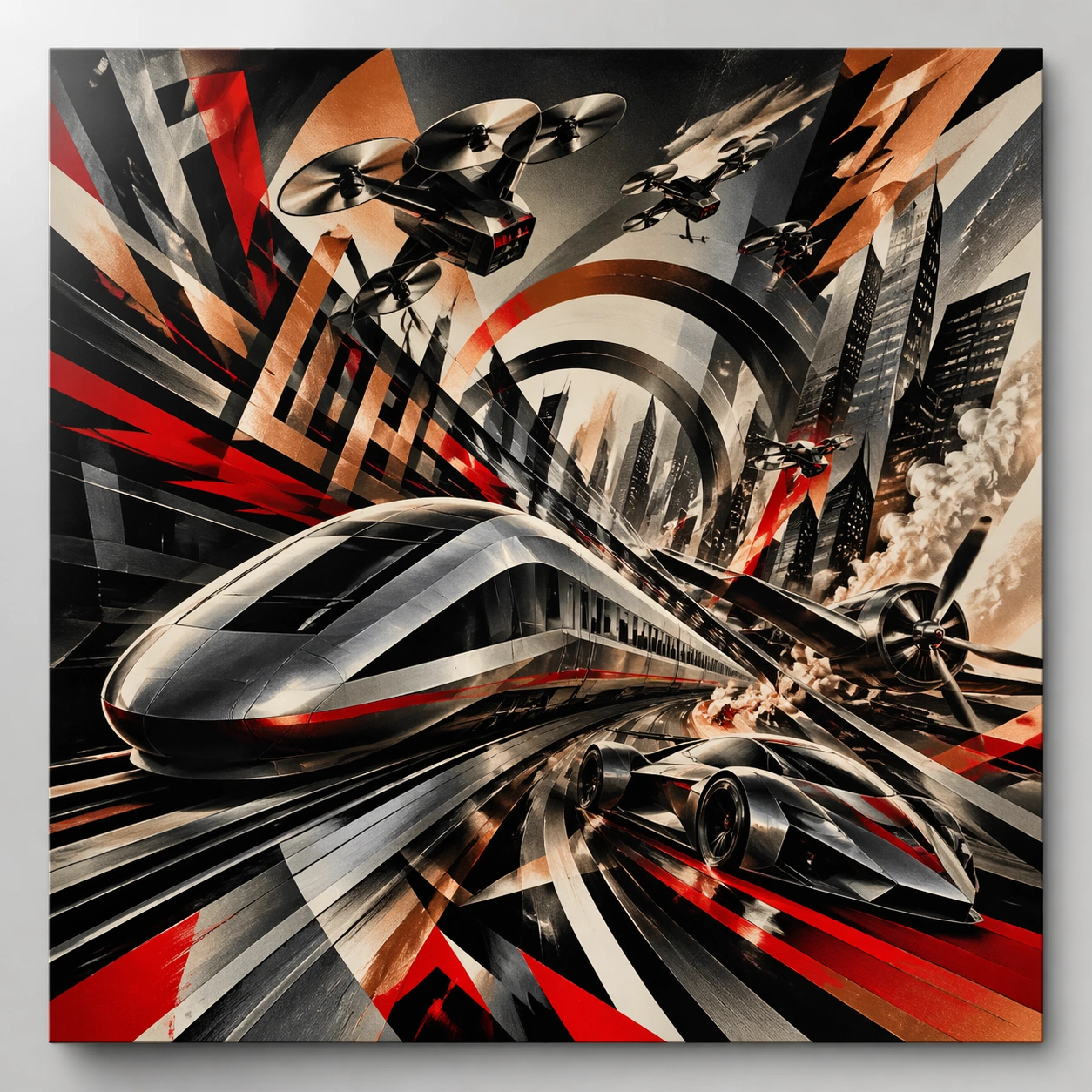
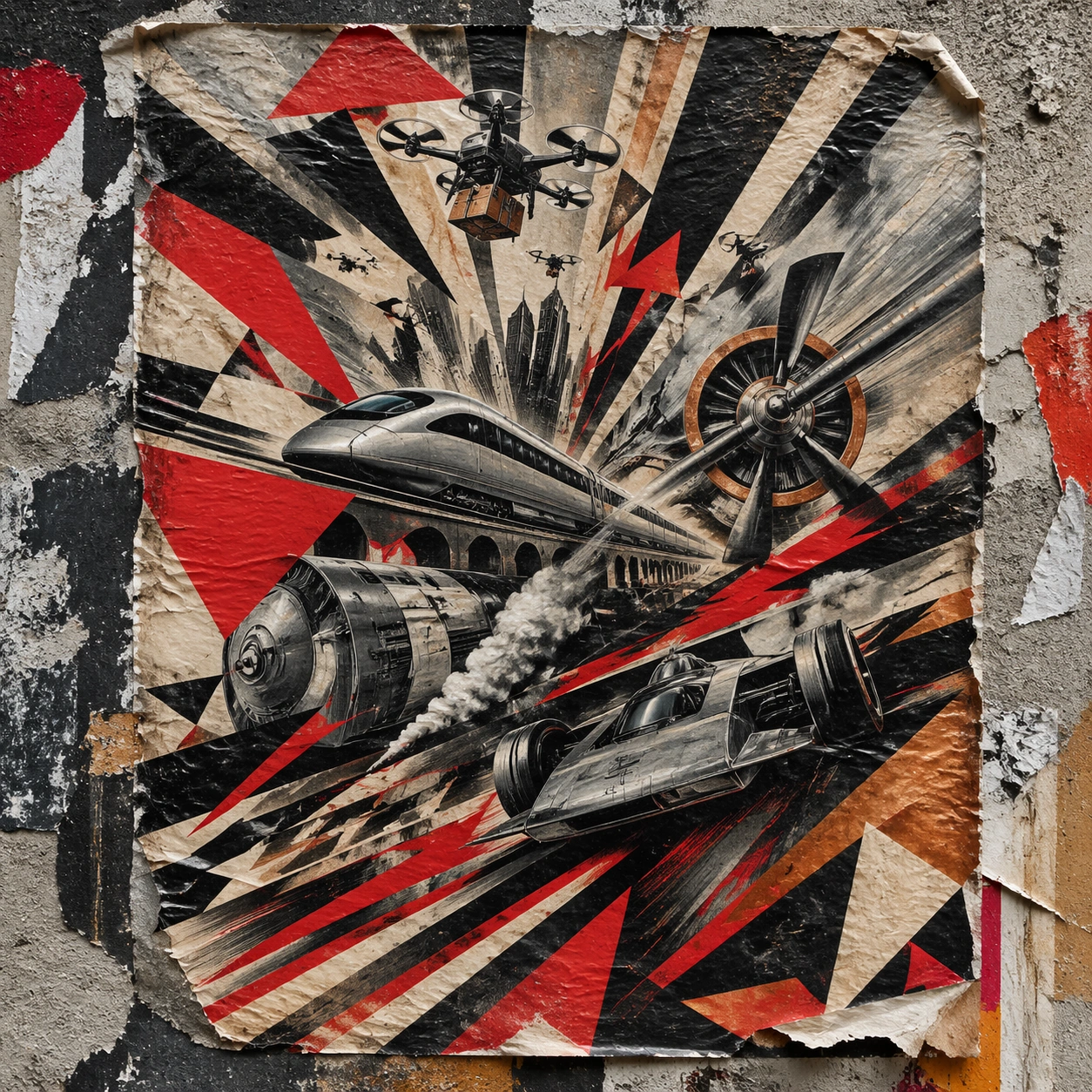
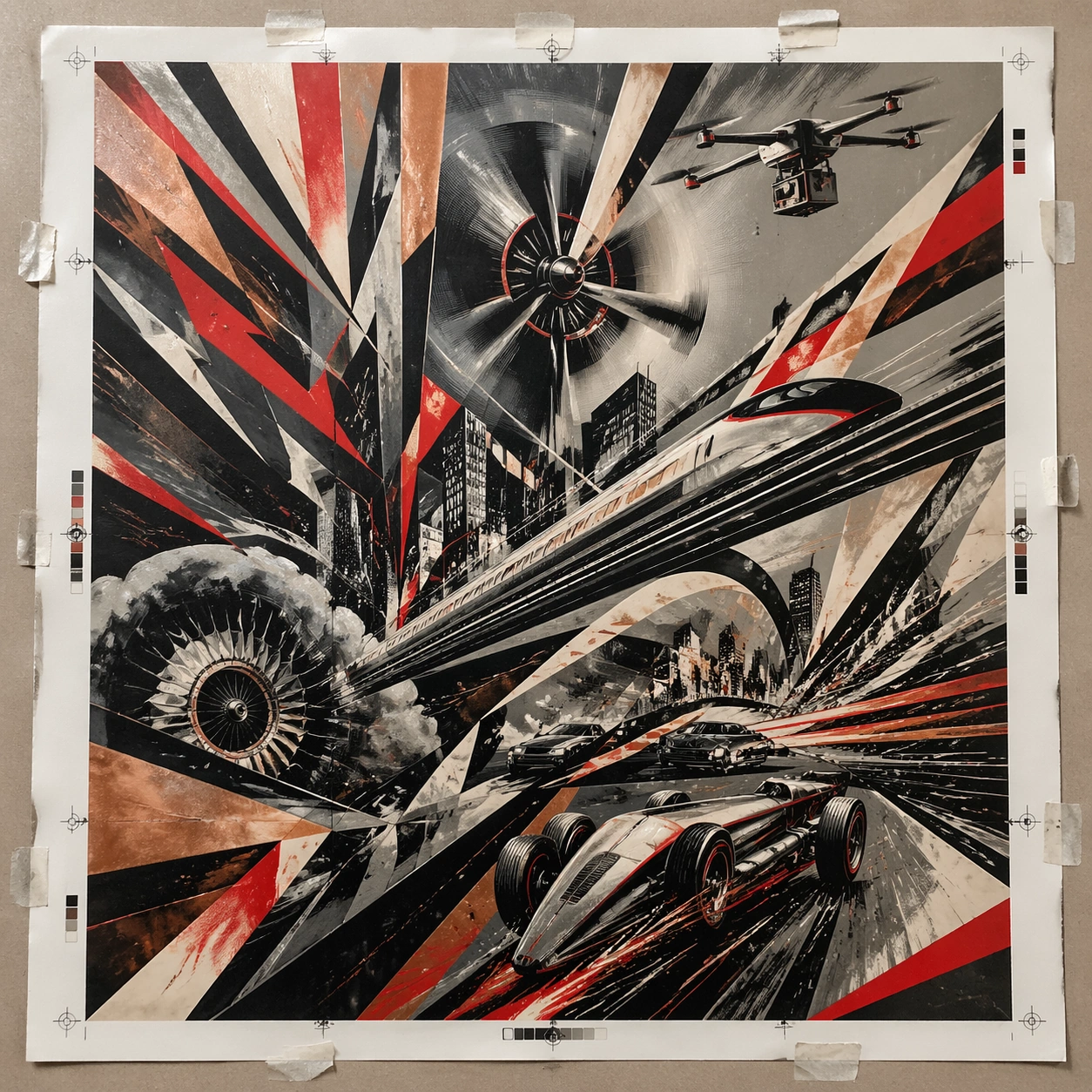
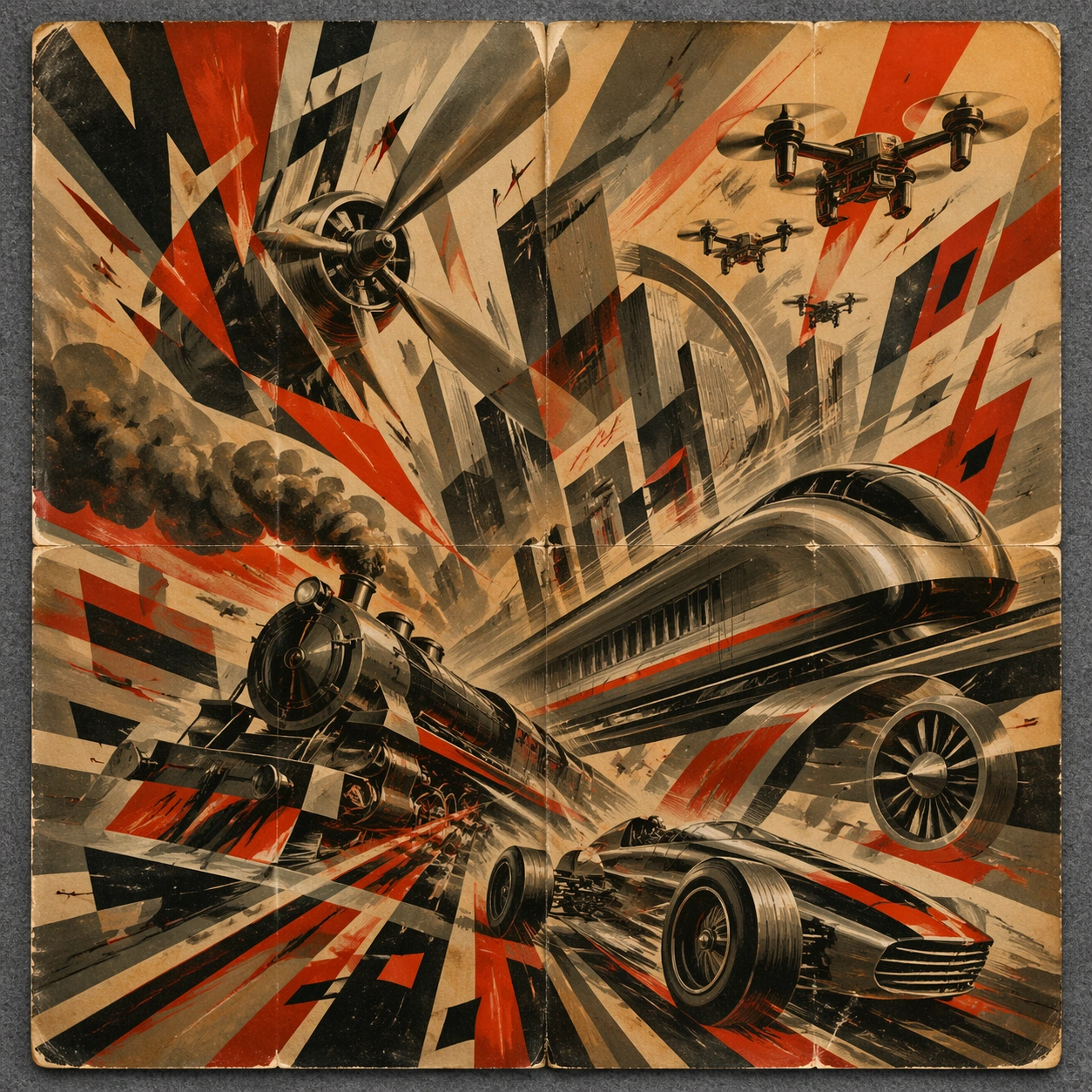
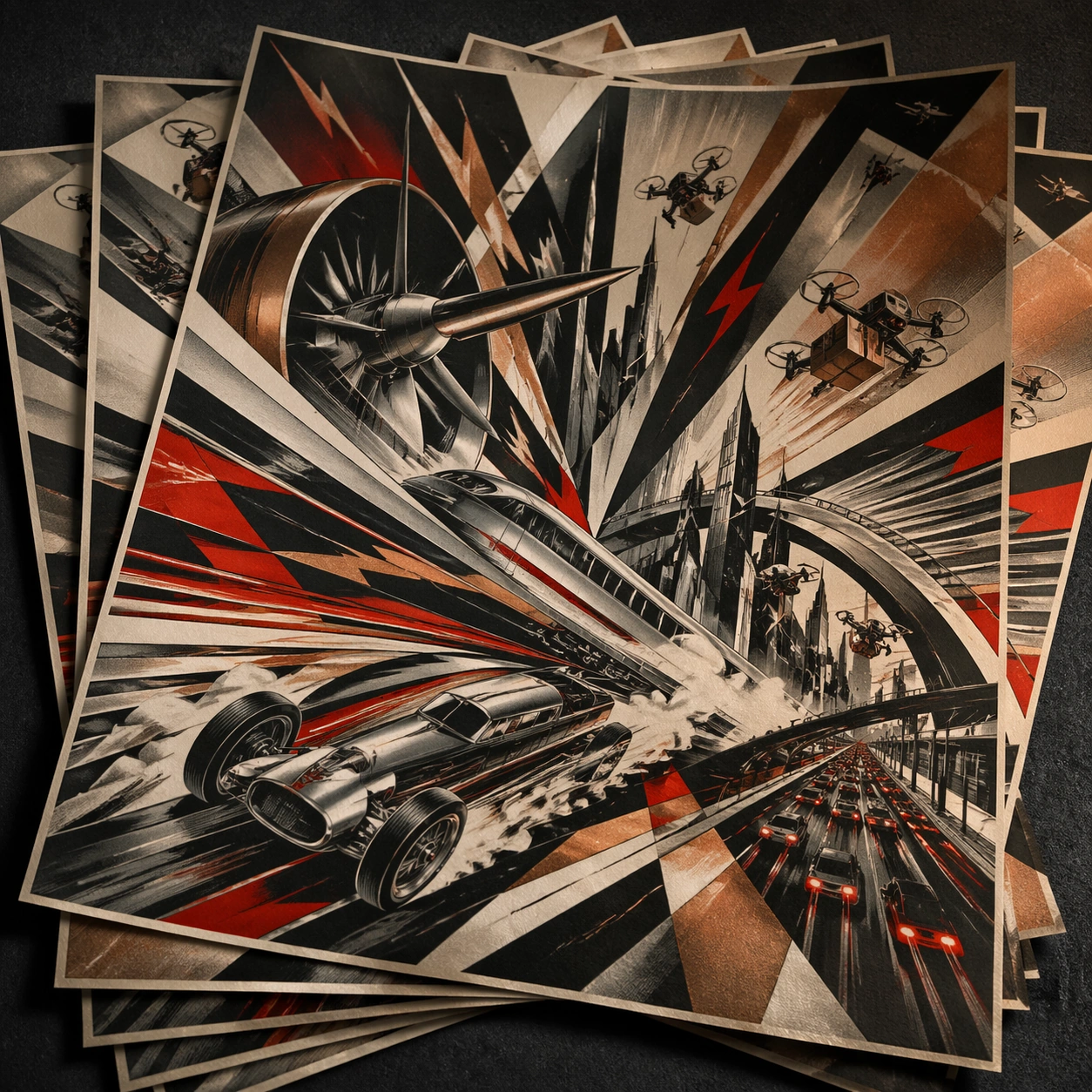
A square tabletop shot of several poster prints stacked and slightly fanned, with curled corners, offset edges, and soft directional light revealing paper thickness and ink behavior. The poster should express machine-age futurist poster language with fractured motion, metallic planes, angular overlaps, and speed-worshiping thrust, using gunmetal silver, copper, cream, black, and electric red accents and a tactile surface appropriate to the medium.

Subject:
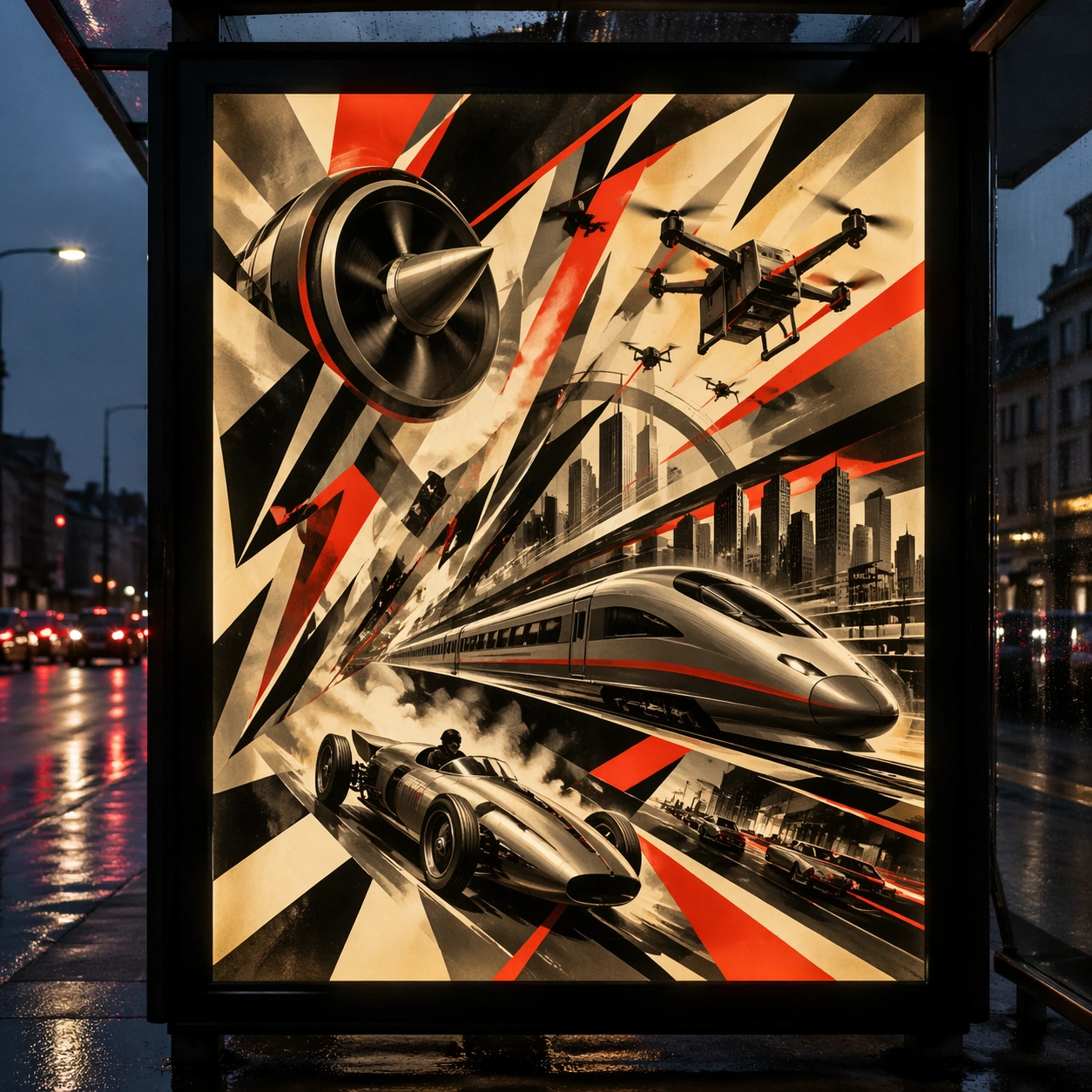
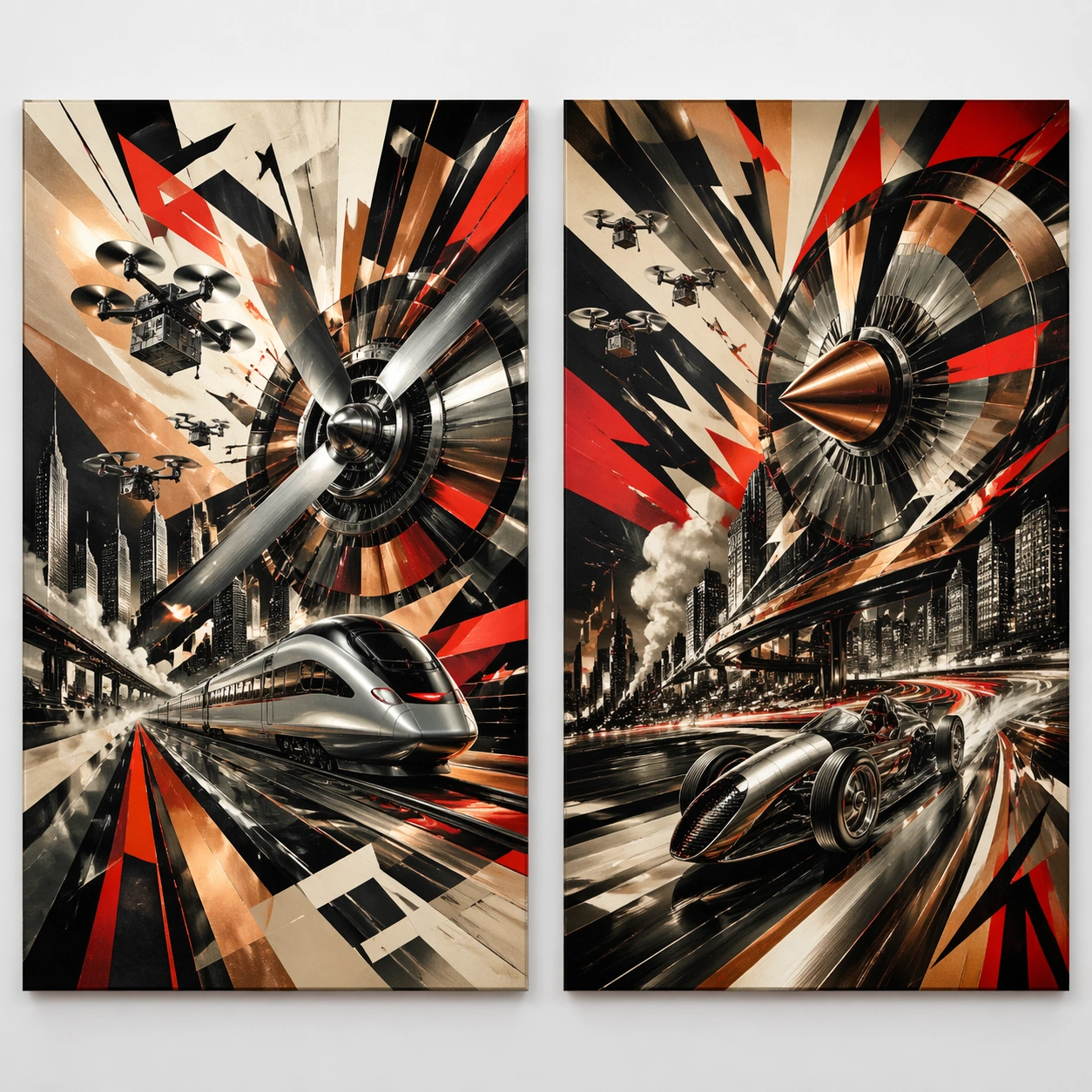
Design the top poster to dominate while nearby duplicate sheets echo the same composition, creating a tactile print-run scene rather than a single isolated sheet. Use trains, propellers, racing cars, turbines, smoke trails, city arcs, and explosive speed lines as the main visual ingredients, and organize them with chopped angular typographic shards used as non-readable motion accents. For the contemporary-subject axis, thread in high-speed rail, delivery drones, and urban night traffic translated into ecstatic machine momentum. The poster must feel like an original design object rather than a reproduction of any known work.

Important details:
Use the stack to emphasize production character: edge shadows, repeated motifs peeking from beneath, and subtle misalignment should enrich the material reading without changing the core design. Preserve dynamic rotation, vector thrust, hard overlaps, metallic sheen restraint, and aggressive directional rhythm. Keep every letterform abstract and non-readable, as if it were a typographic texture rather than language. Make the style unmistakable through composition, palette, surface behavior, and symbolic compression. no static composition, no soft nostalgic brushwork, no pastoral calm, no rounded playful forms.

Use case:
Italian Futurism single study 7/9, testing print-run tactility and repeat presence.

Constraints:
No readable text, no watermark, no logos, preserve exact 1:1 aspect ratio, no copyrighted characters, no real brand marks, no QR codes, no interface chrome, no accidental gibberish lettering.
Jak używać
- Skopiuj cały oryginalny prompt wraz z parametrami.
- Dostosuj temat, tekst i kompozycję do swoich potrzeb.
- Użyj zgodnego narzędzia zewnętrznego; sprawdź warunki dostępu i wynik.
Przed rozpoczęciem
- Sprawdź, czy potrzebny jest obraz referencyjny. Zgodność nie potwierdza modelu użytego do przykładu.
- Sprawdź nazwy, liczby i napisy; wyniki zależą od wersji modelu.