Oryginalny dokument
GPT Image 2 · en
Scene:
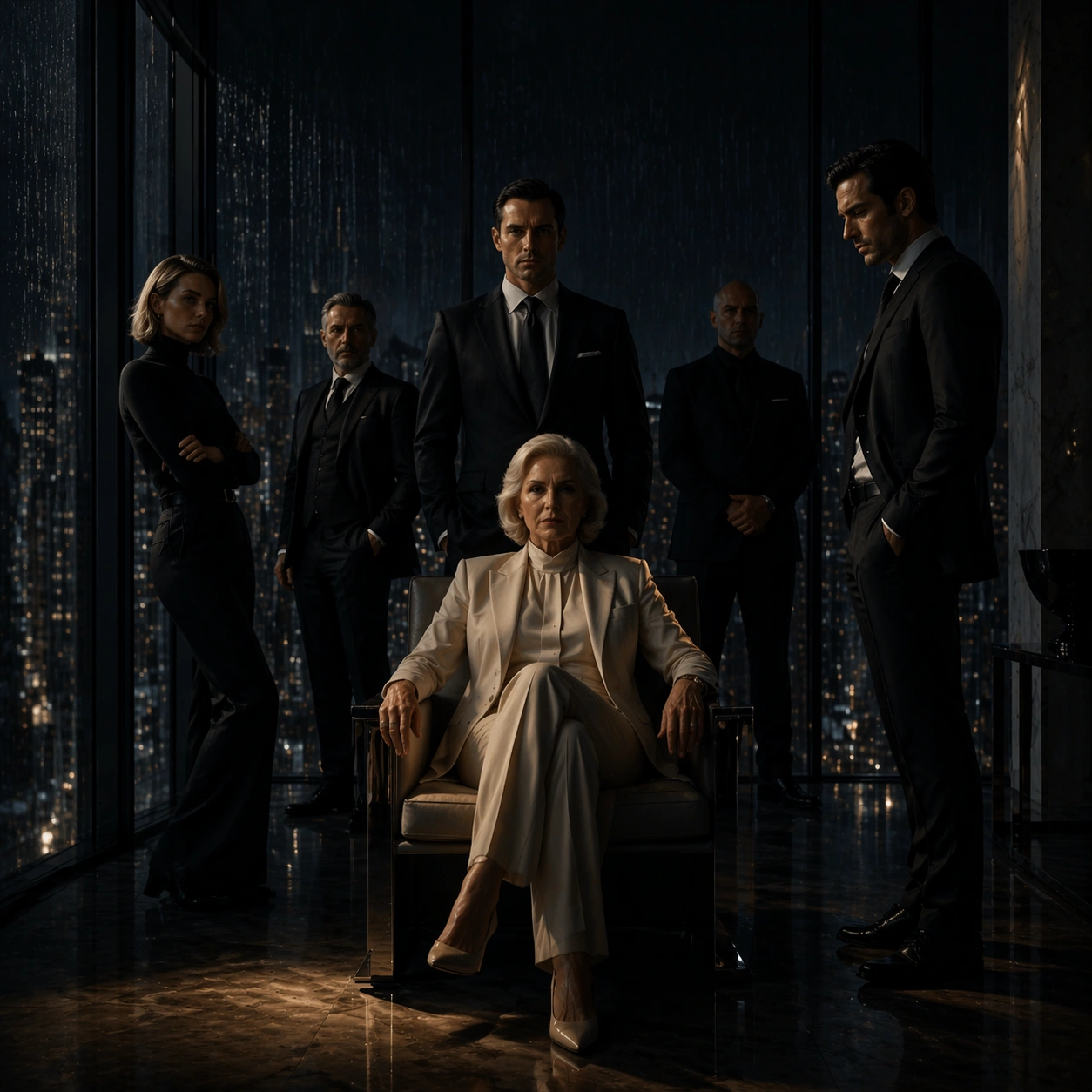
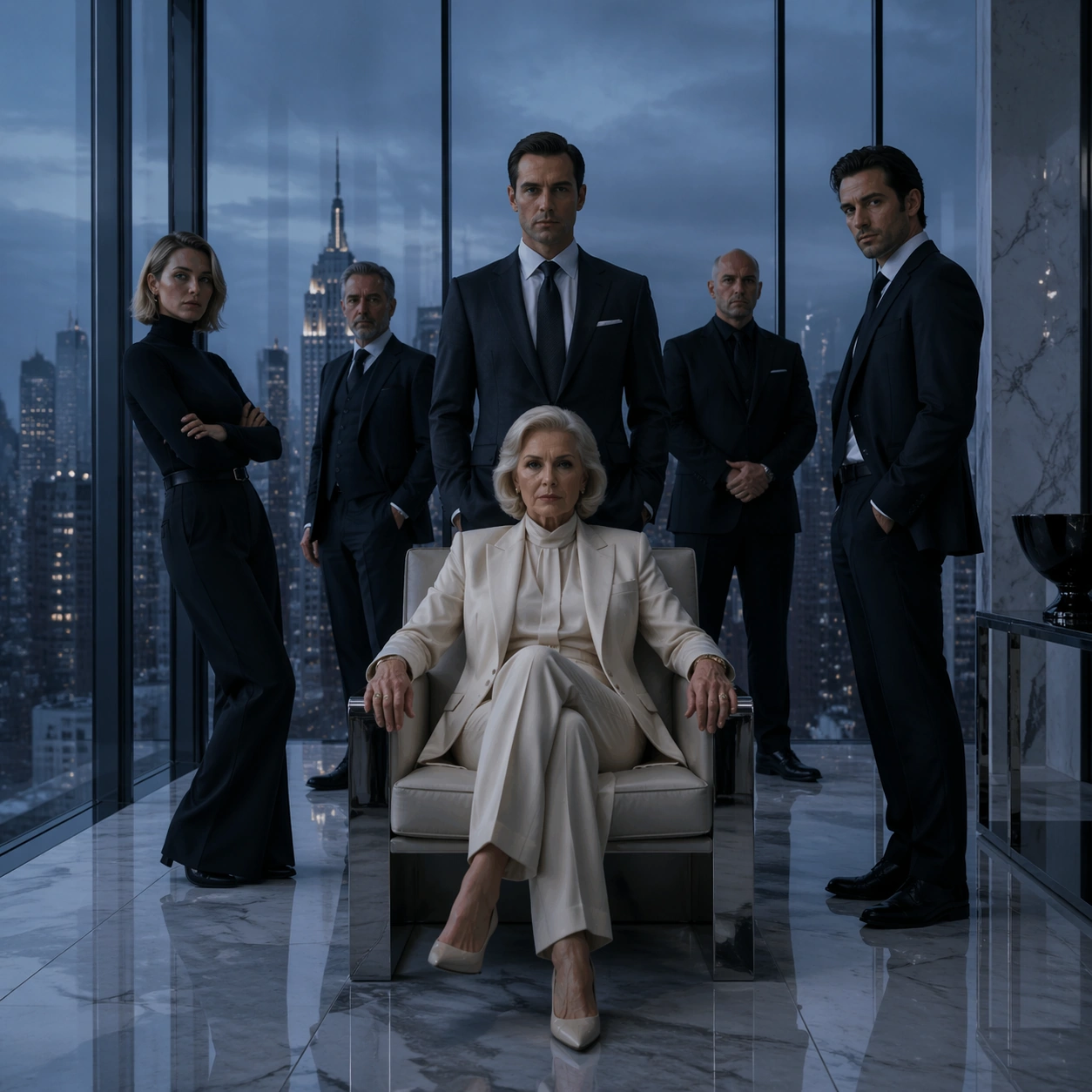
A square premium-streaming key art composition staged inside a glass-walled penthouse above a winter city skyline at blue hour. The frame is cool, polished, and austere, with silver reflections, pale marble, smoked glass, and a disciplined balance of shadow and controlled highlights. The camera is frontal and slightly elevated so the whole group reads like an official campaign image rather than a candid scene.

Subject:
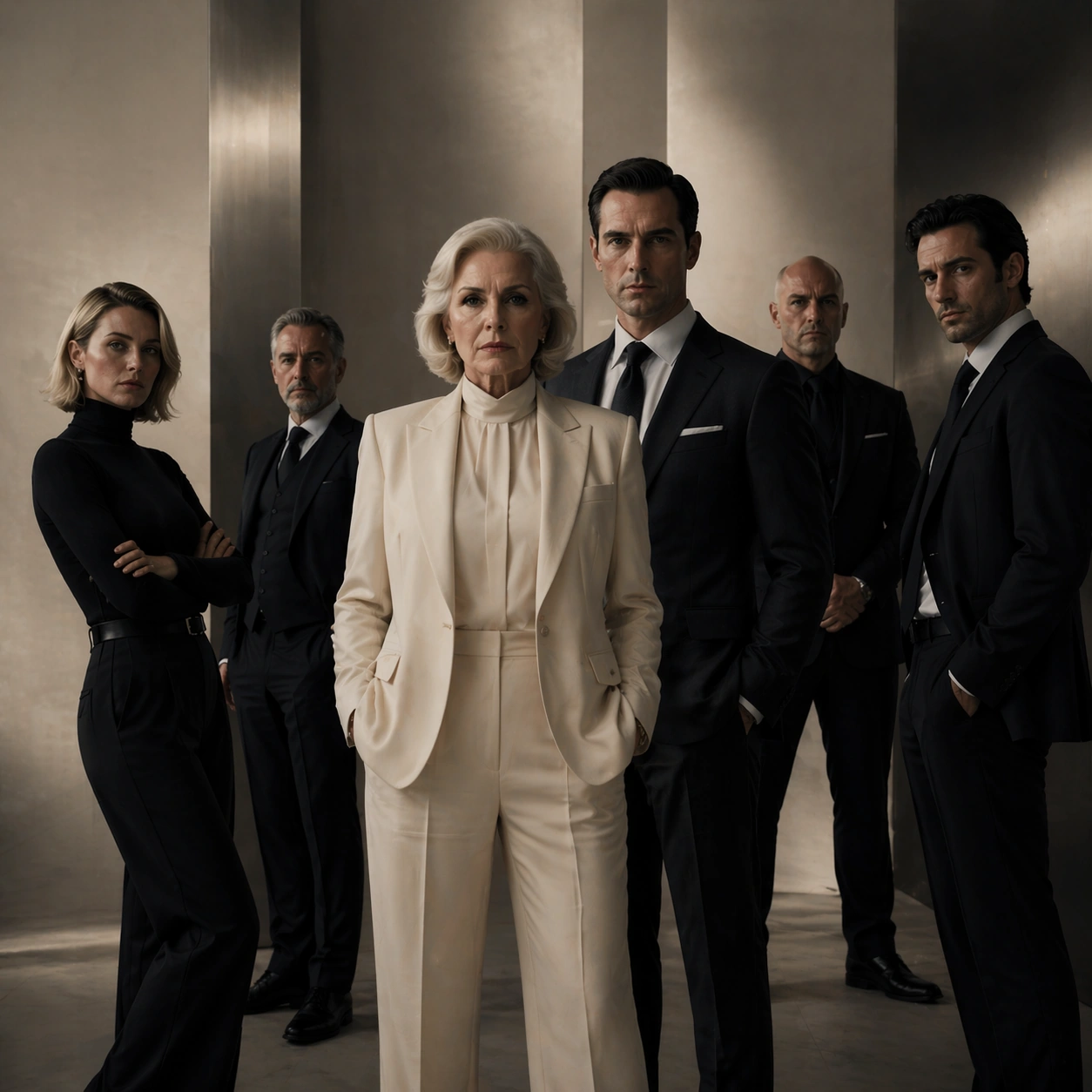
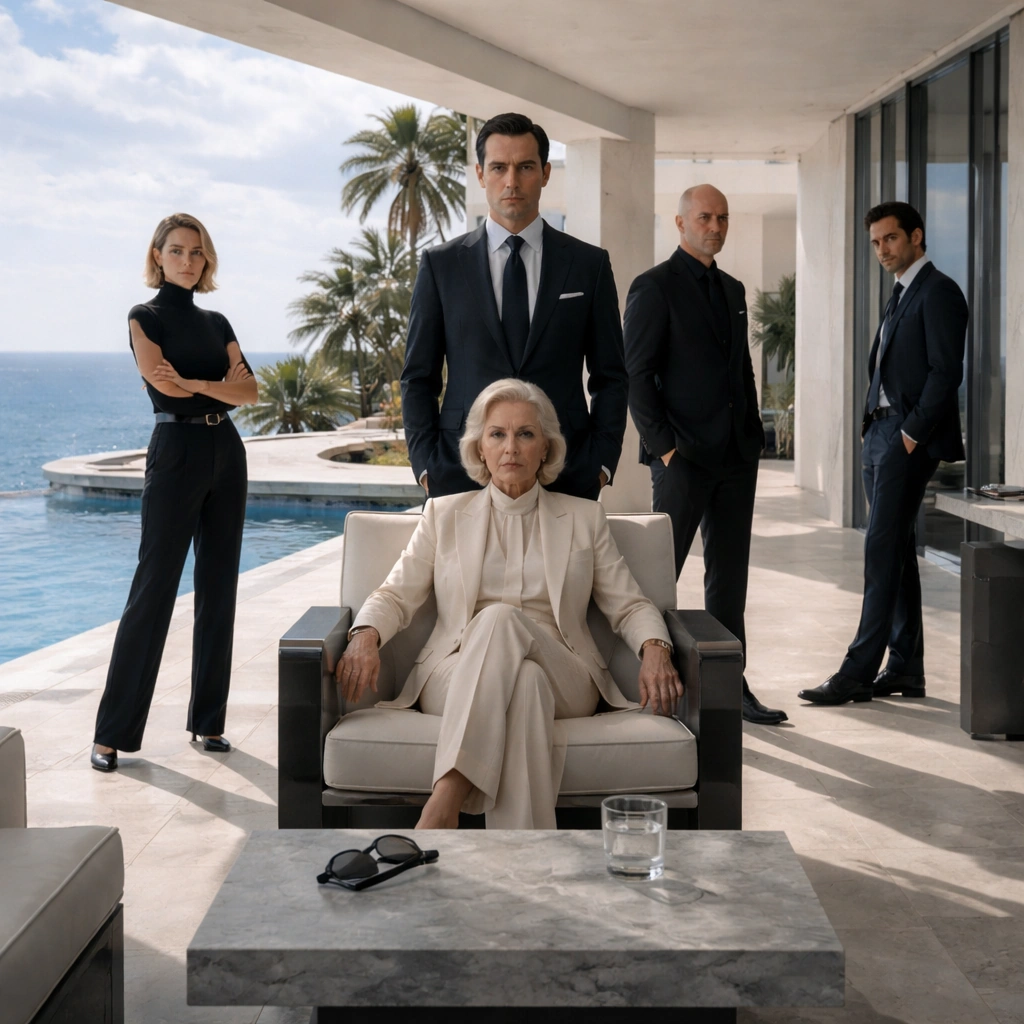
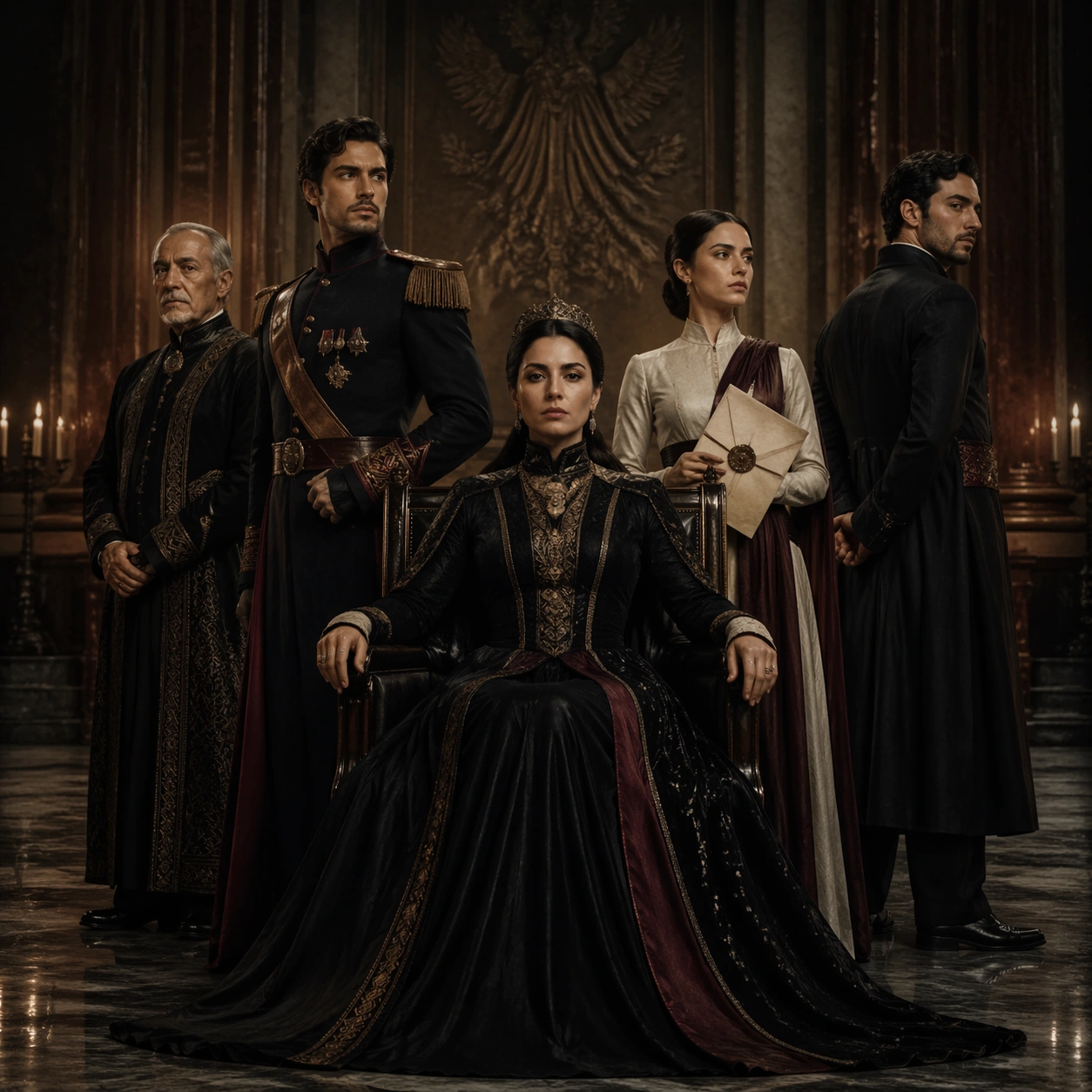
Create a fictional prestige-drama ensemble of six people arranged in a strict power pyramid. At the center sits an older matriarch in an ivory suit on a low modern chair, perfectly still and clearly dominant. Behind her stands the chosen heir in a dark charcoal suit, tense but composed. To one side, a sharp younger daughter leans against the window with a guarded stare; opposite her, an outsider son-in-law stands half a step back, uncertain but ambitious. Slightly behind them, a discreet fixer and a silent bodyguard complete the composition. Their expressions must suggest inheritance battles, private grievances, and long family memory without melodrama.

Important details:
This is the reference image for the series, so face identities, hair silhouettes, wardrobe palette, and precise spacing between figures must be memorable and reusable. The visual language must feel like an awards-season streamer campaign: clean negative space, expensive tailoring, subtle environmental storytelling, and unmistakable role hierarchy. Preserve believable anatomy, consistent eye lines, and enough empty space around the ensemble for future crop logic.

Use case:
Prestige TV Key Art Remix series study 1/9, establishing the core cast hierarchy for a fictional streaming dynasty drama.

Constraints:
No readable text, no watermark, no logos, preserve exact 1:1 aspect ratio, no comedy energy, no crowded props, no extra background people, no exaggerated action poses, no cheap soap-opera styling.
Jak używać
- Skopiuj cały oryginalny prompt wraz z parametrami.
- Dostosuj temat, tekst i kompozycję do swoich potrzeb.
- Użyj zgodnego narzędzia zewnętrznego; sprawdź warunki dostępu i wynik.
Przed rozpoczęciem
- Sprawdź, czy potrzebny jest obraz referencyjny. Zgodność nie potwierdza modelu użytego do przykładu.
- Sprawdź nazwy, liczby i napisy; wyniki zależą od wersji modelu.