Oryginalny dokument
GPT Image 2 · en
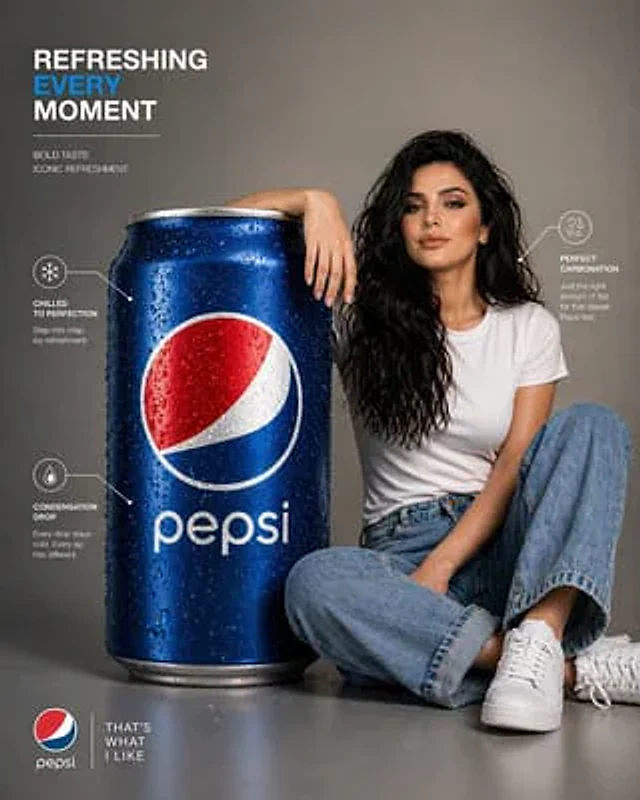
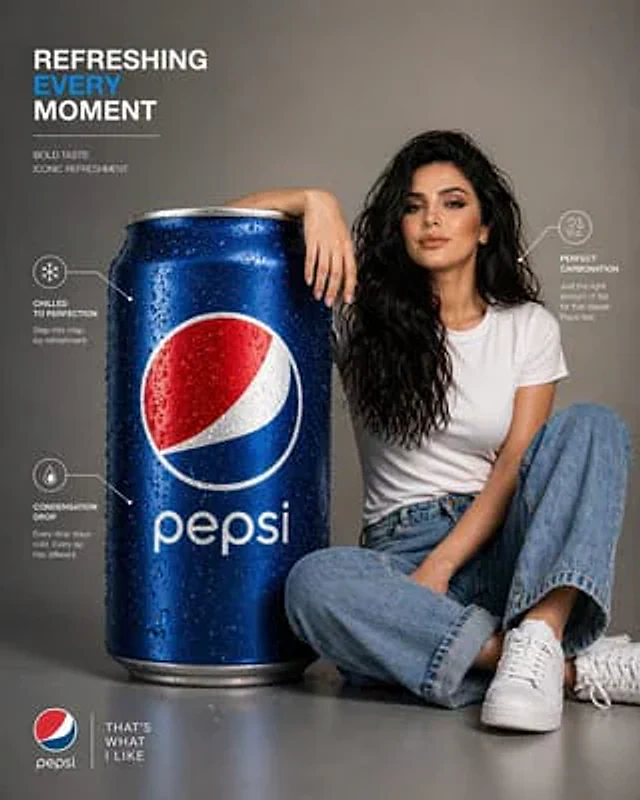
A high-end infographic-style visual work showcasing the placement of{argument name="subject" default="young women"} The extra-large size next to me{argument name="brand" default="Pepsi"} The can. The can's proportions are magnified to almost the size of her entire seated body, creating a striking, surreal sense of scale. The woman leans casually against the enormous can, one arm draped over it, interacting naturally with the object. Her face must be highly consistent with the provided reference image, including accurate facial structure, skin tone, hairstyle, and expression—refined, realistic, and visually appealing. The Pepsi can is incredibly detailed, featuring a clear brand logo, condensation droplets, realistic reflections, and a metallic texture. The logo is clear, sharp, and well-proportioned. The composition is modern and minimalist, with backgrounds set in a clean photo studio or soft gradient colors. Subtle infographic-style elements are incorporated, such as thin line markings, minimalist labels, or highlights like "..."{argument name="feature" default="refreshing"} Labels should describe characteristics such as "carbonated" or "icy texture," but should remain elegant and uncluttered. Soft studio lighting with controlled highlights and shadows creates a high-end advertising feel. Models wear simple, modern clothing that complements the red, white, and blue colors of the can. Color gradation is clear and slightly vibrant, achieving a commercial advertising aesthetic. The composition is balanced, with sharp focus and a slight depth of field to enhance realism. Style: High-end product infographic, commercial beverage advertisement, clean UI style labeling. Resolution: Ultra-high resolution, 4K, high detail, photorealistic, 85mm lens, f/2.8 hyperrealistic, studio quality, no distortion, accurate proportions, clear typography, modern layout.Jak używać
- Skopiuj cały oryginalny prompt wraz z parametrami.
- Dostosuj temat, tekst i kompozycję do swoich potrzeb.
- Użyj zgodnego narzędzia zewnętrznego; sprawdź warunki dostępu i wynik.
Przed rozpoczęciem
- Sprawdź, czy potrzebny jest obraz referencyjny. Zgodność nie potwierdza modelu użytego do przykładu.
- Sprawdź nazwy, liczby i napisy; wyniki zależą od wersji modelu.