
Oryginalny dokument
GPT Image 2 · en
Scene:
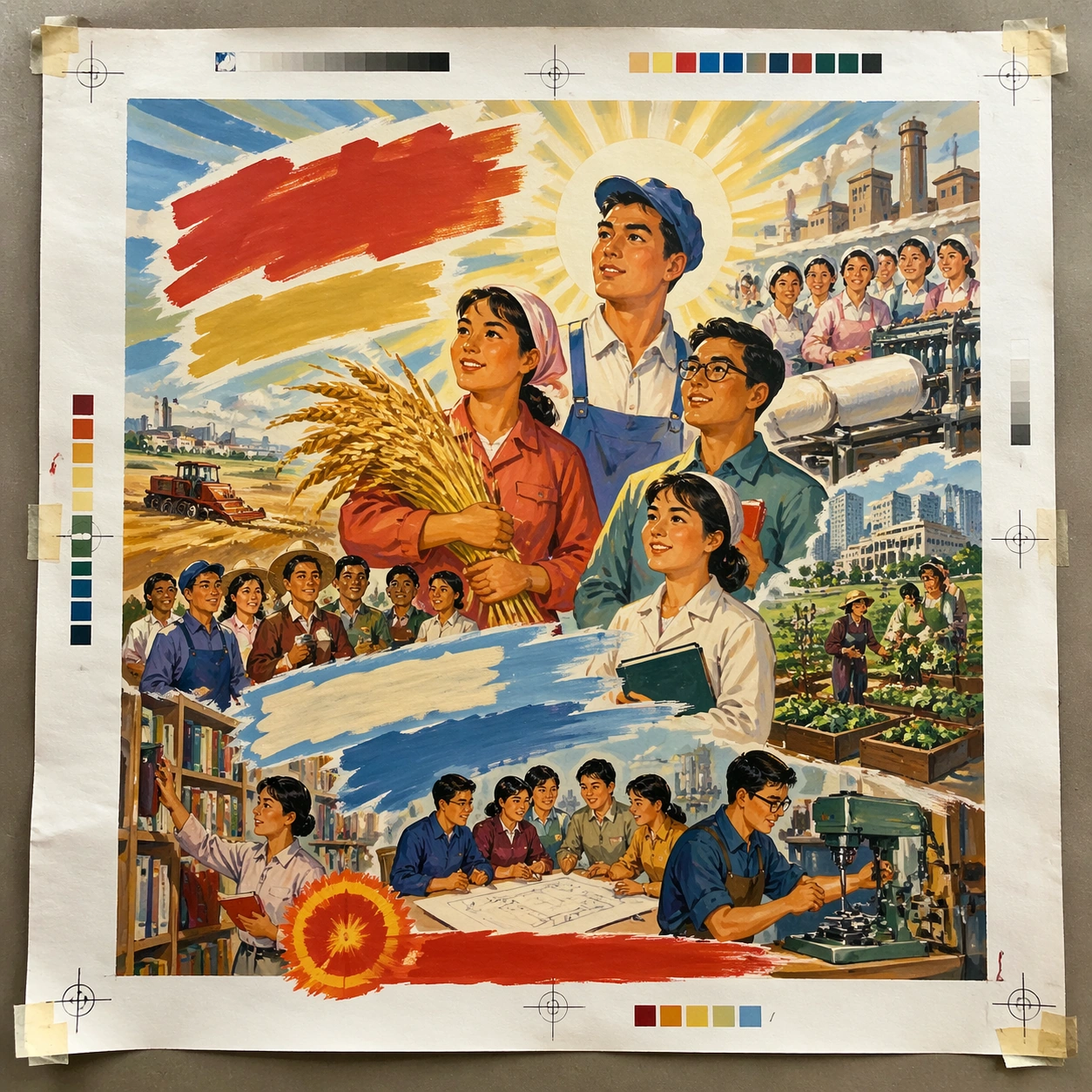
A square overhead tabletop photograph of a fresh poster proof on neutral worktable paper, lit by cool daylight, with crop marks, tape tabs, and slight paper bow visible around the sheet. The poster should express late-1970s handmade gouache poster language with bright optimism, grouped figures, clean silhouettes, and celebratory sunlit staging, using red, gold, sky blue, leaf green, cream, and warm skin tones painted opaquely and a tactile surface appropriate to the medium.

Subject:
Design the poster as a print-shop proof, preserving the same poster language while allowing production clues such as edge trims, registration targets, and process marks to frame the composition. Use workers, farmers, teachers, textile mills, books, wheat, machinery, and radiant sky bands as the main visual ingredients, and organize them with brush slogan panels and seal forms treated as non-readable compositional devices. For the contemporary-subject axis, thread in urban community gardens, public libraries, and makerspaces rendered through optimistic collective poster grammar. The poster must feel like an original design object rather than a reproduction of any known work.

Important details:
The image must still read as a finished poster concept, but it should carry believable print-process evidence and material tactility instead of gallery-wall perfection. Preserve uplifted expressions, gouache blending, clear grouping hierarchy, and warm public-education energy without specific portraiture. Keep every letterform abstract and non-readable, as if it were a typographic texture rather than language. Make the style unmistakable through composition, palette, surface behavior, and symbolic compression. no actual political portraits, no national emblem, no cynical decay, no muddy desaturated palette.

Use case:
Chinese 70s Poster single study 2/9, testing production realism and process evidence.

Constraints:
No readable text, no watermark, no logos, preserve exact 1:1 aspect ratio, no copyrighted characters, no real brand marks, no QR codes, no interface chrome, no accidental gibberish lettering.
Jak używać
- Skopiuj cały oryginalny prompt wraz z parametrami.
- Dostosuj temat, tekst i kompozycję do swoich potrzeb.
- Użyj zgodnego narzędzia zewnętrznego; sprawdź warunki dostępu i wynik.
Przed rozpoczęciem
- Sprawdź, czy potrzebny jest obraz referencyjny. Zgodność nie potwierdza modelu użytego do przykładu.
- Sprawdź nazwy, liczby i napisy; wyniki zależą od wersji modelu.