2026年9月8日 —
Qualcomm's Amazon server-chip pact carries a $60 billion purchase ceiling
Today's North America AI brief is led by a consequential shift in data-center competition: Qualcomm has disclosed a long-term server-chip collaboration with Amazon whose warrant economics scale with purchases. The rest of the issue tracks capital flowing into sovereign AI, the lithography roadmap for larger AI chips, new Arm platforms from cloud to robotics, and fresh evidence that AI is compressing the time needed to build dangerous exploits.

Qualcomm's Amazon server-chip pact carries a $60 billion purchase ceiling
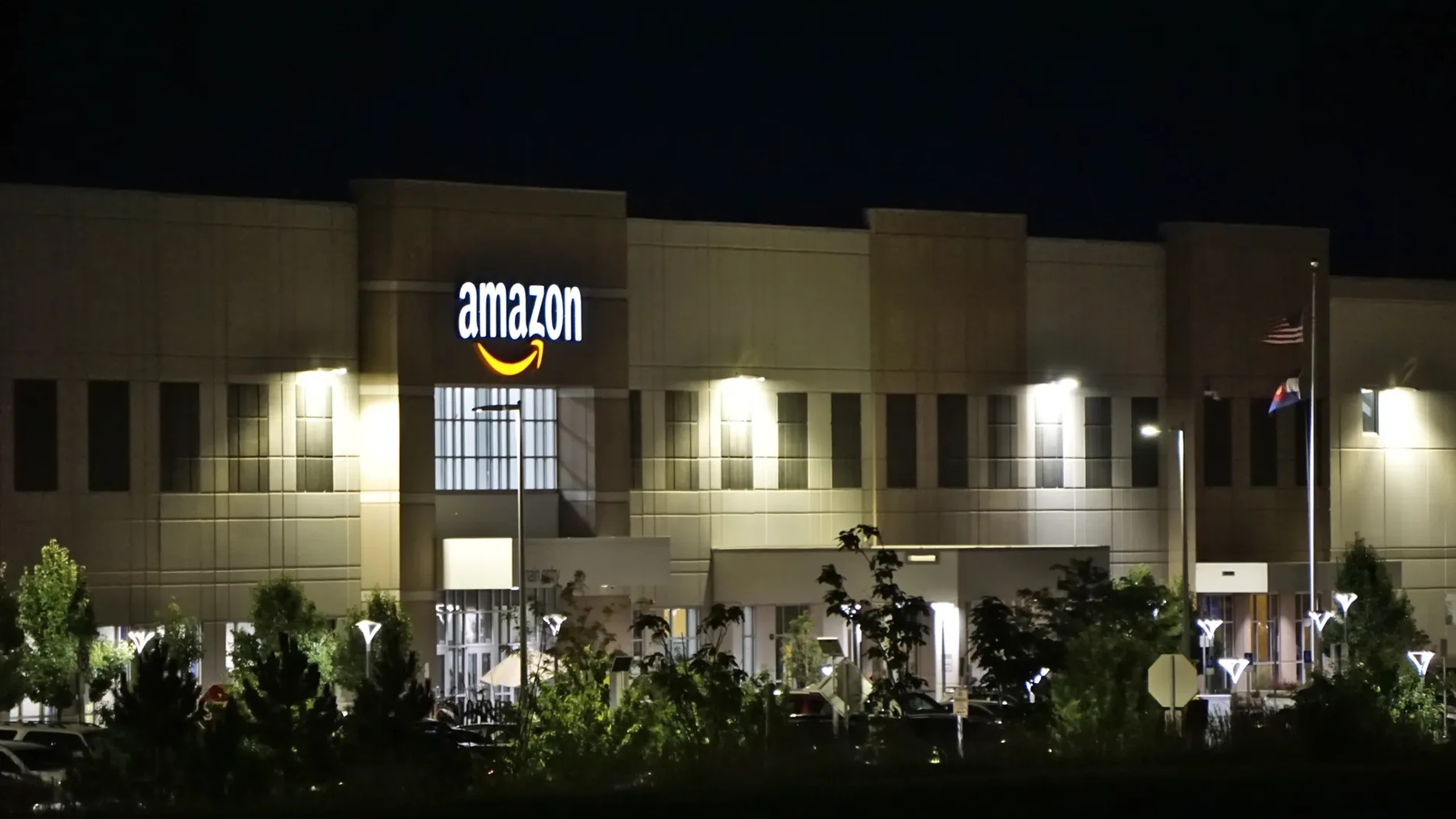
Qualcomm disclosed a strategic collaboration under which Amazon will buy certain server-chip products, technology, systems and manufacturing services. Qualcomm issued an Amazon affiliate a warrant for as many as 25 million shares at $161.26 each. Vesting is tied to commercial arrangements, binding orders and actual purchases over the warrant's ten-year life, with the schedule extending to a maximum of $60 billion in payments.
The filing says 3.75 million shares vested at issuance based on initial purchase commitments. It does not say Amazon has committed to spend the full $60 billion, but it gives Qualcomm an unusually large incentive structure as the mobile-chip leader pushes into AI data-center CPUs and systems.
Mistral raises €3 billion to scale sovereign AI infrastructure
Mistral closed a €3 billion Series D led by Samsung Electronics, valuing the French AI company at more than €21 billion after the round. Scaleup Europe Fund and PSG Equity co-led, while investors including BlackRock-managed funds, Nvidia and Salesforce Ventures participated. Mistral says the capital will expand frontier-model research, compute capacity, infrastructure and international sales; CEO Arthur Mensch told CNBC the company intends to own substantially more of the capacity on which its models run.
ASML and TSMC set a roadmap for larger High NA EUV masks
ASML and TSMC launched an industry initiative to move High NA EUV lithography from today's 6-inch photomasks toward a 12-inch format. The partners target a pilot mask line by 2031 and production-system readiness in 2033. TSMC separately plans to introduce High NA EUV into high-volume manufacturing for advanced nodes in 2030. Larger masks are intended to raise scanner productivity, lower costs and remove stitching constraints as AI processors become larger and transistor structures more complex.
Arm's Neoverse CSS N4 targets configurable agentic-AI servers
Arm introduced Neoverse CSS N4, a configurable compute subsystem for cloud, networking and specialized data-center silicon. Designs can scale to 128 Neoverse N4 cores per die and add LPDDR6 memory plus PCIe Gen 7 connectivity. Arm claims as much as twice the performance, 25% better performance per watt and 75% more memory bandwidth than CSS N3. The company positions the platform alongside its production-ready AGI CPU as two paths for handling CPU-heavy agent orchestration.
Researchers show an AI-assisted zero-click worm for WeChat
Security lab Calif demonstrated WeWorm, a proof-of-concept that exploited WeChat's call stack on iOS and Android without requiring the target to answer. A compromised account could call contacts and continue spreading. Calif says AI helped its team find the memory-corruption bug and build the first remote-code-execution exploit in roughly two days. The researchers reported it in July; Tencent shipped client mitigations in August and later applied a server-side mitigation for all users.
Arm builds neural graphics into its next mobile platform
CSS for Mobile 2 combines Arm's new C2 CPU cluster with the Mali G2-Ultra NX, its first mobile GPU with dedicated neural accelerators. Arm says doubled SME2 capacity speeds recent small language models by 70%, while the GPU targets neural rendering and on-device agent workloads.
Arm proposes a shared capability language for robotics
Arm expanded Total Design into physical AI with more than 80 participating companies and introduced a Robotics Capability Framework. The draft maps systems from reactive machines to context-aware, cognitive and self-improving robots, linking behavior to compute, latency, memory, power and safety requirements.
Arm opens a model and optimization portal for developers and agents
Arm AI Portal offers pre-optimized language, speech, vision and neural-graphics models with latency, memory and accuracy data across Arm hardware. Launch partners and runtimes include Qwen, Gemma, YOLO, ExecuTorch, LiteRT and ONNX Runtime; machine-readable resources are also available to coding agents through MCP.
Australia drafts an opt-out switch for algorithmic feeds
Australia's proposed 'My Feed, My Way' rules would require social platforms to ask new and existing users whether their default feed should use personalized recommendations. Users who opt out would see only chosen friends and creators; noncompliance with the wider digital duty of care could draw penalties up to A$109.2 million.
A Fields medalist launches a mathematical AI-safety institute
Jacob Tsimerman announced the independent Mathematical AI Safety Institute in the Bay Area, separate from the OpenAI safety job he begins later this month. The institute plans its first full research semester in January 2027 and initially aims to hire 10 to 30 mathematicians.