原始文档
GPT Image 2 · en
Scene:
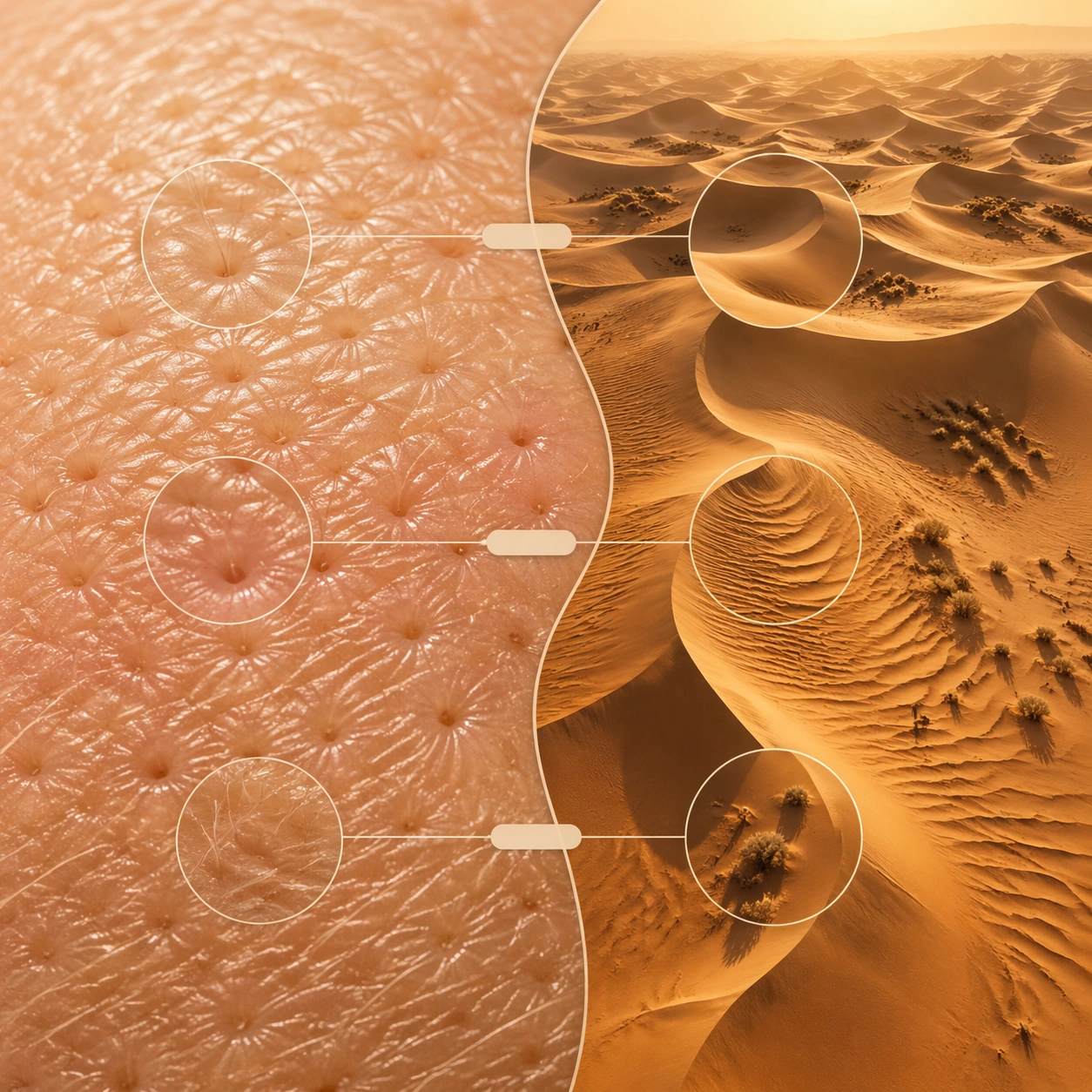
A square warm-toned editorial infographic with a soft beige background, divided by a gentle S-shaped comparison boundary. The left side is a macro skin-surface close-up under scientific lighting; the right side is an aerial desert dune landscape at sunset. Fine contour lines, small blank callout tabs, and transparent circles tie the two halves together without readable text.

Subject:
Left panel: detailed human skin texture at very close range, showing pores, fine ridges, soft peach fuzz, subtle oil highlights, and natural color variation. Right panel: desert dunes from above, with wind-carved ridges, shadowed troughs, small dry shrubs, and golden sand gradients. The shared visual language is surface topology: pore depressions echo dune basins, skin ridges echo sand ripples, and fine hairs echo sparse desert vegetation.

Important details:
Keep the comparison respectful and scientific, not cosmetic advertising. The skin should look natural and healthy, not medical or glamor retouched. The desert should feel vast but organized, not a random sand texture. Use contour overlays and matched light direction to reveal surface physics. The image should be calm, tactile, and visually obvious as a micro-macro topology comparison.

Use case:
Micro-Macro Infographic single study 7/8, comparing skin microtopography with desert dune formations through surface pattern reasoning.

Constraints:
No readable text, no watermark, no logos, preserve exact 1:1 aspect ratio, no beauty-product branding, no medical diagnosis, no wounds, no glamour portrait, no fake map labels, no repetitive sand wallpaper, no intrusive text blocks.
使用方法
- 复制完整原始提示词,并保留其中的参数。
- 按需求替换主体、文字和构图要求。
- 在兼容的外部工具中使用,核对当前使用条件并检查结果。
开始前需了解
- 先确认是否需要参考图。标注兼容模型,不代表该示例由这个模型生成。
- 核对名称、数字与画面文字;不同模型版本的结果可能不同。