原始文档
GPT Image 2 · en
Scene:
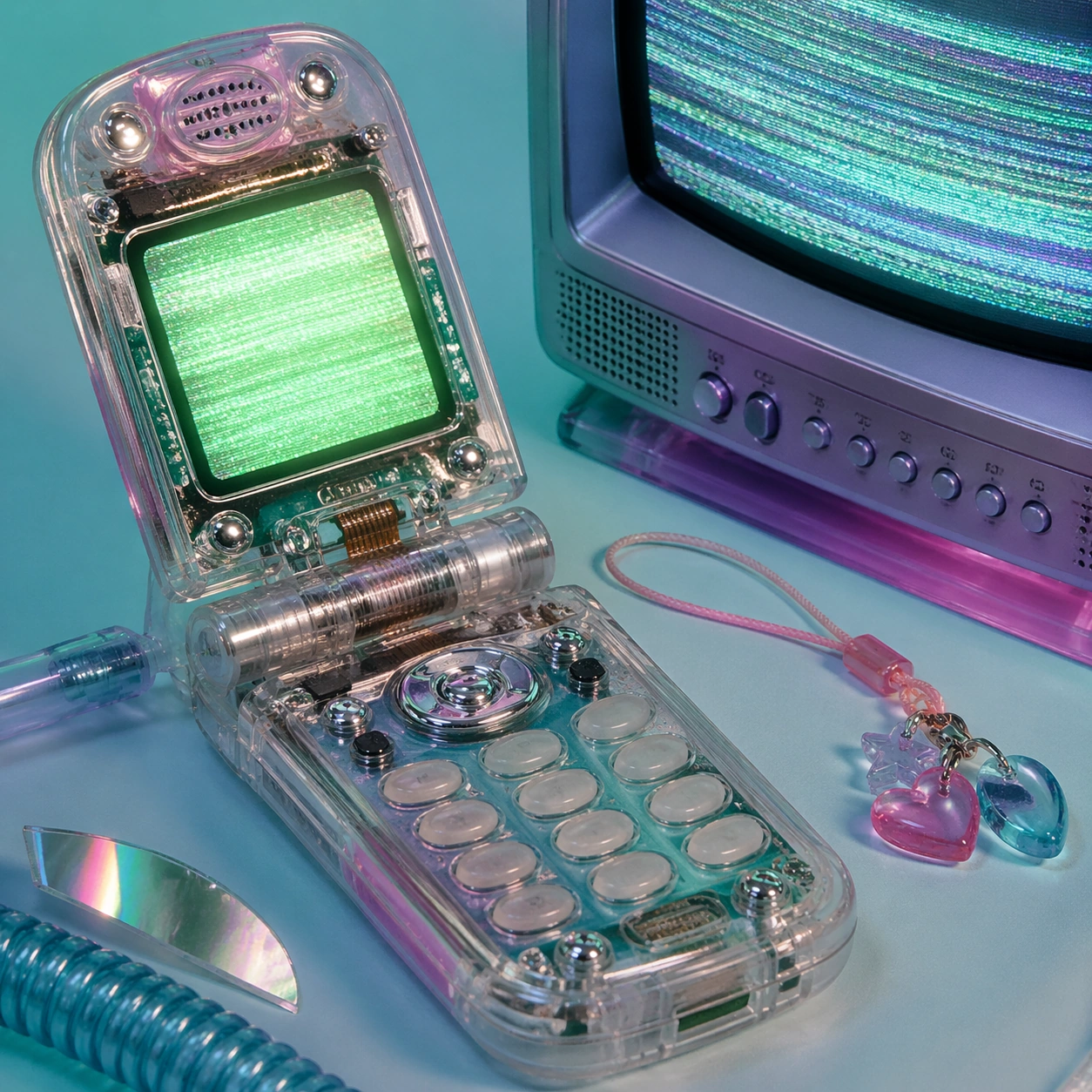
A square close-up still life on a pale aqua workbench, photographed with crisp catalog lighting and a slight analog video softness at the edges. The camera looks down at a three-quarter angle, close enough to reveal internal electronics and molded plastic seams. The palette is translucent teal, frosted violet, hot pink highlights, silver screws, and soft CRT phosphor green reflections.

Subject:
A fictional early-2000s transparent flip phone shell opened like a small technological specimen. The case is clear plastic with rounded Y2K contours, visible hinge barrels, tiny speaker mesh, rubber keys without legible symbols, ribbon cables, battery cells, and decorative chrome bubble inserts. Beside it are translucent charms, a small reflective disc fragment, and a tiny CRT monitor in the background showing only abstract static bands. The phone feels usable and physically assembled, not a flat prop.

Important details:
The transparent casing must show layered refraction, internal shadows, screw posts, molded ribs, and slight yellowing at the edges. Avoid real device identity; this is a fictional object inspired by an era. The CRT influence should appear as greenish screen glow, scanline reflections on the plastic, and mild RGB separation along shiny edges. The image tests whether translucent material, tiny mechanisms, and nostalgia styling can coexist without becoming clutter.

Use case:
Y2K Vaporwave CRT single study 5/8, testing transparent consumer electronics and era-specific material realism.

Constraints:
No readable text, no watermark, no logos, preserve exact 1:1 aspect ratio, no real phone brand cues, no readable keypad labels, no broken hinge geometry, no modern smartphone shape.
使用方法
- 复制完整原始提示词,并保留其中的参数。
- 按需求替换主体、文字和构图要求。
- 在兼容的外部工具中使用,核对当前使用条件并检查结果。
开始前需了解
- 先确认是否需要参考图。标注兼容模型,不代表该示例由这个模型生成。
- 核对名称、数字与画面文字;不同模型版本的结果可能不同。