原始文档
GPT Image 2 · en
Scene:
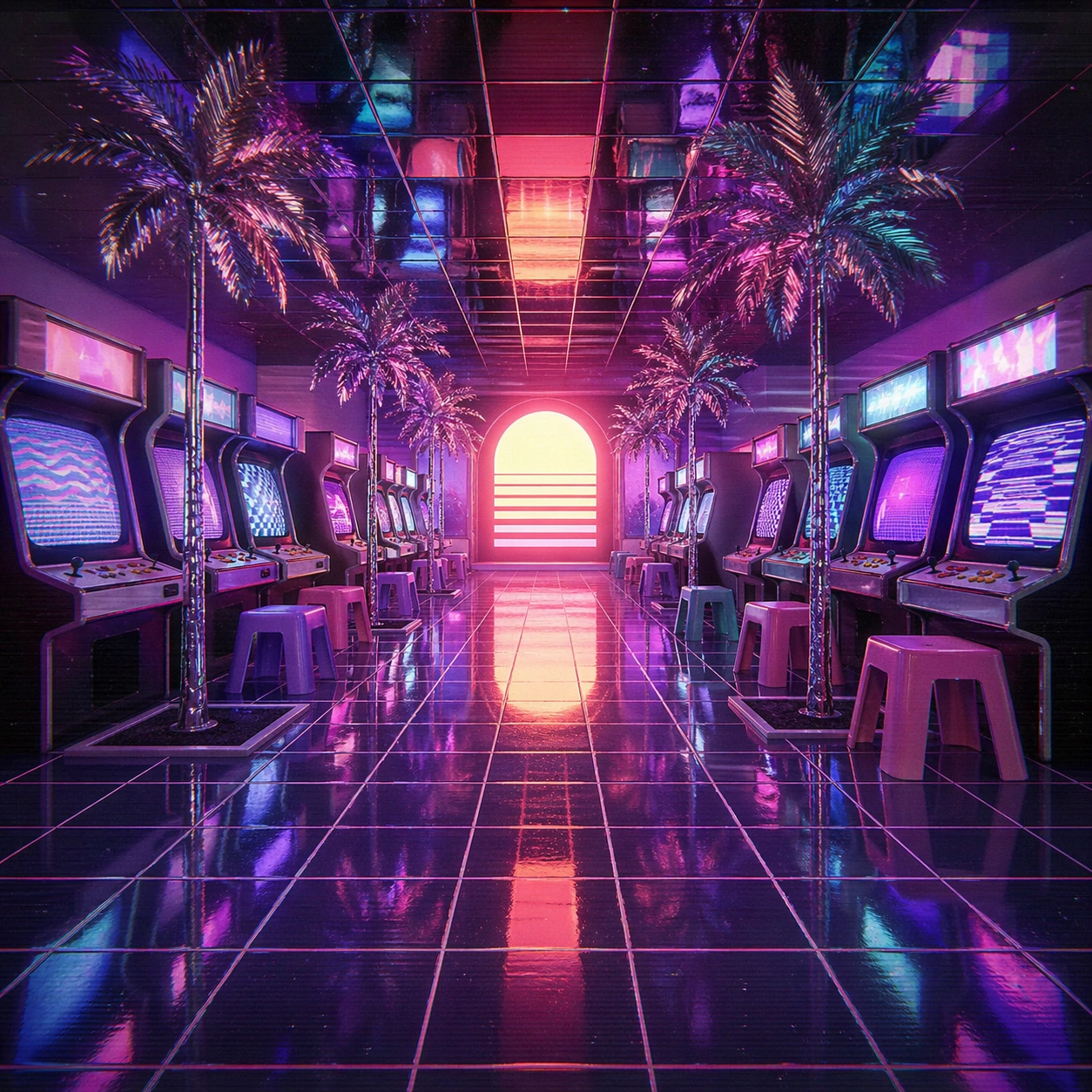
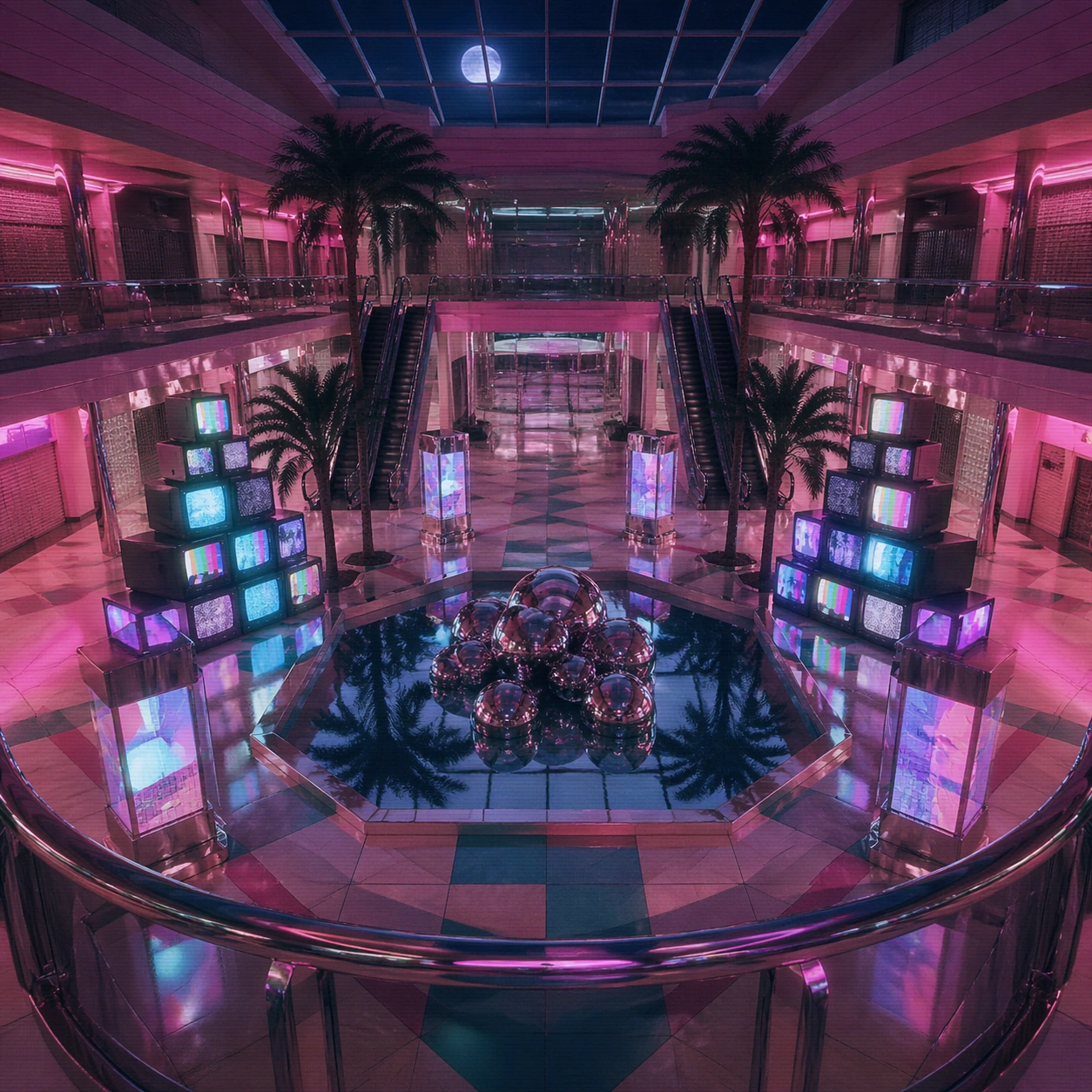
A square architectural scene inside an empty after-hours shopping mall atrium, shot from the upper balcony looking down into a symmetrical vaporwave composition. The lighting is moody but clear: pink neon from closed storefronts, cyan reflections from CRT display stacks, and pale moonlight through a skylight. The image should have the faint softness of analog tape, with scanlines most visible in darker gradients.

Subject:
A central fountain has been replaced by a chrome sphere cluster and a shallow pool reflecting artificial palm trees. Around the atrium are rounded glass railings, pastel tile patterns, dead escalators, translucent directory kiosks with abstract unreadable panels, and stacks of small CRT televisions forming a glowing sculpture. The televisions show only static, color bars without labels, palm silhouettes, and geometric gradients. Reflections should connect the water, glass, chrome, and tile surfaces.

Important details:
The scene should feel like digital nostalgia archaeology rather than a normal mall photo. Preserve coherent architecture, believable escalator geometry, and correct reflection directions. CRT artifacts belong on the television screens and reflective edges; they should not erase spatial clarity. Use vaporwave color language carefully: magenta and cyan light, pale peach tiles, black glass, and chrome highlights, with enough physical grit to keep the place credible.

Use case:
Y2K Vaporwave CRT single study 8/8, testing large-scale environment composition with CRT-era atmosphere.

Constraints:
No readable text, no watermark, no logos, preserve exact 1:1 aspect ratio, no real store signs, no people, no collapsed architecture, no excessive fog hiding the atrium structure.
使用方法
- 复制完整原始提示词,并保留其中的参数。
- 按需求替换主体、文字和构图要求。
- 在兼容的外部工具中使用,核对当前使用条件并检查结果。
开始前需了解
- 先确认是否需要参考图。标注兼容模型,不代表该示例由这个模型生成。
- 核对名称、数字与画面文字;不同模型版本的结果可能不同。