原始文档
GPT Image 2 · en
Scene:
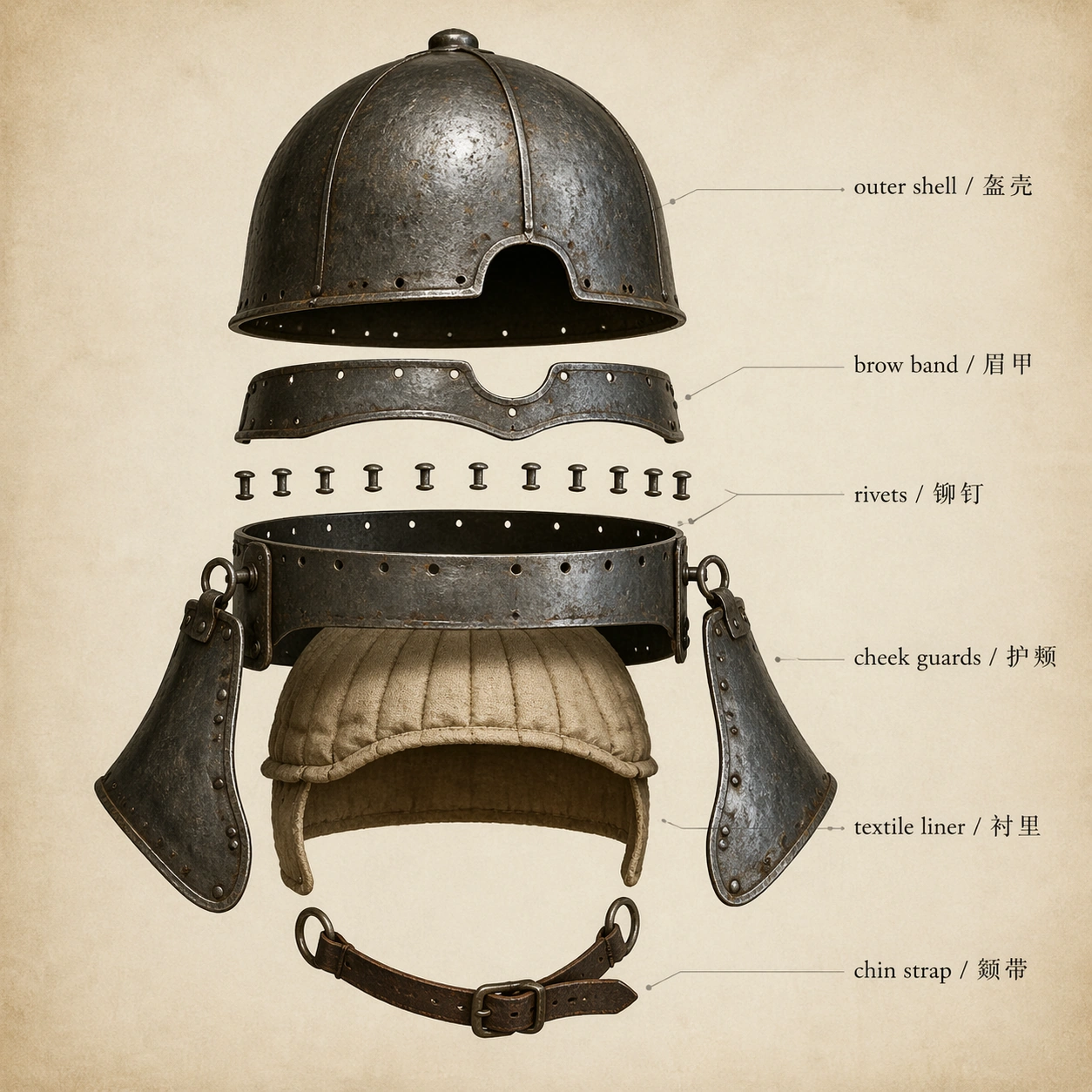
A square museum armory diagram on neutral parchment paper, rendered with orthographic precision and controlled dramatic light. The central object is an ancient layered helmet presented as an exploded vertical stack, with metal plates, padding, rivets, and cheek guards separated just enough to show construction. Use cool steel, dark leather, linen beige, and graphite annotation lines.

Subject:
Show a historical helmet broken into readable construction layers: outer shell lifted upward, brow band floating forward, rivet row separated, cheek guards angled outward, textile liner visible inside, and leather chin strap below. Include only these readable bilingual labels: outer shell / 盔壳, brow band / 眉甲, rivets / 铆钉, cheek guards / 护颊, textile liner / 衬里, chin strap / 颏带. The helmet should look museum-preserved, with scratches, oxidation, and believable thickness.

Important details:
The exploded view must obey physical assembly logic: rivets align with holes, cheek guards hang from side joints, liner follows the inner curve, and the chin strap attaches below. Avoid fantasy armor exaggeration. The diagram should have clear hierarchy, precise leader lines, realistic material contrast, and enough negative space for bilingual labels to remain readable.

Use case:
Museum Exploded View single study 8/8, testing an armored artifact exploded diagram with metal, textile, and leather material layers.

Constraints:
No readable text except the specified bilingual labels, no watermark, no logos, preserve exact 1:1 aspect ratio, no fantasy horns, no modern tactical gear, no weapons, no blood, no random heraldry, no cluttered labels.
使用方法
- 复制完整原始提示词,并保留其中的参数。
- 按需求替换主体、文字和构图要求。
- 在兼容的外部工具中使用,核对当前使用条件并检查结果。
开始前需了解
- 先确认是否需要参考图。标注兼容模型,不代表该示例由这个模型生成。
- 核对名称、数字与画面文字;不同模型版本的结果可能不同。