原始文档
GPT Image 2 · en
Scene:
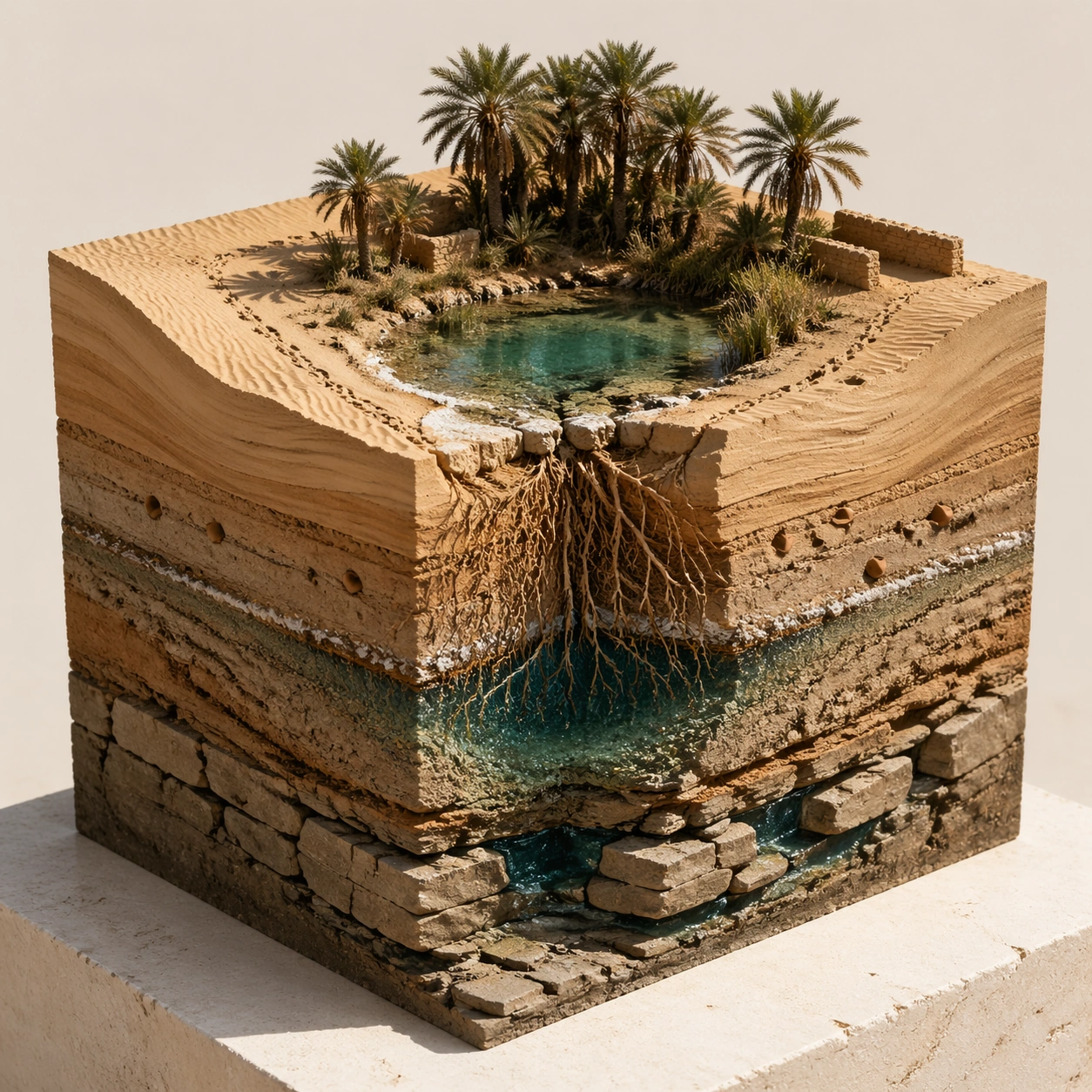
A square hyperreal museum-display photograph of a desert oasis diorama cube on a pale limestone base. Use high, dry sunlight with crisp shadows, a clean cream background, and a three-quarter camera angle that shows the palm-covered top surface and exposed sides. The cube should feel tactile, dusty, and precisely cut.

Subject:
The top face shows a small oasis with date palms, a shallow turquoise pool, reed patches, wind ripples in sand, camel tracks without animals, and a few mudbrick walls without signage. The cutaway sides reveal dune cross-bedding, compacted ancient lakebed clay, palm roots, a freshwater lens, salt crust, buried pottery fragments, beetle burrows, and a deeper fractured sandstone aquifer. Include capillary moisture gradients, root hairs touching wet sand, and mineral rings around the pool.

Important details:
The whole object must communicate how an oasis works. Surface water should connect visibly to groundwater, palm roots should reach toward the wet lens, and sand layers should show wind-driven structure. Pottery fragments and burrows should be sparse and embedded, not scattered decoration. Keep the cube edges sharp, the materials dry except at the wet zones, and the top oasis small enough to preserve the sense of a specimen block.

Use case:
Hyperreal Diorama Cube single study 8/8, testing a desert oasis cube with groundwater logic, dune stratigraphy, roots, salt, artifacts, and aquifer layers.

Constraints:
No readable text, no watermark, no logos, preserve exact 1:1 aspect ratio, no floating labels, no fantasy temple ruins, no oversized animals, no random treasure, no muddy blue water stripe, no disconnected pool, no soft rounded cube edges, no cropped palm crowns.
使用方法
- 复制完整原始提示词,并保留其中的参数。
- 按需求替换主体、文字和构图要求。
- 在兼容的外部工具中使用,核对当前使用条件并检查结果。
开始前需了解
- 先确认是否需要参考图。标注兼容模型,不代表该示例由这个模型生成。
- 核对名称、数字与画面文字;不同模型版本的结果可能不同。