
原始文档
GPT Image 2 · en
Scene:
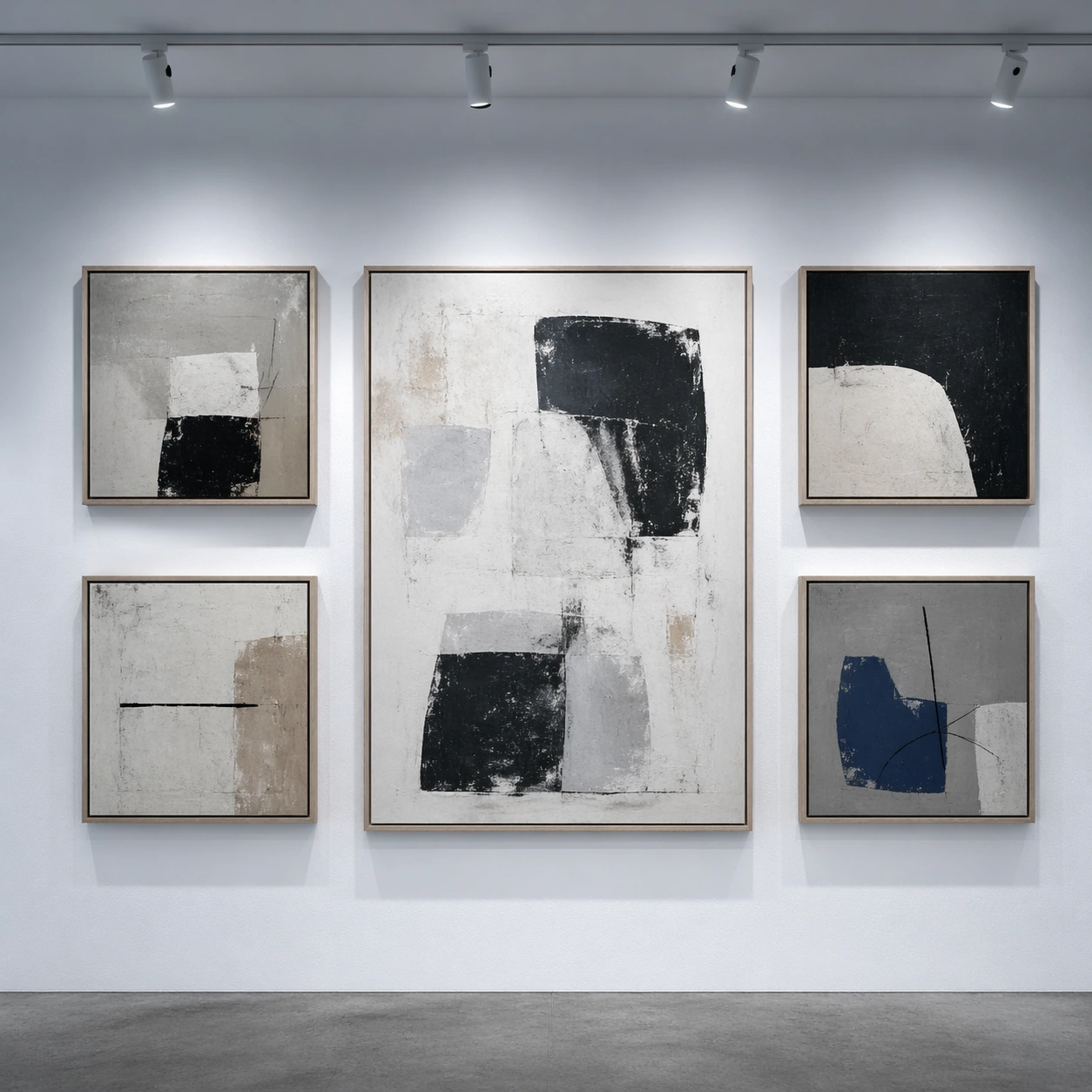
Square crop of a contemporary gallery wall photographed straight-on, soft ceiling track lights, matte white wall, concrete floor edge, and a restrained exhibition design mood. The image should be clean and frontal, like documentation of a corrected layout after a curator requested edits.

Subject:
Show five framed abstract artworks arranged in a precise grid-like rhythm. The final image should imply multiple conversational edits: remove the small leftmost label plaque, enlarge the central artwork, make the lighting cooler, and align the top row more evenly while preserving the identities of the other frames. All visible art marks are abstract shapes and textures; no readable labels or signatures. The empty wall where the plaque was removed should retain wall texture and natural shadow falloff.

Important details:
This tests structured layout correction. The central frame should grow without colliding with the neighboring frames, and the surrounding frames should reposition just enough to maintain balance. Track-light highlights must follow the cooler lighting request while still looking physically plausible. Keep the wall plane, floor line, frame materials, and overall exhibition style consistent. The corrected grid should feel intentional, not mechanically perfect or randomly rearranged.

Use case:
Conversational Editing Workflow single study 8/8, testing layout-aware object removal, resizing, lighting change, and alignment repair.

Constraints:
No readable text, no watermark, no logos, preserve exact 1:1 aspect ratio, no museum brand, no people, no UI overlay, no before-after split, no crooked final frames, no impossible light beams, no duplicate central artwork.
使用方法
- 复制完整原始提示词,并保留其中的参数。
- 按需求替换主体、文字和构图要求。
- 在兼容的外部工具中使用,核对当前使用条件并检查结果。
开始前需了解
- 先确认是否需要参考图。标注兼容模型,不代表该示例由这个模型生成。
- 核对名称、数字与画面文字;不同模型版本的结果可能不同。