原始文档
GPT Image 2 · en
Scene:
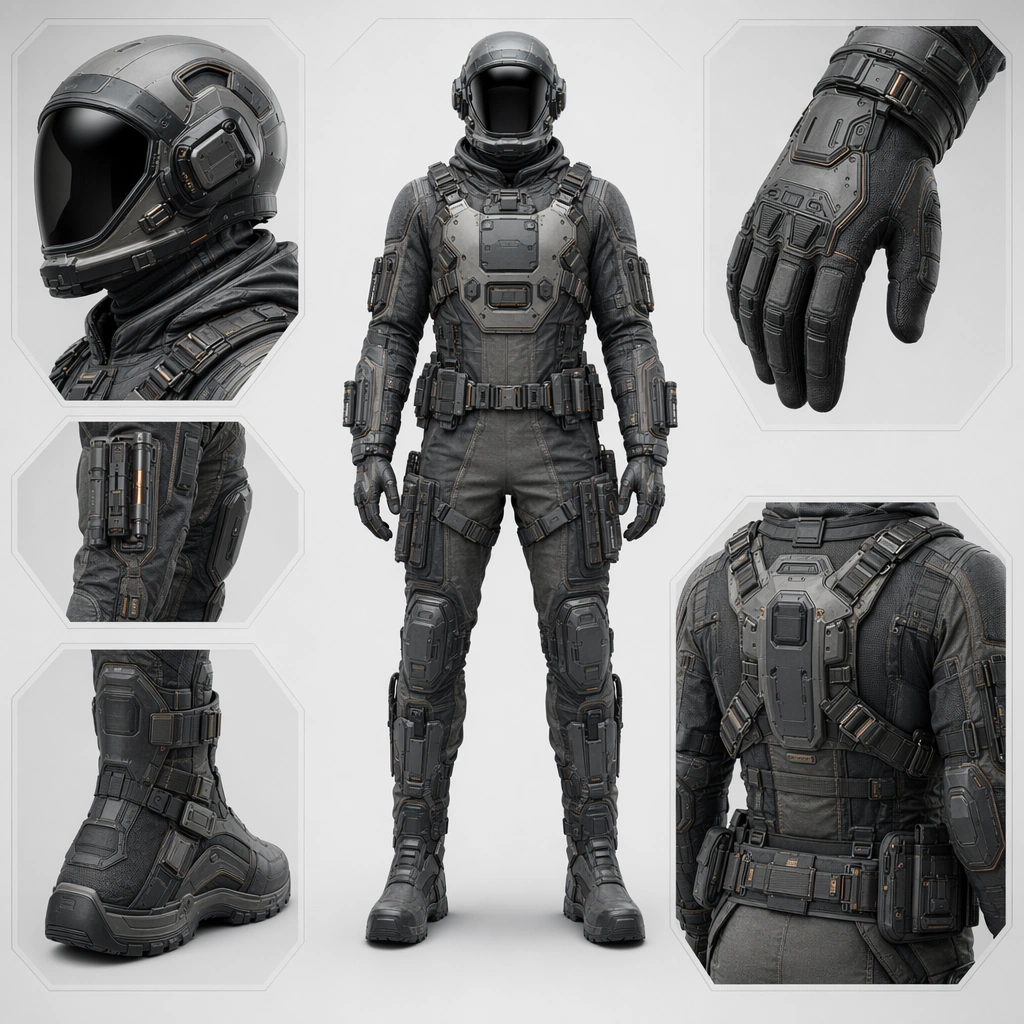
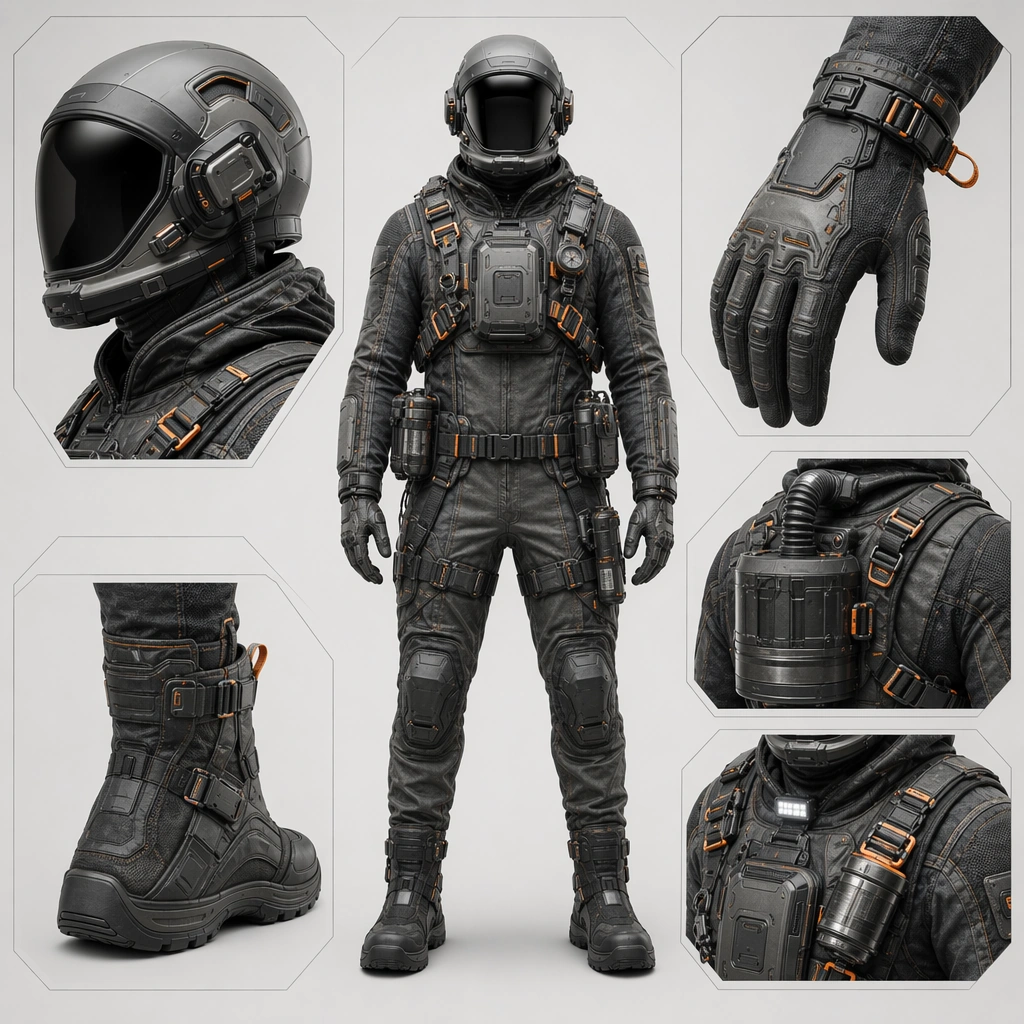
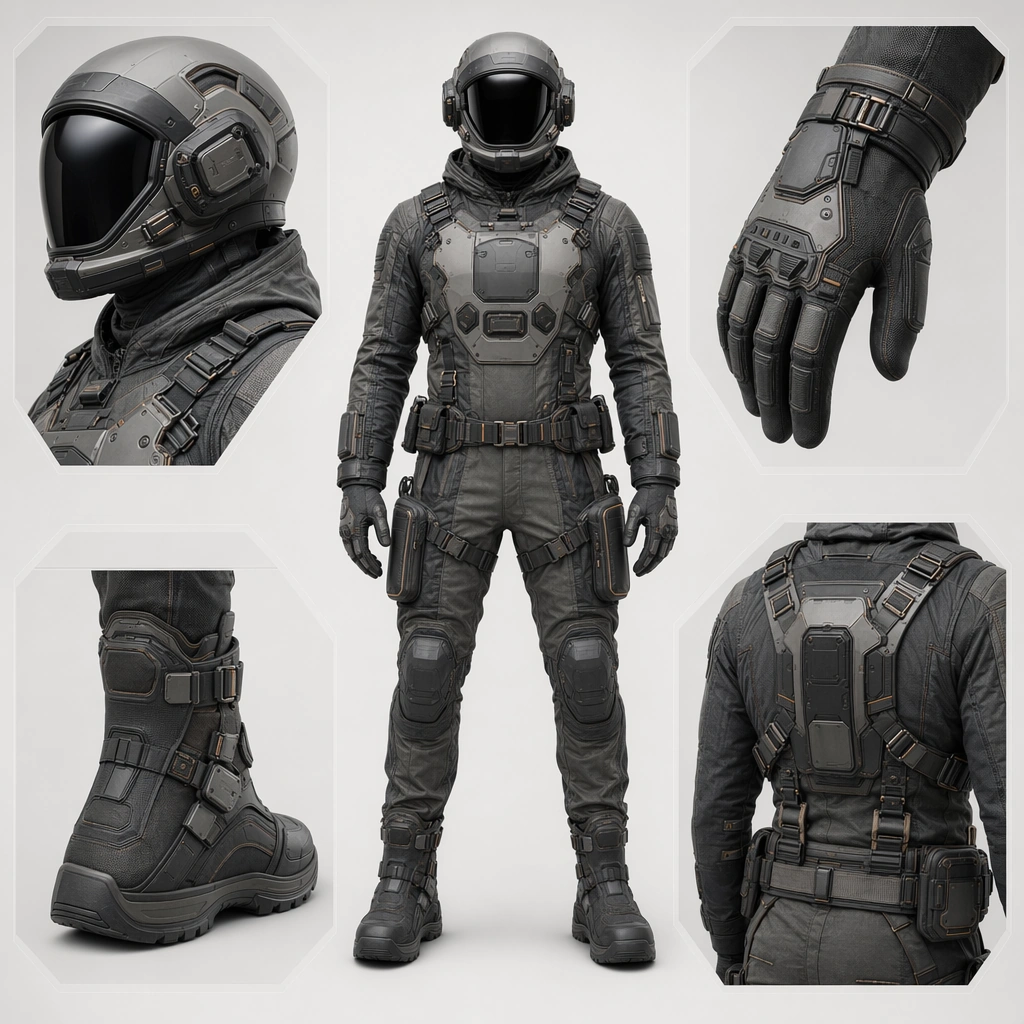
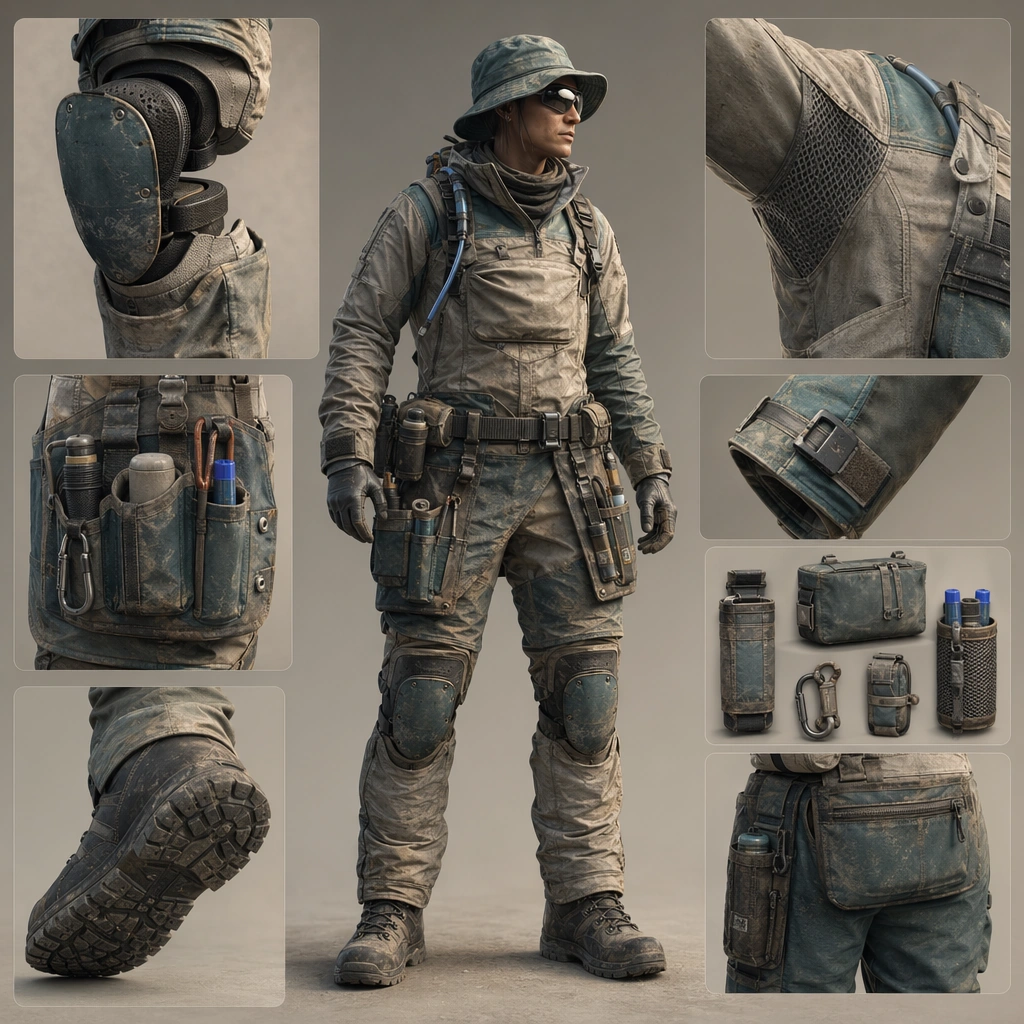
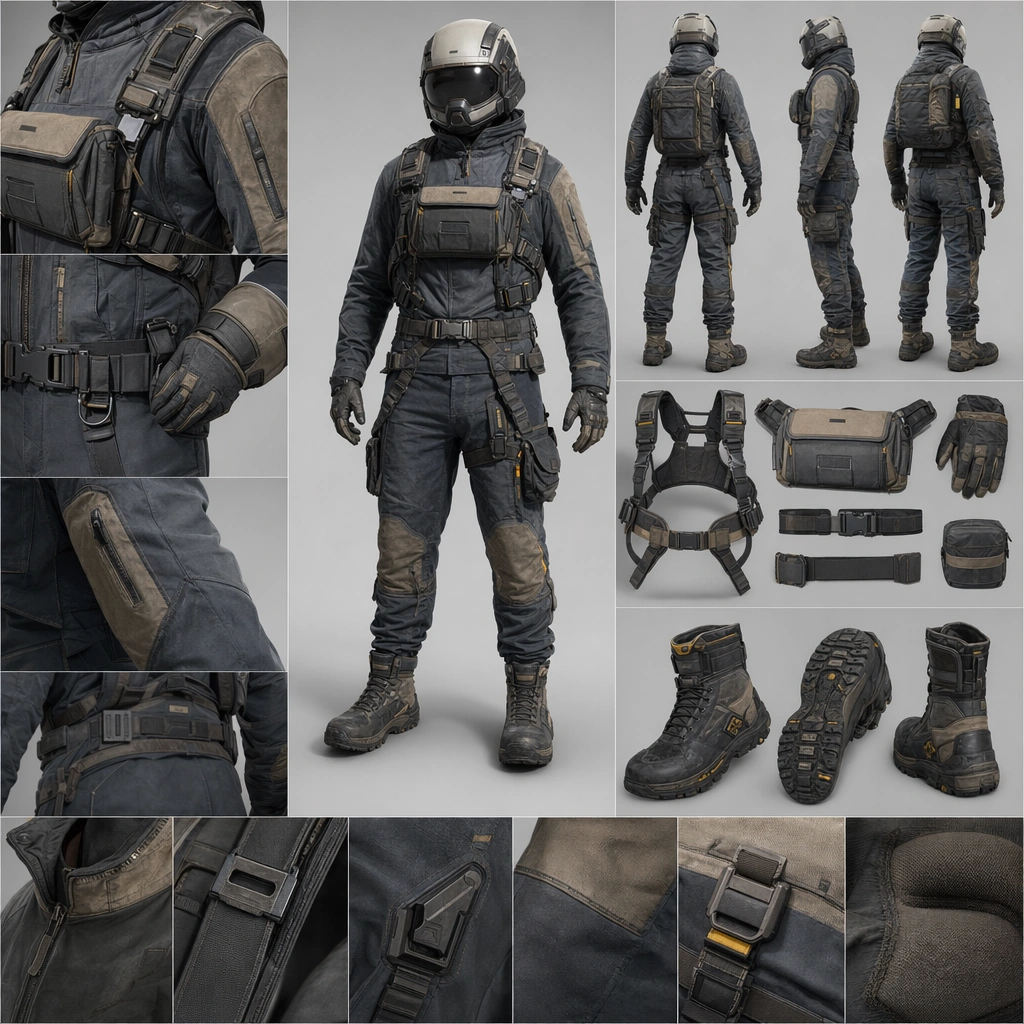
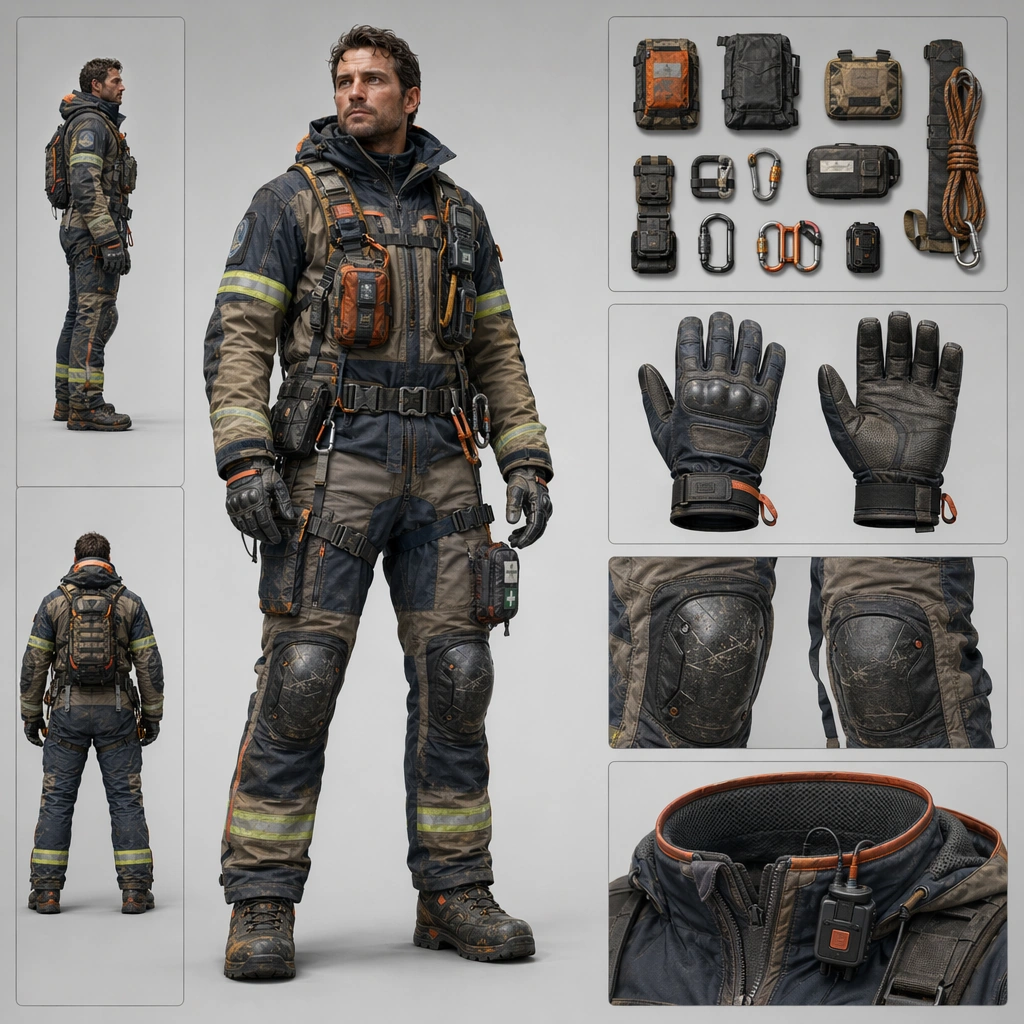
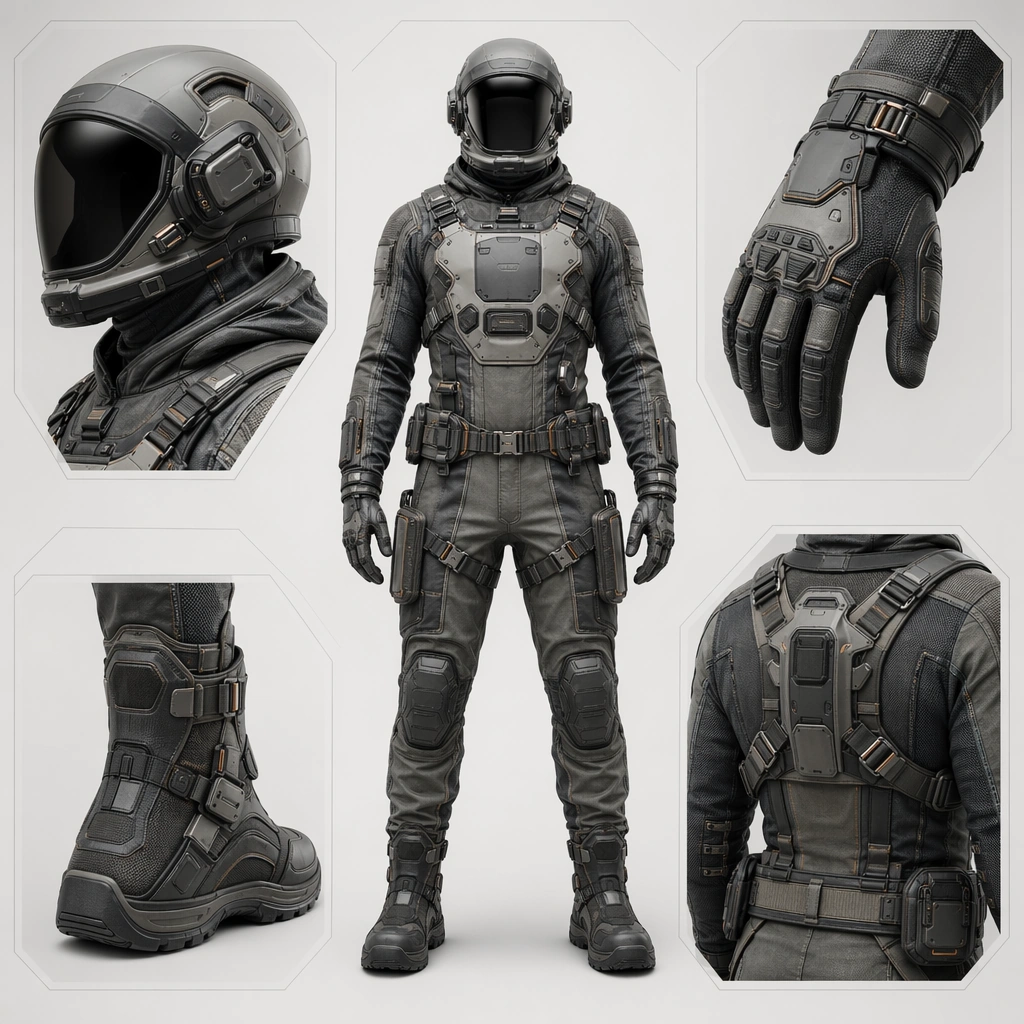
Create a square product-board image for a future wearable system, balancing full-body presentation, material close-ups, and family-level design coherence. The lighting should feel commercial and physical, revealing fabric, shell, seals, and hardware clearly without flattening the subject. Use a controlled studio or minimal contextual environment that supports readability. Present a neutral full-body wearer centered in the square with detail windows for helmet, glove, boot, and utility harness against a clean product-board background.

Subject:
Center the image on one coherent suitline: helmet, torso shell, seam system, gloves, boots, harness points, and modular attachments should all read as parts of one product family. The wearer can appear neutral and upright, but the real protagonist is the design system and its task identity. Establish the reference family through one core suit, one compact accessory rail, one chest interface zone, and clearly matched fasteners across all components.

Important details:
Treat the board as a commercial concept surface. Materials, fastening logic, body protection, comfort cues, and accessory placement must all feel intentional. The suite should look ready for campaign imagery, product family boards, or advanced apparel concept work rather than as a costume illustration. The first image should lock silhouette, material palette, seam rhythm, and attachment strategy so later variants preserve the same family identity. Resolve the anchor rules that later reference-dependent variants must inherit, especially the helmet profile, seam architecture, fastening language, and modular accessory family.

Use case:
Suitline System series study 1/4, designed as a reusable core-system image for this topic.

Constraints:
No readable text, no watermark, no logos, preserve exact 1:1 aspect ratio, no superhero spandex cues, no military insignia, no readable labels, no impossible body proportions, no dramatic action pose.
使用方法
- 复制完整原始提示词,并保留其中的参数。
- 按需求替换主体、文字和构图要求。
- 在兼容的外部工具中使用,核对当前使用条件并检查结果。
开始前需了解
- 先确认是否需要参考图。标注兼容模型,不代表该示例由这个模型生成。
- 核对名称、数字与画面文字;不同模型版本的结果可能不同。