
原始文档
GPT Image 2 · en
Scene:
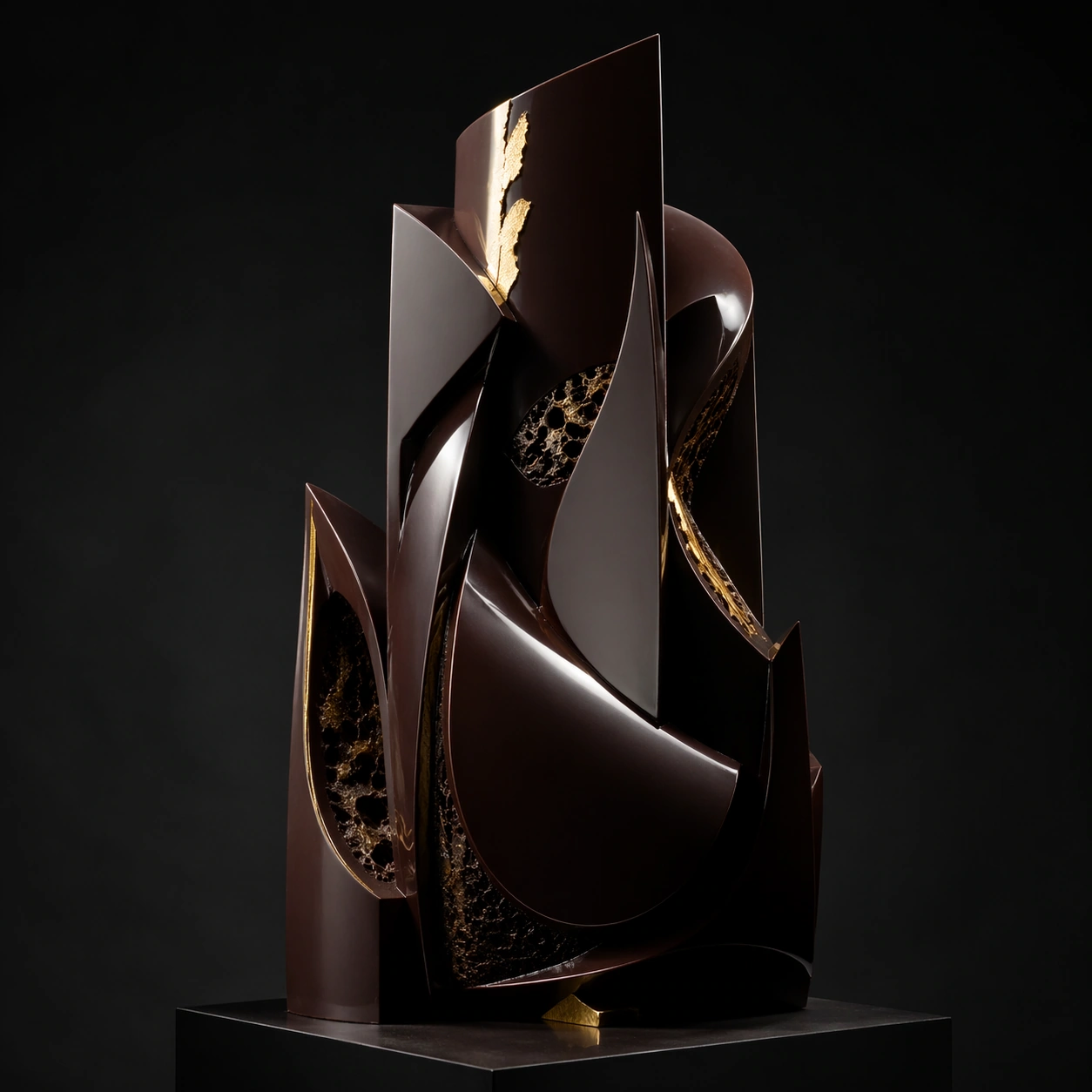
Create a square competition-style pastry studio photograph with one sculptural chocolate showpiece on a dark pedestal against a controlled neutral or black backdrop. Softbox reflections should skim the tempered surfaces with glass-like sharpness, while shadows stay deep and elegant. The object must feel large, balanced, and professionally lit, as if documented after winning a grand pastry prize. Create a square black-studio photograph with one large monolithic chocolate form on a dark pedestal, using crisp softbox reflections and deep surrounding shadow. The mood should be midnight-dark and monumental.

Subject:
Build a dense sculptural mass from layered dark chocolate planes, with a few precise cuts, narrow openings, and restrained gold accents interrupting the volume. The monolith should feel heavy and stable, as if carved from tempered darkness. A few subtle praline-inspired cavity hints may appear within the structure.

Important details:
Tempered chocolate realism is critical: mirror reflections, crisp edges, matte-to-gloss transitions, gold leaf, sugar accents, and structural balance all need to feel plausible. The sculpture can be impossible in composition, but never sloppy in craft. Every support point and reflection line should suggest deliberate pastry engineering. The power of the image comes from weight, reflection, and controlled interruption. Make the mass feel undeniably chocolate while preserving the severe monumentality of the form.

Use case:
Chocolate lacquer sculpture single study 9/9, turning tempered chocolate into a monumental midnight monolith.

Constraints:
No readable text, no watermark, no logos, preserve exact 1:1 aspect ratio, no candy-bar packaging cues, no readable competition banners, no cartoon dessert palette, no smudged fingerprints, no cluttered workshop background, no cake-slice associations, no dessert plate context, no sugary decorations.
使用方法
- 复制完整原始提示词,并保留其中的参数。
- 按需求替换主体、文字和构图要求。
- 在兼容的外部工具中使用,核对当前使用条件并检查结果。
开始前需了解
- 先确认是否需要参考图。标注兼容模型,不代表该示例由这个模型生成。
- 核对名称、数字与画面文字;不同模型版本的结果可能不同。