提示词库 · 创作探索

提示词库

探索真实提示词和对应生成示例,按任务找到灵感,免费复制完整提示词,开启下一次创作。

示例
10,974
模型
17
来源
1277

精选合集

10,974 条提示词示例 · 第 1 / 229 页
Example generated from “Peach and apricot flat lay illustration”
GPT Image 2.5en

Render the entire scene as a two-dimensional flat vector illustration: simple solid-colour shapes, crisp contours and minimal flat shading. Flat lay illustration of peach and apricot slices, slices seen from above with visible segments, pale rose and gold dawn colours, plain soft background, 16:9 aspect ratio.

Example generated from “Lavender geometric tile pattern”
GPT Image 2.5en

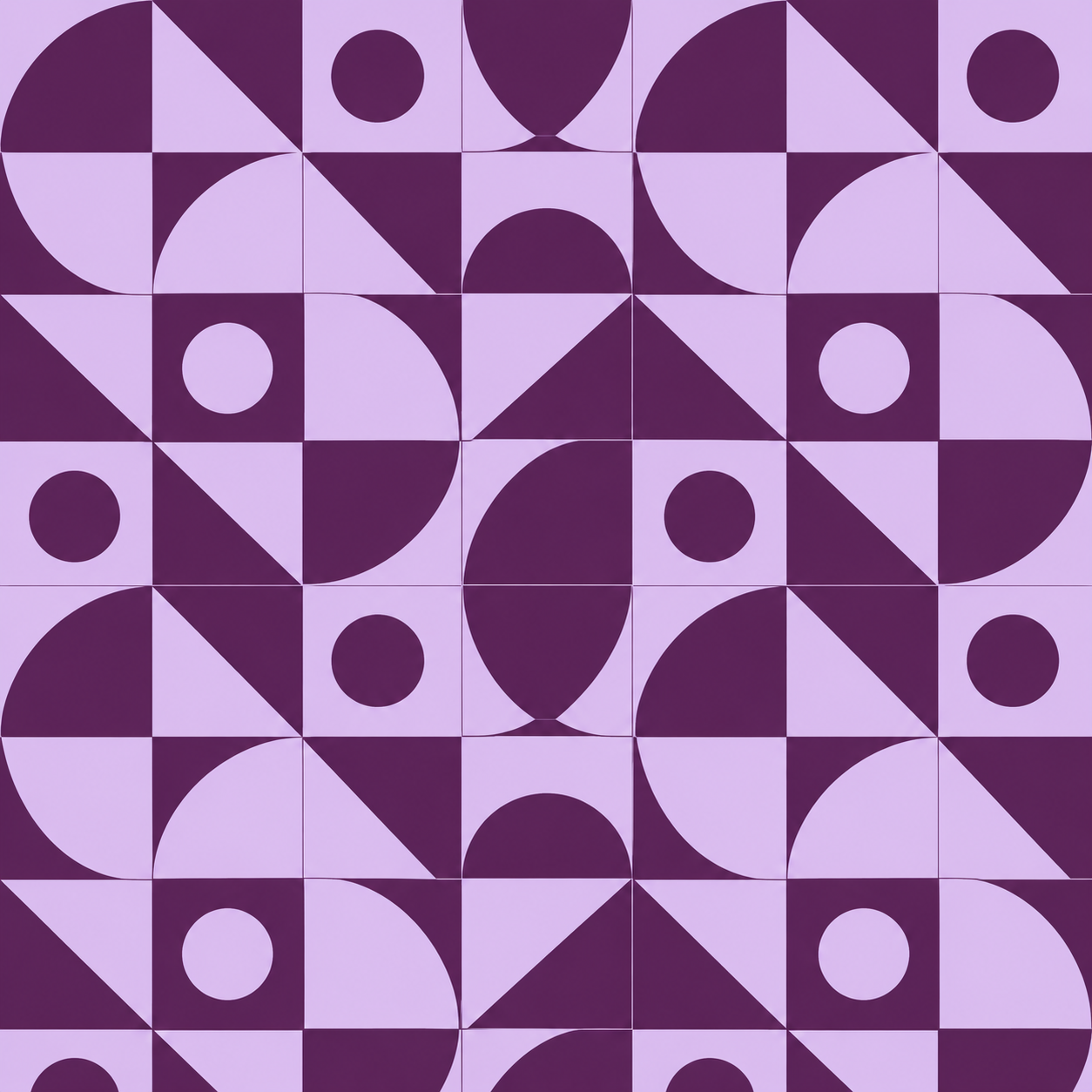
Seamless geometric tile pattern of lavender tiles: quarter circles, triangles, half circles and dots on square tiles, lavender and plum, flat colours, 1:1 aspect ratio.

Example generated from “Retro Riviera sunset travel poster”
GPT Image 2.5en

Retro flat vector travel poster: a striped peach and orange sunset sky, a pale sun setting between two violet mountains, a deep teal sea with thin white reflection lines, a dark title bar at the top, 2:3 aspect ratio.

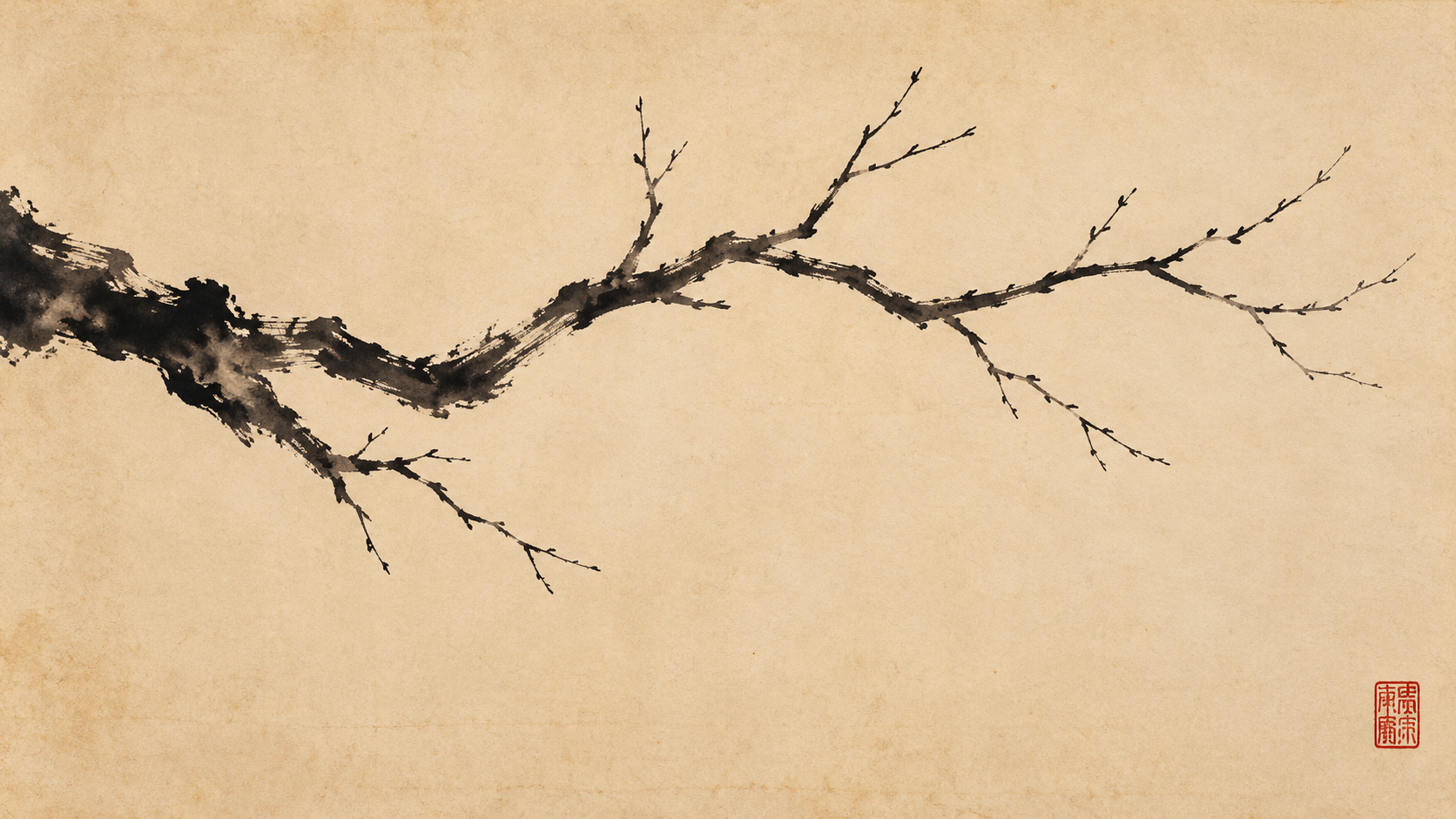
Example generated from “Bare branch ink painting on warm paper”
GPT Image 2.5en

Minimal ink painting of a single bare branch across a wide scroll, dark dry-brush strokes, warm paper tones with ink black, a small red seal in the corner, wide empty space on warm paper, 16:9 aspect ratio.

Example generated from “Amber and teal dancer silhouette”
GPT Image 2.5en

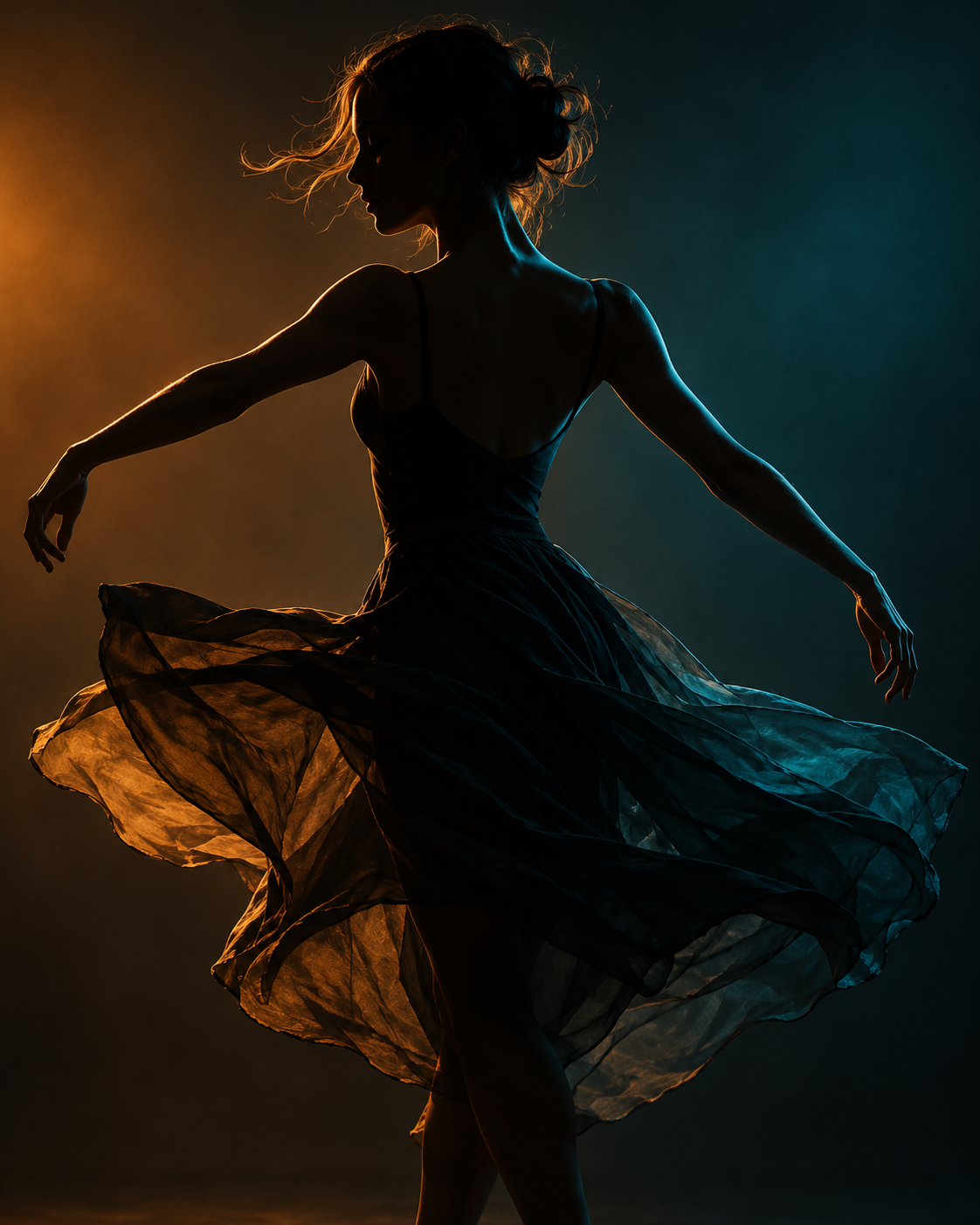
Moody portrait of a dancer mid-turn as a dark silhouette, rim-lit in amber and teal against a flat dark gradient. Mood: Aspect ratio: 4:5. Keep the face in shadow so the outline carries the likeness.

Example generated from “Coral and cream perfume bottle illustration”
GPT Image 2.5en

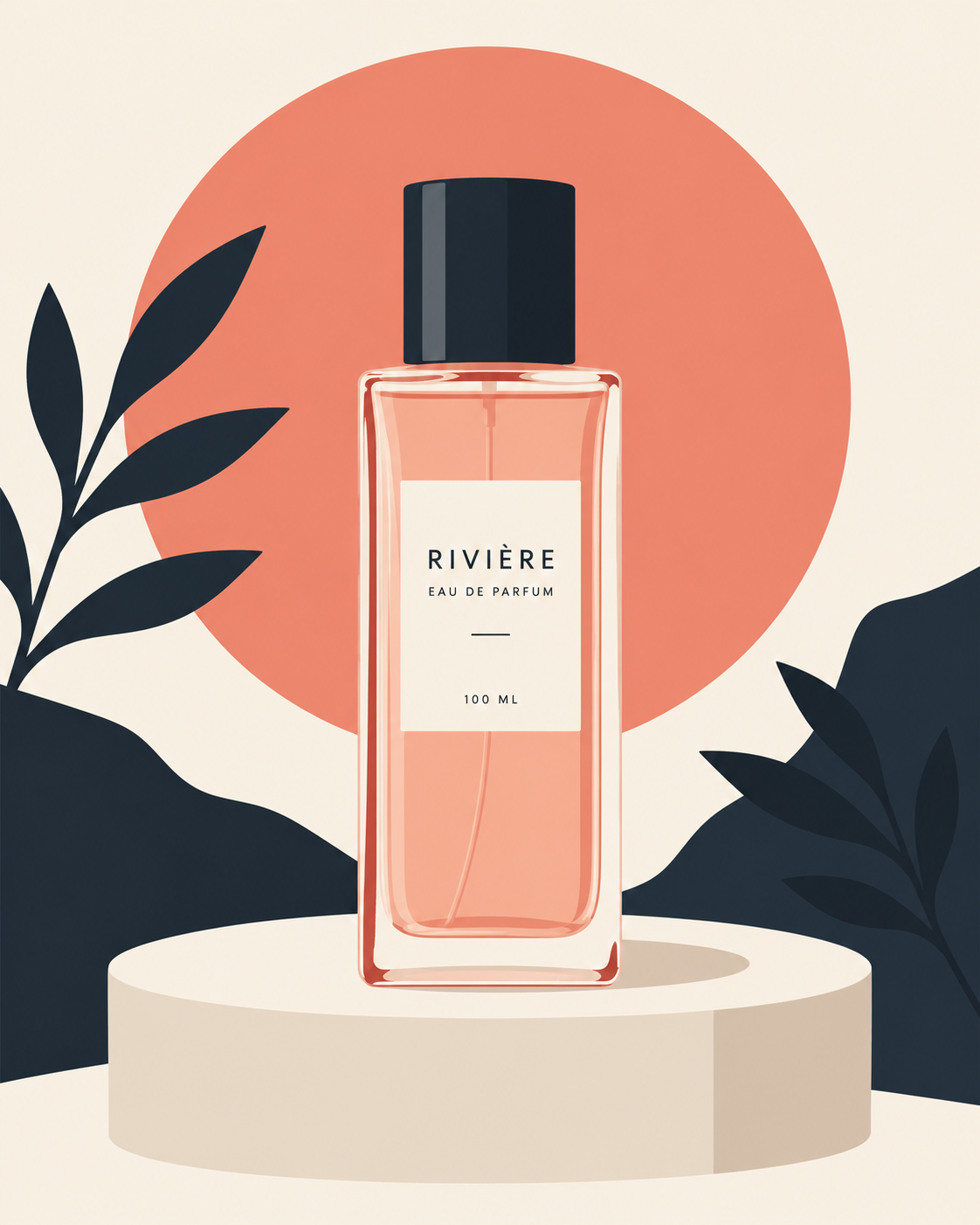
Render the product itself and the entire scene as a two-dimensional flat vector illustration: simple solid-colour shapes, crisp contours and minimal flat shading. Clean flat-vector product illustration of a slim perfume bottle with a dark cap, centred on a pale plinth in front of a soft circular backdrop, coral, cream and ink, gentle contact shadow, 4:5 aspect ratio.

Example generated from “Blue harbor city flat vector skyline”
GPT Image 2.5en

Flat vector cityscape of harbor city towers by day, block buildings with rows of small windows, deep blues with a pale sun, a round moon or sun, no outlines, 3:4 aspect ratio.

Example generated from “Ramen Kitchen at Five in the Morning”
Nano Banana 2.1en

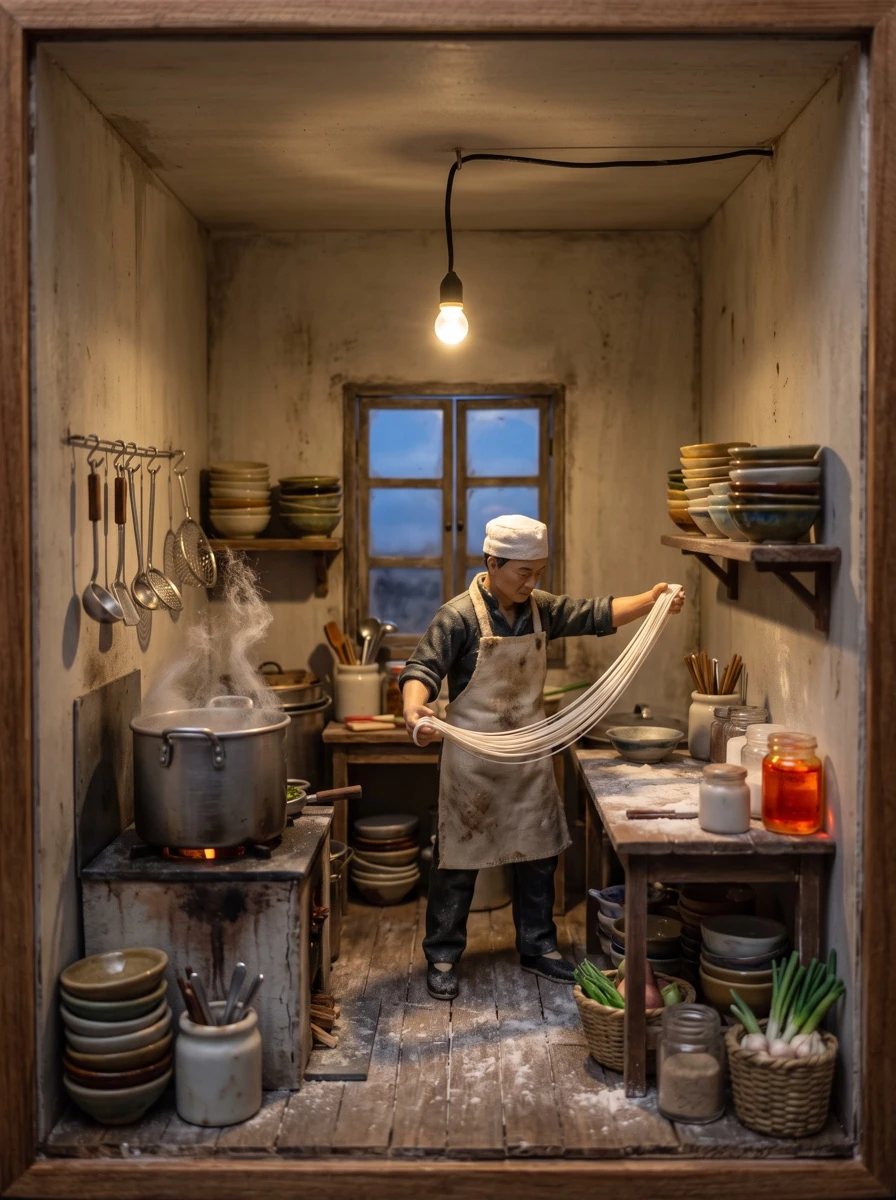
A 1:12 scale miniature diorama of a tiny Chinese noodle shop kitchen at 5 a.m., photographed straight on like a dollhouse with the front wall removed. A cook in a white cap and apron pulls hand-pulled noodles in a long arc between his hands, a huge pot steams on the stove, bowls are stacked high, chilli oil glows in a jar, ladles hang on hooks, and a single bare bulb lights the scene. Outside the back window, the sky is just turning blue. Real miniature materials: painted wood, tiny ceramic bowls, cotton-wool steam. Every jar, bowl and wall is plain, with no labels, signs, posters or lettering.

Example generated from “An apartment-block advent calendar”
GPT Image 2.6en

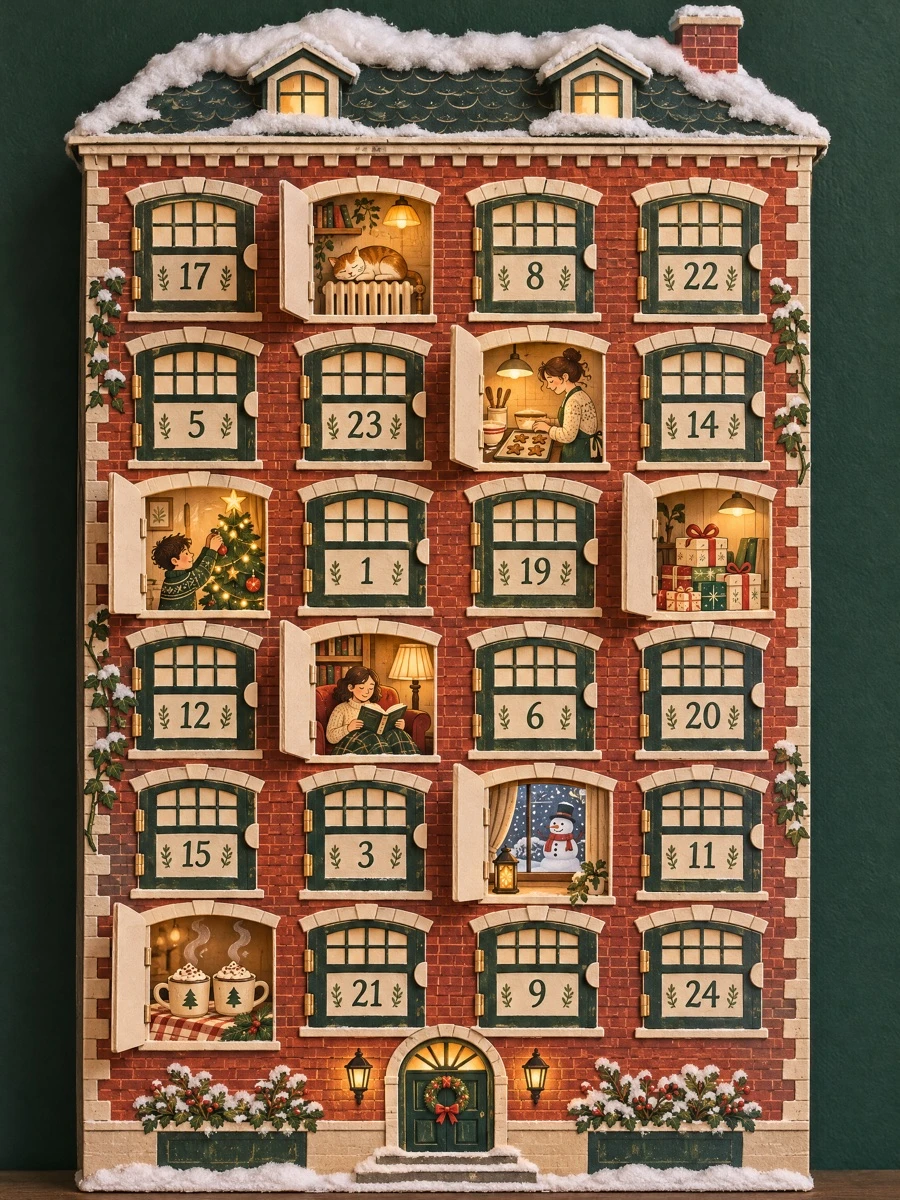
A handmade advent calendar shaped like a narrow four-storey apartment building, made of thick printed card and photographed straight on against a dark green wall, portrait format. The facade has twenty-four small windows in a 4×6 grid, each a little door with a hand-printed number from 1 to 24 in no particular order. Seven doors have been opened, each revealing a tiny scene inside a lit room: a cat asleep on a radiator, someone baking, a small tree being decorated, a stack of wrapped presents, a person reading in an armchair, a snowman seen through a back window, two cups of cocoa. The other doors are still closed. A paper roof with a little chimney and cotton snow on top. Palette of brick red, cream, forest green and warm window light. Crisp card edges, visible tabs, soft studio light.

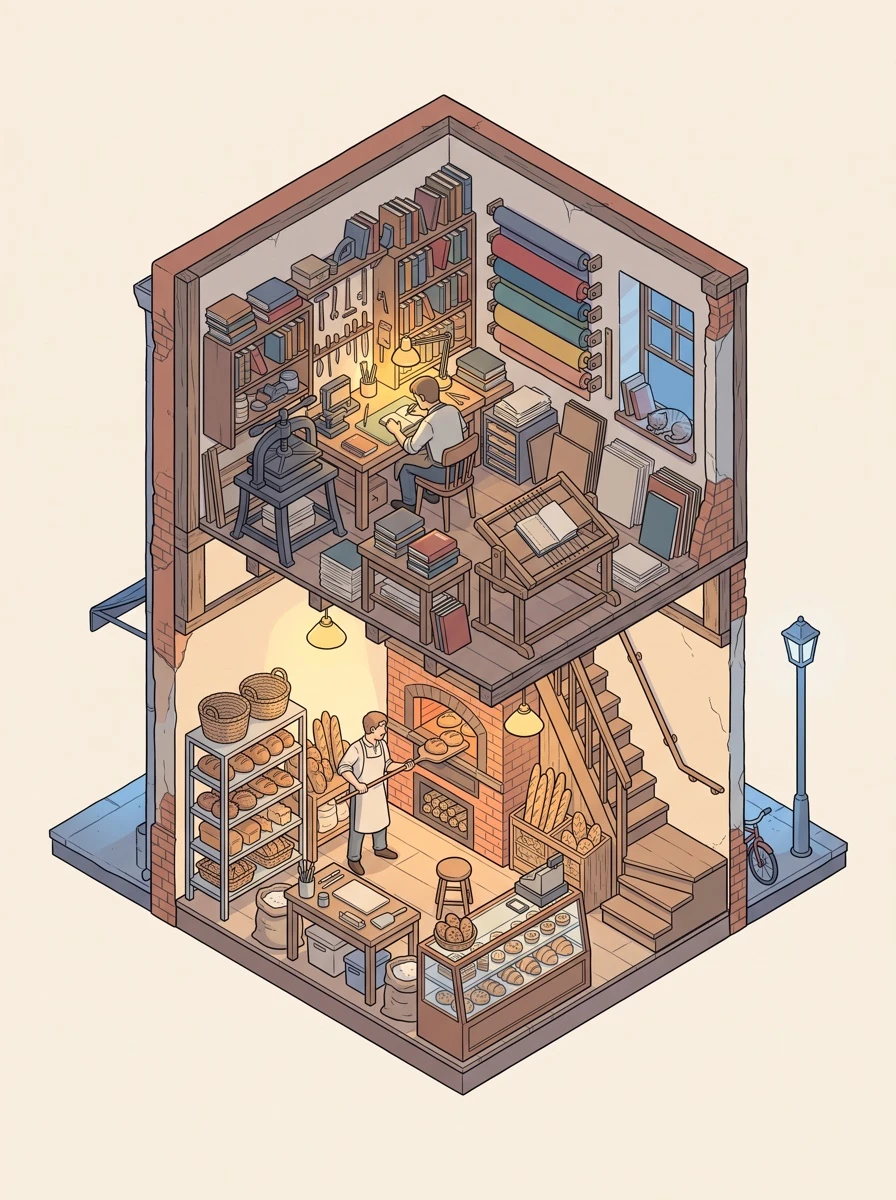
Example generated from “Bookbinding studio above a bakery”
Nano Banana 2.1en

An isometric cutaway illustration of a narrow two-storey building on a plain warm off-white background, portrait format. The ground floor is a small bakery at dawn: a baker sliding loaves from a deck oven, racks of bread and a glass counter. Upstairs is a one-person bookbinding workshop: a nipping press, a sewing frame with a half-sewn book, stacks of paper, rolls of cloth on the wall, a desk lamp, and a window with a sleeping cat on the sill. A narrow staircase connects the two floors. Warm light glows from both rooms, cool blue outside. Precise line work, flat soft colours with subtle shading, small figures in correct proportion. Palette of terracotta, cream, slate blue and warm yellow. No text.

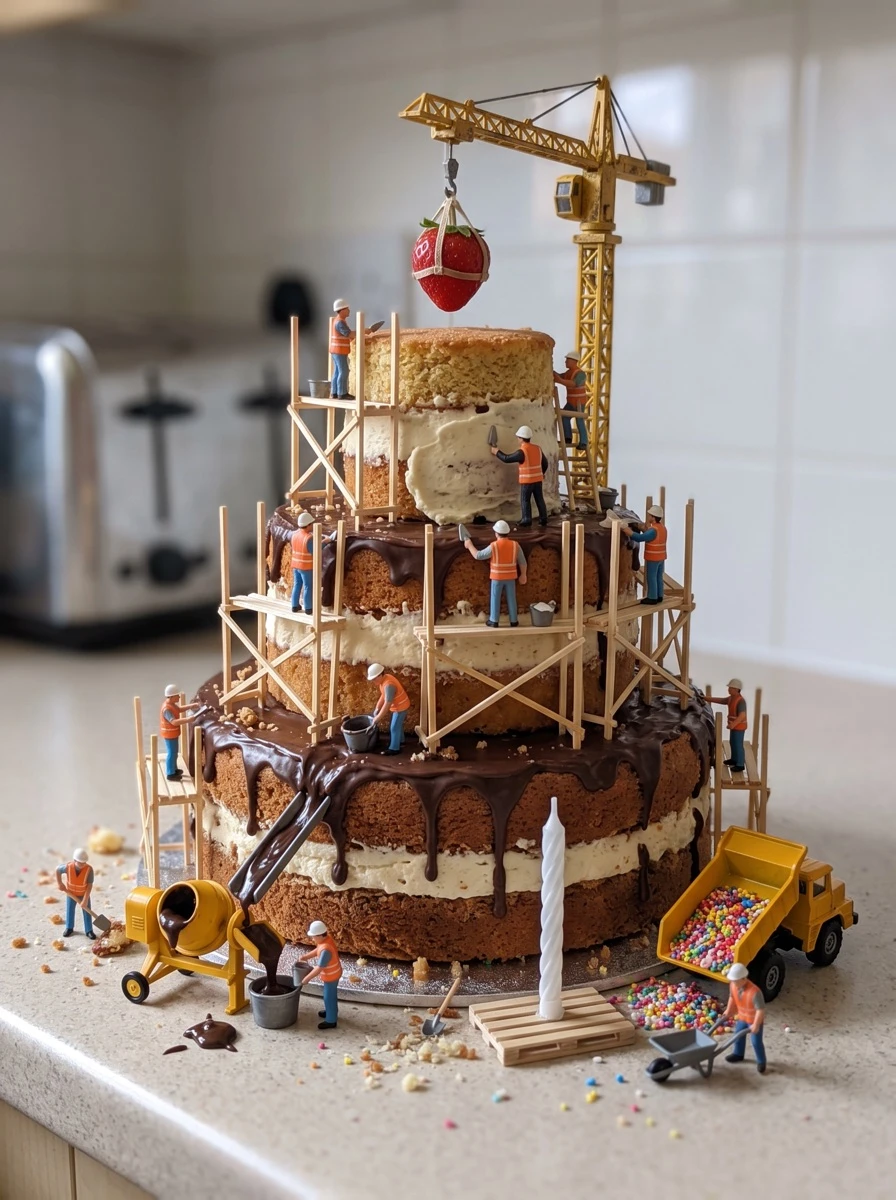
Example generated from “Little People Building a Birthday Cake on a Construction Site”
Nano Banana 2.1en

A tilt-shift macro photograph of a tiny construction crew building a three-layer birthday cake on a kitchen counter, as if it were a building site. Miniature workers in orange vests and plain white hard hats operate a small yellow crane lifting a whole strawberry to the top tier, others stand on wooden scaffolding spreading cream with trowels, a tiny cement mixer pours chocolate ganache, and a dump truck unloads sprinkles. A single unlit candle waits on a pallet to be installed. Bright morning light, soft background, real model-railway figures and real cake. The vests, hard hats, crane and trucks have no logos, numbers, signs or lettering.

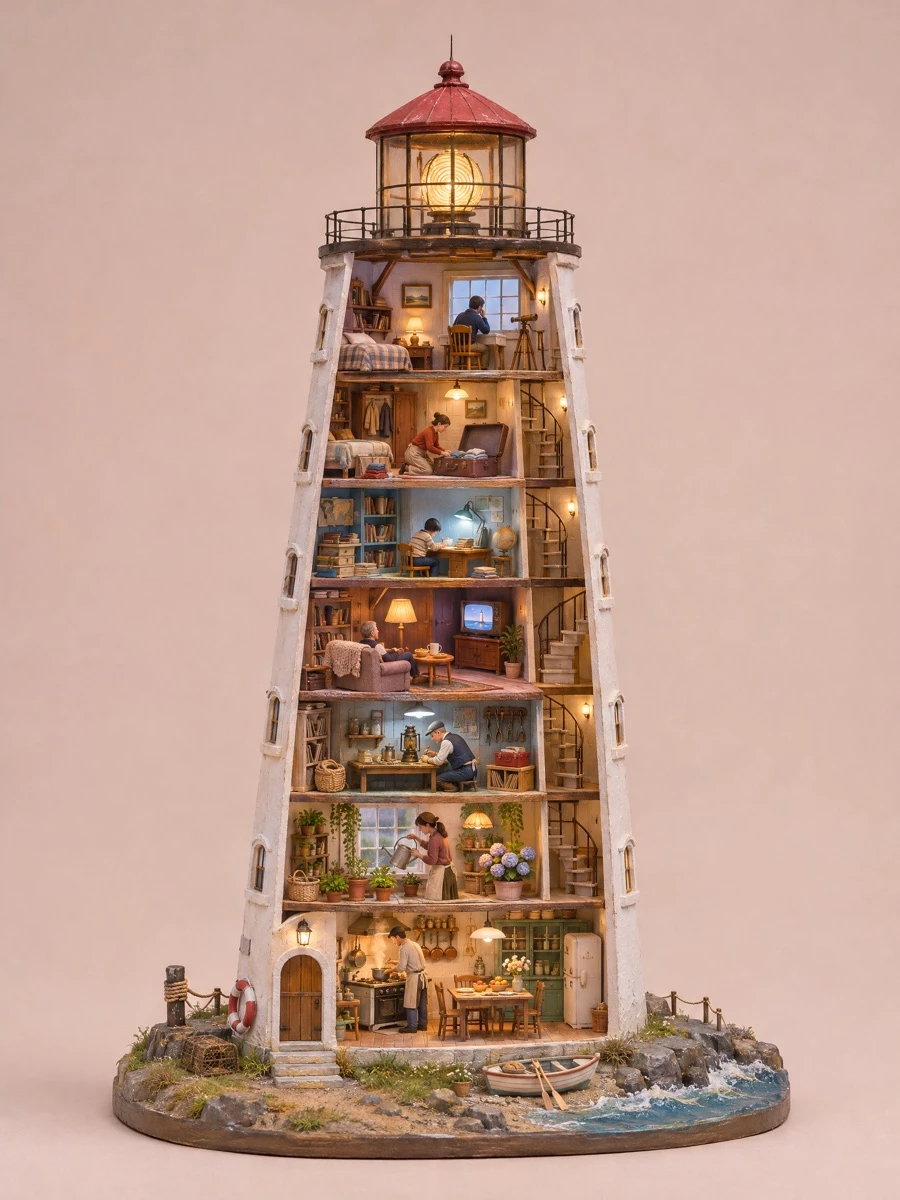
Example generated from “A Cutaway Miniature Building”
GPT Image 2.6zh

建筑「海边一座白色的灯塔,塔身里一层一层是看守人的生活,顶上是灯室」。一张实物微缩模型的摄影作品:把这栋建筑做成大约 1:50 的手工模型,正面整面墙被切掉,像玩具屋一样露出每一层、每一个房间的内部。每个房间里都有一件事正在发生,每个房间的事都不一样(做饭、写作业、浇花、修东西、看电视、对着窗户发呆、收拾行李),房间里的家具、灯、杂物都做得很细,每个房间亮着自己的灯,灯色有暖有冷。楼梯或走廊把各层连起来,楼里的小人比例一致、穿着不同。模型立在一张纯色无缝背景纸上,镜头正对着剖开的那一面、略微俯视,整栋建筑从顶到底、连同它站着的那一小块地面都完整入画,上下左右都留出一圈背景;建筑在画面里的高度不超过画面高度的百分之八十,脚下的底座和底座下面的一条背景纸都要看得见;屋顶和两侧外墙保留,看得出建筑本来的外形。摄影:微距镜头,整栋楼都清楚,柔和的棚拍光加上房间里自己的小灯;看得出木头、纸板、布料、树脂、细铁丝这些模型材料,边缘有一点手工的痕迹。避免:建筑的顶部或底部被画面裁掉、真实建筑照片、外墙没有剖开、房间是空的、所有房间在做同一件事、可读的文字、招牌、品牌、现有影视作品的场景、廉价塑料玩具感、过度光滑的电脑渲染感。

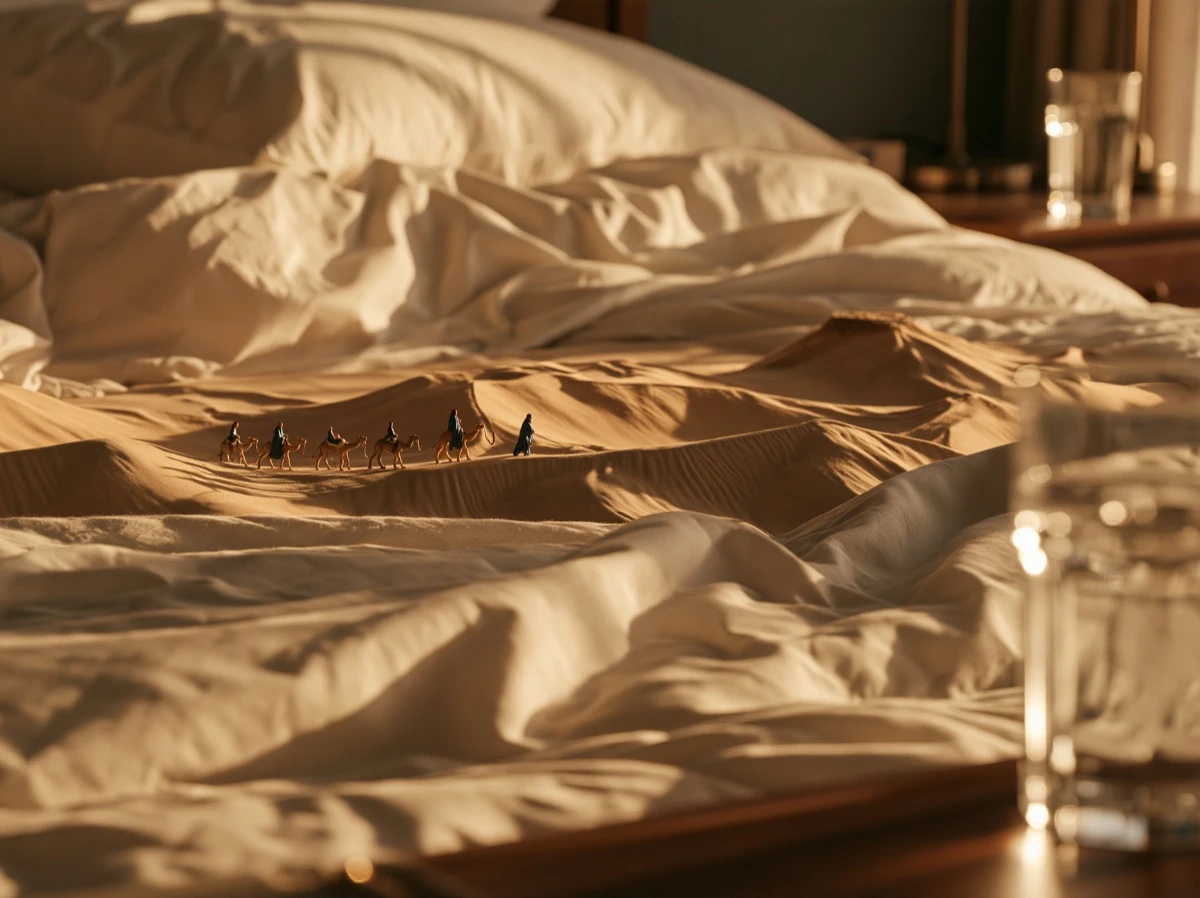
Example generated from “An Unmade Duvet Is a Desert”
Midjourney V8.2en

Morning light across an unmade bed, seen from low at mattress level, where the rumpled cream duvet has become a vast desert of sand-coloured dunes. A tiny caravan of camels and travellers in indigo robes crosses the ridges toward a pillow that rises like a distant mesa, and a glass of water on the bedside table glints like an oasis. Long warm shadows, fine fabric folds like rippled sand, macro photograph, shallow depth of field. That is all: the duvet dunes, the caravan, the pillow and the glass of water.

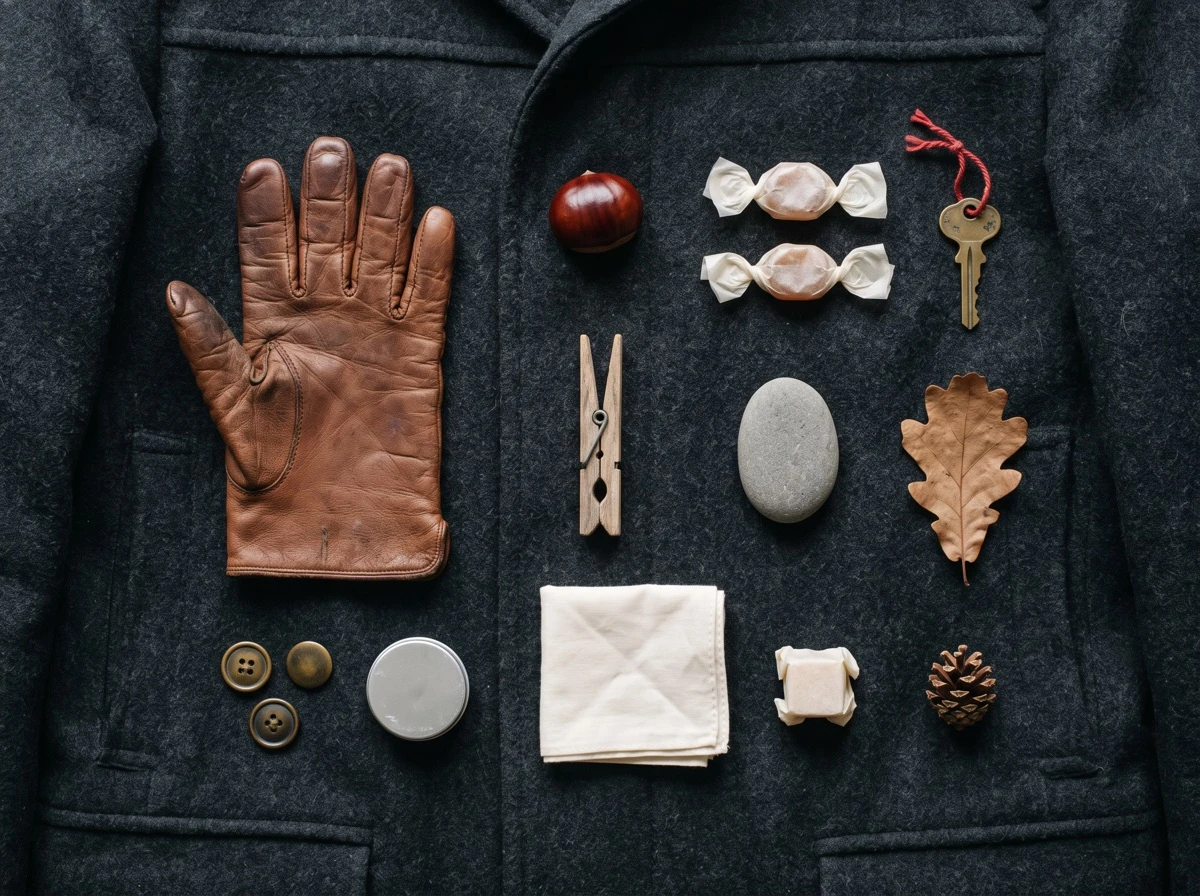
Example generated from “The First Cold Day’s Coat Pockets”
Nano Banana 2.1en

A top-down editorial still life on a charcoal grey wool coat laid flat, photographed in soft overcast window light. Everything found in the pockets of a winter coat on the first cold morning of the year, laid out in neat knolling rows at right angles with even gaps: a single brown leather glove lying flat with its four fingers and thumb clearly visible, a whole glossy roasted chestnut, two cough drops in twists of wax paper, a brass house key on a loop of red string, a wooden clothes peg, a smooth grey beach pebble, a dried oak leaf, three loose brass coat buttons, a small closed tin of lip balm with a plain lid, a folded white cotton handkerchief, a single wrapped sugar cube, and a tiny pine cone. Muted palette of charcoal, chestnut brown and cream with one red accent. Short soft shadows, visible wool fibres, true-to-life textures, slight film grain. Medium format, 80mm lens, f/8. No hands, no coins, no paper with printing, no text anywhere.

Example generated from “An Early Frost Morning Frozen in Ice”
Nano Banana 2.1en

A clear block of ice photographed on a dark slate surface in cold morning light, portrait format. Frozen inside the ice, suspended at different depths, are small things gathered on the first frosty morning: a red maple leaf, three rowan berries, a sprig of rosemary, a small brass key, a grey feather, and a thin slice of orange. Tiny trapped air bubbles and white fracture lines run through the ice, the bottom edge is beginning to melt into a thin puddle on the slate, and light passes through the block with a pale glow. Palette of slate grey, icy blue-white and small accents of red and orange. Sharp focus, true-to-life textures, no text.

Example generated from “A Paper-Cut Mountain Village on the Night of the First Snow”
Midjourney V8.2en

A layered paper-cut diorama of a small mountain village on the night of the first snow, built inside a shallow wooden box and lit from behind. Sheets of white and pale blue watercolour paper are cut by hand into rolling hills, pine forests and a cluster of pitched-roof houses, each layer standing a finger's width in front of the next so the depth reads clearly. A few house windows are cut out and backed with amber tissue paper so they glow warm, and tiny punched paper snowflakes hang on fine thread in front of the scene. Soft blue backlight, crisp shadows between the layers, visible deckled paper edges and faint pencil guide marks, photographed straight on with a shallow depth of field. Palette of white, cool blue and warm amber. Quiet and still, with nothing else in the frame.

Example generated from “A Pop-Up Christmas Card for Coming Home”
Nano Banana 2.1en

A handmade pop-up Christmas card standing open on a wooden table in warm evening lamplight, portrait format. As the card opens, a paper railway station rises out of the fold: a small platform with a station clock, a lamp post and a bench, a little steam train pulling in, and three paper figures with suitcases waiting, all cut from white and cream card with the tabs and folds visible. Paper snowflakes on fine threads hang above the platform. On the left inside page, hand-lettered in green ink: "home for christmas". Palette of cream, forest green, warm red and lamplight gold. Shallow depth of field, visible paper texture and crisp cut edges.

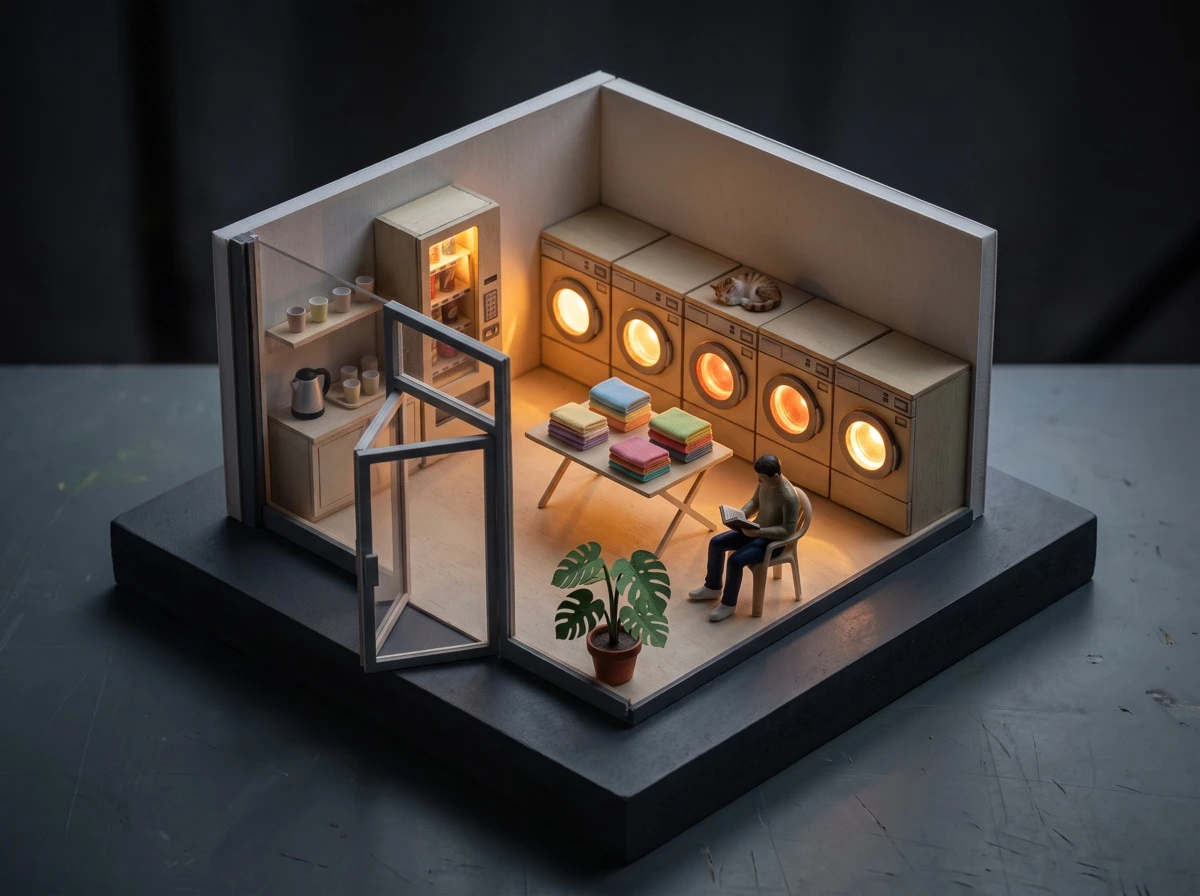
Example generated from “A Laundromat That Opens Only at Night”
Nano Banana 2.1en

An isometric architectural model of a tiny laundromat that only opens at night, built from foam board and painted wood with the roof removed, on a dark grey base, lit warmly from inside like a lantern. Inside: a row of exactly five front-loading washing machines with round glowing windows, a folding table with neatly folded towels, a vending corner with a kettle and cups, a cat asleep on top of a dryer, a single customer reading on a plastic chair, and a potted monstera by the door. Soft studio light, real model-making materials, high three-quarter angle. Every surface is plain: no signs, posters, labels, logos or lettering.

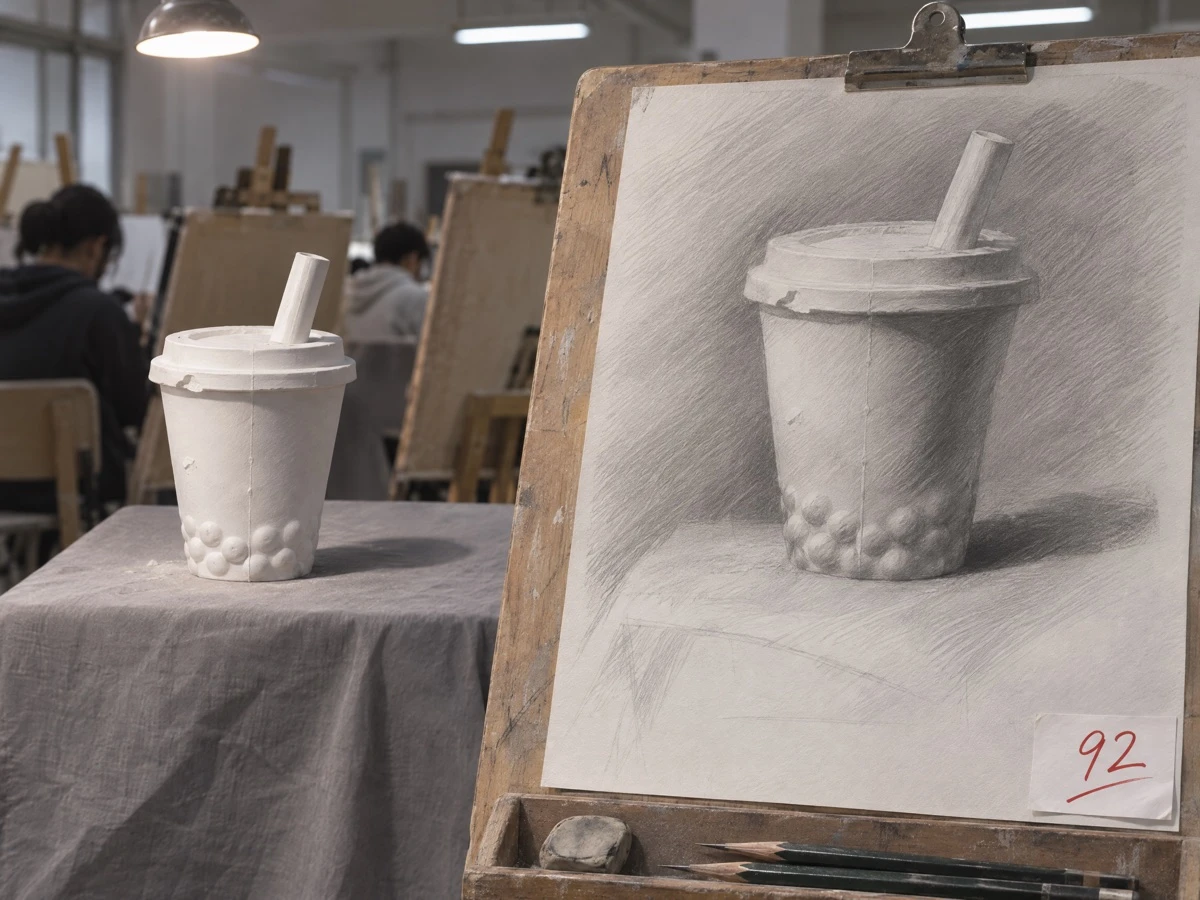
Example generated from “A Plaster Bust in the Exam Room”
GPT Image 2.6zh

石膏像:一杯插着粗吸管的奶茶,杯底能看到一颗颗珍珠。评分条:「92」。一张美术考场里的照片:教室的顶光从上方偏左打下来,静物台上铺着一块灰色衬布,上面放着一尊白色石膏像,做的就是上面这件今天的东西,严格按石膏像的规矩:通体哑光白、粉质的表面、翻模留下的接缝线、几处磕掉的小缺口和一点灰尘。前景偏右是一块画板,夹着一张画到七成的素描,画的正是这尊石膏像:4B 铅笔的长排线、明暗交界线、反光和留白的高光,还有没画完的部分只有轻轻的辅助线;画板槽里放着一块用脏的软橡皮和几支削得很长的铅笔。画纸右下角贴着一张白色小评分条,红笔手写上面「」里的字。背景是别的考生的画架和画板背面,虚化。全部用简体字,评分条逐字照写,不写引号;除了评分条,没有其他文字。避免:学校名称、人脸正面、彩色的石膏像、其他文字。

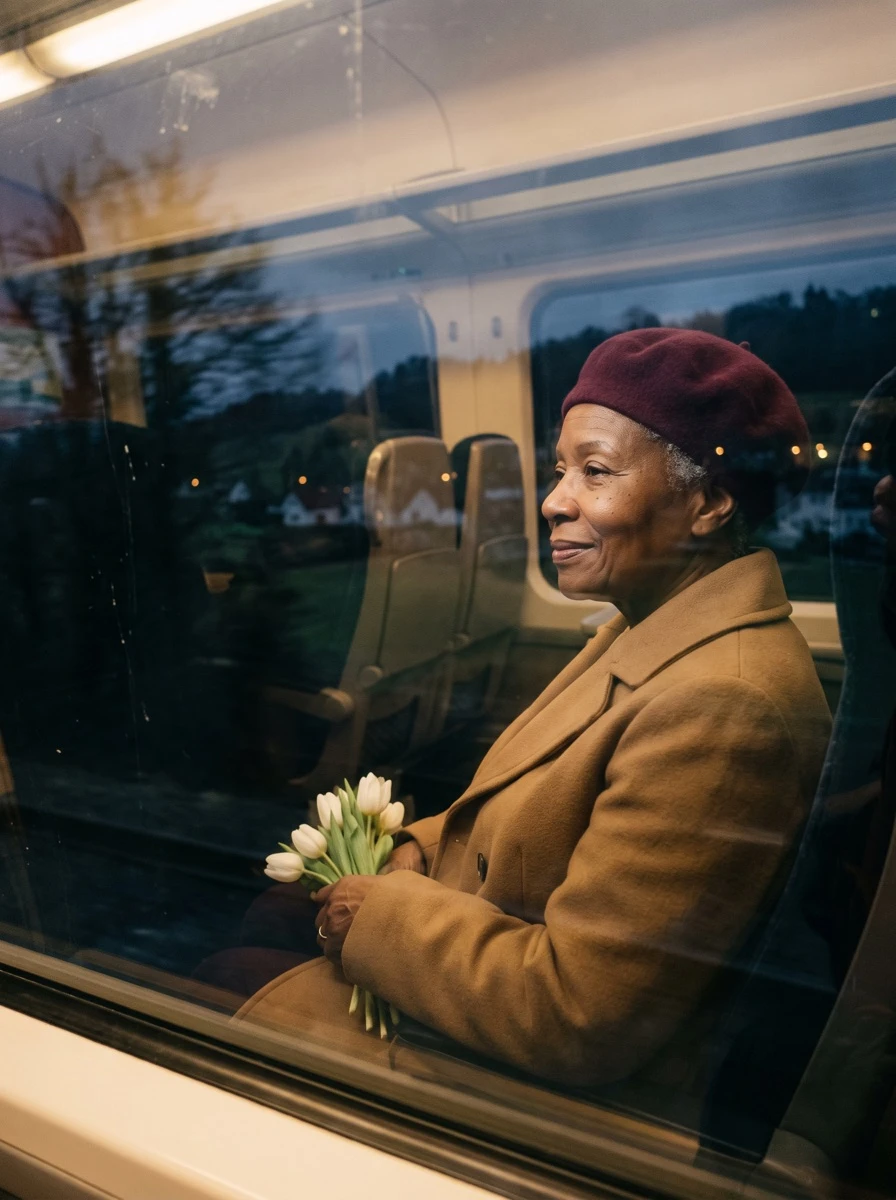
Example generated from “White Tulips Through a Train Window”
Nano Banana 2.1en

A soft-light photograph taken through the glass of a train window at night, the reflection and the outside world overlapping. In the reflection: a Black woman in her sixties, a retired nurse, in a camel wool coat and a burgundy beret, her grey hair cut short, looking at her own reflection with a quiet, satisfied smile, a small bunch of white tulips on her lap. Through the reflection, the dark countryside rushes past with a scatter of distant house lights. Warm carriage light on her face, cool blue outside. Real skin texture with fine lines, natural hands with five fingers. No signs, adverts or lettering anywhere.

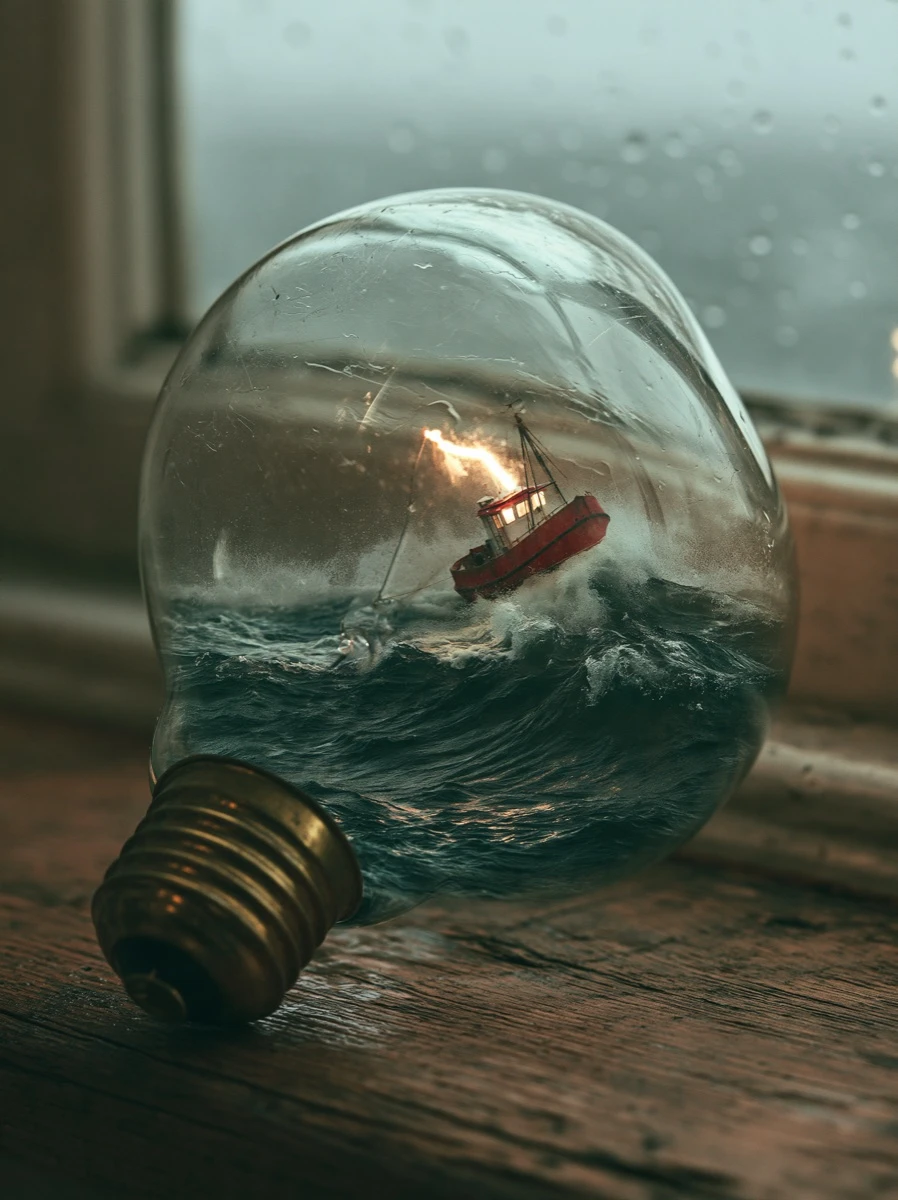
Example generated from “A Storm Inside a Light Bulb”
Midjourney V8.2en

An old clear glass filament light bulb lying on its side on a weathered wooden windowsill, and sealed inside it is a whole stormy sea: dark green waves breaking, spray against the inside of the glass, and a small red fishing boat climbing a wave with its tiny cabin light on. The screw base is dull brass, and the glass shows fine scratches and reflections of the grey window light. Outside the window, soft out-of-focus rain. Macro photograph, shallow depth of field, palette of storm green, slate grey, brass and one red boat.

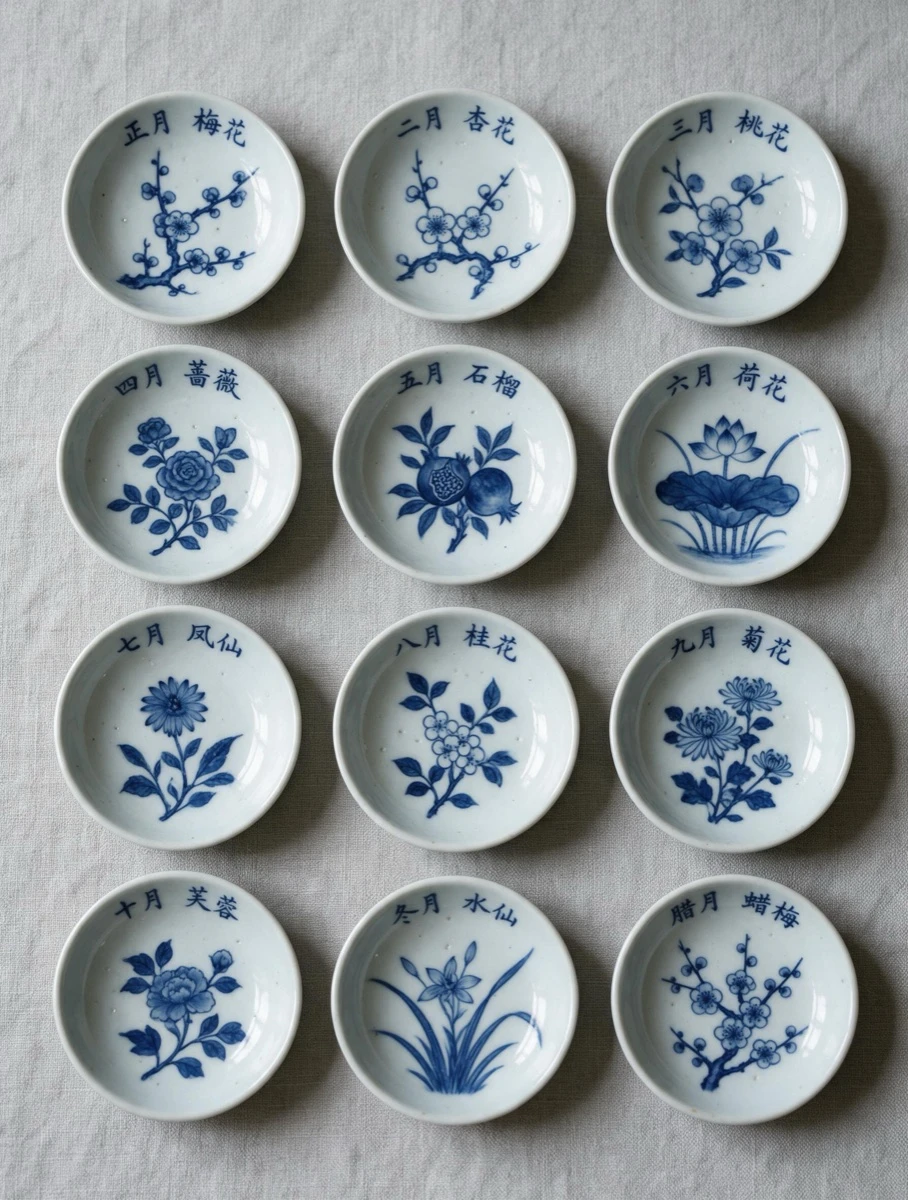
Example generated from “Blue-and-white flower plates for the twelve months”
Seedream 5.0 Prozh

十二只青花瓷小碟排成四行三列,平放在浅灰色亚麻布上俯拍,竖版,柔和的自然光。每只小碟中央用钴蓝青花画一种当月的花,碟边用青花小楷写月份和花名,依次是「正月 梅花」「二月 杏花」「三月 桃花」「四月 蔷薇」「五月 石榴」「六月 荷花」「七月 凤仙」「八月 桂花」「九月 菊花」「十月 芙蓉」「冬月 水仙」「腊月 蜡梅」。青花发色浓淡自然,釉面温润,有细小气泡,每只碟子的手绘笔触略有不同。只有钴蓝和白两种颜色。全部文字用简体字,逐字照写,不要其他文字。

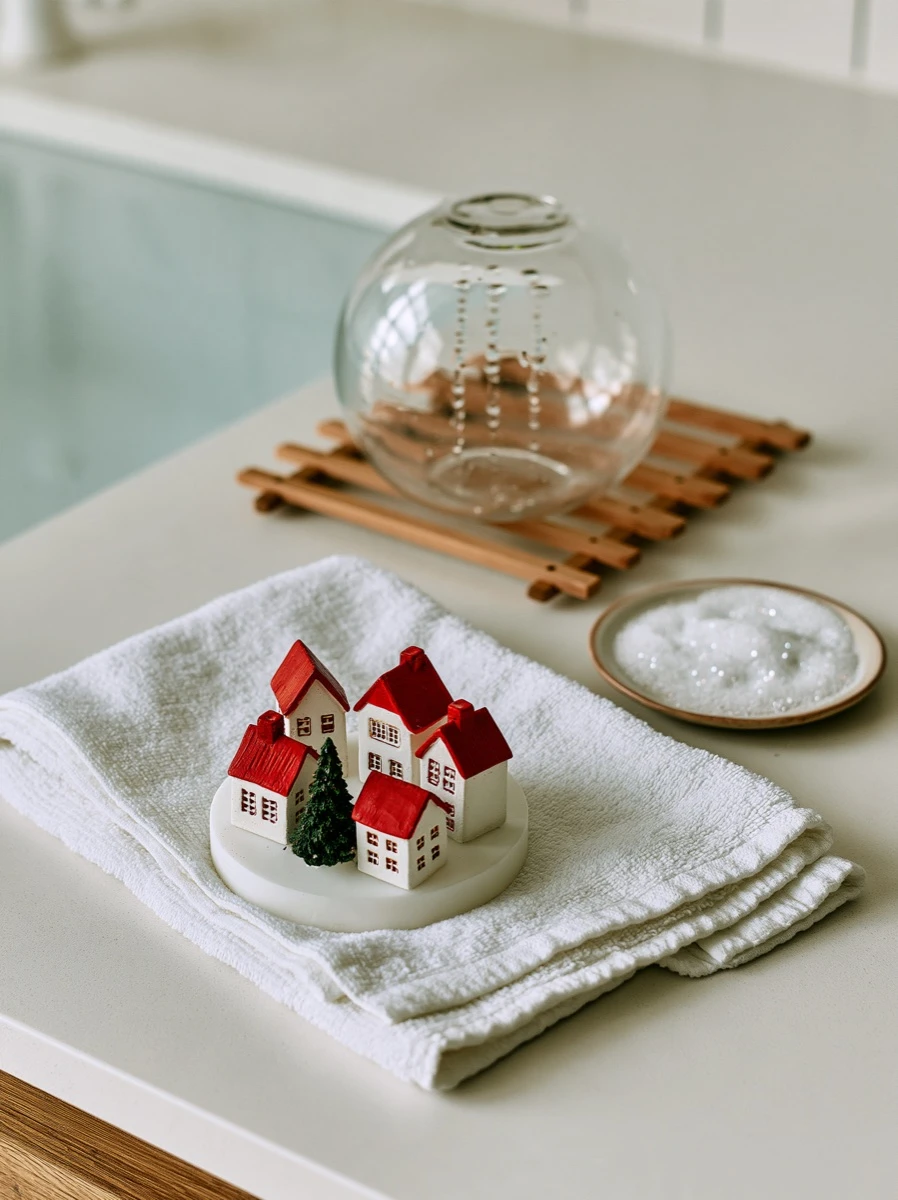
Example generated from “Snow globe taken apart to dry”
Midjourney V8.2en

A tiny snow globe village drying on a folded white kitchen towel after its snow globe was taken apart for cleaning: five little painted houses with red roofs and a fir tree on a round white base. Behind it, a single empty glass sphere lies upside down on a small wooden dish rack with drops of water running down inside. A small saucer of white glitter sits to one side. That is all: the village, the glass, the glitter. Photographed from slightly above on a pale kitchen counter in soft morning light, shallow depth of field, palette of white, pale blue, red roofs and warm wood. Calm, ordinary, a little funny.

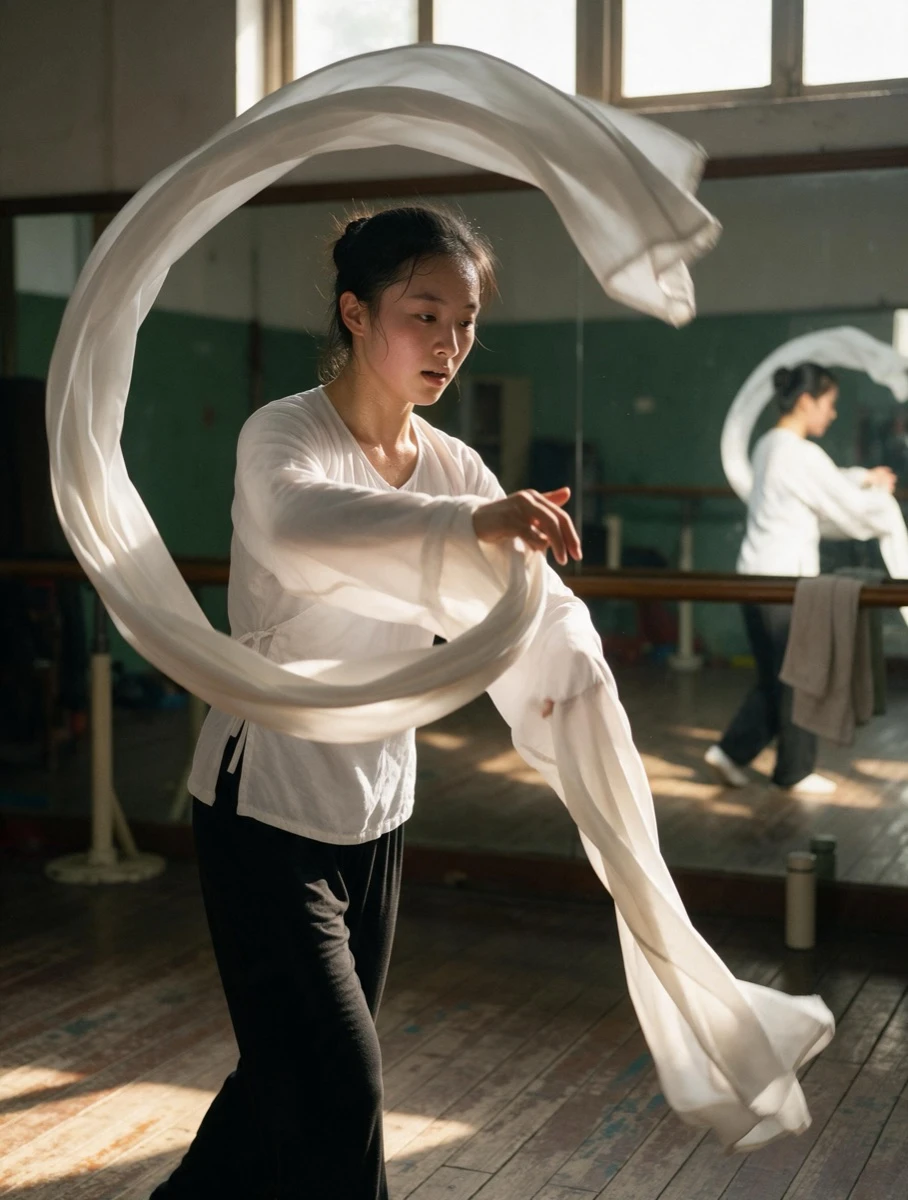
Example generated from “A Woman Practicing Water Sleeves in a Rehearsal Room”
Seedream 5.0 Prozh

实拍照片,戏曲学校的练功房,下午的斜光从高窗照进来,旧木地板上有磨损的痕迹。一位二十出头的东亚女生,戏曲专业的学生,穿着白色练功服和黑色练功裤,头发简单盘起,正在练水袖:两条很长的白色水袖在空中甩开,一条划成弧线,一条正在落下,她的手腕翻转,目光跟着袖子,额头上有细汗。背景是一面大镜子,映出她的背影,镜子边上搭着一条毛巾、放着一个保温杯。动作有一点运动模糊,袖子边缘透光。皮肤有真实纹理,手指自然。画面里没有任何文字,保温杯上没有字和图案。

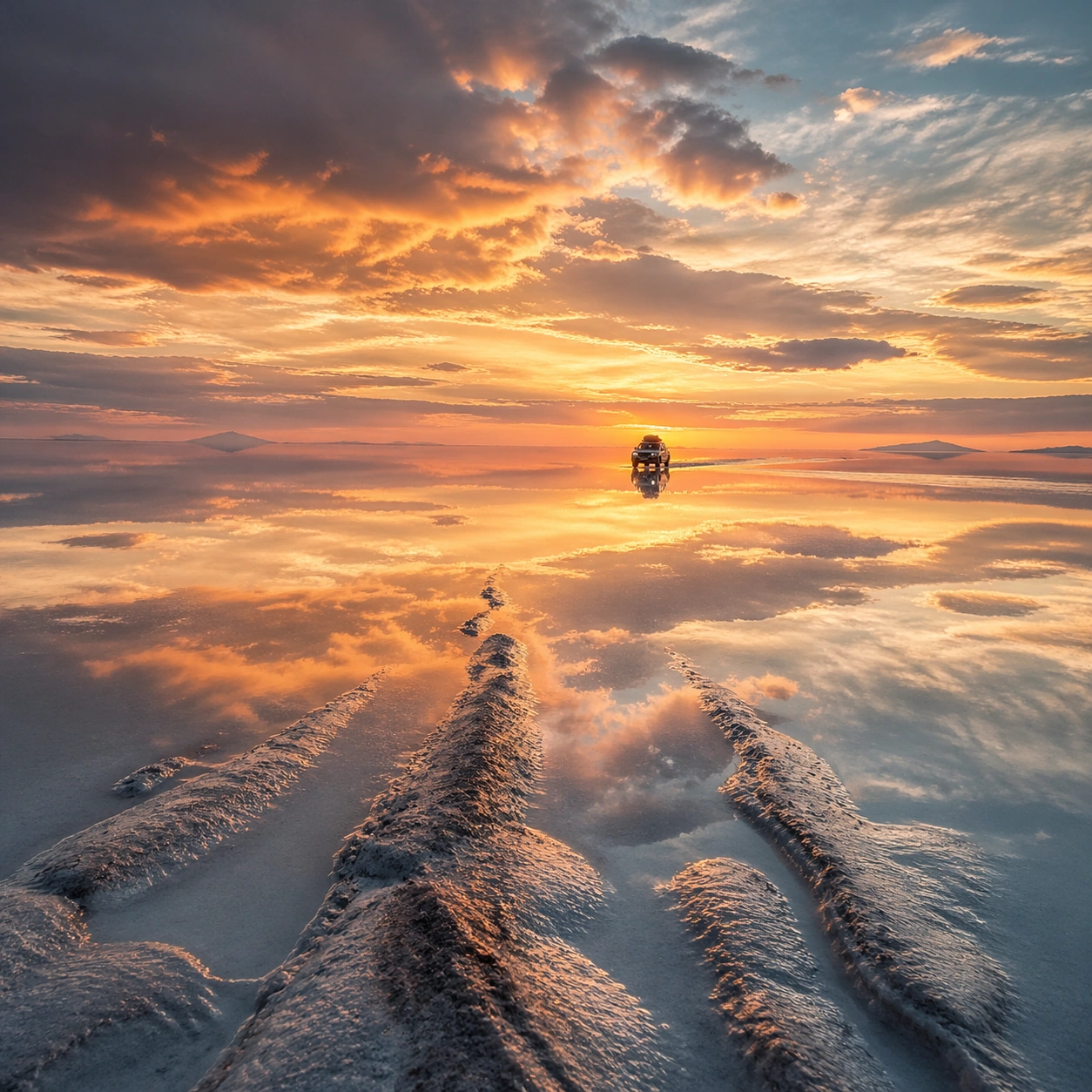
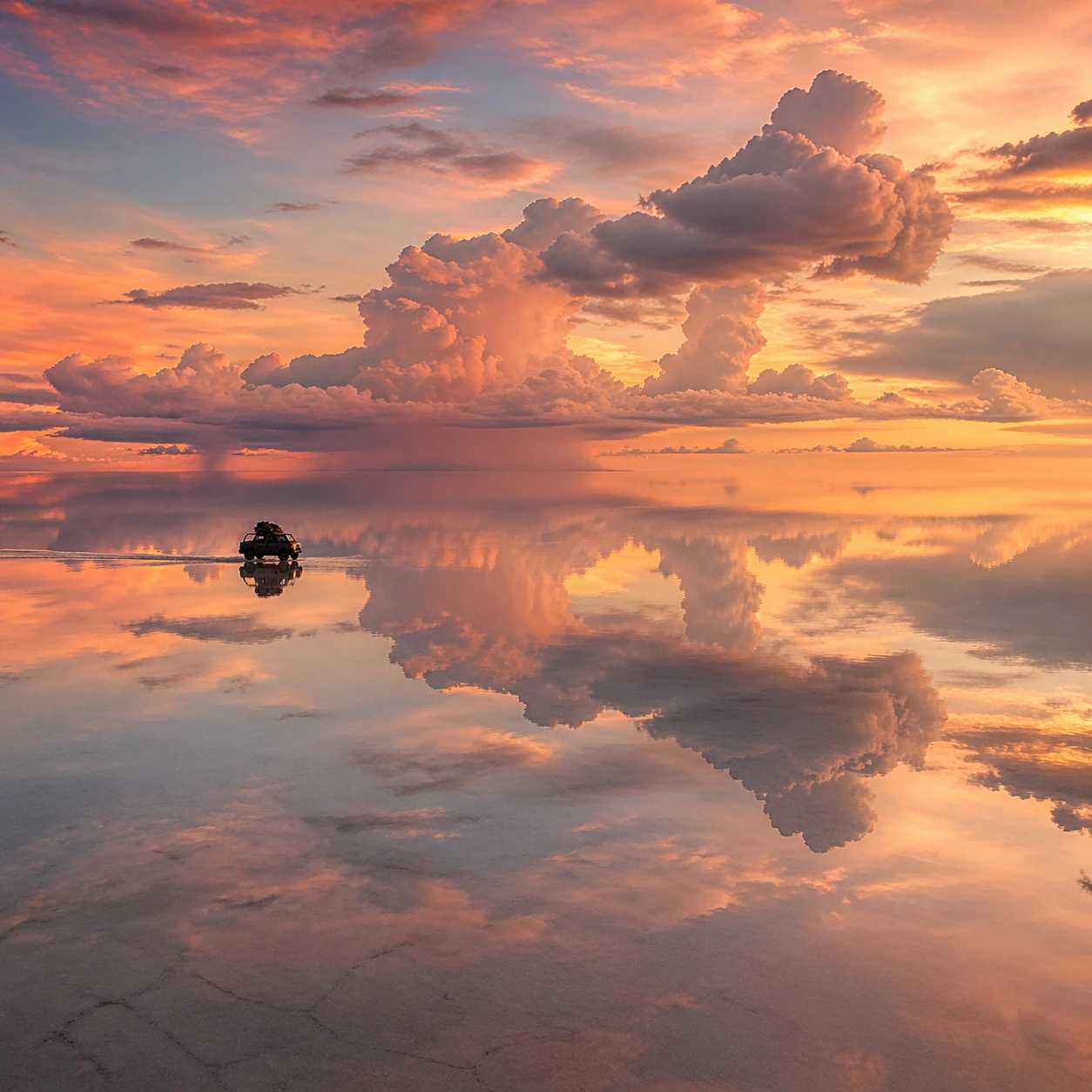
Example generated from “Salt Flat Mirror Bolivia — Foreground Path”
GPT Image 2en

Scene: Create a square, photoreal landscape study of bolivian salt flat mirror. Compose it as a ground-level entry path that pulls the viewer into the terrain, using a lower vantage with a strong foreground element such as a ridge line, shoreline, stream, boot track, or wet surface leading inward. Let the foreground remain tactile and detailed while the distance opens gradually Keep the frame cinematic but disciplined, with a clear foreground, middle distance, and far mass so the viewer can measure real depth. The image should feel like a field photograph made with patience, precision, and sublime restraint rather than a fantasy matte painting. Subject: Show a flooded Bolivian salt flat at sunset with a near-perfect mirror surface reflecting cloud towers, a vanishing horizon, and a single jeep sending one subtle ripple across the water film. This variation should emphasize foreground-led composition. The main landform must dominate the composition, but secondary elements should quietly explain how the place works: water paths, sediment lines, snow bands, surf, ash, wind streaks, stars, or human traces where appropriate. Everything in the image should support the same idea of scale and climate, so the scene reads as one coherent environment rather than a stack of spectacular details. Important details: Preserve horizon loss, razor-thin water over salt, exact mirror behavior, soft sunset color mirrored above and below, and a clean sense of infinite horizontal space. The image should reward close looking through layered depth cues rather than pure spectacle alone. Keep geology, weather, and atmosphere physically believable. Use subtle micro-texture, tonal separation, and air perspective to reinforce distance. If a human, vehicle, tent, caravan, bird, or boat appears, it must remain tiny and subordinate to the landscape, functioning only as a scale witness. The composition should feel original, severe, and elegant, with no decorative filler and no imitation of any copyrighted visual property. Use case: Bolivian Salt Flat Mirror single study 2/9, exploring the foreground-led composition variation. Constraints: No readable text, no watermark, no logos, preserve exact 1:1 aspect ratio, no extra vehicles, no crowd of tourists, no giant props, no surreal floating islands, no blocked foreground, no random props, no awkward dead zone in the lower third, no kitsch color grading, no artificial border, no split-panel treatment.

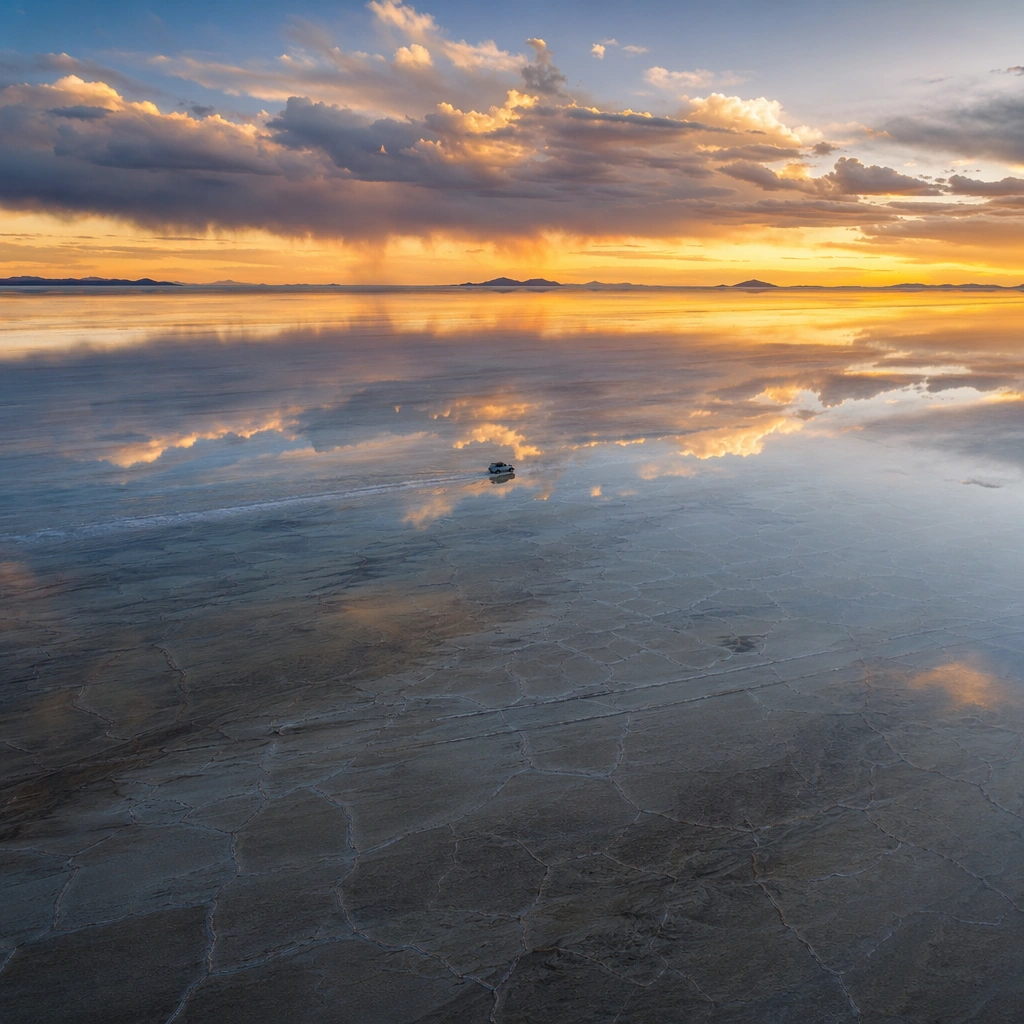
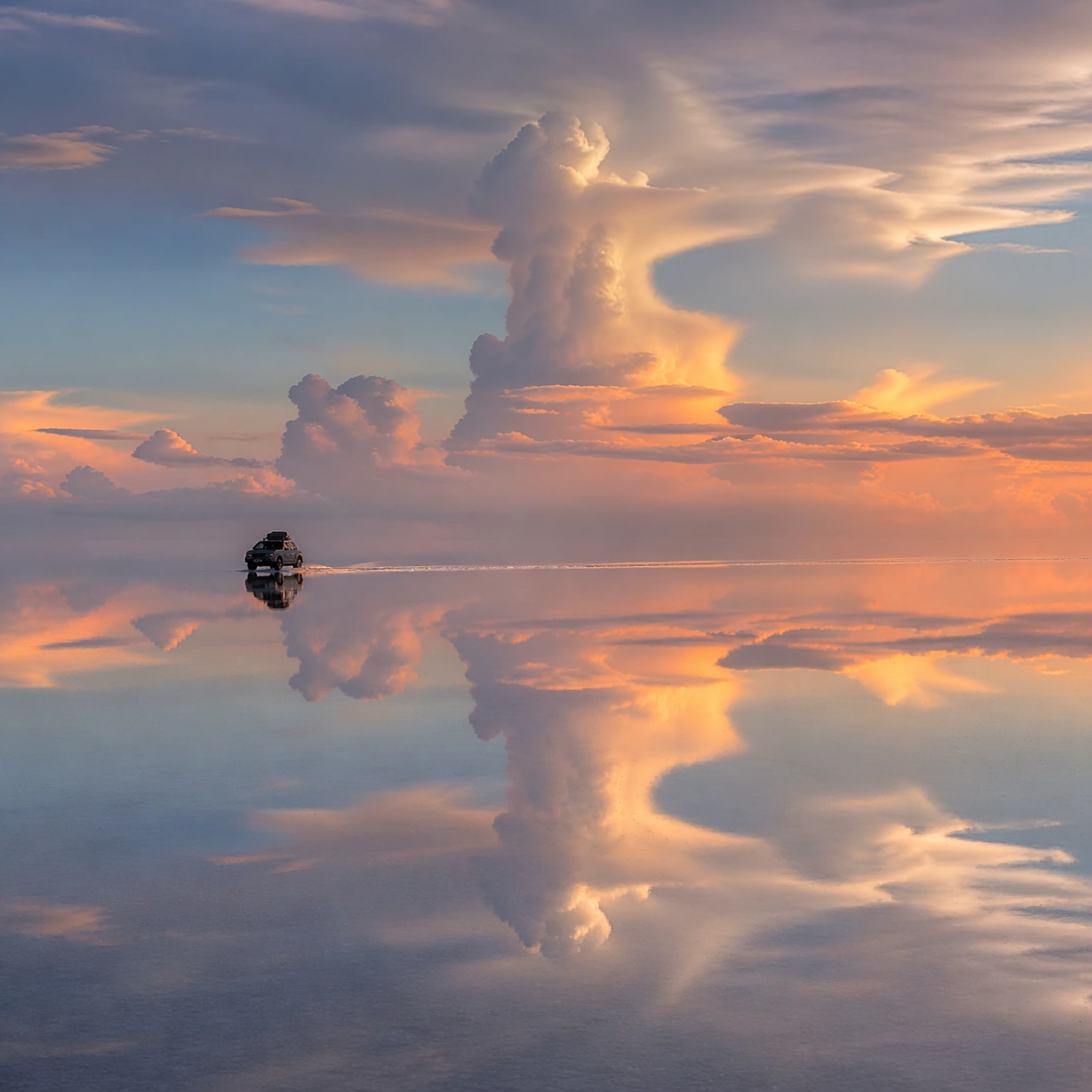
Example generated from “Salt Flat Mirror Bolivia — Aerial Geometry”
GPT Image 2en

Scene: Create a square, photoreal landscape study of bolivian salt flat mirror. Compose it as the planform geometry and overall shape logic of the landscape, using an elevated oblique aerial view that still preserves believable scale and natural topography. Let light reveal contour, fracture, and pattern instead of flattening the terrain Keep the frame cinematic but disciplined, with a clear foreground, middle distance, and far mass so the viewer can measure real depth. The image should feel like a field photograph made with patience, precision, and sublime restraint rather than a fantasy matte painting. Subject: Show a flooded Bolivian salt flat at sunset with a near-perfect mirror surface reflecting cloud towers, a vanishing horizon, and a single jeep sending one subtle ripple across the water film. This variation should emphasize aerial scale read. The main landform must dominate the composition, but secondary elements should quietly explain how the place works: water paths, sediment lines, snow bands, surf, ash, wind streaks, stars, or human traces where appropriate. Everything in the image should support the same idea of scale and climate, so the scene reads as one coherent environment rather than a stack of spectacular details. Important details: Preserve horizon loss, razor-thin water over salt, exact mirror behavior, soft sunset color mirrored above and below, and a clean sense of infinite horizontal space. Emphasize rhythm, repetition, and large-form geometry without losing physical realism. Keep geology, weather, and atmosphere physically believable. Use subtle micro-texture, tonal separation, and air perspective to reinforce distance. If a human, vehicle, tent, caravan, bird, or boat appears, it must remain tiny and subordinate to the landscape, functioning only as a scale witness. The composition should feel original, severe, and elegant, with no decorative filler and no imitation of any copyrighted visual property. Use case: Bolivian Salt Flat Mirror single study 3/9, exploring the aerial scale read variation. Constraints: No readable text, no watermark, no logos, preserve exact 1:1 aspect ratio, no extra vehicles, no crowd of tourists, no giant props, no surreal floating islands, no map labels, no diagram arrows, no satellite-interface graphics, no kitsch color grading, no artificial border, no split-panel treatment.

Example generated from “Salt Flat Mirror Bolivia — Atmosphere Event”
GPT Image 2en

Scene: Create a square, photoreal landscape study of bolivian salt flat mirror. Compose it as the moment when weather, particles, or moving air become the main dramatic agent, using a stable documentary framing that lets the environmental event stay legible. Let the air itself carry visible density through haze, spray, ash, dust, snow, or storm structure Keep the frame cinematic but disciplined, with a clear foreground, middle distance, and far mass so the viewer can measure real depth. The image should feel like a field photograph made with patience, precision, and sublime restraint rather than a fantasy matte painting. Subject: Show a flooded Bolivian salt flat at sunset with a near-perfect mirror surface reflecting cloud towers, a vanishing horizon, and a single jeep sending one subtle ripple across the water film. This variation should emphasize weather-driven study. The main landform must dominate the composition, but secondary elements should quietly explain how the place works: water paths, sediment lines, snow bands, surf, ash, wind streaks, stars, or human traces where appropriate. Everything in the image should support the same idea of scale and climate, so the scene reads as one coherent environment rather than a stack of spectacular details. Important details: Preserve horizon loss, razor-thin water over salt, exact mirror behavior, soft sunset color mirrored above and below, and a clean sense of infinite horizontal space. The atmosphere must feel physically plausible and tied to terrain, wind direction, temperature, and moisture. Keep geology, weather, and atmosphere physically believable. Use subtle micro-texture, tonal separation, and air perspective to reinforce distance. If a human, vehicle, tent, caravan, bird, or boat appears, it must remain tiny and subordinate to the landscape, functioning only as a scale witness. The composition should feel original, severe, and elegant, with no decorative filler and no imitation of any copyrighted visual property. Use case: Bolivian Salt Flat Mirror single study 4/9, exploring the weather-driven study variation. Constraints: No readable text, no watermark, no logos, preserve exact 1:1 aspect ratio, no extra vehicles, no crowd of tourists, no giant props, no surreal floating islands, no disaster-movie excess, no impossible lightning clutter, no synthetic smoke plumes, no kitsch color grading, no artificial border, no split-panel treatment.

Example generated from “Salt Flat Mirror Bolivia — Light Contrast”
GPT Image 2en

Scene: Create a square, photoreal landscape study of bolivian salt flat mirror. Compose it as directional light carving sharp separation between illuminated and shadowed forms, using a composition built around light falloff, shadow shape, and reflective control rather than camera gimmicks. Let one strong light source create crisp hierarchy and believable color temperature shifts Keep the frame cinematic but disciplined, with a clear foreground, middle distance, and far mass so the viewer can measure real depth. The image should feel like a field photograph made with patience, precision, and sublime restraint rather than a fantasy matte painting. Subject: Show a flooded Bolivian salt flat at sunset with a near-perfect mirror surface reflecting cloud towers, a vanishing horizon, and a single jeep sending one subtle ripple across the water film. This variation should emphasize light-structure study. The main landform must dominate the composition, but secondary elements should quietly explain how the place works: water paths, sediment lines, snow bands, surf, ash, wind streaks, stars, or human traces where appropriate. Everything in the image should support the same idea of scale and climate, so the scene reads as one coherent environment rather than a stack of spectacular details. Important details: Preserve horizon loss, razor-thin water over salt, exact mirror behavior, soft sunset color mirrored above and below, and a clean sense of infinite horizontal space. Surface brightness, shadow depth, and reflected light should all agree with the material and weather conditions. Keep geology, weather, and atmosphere physically believable. Use subtle micro-texture, tonal separation, and air perspective to reinforce distance. If a human, vehicle, tent, caravan, bird, or boat appears, it must remain tiny and subordinate to the landscape, functioning only as a scale witness. The composition should feel original, severe, and elegant, with no decorative filler and no imitation of any copyrighted visual property. Use case: Bolivian Salt Flat Mirror single study 5/9, exploring the light-structure study variation. Constraints: No readable text, no watermark, no logos, preserve exact 1:1 aspect ratio, no extra vehicles, no crowd of tourists, no giant props, no surreal floating islands, no blown highlights, no muddy blacks, no theatrical stage lighting, no kitsch color grading, no artificial border, no split-panel treatment.

Example generated from “Salt Flat Mirror Bolivia — Material Close”
GPT Image 2en

Scene: Create a square, photoreal landscape study of bolivian salt flat mirror. Compose it as surface texture and material transitions while still keeping the full environment recognizable, using a tighter medium-wide crop that gives more area to texture, fracture, grain, water, ice, lava, salt, or stone. Let texture remain readable without making the scene feel like a macro shot Keep the frame cinematic but disciplined, with a clear foreground, middle distance, and far mass so the viewer can measure real depth. The image should feel like a field photograph made with patience, precision, and sublime restraint rather than a fantasy matte painting. Subject: Show a flooded Bolivian salt flat at sunset with a near-perfect mirror surface reflecting cloud towers, a vanishing horizon, and a single jeep sending one subtle ripple across the water film. This variation should emphasize material realism check. The main landform must dominate the composition, but secondary elements should quietly explain how the place works: water paths, sediment lines, snow bands, surf, ash, wind streaks, stars, or human traces where appropriate. Everything in the image should support the same idea of scale and climate, so the scene reads as one coherent environment rather than a stack of spectacular details. Important details: Preserve horizon loss, razor-thin water over salt, exact mirror behavior, soft sunset color mirrored above and below, and a clean sense of infinite horizontal space. Micro-texture, edge wear, wetness, frost, dust, foam, or sediment should deepen realism rather than distract from scale. Keep geology, weather, and atmosphere physically believable. Use subtle micro-texture, tonal separation, and air perspective to reinforce distance. If a human, vehicle, tent, caravan, bird, or boat appears, it must remain tiny and subordinate to the landscape, functioning only as a scale witness. The composition should feel original, severe, and elegant, with no decorative filler and no imitation of any copyrighted visual property. Use case: Bolivian Salt Flat Mirror single study 6/9, exploring the material realism check variation. Constraints: No readable text, no watermark, no logos, preserve exact 1:1 aspect ratio, no extra vehicles, no crowd of tourists, no giant props, no surreal floating islands, no extreme macro abstraction, no plastic-looking surfaces, no shallow depth-of-field blur, no kitsch color grading, no artificial border, no split-panel treatment.


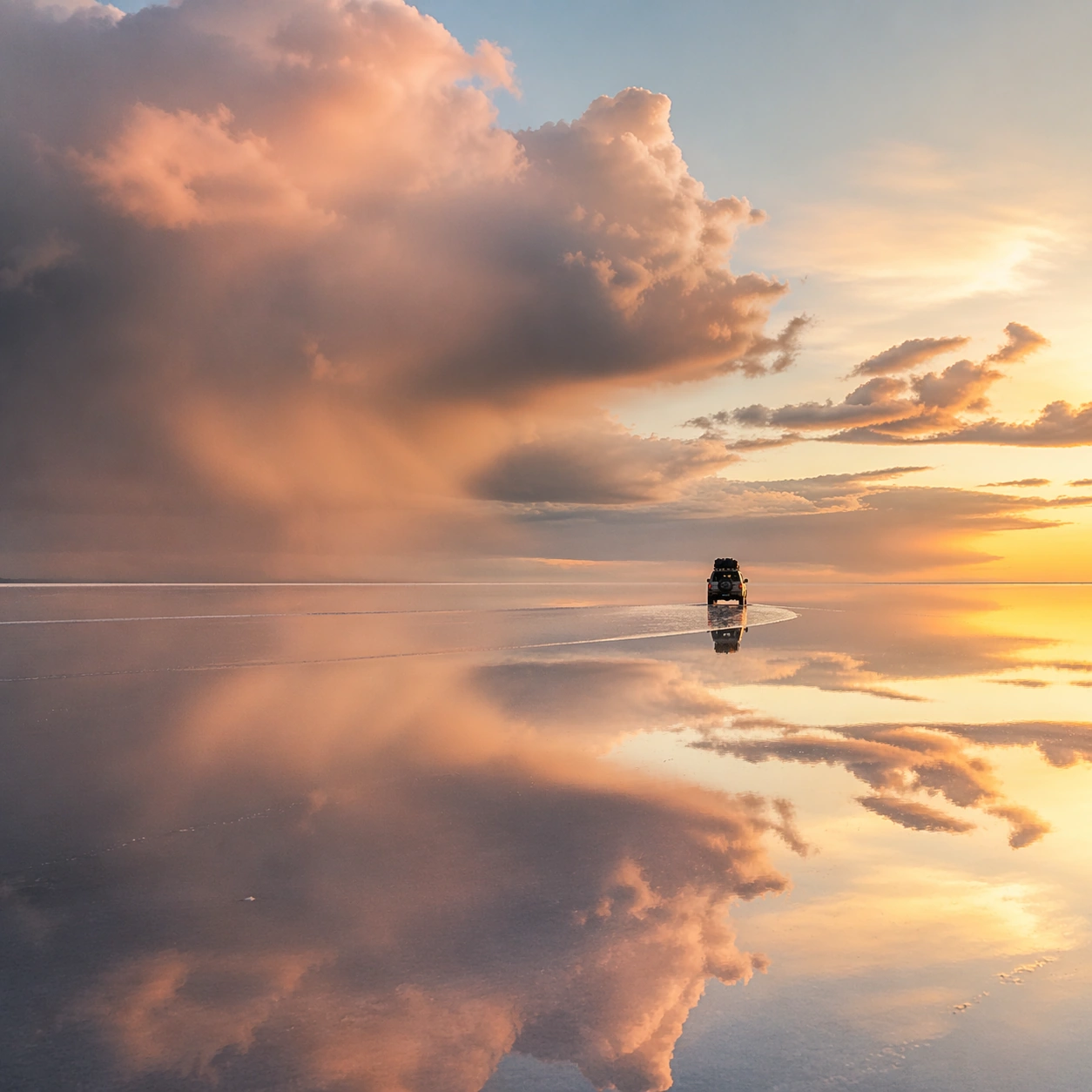
Example generated from “Salt Flat Mirror Bolivia — Scale Witness”
GPT Image 2en

Scene: Create a square, photoreal landscape study of bolivian salt flat mirror. Compose it as a tiny human, animal, tent, vehicle, or craft that reveals the vastness of the environment, using a balanced frame where the witness remains small but unmistakable. Let the scale marker stay visible without becoming the true subject Keep the frame cinematic but disciplined, with a clear foreground, middle distance, and far mass so the viewer can measure real depth. The image should feel like a field photograph made with patience, precision, and sublime restraint rather than a fantasy matte painting. Subject: Show a flooded Bolivian salt flat at sunset with a near-perfect mirror surface reflecting cloud towers, a vanishing horizon, and a single jeep sending one subtle ripple across the water film. This variation should emphasize scale comparison. The main landform must dominate the composition, but secondary elements should quietly explain how the place works: water paths, sediment lines, snow bands, surf, ash, wind streaks, stars, or human traces where appropriate. Everything in the image should support the same idea of scale and climate, so the scene reads as one coherent environment rather than a stack of spectacular details. Important details: Preserve horizon loss, razor-thin water over salt, exact mirror behavior, soft sunset color mirrored above and below, and a clean sense of infinite horizontal space. The viewer should understand the environment first and the witness second, with clean spatial separation between them. Keep geology, weather, and atmosphere physically believable. Use subtle micro-texture, tonal separation, and air perspective to reinforce distance. If a human, vehicle, tent, caravan, bird, or boat appears, it must remain tiny and subordinate to the landscape, functioning only as a scale witness. The composition should feel original, severe, and elegant, with no decorative filler and no imitation of any copyrighted visual property. Use case: Bolivian Salt Flat Mirror single study 7/9, exploring the scale comparison variation. Constraints: No readable text, no watermark, no logos, preserve exact 1:1 aspect ratio, no extra vehicles, no crowd of tourists, no giant props, no surreal floating islands, no crowd scenes, no heroic close-up character framing, no busy gear pile, no kitsch color grading, no artificial border, no split-panel treatment.
Example generated from “Salt Flat Mirror Bolivia — Abstract Rhythm”
GPT Image 2en

Scene: Create a square, photoreal landscape study of bolivian salt flat mirror. Compose it as the near-abstract rhythm of repeated natural forms, lines, and tonal bands, using a disciplined crop that approaches abstraction while remaining unmistakably a real place. Let shape and tonal cadence dominate before small narrative details Keep the frame cinematic but disciplined, with a clear foreground, middle distance, and far mass so the viewer can measure real depth. The image should feel like a field photograph made with patience, precision, and sublime restraint rather than a fantasy matte painting. Subject: Show a flooded Bolivian salt flat at sunset with a near-perfect mirror surface reflecting cloud towers, a vanishing horizon, and a single jeep sending one subtle ripple across the water film. This variation should emphasize formal composition study. The main landform must dominate the composition, but secondary elements should quietly explain how the place works: water paths, sediment lines, snow bands, surf, ash, wind streaks, stars, or human traces where appropriate. Everything in the image should support the same idea of scale and climate, so the scene reads as one coherent environment rather than a stack of spectacular details. Important details: Preserve horizon loss, razor-thin water over salt, exact mirror behavior, soft sunset color mirrored above and below, and a clean sense of infinite horizontal space. Pattern, repetition, and negative space should feel discovered in nature, not graphically imposed. Keep geology, weather, and atmosphere physically believable. Use subtle micro-texture, tonal separation, and air perspective to reinforce distance. If a human, vehicle, tent, caravan, bird, or boat appears, it must remain tiny and subordinate to the landscape, functioning only as a scale witness. The composition should feel original, severe, and elegant, with no decorative filler and no imitation of any copyrighted visual property. Use case: Bolivian Salt Flat Mirror single study 8/9, exploring the formal composition study variation. Constraints: No readable text, no watermark, no logos, preserve exact 1:1 aspect ratio, no extra vehicles, no crowd of tourists, no giant props, no surreal floating islands, no graphic overlays, no surreal floating elements, no ornamental symmetry cheats, no kitsch color grading, no artificial border, no split-panel treatment.

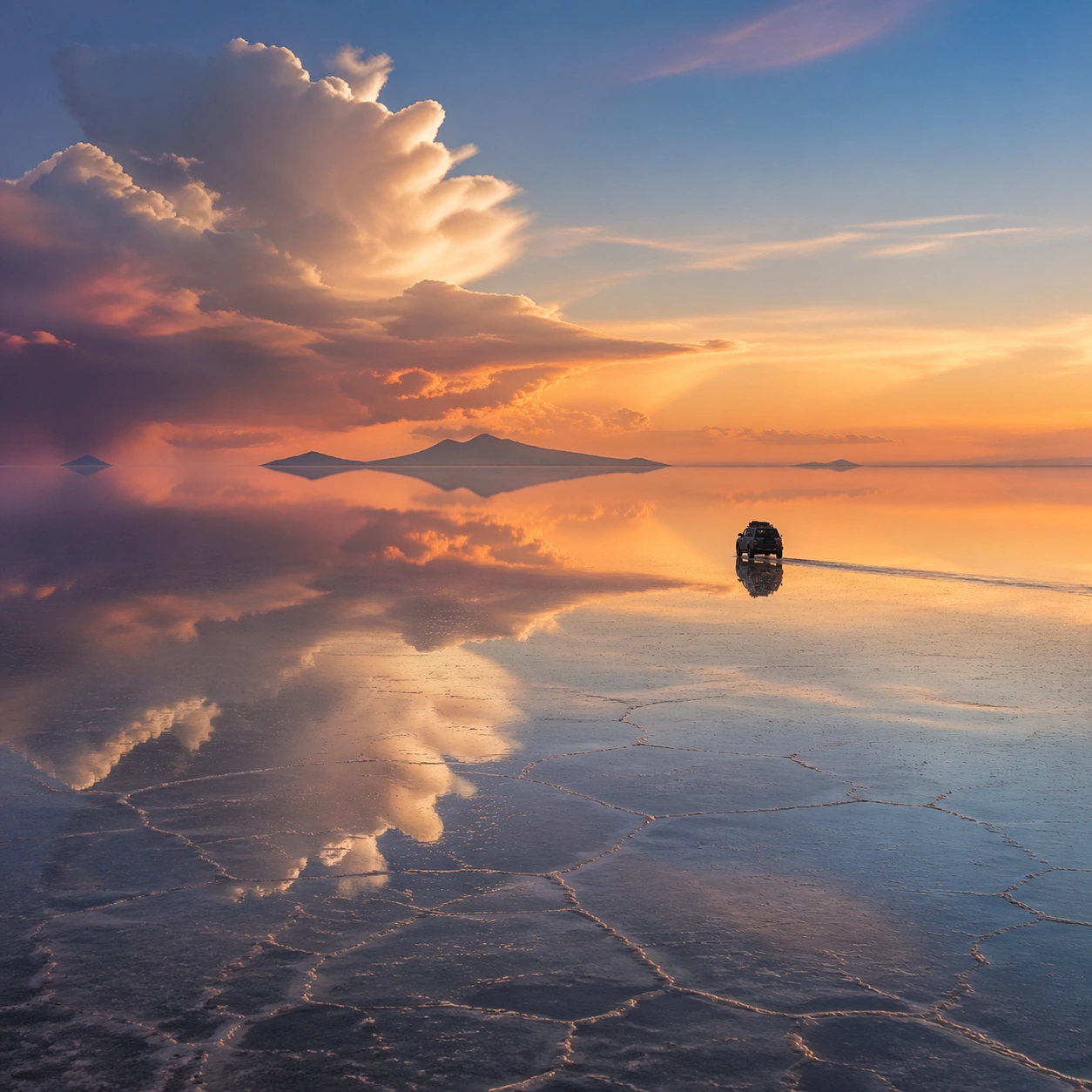
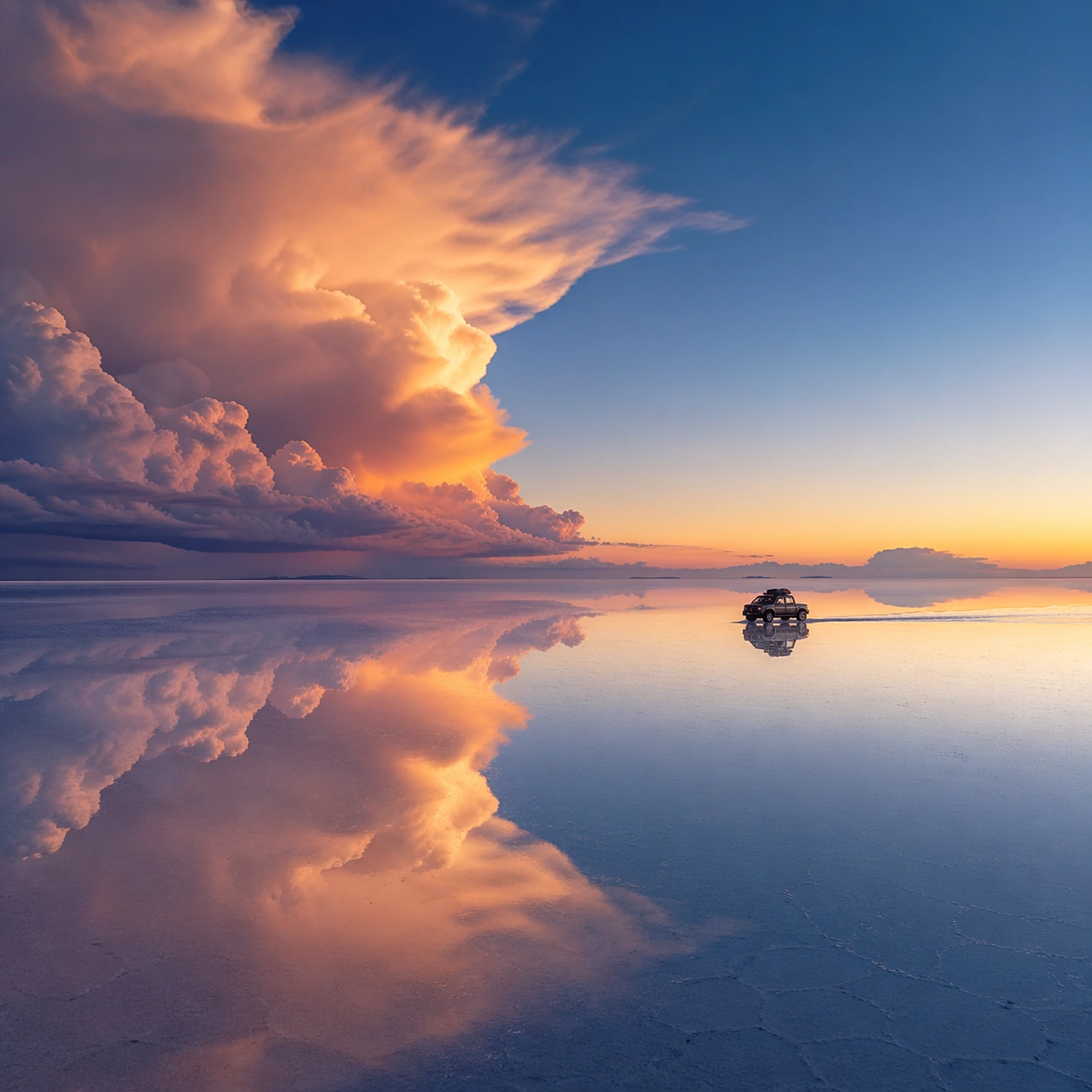
Example generated from “Salt Flat Mirror Bolivia — Final Iconic”
GPT Image 2en

Scene: Create a square, photoreal landscape study of bolivian salt flat mirror. Compose it as the cleanest, most iconic summary of the whole landscape idea, using a distilled composition with one unforgettable silhouette or mass relationship and generous breathing room. Let the scene resolve into a memorable final image with strong legibility at thumbnail size Keep the frame cinematic but disciplined, with a clear foreground, middle distance, and far mass so the viewer can measure real depth. The image should feel like a field photograph made with patience, precision, and sublime restraint rather than a fantasy matte painting. Subject: Show a flooded Bolivian salt flat at sunset with a near-perfect mirror surface reflecting cloud towers, a vanishing horizon, and a single jeep sending one subtle ripple across the water film. This variation should emphasize iconic final plate. The main landform must dominate the composition, but secondary elements should quietly explain how the place works: water paths, sediment lines, snow bands, surf, ash, wind streaks, stars, or human traces where appropriate. Everything in the image should support the same idea of scale and climate, so the scene reads as one coherent environment rather than a stack of spectacular details. Important details: Preserve horizon loss, razor-thin water over salt, exact mirror behavior, soft sunset color mirrored above and below, and a clean sense of infinite horizontal space. Keep the frame spare, confident, and monumental, with every element earning its place. Keep geology, weather, and atmosphere physically believable. Use subtle micro-texture, tonal separation, and air perspective to reinforce distance. If a human, vehicle, tent, caravan, bird, or boat appears, it must remain tiny and subordinate to the landscape, functioning only as a scale witness. The composition should feel original, severe, and elegant, with no decorative filler and no imitation of any copyrighted visual property. Use case: Bolivian Salt Flat Mirror single study 9/9, exploring the iconic final plate variation. Constraints: No readable text, no watermark, no logos, preserve exact 1:1 aspect ratio, no extra vehicles, no crowd of tourists, no giant props, no surreal floating islands, no cluttered edges, no competing focal points, no visual noise in empty space, no kitsch color grading, no artificial border, no split-panel treatment.
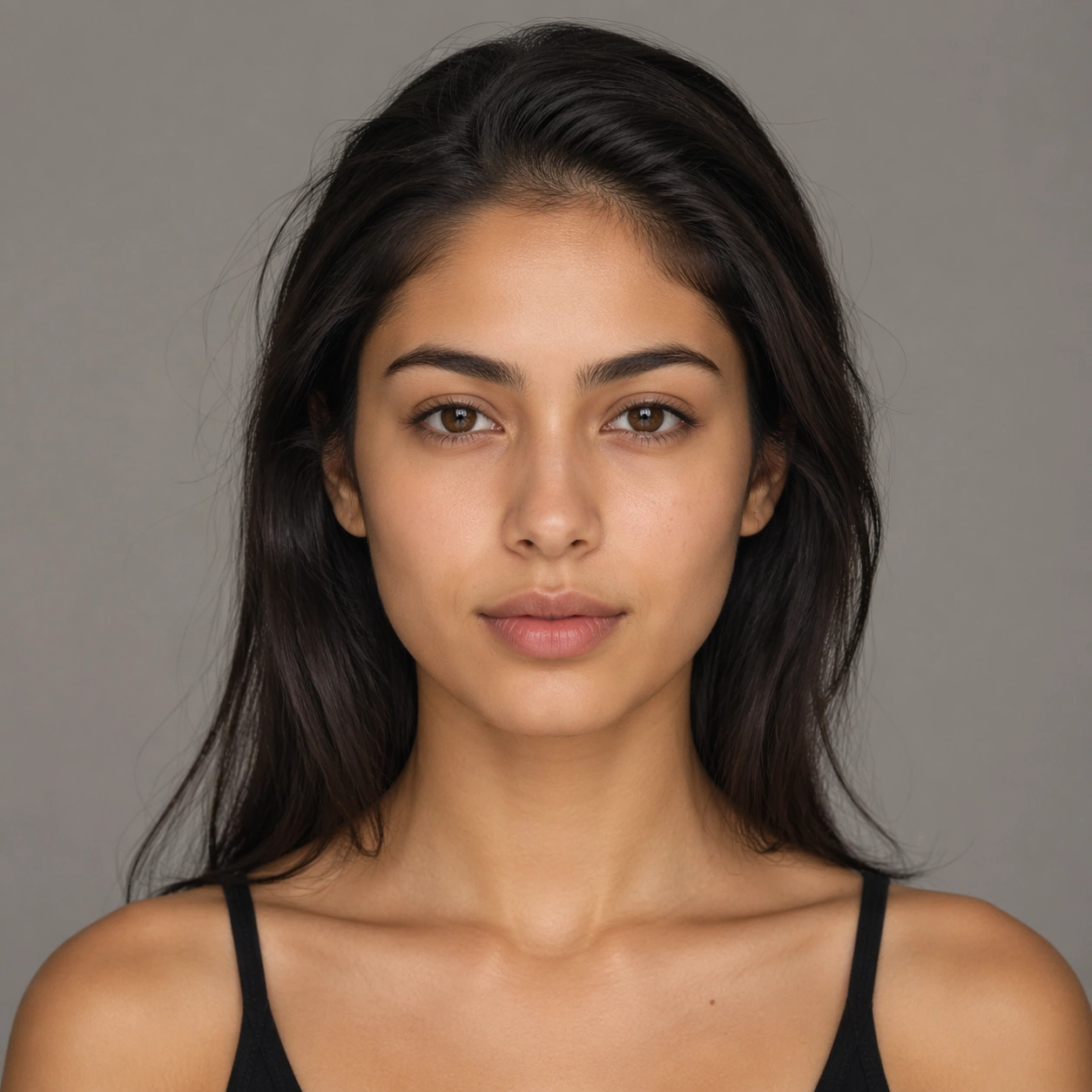
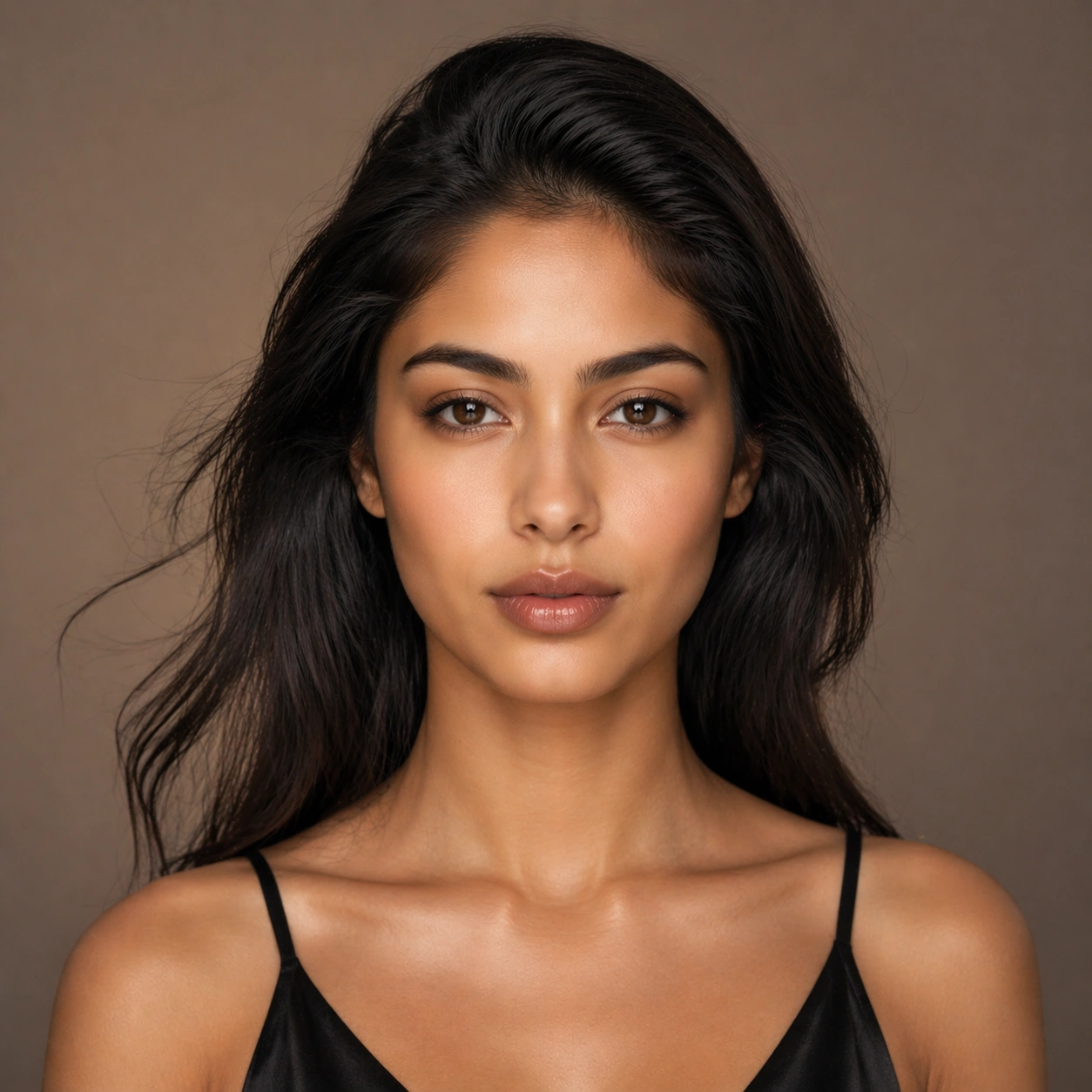
Example generated from “Same Face Makeup Era Matrix — Reference Natural Base”
GPT Image 2en

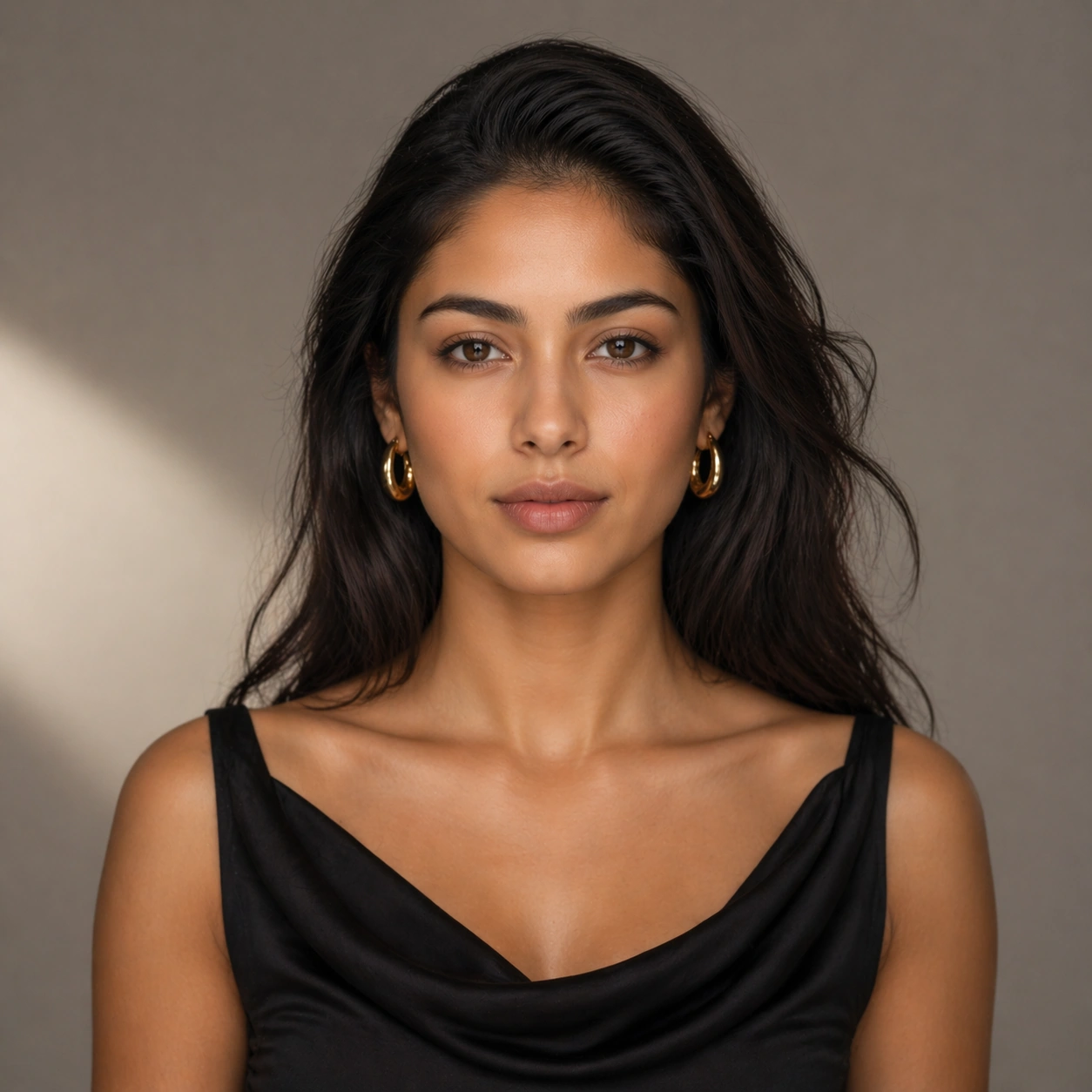
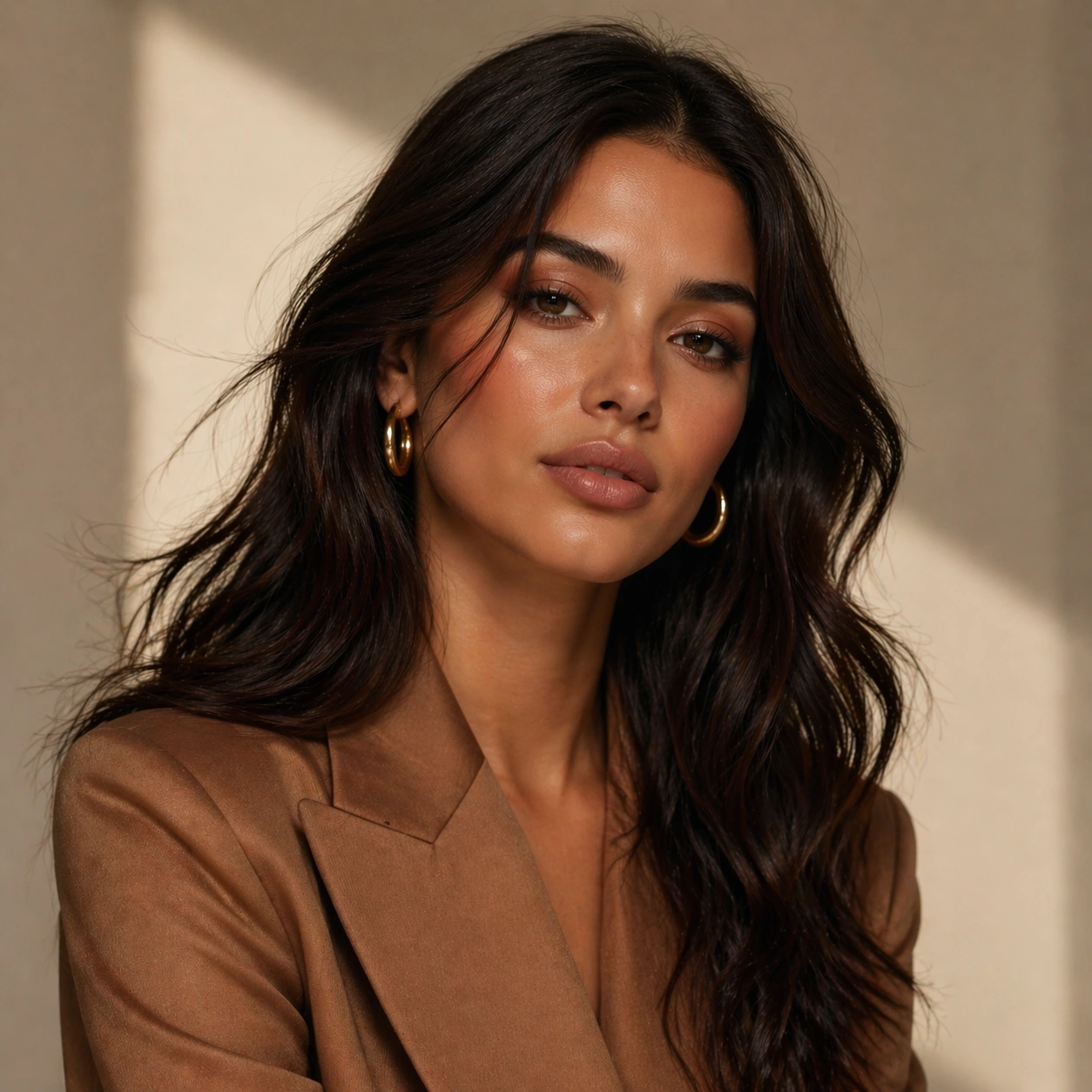
Scene: Create a square 1:1 portrait image for Same-Face Makeup Era Matrix. Use a clean approval-style studio portrait with neutral light, simple wardrobe, and enough facial visibility to lock identity perfectly. The frame should feel like a finished professional deliverable rather than a casual snapshot, with clear lens discipline, believable light falloff, and a palette that directly supports Transform one face across beauty eras and makeup directions while holding bone structure, age read, and natural identity stable.. Keep enough surrounding space and compositional control for gallery, research, campaign, or approval-board reuse while staying photoreal and human-scaled. Subject: Center one beauty model with golden olive skin, dark almond eyes, softly arched brows, and stable face proportions suited to multiple makeup eras. Establish the exact same face, hair base, skin tone family, and body proportions that every transformation image must preserve. Use the example direction from the brief as grounding context: Transform one face across beauty eras and makeup directions while holding bone structure, age read, and natural identity stable.. Wardrobe, lighting, environment, and pose may shift to serve this variation, but the viewer must immediately understand that the same reference identity is still in front of the camera. Important details: This backlog line is difficult because Transform one face across beauty eras and makeup directions while holding bone structure, age read, and natural identity stable.. Preserve skin tone family, bone structure, eye spacing, nose shape, mouth shape, hairline logic, shoulder width, and overall body read across the entire series. preserve exact face / hair base / body proportions from the reference model. This baseline must read like the trustworthy approval frame before switching anything. Avoid the common failure described in the brief: ordinary image models often lose likeness once styling, lighting, or layout changes enter the frame. Success should feel like the result should feel professionally usable, coherent, and clearly built around one stable human identity. Use case: Same-Face Makeup Era Matrix series study 1/9, the natural baseline look. Constraints: No readable text, no watermark, no logos, preserve exact 1:1 aspect ratio, preserve exact face / hair base / body proportions from the reference model, no heavy styling, no logo wardrobe, no beauty filter, no extra subjects.

Example generated from “Same Face Makeup Era Matrix — Look Switch One”
GPT Image 2en

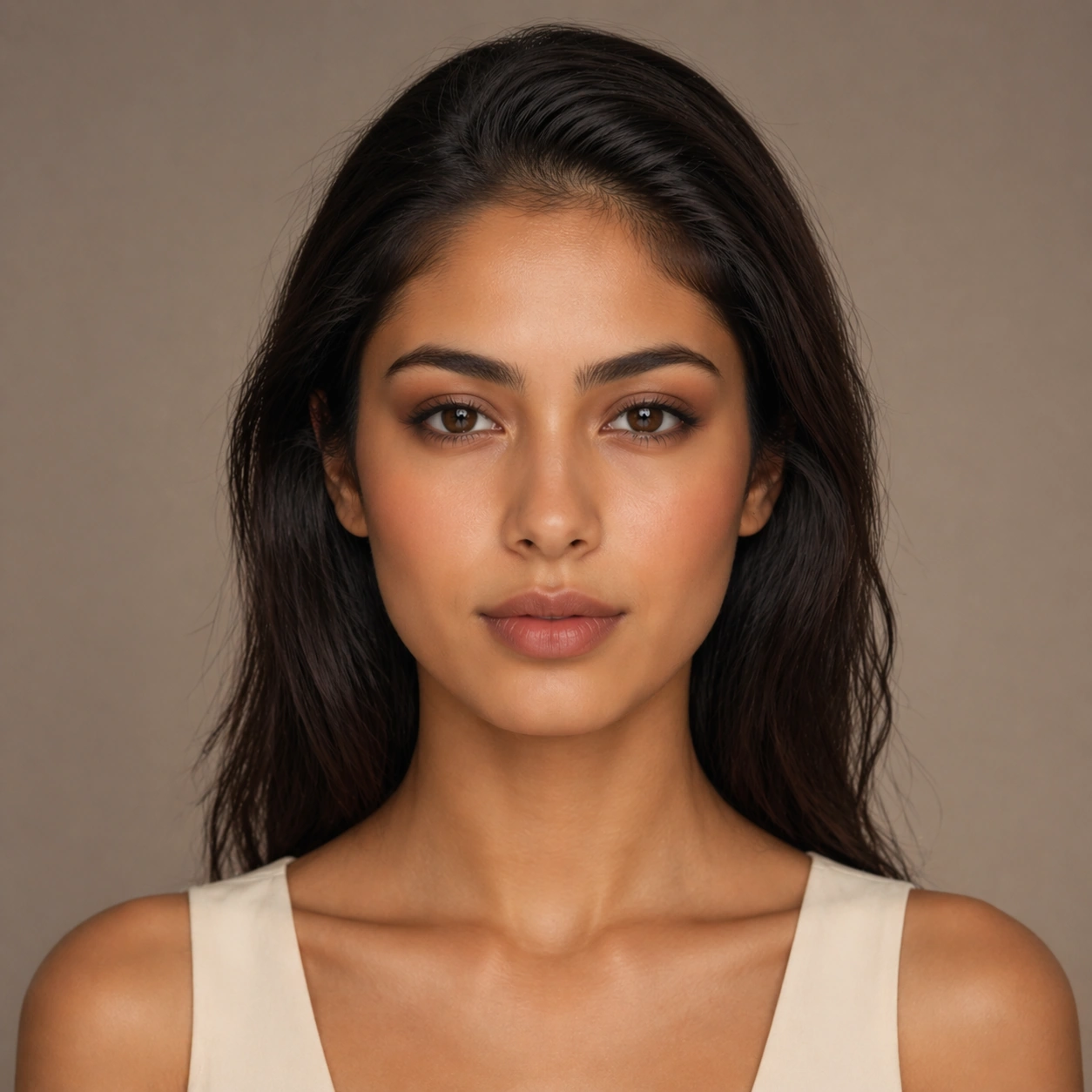
Scene: Create a square 1:1 portrait image for Same-Face Makeup Era Matrix. Use a premium portrait frame with one clear change direction and enough negative space to judge styling cleanly. The frame should feel like a finished professional deliverable rather than a casual snapshot, with clear lens discipline, believable light falloff, and a palette that directly supports Transform one face across beauty eras and makeup directions while holding bone structure, age read, and natural identity stable.. Keep enough surrounding space and compositional control for gallery, research, campaign, or approval-board reuse while staying photoreal and human-scaled. Subject: Center one beauty model with golden olive skin, dark almond eyes, softly arched brows, and stable face proportions suited to multiple makeup eras. Keep the exact same person from the reference while executing the first major change requested by the topic, whether hair, makeup, wardrobe, grooming, or professional read. Use the example direction from the brief as grounding context: Transform one face across beauty eras and makeup directions while holding bone structure, age read, and natural identity stable.. Wardrobe, lighting, environment, and pose may shift to serve this variation, but the viewer must immediately understand that the same reference identity is still in front of the camera. Important details: This backlog line is difficult because Transform one face across beauty eras and makeup directions while holding bone structure, age read, and natural identity stable.. Preserve skin tone family, bone structure, eye spacing, nose shape, mouth shape, hairline logic, shoulder width, and overall body read across the entire series. preserve exact face / hair base / body proportions from the reference model. The switch must be obvious, but the identity must remain stronger than the styling change. Avoid the common failure described in the brief: ordinary image models often lose likeness once styling, lighting, or layout changes enter the frame. Success should feel like the result should feel professionally usable, coherent, and clearly built around one stable human identity. Use case: Same-Face Makeup Era Matrix series study 2/9, the first controlled transformation. Constraints: No readable text, no watermark, no logos, preserve exact 1:1 aspect ratio, preserve exact face / hair base / body proportions from the reference model, no face redraw, no changed age unless explicitly asked, no costume-party exaggeration, no new body shape.

Example generated from “Same Face Makeup Era Matrix — Look Switch Two”
GPT Image 2en

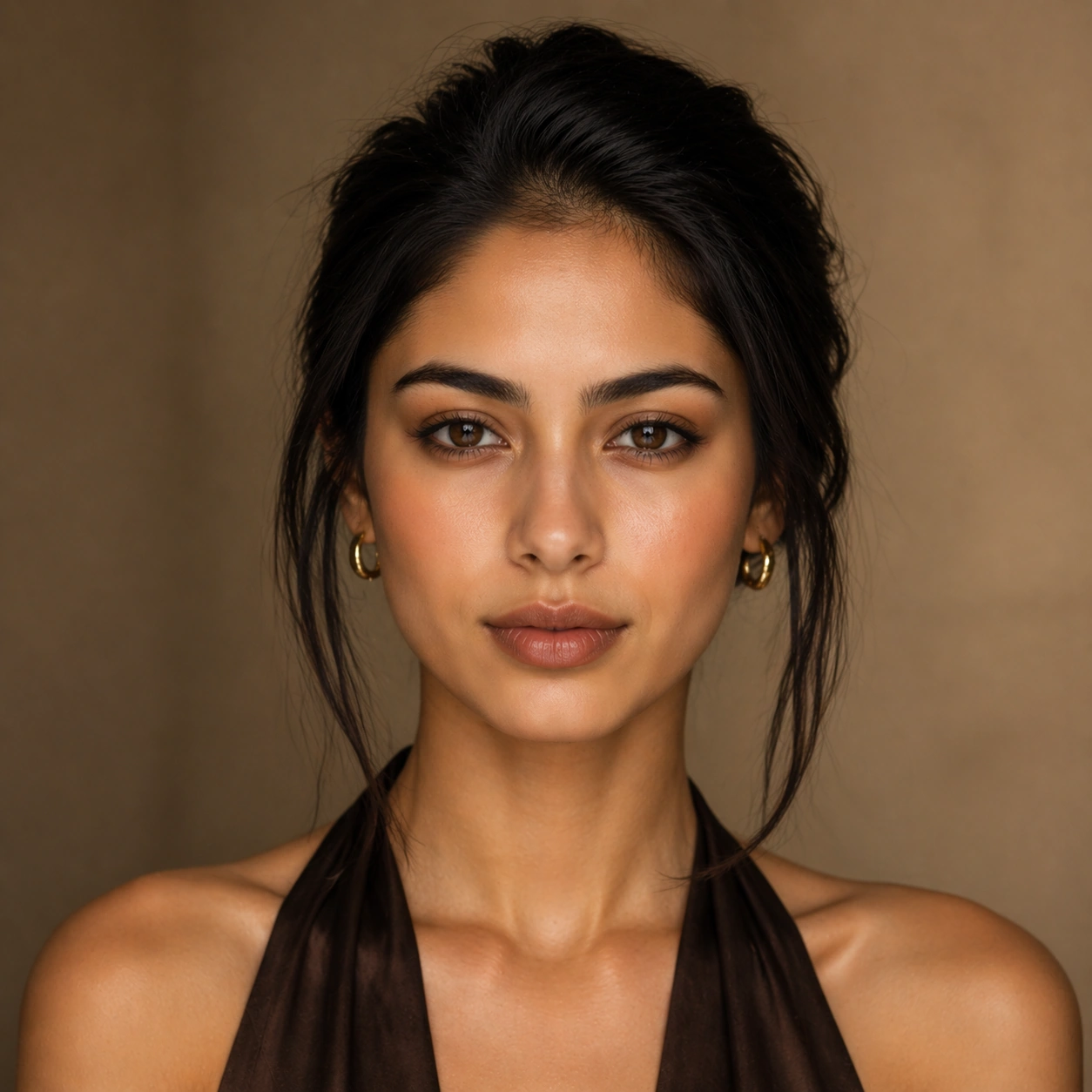
Scene: Create a square 1:1 portrait image for Same-Face Makeup Era Matrix. Use a square commercial portrait proof with similar camera logic and controlled light. The frame should feel like a finished professional deliverable rather than a casual snapshot, with clear lens discipline, believable light falloff, and a palette that directly supports Transform one face across beauty eras and makeup directions while holding bone structure, age read, and natural identity stable.. Keep enough surrounding space and compositional control for gallery, research, campaign, or approval-board reuse while staying photoreal and human-scaled. Subject: Center one beauty model with golden olive skin, dark almond eyes, softly arched brows, and stable face proportions suited to multiple makeup eras. Preserve the same face and body while moving to a second transformation state that still feels plausible for the same person. Use the example direction from the brief as grounding context: Transform one face across beauty eras and makeup directions while holding bone structure, age read, and natural identity stable.. Wardrobe, lighting, environment, and pose may shift to serve this variation, but the viewer must immediately understand that the same reference identity is still in front of the camera. Important details: This backlog line is difficult because Transform one face across beauty eras and makeup directions while holding bone structure, age read, and natural identity stable.. Preserve skin tone family, bone structure, eye spacing, nose shape, mouth shape, hairline logic, shoulder width, and overall body read across the entire series. preserve exact face / hair base / body proportions from the reference model. Hairline logic, eye spacing, lip shape, and shoulder width must remain exact. Avoid the common failure described in the brief: ordinary image models often lose likeness once styling, lighting, or layout changes enter the frame. Success should feel like the result should feel professionally usable, coherent, and clearly built around one stable human identity. Use case: Same-Face Makeup Era Matrix series study 3/9, the second controlled transformation. Constraints: No readable text, no watermark, no logos, preserve exact 1:1 aspect ratio, preserve exact face / hair base / body proportions from the reference model, no hairstyle that changes skull shape, no enlarged eyes, no body morphing, no logo props.
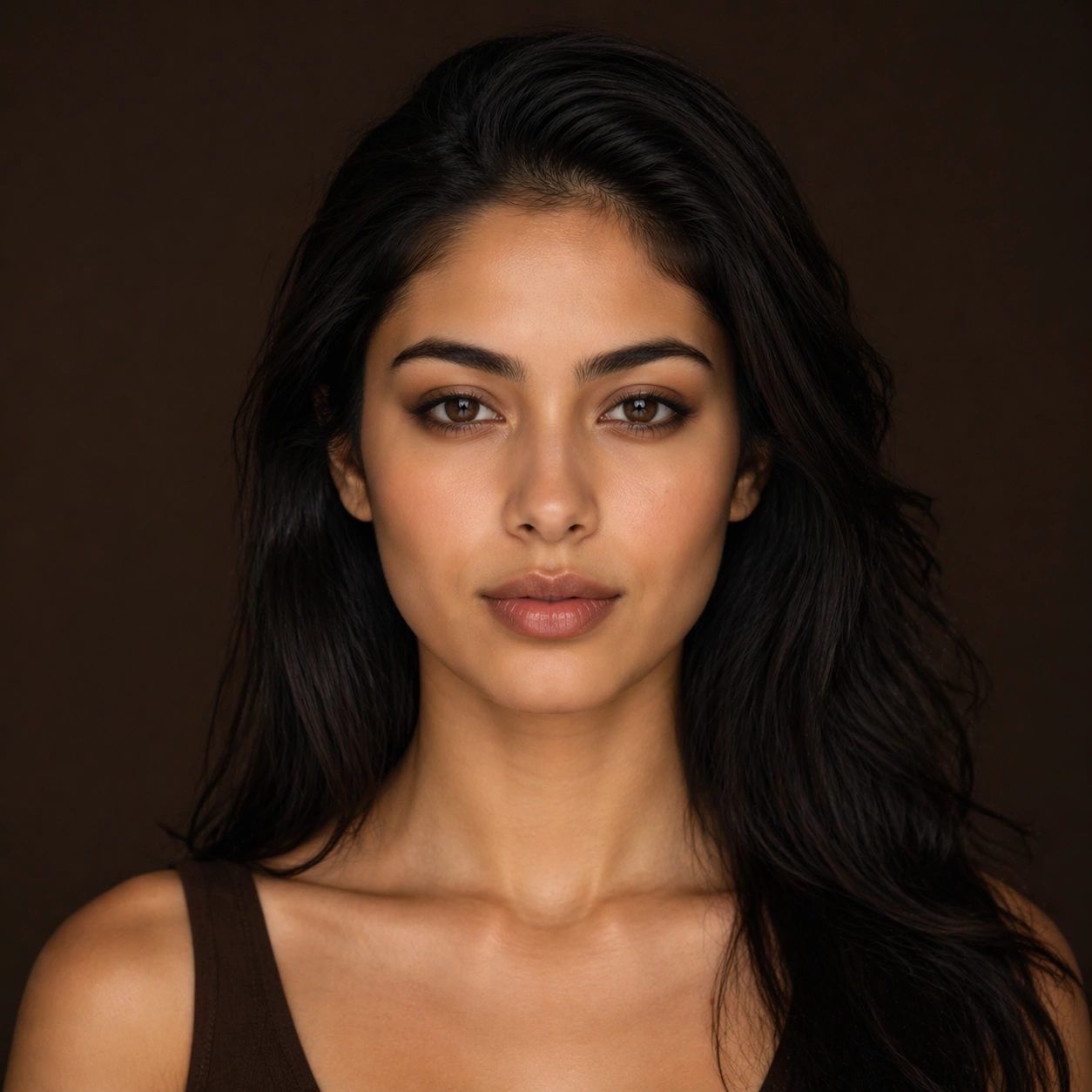
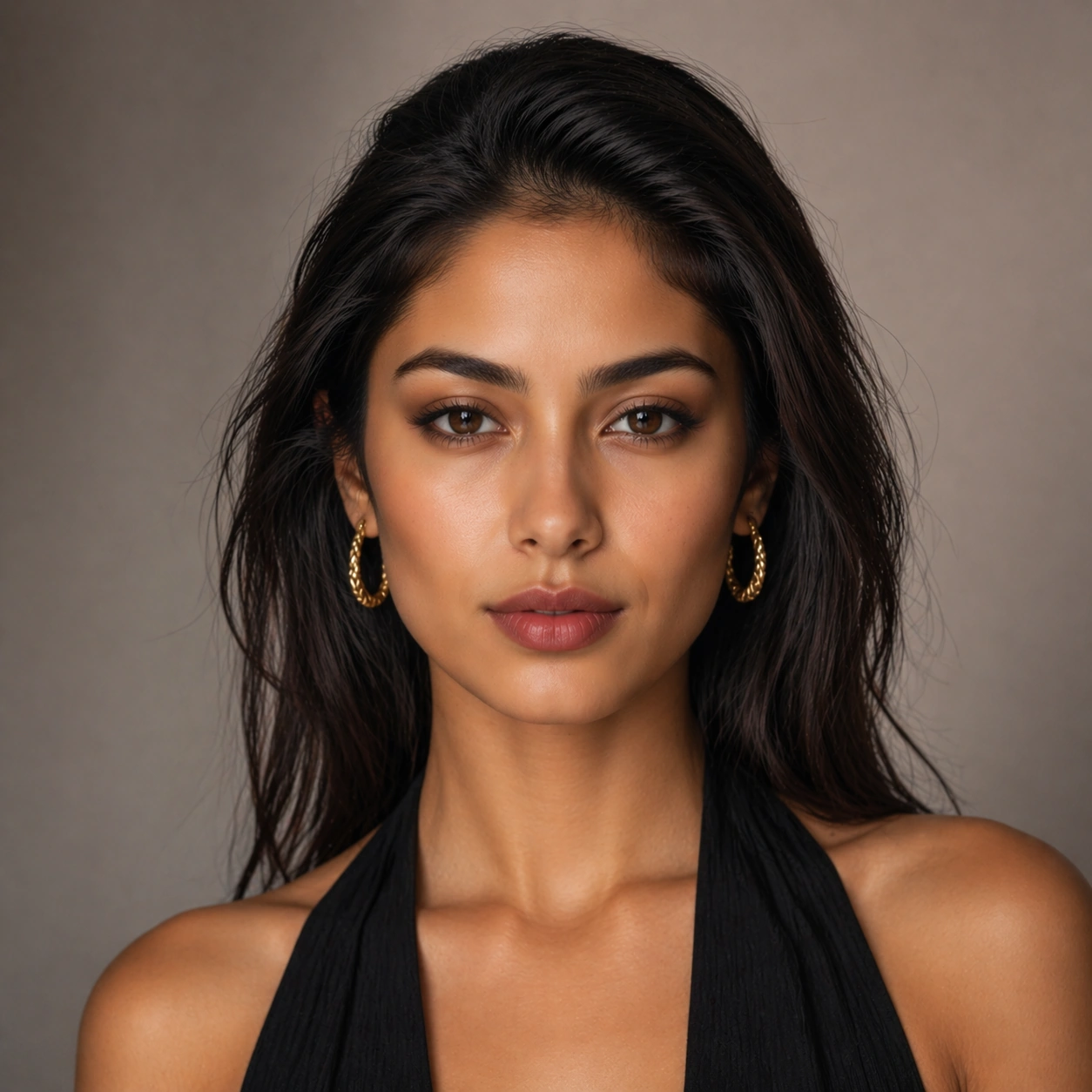
Example generated from “Same Face Makeup Era Matrix — Look Switch Three”
GPT Image 2en

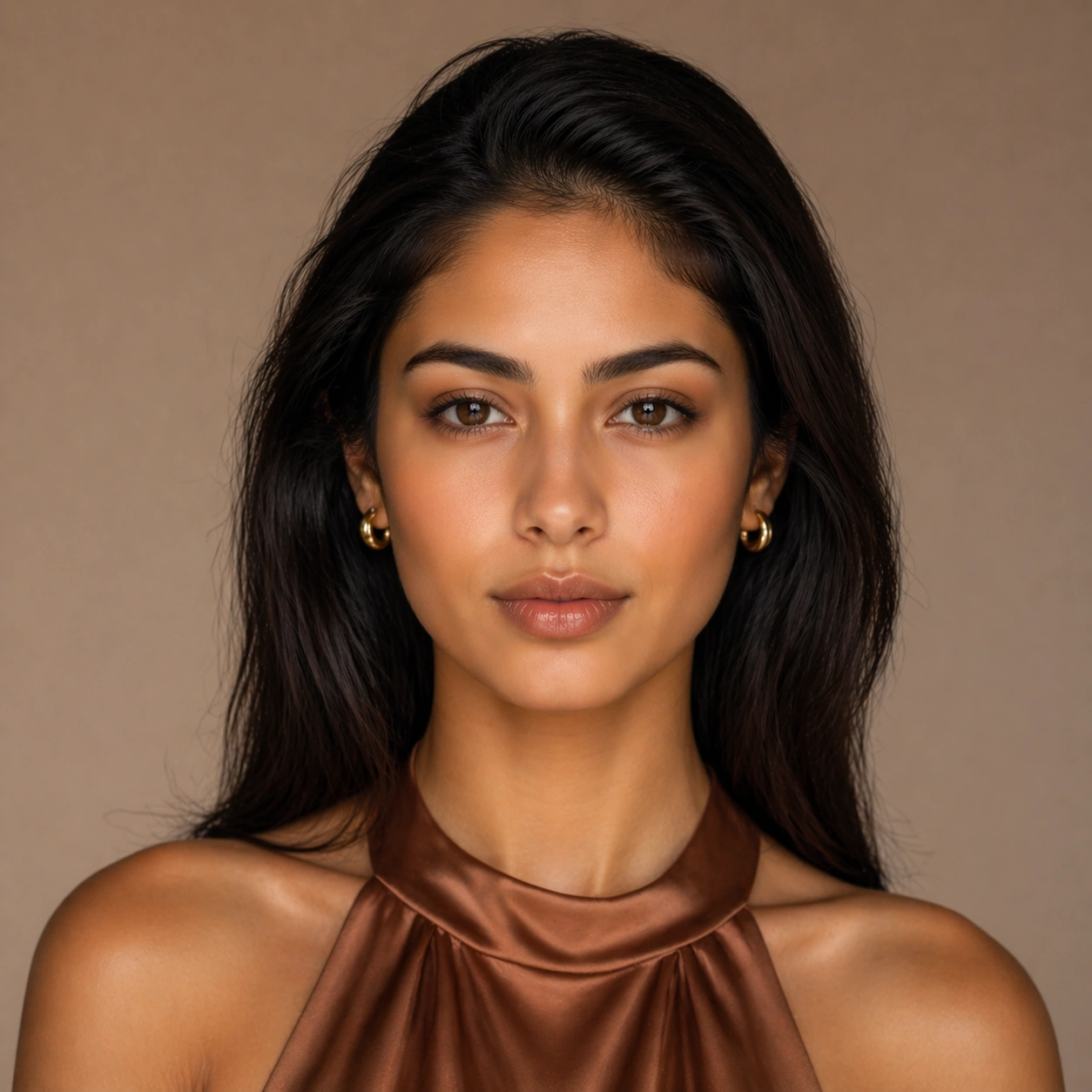
Scene: Create a square 1:1 portrait image for Same-Face Makeup Era Matrix. Use a slightly bolder campaign-like frame with disciplined crop and clean light falloff. The frame should feel like a finished professional deliverable rather than a casual snapshot, with clear lens discipline, believable light falloff, and a palette that directly supports Transform one face across beauty eras and makeup directions while holding bone structure, age read, and natural identity stable.. Keep enough surrounding space and compositional control for gallery, research, campaign, or approval-board reuse while staying photoreal and human-scaled. Subject: Center one beauty model with golden olive skin, dark almond eyes, softly arched brows, and stable face proportions suited to multiple makeup eras. Apply a third styling direction while holding the same reference identity with no drift in age, ethnicity, or face structure. Use the example direction from the brief as grounding context: Transform one face across beauty eras and makeup directions while holding bone structure, age read, and natural identity stable.. Wardrobe, lighting, environment, and pose may shift to serve this variation, but the viewer must immediately understand that the same reference identity is still in front of the camera. Important details: This backlog line is difficult because Transform one face across beauty eras and makeup directions while holding bone structure, age read, and natural identity stable.. Preserve skin tone family, bone structure, eye spacing, nose shape, mouth shape, hairline logic, shoulder width, and overall body read across the entire series. preserve exact face / hair base / body proportions from the reference model. The image should prove range under control rather than spectacle for spectacle alone. Avoid the common failure described in the brief: ordinary image models often lose likeness once styling, lighting, or layout changes enter the frame. Success should feel like the result should feel professionally usable, coherent, and clearly built around one stable human identity. Use case: Same-Face Makeup Era Matrix series study 4/9, the third controlled transformation. Constraints: No readable text, no watermark, no logos, preserve exact 1:1 aspect ratio, preserve exact face / hair base / body proportions from the reference model, no gimmick costume, no false lashes that change eye shape, no surreal hair physics, no second person.

Example generated from “Same Face Makeup Era Matrix — Look Switch Four”
GPT Image 2en

Scene: Create a square 1:1 portrait image for Same-Face Makeup Era Matrix. Use a close or mid-shot portrait that privileges detail and approval clarity over background storytelling. The frame should feel like a finished professional deliverable rather than a casual snapshot, with clear lens discipline, believable light falloff, and a palette that directly supports Transform one face across beauty eras and makeup directions while holding bone structure, age read, and natural identity stable.. Keep enough surrounding space and compositional control for gallery, research, campaign, or approval-board reuse while staying photoreal and human-scaled. Subject: Center one beauty model with golden olive skin, dark almond eyes, softly arched brows, and stable face proportions suited to multiple makeup eras. Keep the same exact subject while introducing another visible shift in style language, finish, or mood tied directly to the topic brief. Use the example direction from the brief as grounding context: Transform one face across beauty eras and makeup directions while holding bone structure, age read, and natural identity stable.. Wardrobe, lighting, environment, and pose may shift to serve this variation, but the viewer must immediately understand that the same reference identity is still in front of the camera. Important details: This backlog line is difficult because Transform one face across beauty eras and makeup directions while holding bone structure, age read, and natural identity stable.. Preserve skin tone family, bone structure, eye spacing, nose shape, mouth shape, hairline logic, shoulder width, and overall body read across the entire series. preserve exact face / hair base / body proportions from the reference model. Micro-details may change, but likeness, skin tone family, and body read cannot. Avoid the common failure described in the brief: ordinary image models often lose likeness once styling, lighting, or layout changes enter the frame. Success should feel like the result should feel professionally usable, coherent, and clearly built around one stable human identity. Use case: Same-Face Makeup Era Matrix series study 5/9, the fourth controlled transformation. Constraints: No readable text, no watermark, no logos, preserve exact 1:1 aspect ratio, preserve exact face / hair base / body proportions from the reference model, no retouch blur, no facial asymmetry drift, no extra accessories noise, no unreadable product text.

Example generated from “Same Face Makeup Era Matrix — Look Switch Five”
GPT Image 2en

Scene: Create a square 1:1 portrait image for Same-Face Makeup Era Matrix. Use a square portrait with polished commercial finish and enough room to see styling structure clearly. The frame should feel like a finished professional deliverable rather than a casual snapshot, with clear lens discipline, believable light falloff, and a palette that directly supports Transform one face across beauty eras and makeup directions while holding bone structure, age read, and natural identity stable.. Keep enough surrounding space and compositional control for gallery, research, campaign, or approval-board reuse while staying photoreal and human-scaled. Subject: Center one beauty model with golden olive skin, dark almond eyes, softly arched brows, and stable face proportions suited to multiple makeup eras. Push to a fifth variation while preserving exact face / hair base / body proportions from the reference model. This should still feel like one person being art-directed, not re-generated from scratch. Use the example direction from the brief as grounding context: Transform one face across beauty eras and makeup directions while holding bone structure, age read, and natural identity stable.. Wardrobe, lighting, environment, and pose may shift to serve this variation, but the viewer must immediately understand that the same reference identity is still in front of the camera. Important details: This backlog line is difficult because Transform one face across beauty eras and makeup directions while holding bone structure, age read, and natural identity stable.. Preserve skin tone family, bone structure, eye spacing, nose shape, mouth shape, hairline logic, shoulder width, and overall body read across the entire series. preserve exact face / hair base / body proportions from the reference model. Keep continuity stronger than novelty. Avoid the common failure described in the brief: ordinary image models often lose likeness once styling, lighting, or layout changes enter the frame. Success should feel like the result should feel professionally usable, coherent, and clearly built around one stable human identity. Use case: Same-Face Makeup Era Matrix series study 6/9, the fifth controlled transformation. Constraints: No readable text, no watermark, no logos, preserve exact 1:1 aspect ratio, preserve exact face / hair base / body proportions from the reference model, no gender drift unless explicitly relevant, no unrelated props, no costume confusion, no body-scale jump.

Example generated from “Same Face Makeup Era Matrix — Look Switch Six”
GPT Image 2en

Scene: Create a square 1:1 portrait image for Same-Face Makeup Era Matrix. Use a final single-look variation with confident but restrained campaign polish. The frame should feel like a finished professional deliverable rather than a casual snapshot, with clear lens discipline, believable light falloff, and a palette that directly supports Transform one face across beauty eras and makeup directions while holding bone structure, age read, and natural identity stable.. Keep enough surrounding space and compositional control for gallery, research, campaign, or approval-board reuse while staying photoreal and human-scaled. Subject: Center one beauty model with golden olive skin, dark almond eyes, softly arched brows, and stable face proportions suited to multiple makeup eras. Use the same person again in a sixth styling state, making sure recognition is instant before the viewer notices what changed. Use the example direction from the brief as grounding context: Transform one face across beauty eras and makeup directions while holding bone structure, age read, and natural identity stable.. Wardrobe, lighting, environment, and pose may shift to serve this variation, but the viewer must immediately understand that the same reference identity is still in front of the camera. Important details: This backlog line is difficult because Transform one face across beauty eras and makeup directions while holding bone structure, age read, and natural identity stable.. Preserve skin tone family, bone structure, eye spacing, nose shape, mouth shape, hairline logic, shoulder width, and overall body read across the entire series. preserve exact face / hair base / body proportions from the reference model. The transformation should feel deliberate, premium, and usable in a real salon, beauty, fashion, or casting workflow. Avoid the common failure described in the brief: ordinary image models often lose likeness once styling, lighting, or layout changes enter the frame. Success should feel like the result should feel professionally usable, coherent, and clearly built around one stable human identity. Use case: Same-Face Makeup Era Matrix series study 7/9, the sixth controlled transformation. Constraints: No readable text, no watermark, no logos, preserve exact 1:1 aspect ratio, preserve exact face / hair base / body proportions from the reference model, no hidden face, no perspective warp, no dramatic environment change, no AI-gloss artifacts.

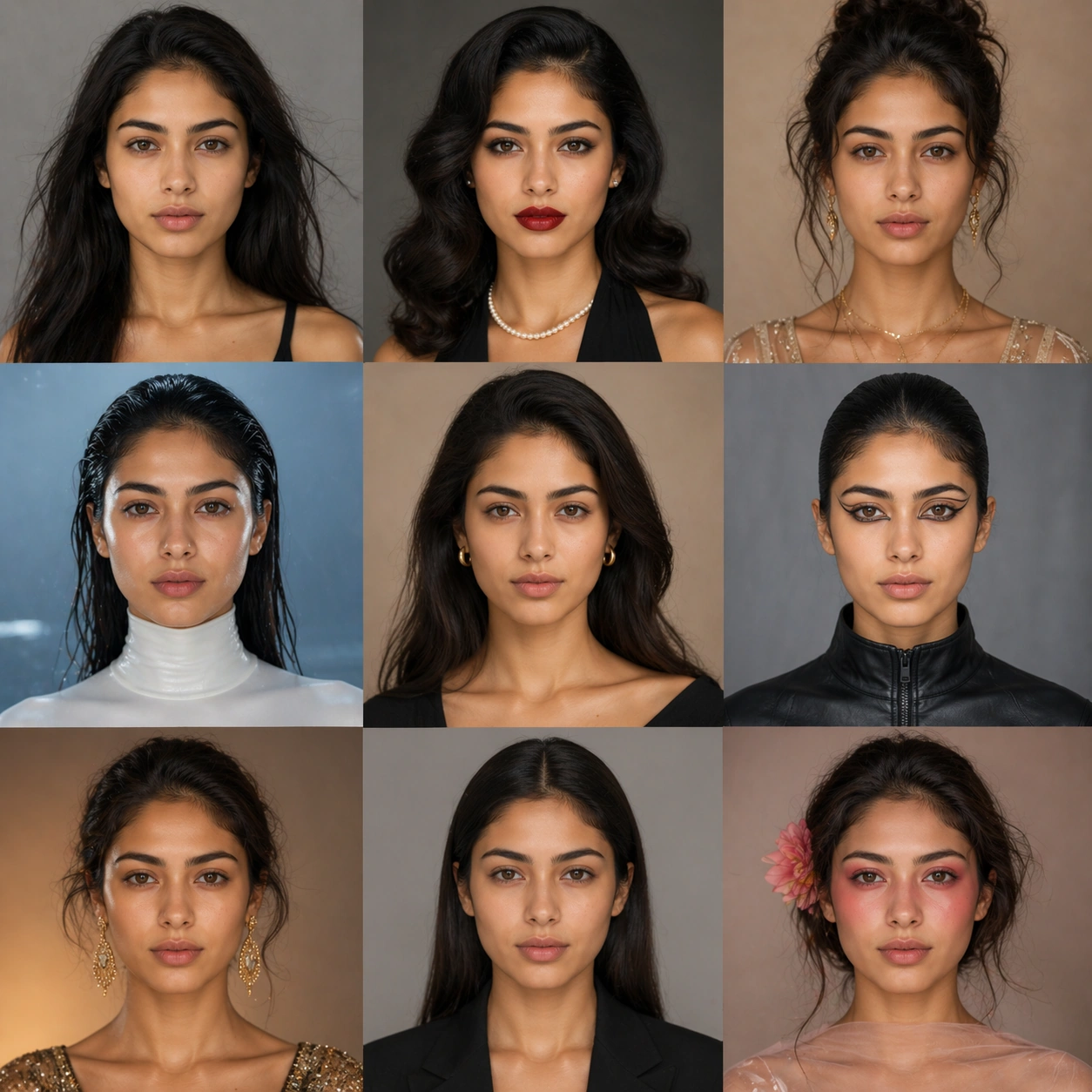
Example generated from “Same Face Makeup Era Matrix — Detail Proof Board”
GPT Image 2en

Scene: Create a square 1:1 portrait image for Same-Face Makeup Era Matrix. Use a square composition that can include multiple tight crops or one richer close-up, but still reads as one coherent portrait asset. The frame should feel like a finished professional deliverable rather than a casual snapshot, with clear lens discipline, believable light falloff, and a palette that directly supports Transform one face across beauty eras and makeup directions while holding bone structure, age read, and natural identity stable.. Keep enough surrounding space and compositional control for gallery, research, campaign, or approval-board reuse while staying photoreal and human-scaled. Subject: Center one beauty model with golden olive skin, dark almond eyes, softly arched brows, and stable face proportions suited to multiple makeup eras. Stay locked to the same identity while emphasizing the evidence of the switch: hair texture, makeup finish, beard line, garment detail, or aging cues depending on the topic. Use the example direction from the brief as grounding context: Transform one face across beauty eras and makeup directions while holding bone structure, age read, and natural identity stable.. Wardrobe, lighting, environment, and pose may shift to serve this variation, but the viewer must immediately understand that the same reference identity is still in front of the camera. Important details: This backlog line is difficult because Transform one face across beauty eras and makeup directions while holding bone structure, age read, and natural identity stable.. Preserve skin tone family, bone structure, eye spacing, nose shape, mouth shape, hairline logic, shoulder width, and overall body read across the entire series. preserve exact face / hair base / body proportions from the reference model. This frame should support professional review and decision making without readable text. Avoid the common failure described in the brief: ordinary image models often lose likeness once styling, lighting, or layout changes enter the frame. Success should feel like the result should feel professionally usable, coherent, and clearly built around one stable human identity. Use case: Same-Face Makeup Era Matrix series study 8/9, a detail-proof or comparison board. Constraints: No readable text, no watermark, no logos, preserve exact 1:1 aspect ratio, preserve exact face / hair base / body proportions from the reference model, no readable labels, no broken panel alignment, no detached close-up fragments, no face drift.

Example generated from “Same Face Makeup Era Matrix — Campaign Finale”
GPT Image 2en

Scene: Create a square 1:1 portrait image for Same-Face Makeup Era Matrix. Use a square commercial finish with strong portrait presence, premium negative space, and final-asset confidence. The frame should feel like a finished professional deliverable rather than a casual snapshot, with clear lens discipline, believable light falloff, and a palette that directly supports Transform one face across beauty eras and makeup directions while holding bone structure, age read, and natural identity stable.. Keep enough surrounding space and compositional control for gallery, research, campaign, or approval-board reuse while staying photoreal and human-scaled. Subject: Center one beauty model with golden olive skin, dark almond eyes, softly arched brows, and stable face proportions suited to multiple makeup eras. Resolve the same identity into a final hero image that proves the transformation line can ship as a real campaign, promo board, or salon approval visual. Use the example direction from the brief as grounding context: Transform one face across beauty eras and makeup directions while holding bone structure, age read, and natural identity stable.. Wardrobe, lighting, environment, and pose may shift to serve this variation, but the viewer must immediately understand that the same reference identity is still in front of the camera. Important details: This backlog line is difficult because Transform one face across beauty eras and makeup directions while holding bone structure, age read, and natural identity stable.. Preserve skin tone family, bone structure, eye spacing, nose shape, mouth shape, hairline logic, shoulder width, and overall body read across the entire series. preserve exact face / hair base / body proportions from the reference model. The final degree of polish cannot erase the exact same-person read established in image 01. Avoid the common failure described in the brief: ordinary image models often lose likeness once styling, lighting, or layout changes enter the frame. Success should feel like the result should feel professionally usable, coherent, and clearly built around one stable human identity. Use case: Same-Face Makeup Era Matrix series study 9/9, a polished campaign finale. Constraints: No readable text, no watermark, no logos, preserve exact 1:1 aspect ratio, preserve exact face / hair base / body proportions from the reference model, no readable copy, no logos, no poster clutter, no identity reset.

Example generated from “Same Model Fashion Tryon Campaign — Anchor Portrait”
GPT Image 2en

Scene: A square commercial beauty-or-fashion image designed like a polished campaign proof for Same-Model Fashion Try-On Campaign. Keep the camera discipline clear and believable: portrait-oriented within the square, premium studio light, controlled tonal contrast, and enough surrounding negative space to feel like an ad layout without relying on readable typography. The image should look production-ready, with realistic skin, hair, fabric, and makeup rendering that supports identity locking instead of distracting from it. Subject: Build the frame around one clearly recognizable person. Anchor Portrait should feel like a specific transformation step that defines the exact face, camera angle, skin texture, and model identity that later images must preserve. The face structure, age, body proportions, and general camera position must stay consistent with the same-person premise of Lock one model's identity while rotating wardrobe, styling direction, and seasonal looks for fashion commerce, editorial, and campaign usage.. Styling, wardrobe, grooming, makeup, hair, or pose can evolve, but the viewer must believe it is unquestionably the same subject across the whole theme. Use a premium editorial-commercial tone rather than a casual portrait session. Important details: The visual test is identity consistency under change. Preserve stable bone structure, eye spacing, nose shape, lip volume, skin tone family, and believable texture response. Let the transformation be visible through styling choices instead of facial drift. This theme studies multi-image-reference, editing-workflow, commercial-mockup, photorealism through a production-ready visual system. Make the composition clean enough for client review, with professional grooming fidelity and enough detail for salon, beauty, or fashion decision-making. Aim for clear hierarchy, polished craft, and immediately usable campaign logic. Use case: Same-Model Fashion Try-On Campaign series study 1/4. Constraints: No readable text, no watermark, no logos, preserve exact 1:1 aspect ratio, no face drift, no inconsistent age shift, no extra limbs, no duplicate person, no asymmetric eye placement, no beauty-editorial chaos.

Example generated from “Same Model Fashion Tryon Campaign — First Switch”
GPT Image 2en

Scene: A square commercial beauty-or-fashion image designed like a polished campaign proof for Same-Model Fashion Try-On Campaign. Keep the camera discipline clear and believable: portrait-oriented within the square, premium studio light, controlled tonal contrast, and enough surrounding negative space to feel like an ad layout without relying on readable typography. The image should look production-ready, with realistic skin, hair, fabric, and makeup rendering that supports identity locking instead of distracting from it. Subject: Build the frame around one clearly recognizable person. First Switch should feel like a specific transformation step that keeps the same identity but changes the styling direction in a clear and controlled way. The face structure, age, body proportions, and general camera position must stay consistent with the same-person premise of Lock one model's identity while rotating wardrobe, styling direction, and seasonal looks for fashion commerce, editorial, and campaign usage.. Styling, wardrobe, grooming, makeup, hair, or pose can evolve, but the viewer must believe it is unquestionably the same subject across the whole theme. Use a premium editorial-commercial tone rather than a casual portrait session. Important details: The visual test is identity consistency under change. Preserve stable bone structure, eye spacing, nose shape, lip volume, skin tone family, and believable texture response. Let the transformation be visible through styling choices instead of facial drift. This theme studies multi-image-reference, editing-workflow, commercial-mockup, photorealism through a production-ready visual system. Make the composition clean enough for client review, with professional grooming fidelity and enough detail for salon, beauty, or fashion decision-making. Aim for clear hierarchy, polished craft, and immediately usable campaign logic. Use case: Same-Model Fashion Try-On Campaign series study 2/4. Constraints: No readable text, no watermark, no logos, preserve exact 1:1 aspect ratio, no face drift, no inconsistent age shift, no extra limbs, no duplicate person, no asymmetric eye placement, no beauty-editorial chaos.

Example generated from “Same Model Fashion Tryon Campaign — Second Switch”
GPT Image 2en

Scene: A square commercial beauty-or-fashion image designed like a polished campaign proof for Same-Model Fashion Try-On Campaign. Keep the camera discipline clear and believable: portrait-oriented within the square, premium studio light, controlled tonal contrast, and enough surrounding negative space to feel like an ad layout without relying on readable typography. The image should look production-ready, with realistic skin, hair, fabric, and makeup rendering that supports identity locking instead of distracting from it. Subject: Build the frame around one clearly recognizable person. Second Switch should feel like a specific transformation step that pushes the same identity into a more dramatic transformation without face drift. The face structure, age, body proportions, and general camera position must stay consistent with the same-person premise of Lock one model's identity while rotating wardrobe, styling direction, and seasonal looks for fashion commerce, editorial, and campaign usage.. Styling, wardrobe, grooming, makeup, hair, or pose can evolve, but the viewer must believe it is unquestionably the same subject across the whole theme. Use a premium editorial-commercial tone rather than a casual portrait session. Important details: The visual test is identity consistency under change. Preserve stable bone structure, eye spacing, nose shape, lip volume, skin tone family, and believable texture response. Let the transformation be visible through styling choices instead of facial drift. This theme studies multi-image-reference, editing-workflow, commercial-mockup, photorealism through a production-ready visual system. Make the composition clean enough for client review, with professional grooming fidelity and enough detail for salon, beauty, or fashion decision-making. Aim for clear hierarchy, polished craft, and immediately usable campaign logic. Use case: Same-Model Fashion Try-On Campaign series study 3/4. Constraints: No readable text, no watermark, no logos, preserve exact 1:1 aspect ratio, no face drift, no inconsistent age shift, no extra limbs, no duplicate person, no asymmetric eye placement, no beauty-editorial chaos.

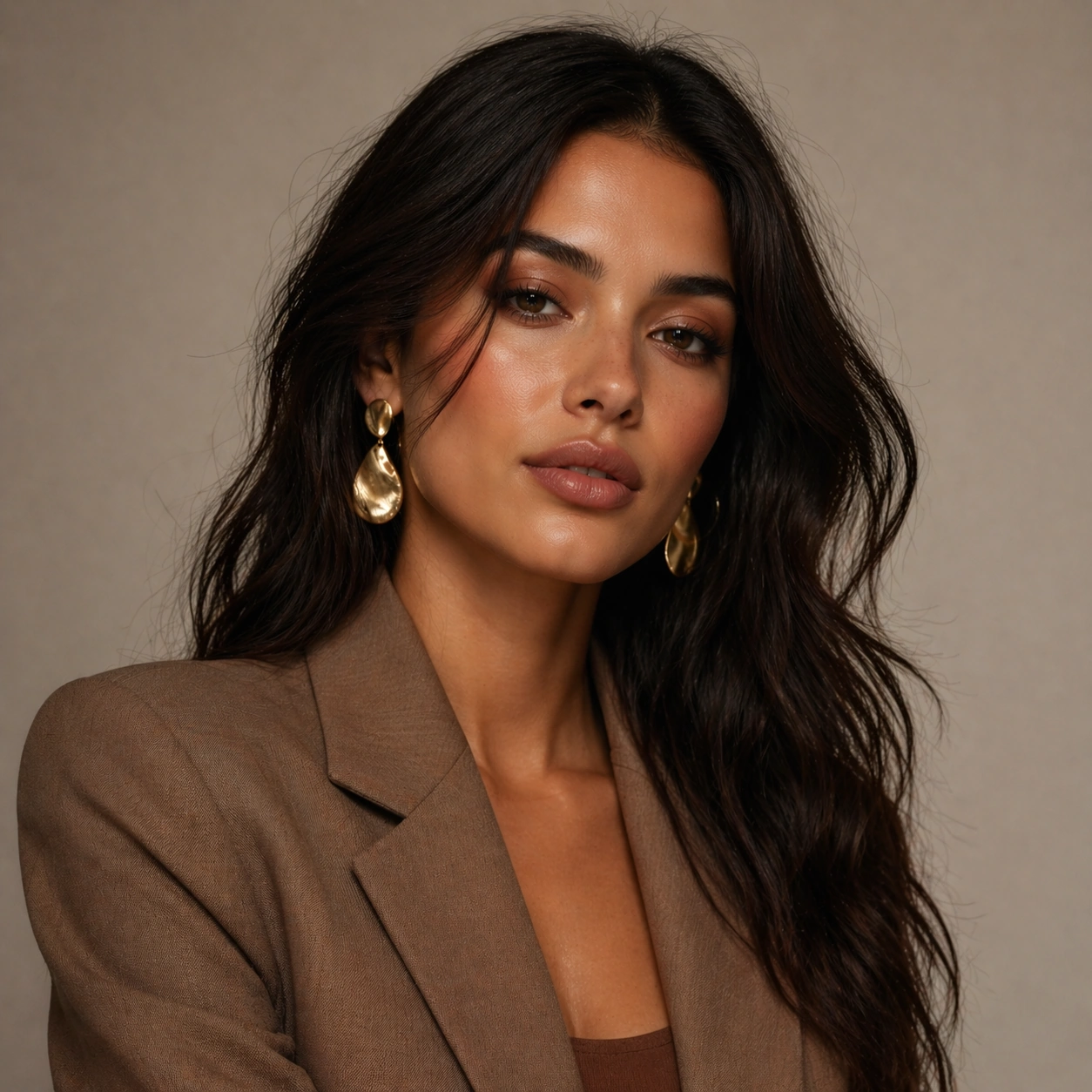
Example generated from “Same Model Fashion Tryon Campaign — Campaign Finish”
GPT Image 2en

Scene: A square commercial beauty-or-fashion image designed like a polished campaign proof for Same-Model Fashion Try-On Campaign. Keep the camera discipline clear and believable: portrait-oriented within the square, premium studio light, controlled tonal contrast, and enough surrounding negative space to feel like an ad layout without relying on readable typography. The image should look production-ready, with realistic skin, hair, fabric, and makeup rendering that supports identity locking instead of distracting from it. Subject: Build the frame around one clearly recognizable person. Campaign Finish should feel like a specific transformation step that turns the locked identity into a polished campaign-ready hero frame. The face structure, age, body proportions, and general camera position must stay consistent with the same-person premise of Lock one model's identity while rotating wardrobe, styling direction, and seasonal looks for fashion commerce, editorial, and campaign usage.. Styling, wardrobe, grooming, makeup, hair, or pose can evolve, but the viewer must believe it is unquestionably the same subject across the whole theme. Use a premium editorial-commercial tone rather than a casual portrait session. Important details: The visual test is identity consistency under change. Preserve stable bone structure, eye spacing, nose shape, lip volume, skin tone family, and believable texture response. Let the transformation be visible through styling choices instead of facial drift. This theme studies multi-image-reference, editing-workflow, commercial-mockup, photorealism through a production-ready visual system. Make the composition clean enough for client review, with professional grooming fidelity and enough detail for salon, beauty, or fashion decision-making. Aim for clear hierarchy, polished craft, and immediately usable campaign logic. Use case: Same-Model Fashion Try-On Campaign series study 4/4. Constraints: No readable text, no watermark, no logos, preserve exact 1:1 aspect ratio, no face drift, no inconsistent age shift, no extra limbs, no duplicate person, no asymmetric eye placement, no beauty-editorial chaos.

Example generated from “Same Model Fashion Tryon Campaign — Before After Board”
GPT Image 2en

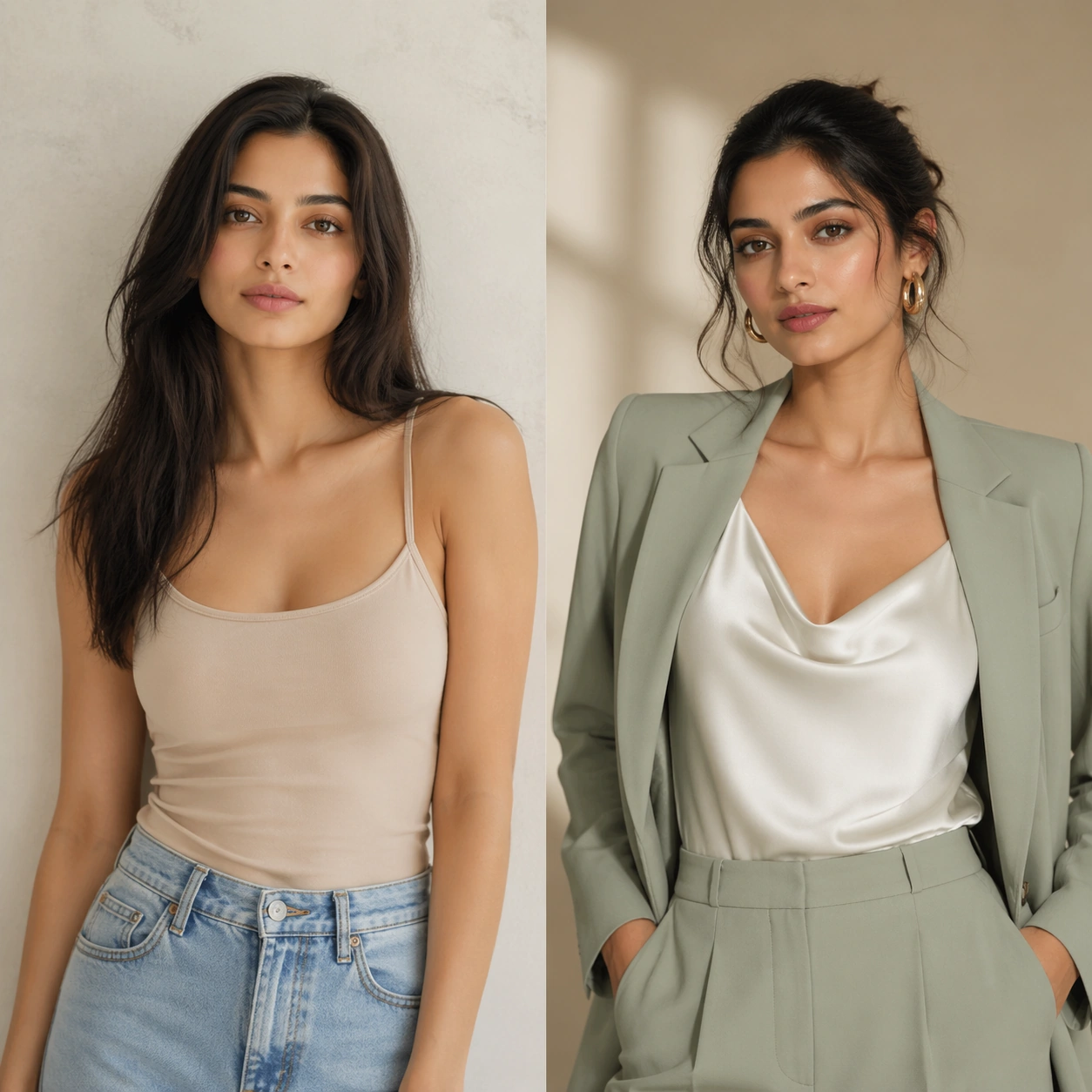
Scene: A square commercial beauty-or-fashion image designed like a polished campaign proof for Same-Model Fashion Try-On Campaign. Keep the camera discipline clear and believable: portrait-oriented within the square, premium studio light, controlled tonal contrast, and enough surrounding negative space to feel like an ad layout without relying on readable typography. The image should look production-ready, with realistic skin, hair, fabric, and makeup rendering that supports identity locking instead of distracting from it. Subject: Build the frame around one clearly recognizable person. Before After Board should feel like a specific transformation step that a disciplined comparison layout making transformation logic instantly legible. The face structure, age, body proportions, and general camera position must stay consistent with the same-person premise of Lock one model's identity while rotating wardrobe, styling direction, and seasonal looks for fashion commerce, editorial, and campaign usage.. Styling, wardrobe, grooming, makeup, hair, or pose can evolve, but the viewer must believe it is unquestionably the same subject across the whole theme. Use a premium editorial-commercial tone rather than a casual portrait session. Important details: The visual test is identity consistency under change. Preserve stable bone structure, eye spacing, nose shape, lip volume, skin tone family, and believable texture response. Let the transformation be visible through styling choices instead of facial drift. This theme studies multi-image-reference, editing-workflow, commercial-mockup, photorealism through a production-ready visual system. Make the composition clean enough for client review, with professional grooming fidelity and enough detail for salon, beauty, or fashion decision-making. Aim for clear hierarchy, polished craft, and immediately usable campaign logic. Use case: Same-Model Fashion Try-On Campaign single study 1/5. Constraints: No readable text, no watermark, no logos, preserve exact 1:1 aspect ratio, no face drift, no inconsistent age shift, no extra limbs, no duplicate person, no asymmetric eye placement, no beauty-editorial chaos.

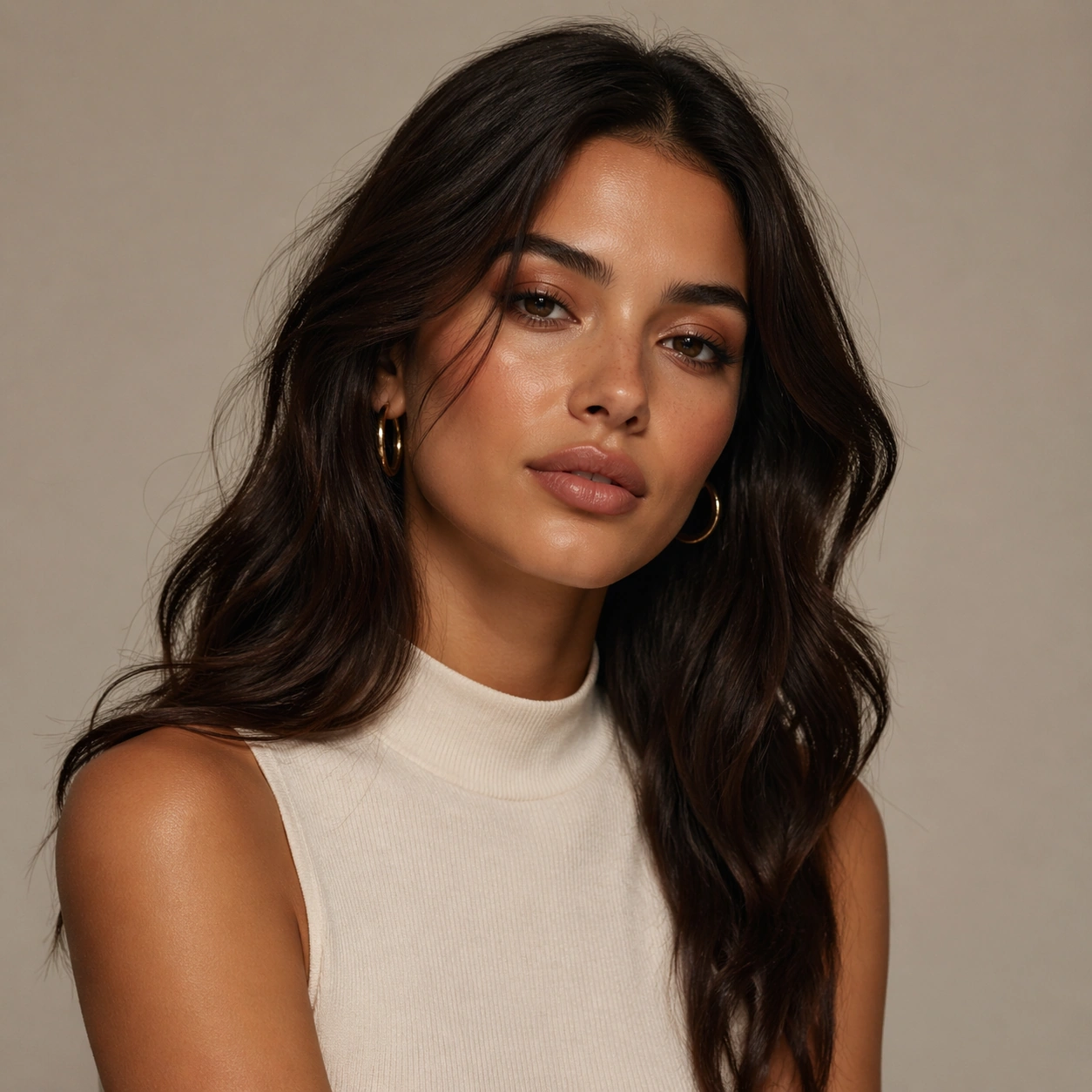
Example generated from “Same Model Fashion Tryon Campaign — Detail Close-up”
GPT Image 2en

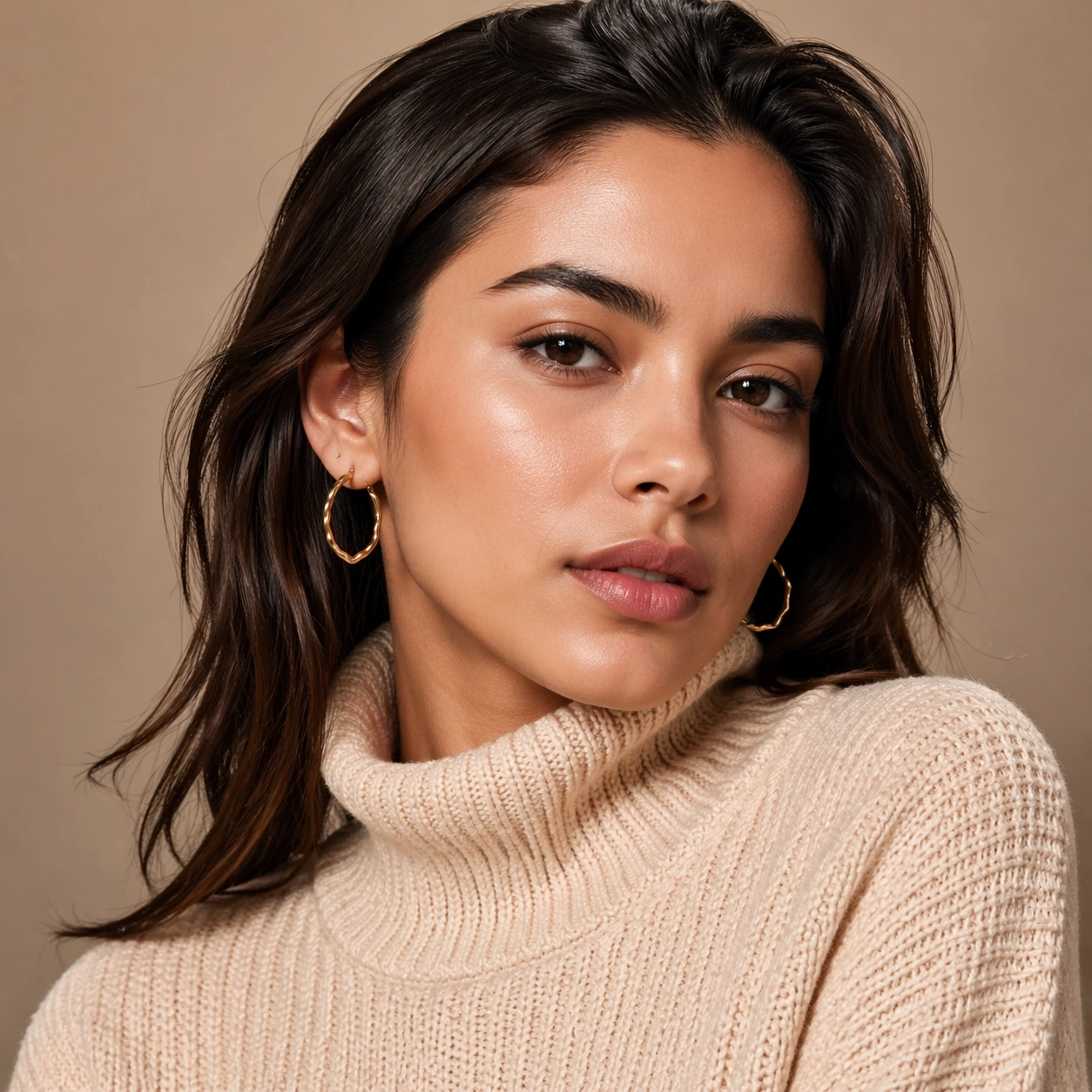
Scene: A square commercial beauty-or-fashion image designed like a polished campaign proof for Same-Model Fashion Try-On Campaign. Keep the camera discipline clear and believable: portrait-oriented within the square, premium studio light, controlled tonal contrast, and enough surrounding negative space to feel like an ad layout without relying on readable typography. The image should look production-ready, with realistic skin, hair, fabric, and makeup rendering that supports identity locking instead of distracting from it. Subject: Build the frame around one clearly recognizable person. Detail Close-up should feel like a specific transformation step that a close-up study focusing on texture, finish, and precise beauty or garment details. The face structure, age, body proportions, and general camera position must stay consistent with the same-person premise of Lock one model's identity while rotating wardrobe, styling direction, and seasonal looks for fashion commerce, editorial, and campaign usage.. Styling, wardrobe, grooming, makeup, hair, or pose can evolve, but the viewer must believe it is unquestionably the same subject across the whole theme. Use a premium editorial-commercial tone rather than a casual portrait session. Important details: The visual test is identity consistency under change. Preserve stable bone structure, eye spacing, nose shape, lip volume, skin tone family, and believable texture response. Let the transformation be visible through styling choices instead of facial drift. This theme studies multi-image-reference, editing-workflow, commercial-mockup, photorealism through a production-ready visual system. Make the composition clean enough for client review, with professional grooming fidelity and enough detail for salon, beauty, or fashion decision-making. Aim for clear hierarchy, polished craft, and immediately usable campaign logic. Use case: Same-Model Fashion Try-On Campaign single study 3/5. Constraints: No readable text, no watermark, no logos, preserve exact 1:1 aspect ratio, no face drift, no inconsistent age shift, no extra limbs, no duplicate person, no asymmetric eye placement, no beauty-editorial chaos.

Example generated from “Same Model Fashion Tryon Campaign — Promo Poster”
GPT Image 2en

Scene: A square commercial beauty-or-fashion image designed like a polished campaign proof for Same-Model Fashion Try-On Campaign. Keep the camera discipline clear and believable: portrait-oriented within the square, premium studio light, controlled tonal contrast, and enough surrounding negative space to feel like an ad layout without relying on readable typography. The image should look production-ready, with realistic skin, hair, fabric, and makeup rendering that supports identity locking instead of distracting from it. Subject: Build the frame around one clearly recognizable person. Promo Poster should feel like a specific transformation step that a polished advertisement frame turning the same identity into a finished commercial visual. The face structure, age, body proportions, and general camera position must stay consistent with the same-person premise of Lock one model's identity while rotating wardrobe, styling direction, and seasonal looks for fashion commerce, editorial, and campaign usage.. Styling, wardrobe, grooming, makeup, hair, or pose can evolve, but the viewer must believe it is unquestionably the same subject across the whole theme. Use a premium editorial-commercial tone rather than a casual portrait session. Important details: The visual test is identity consistency under change. Preserve stable bone structure, eye spacing, nose shape, lip volume, skin tone family, and believable texture response. Let the transformation be visible through styling choices instead of facial drift. This theme studies multi-image-reference, editing-workflow, commercial-mockup, photorealism through a production-ready visual system. Make the composition clean enough for client review, with professional grooming fidelity and enough detail for salon, beauty, or fashion decision-making. Aim for clear hierarchy, polished craft, and immediately usable campaign logic. Use case: Same-Model Fashion Try-On Campaign single study 4/5. Constraints: No readable text, no watermark, no logos, preserve exact 1:1 aspect ratio, no face drift, no inconsistent age shift, no extra limbs, no duplicate person, no asymmetric eye placement, no beauty-editorial chaos.