Originaldokument
GPT Image 2 · en
Scene:
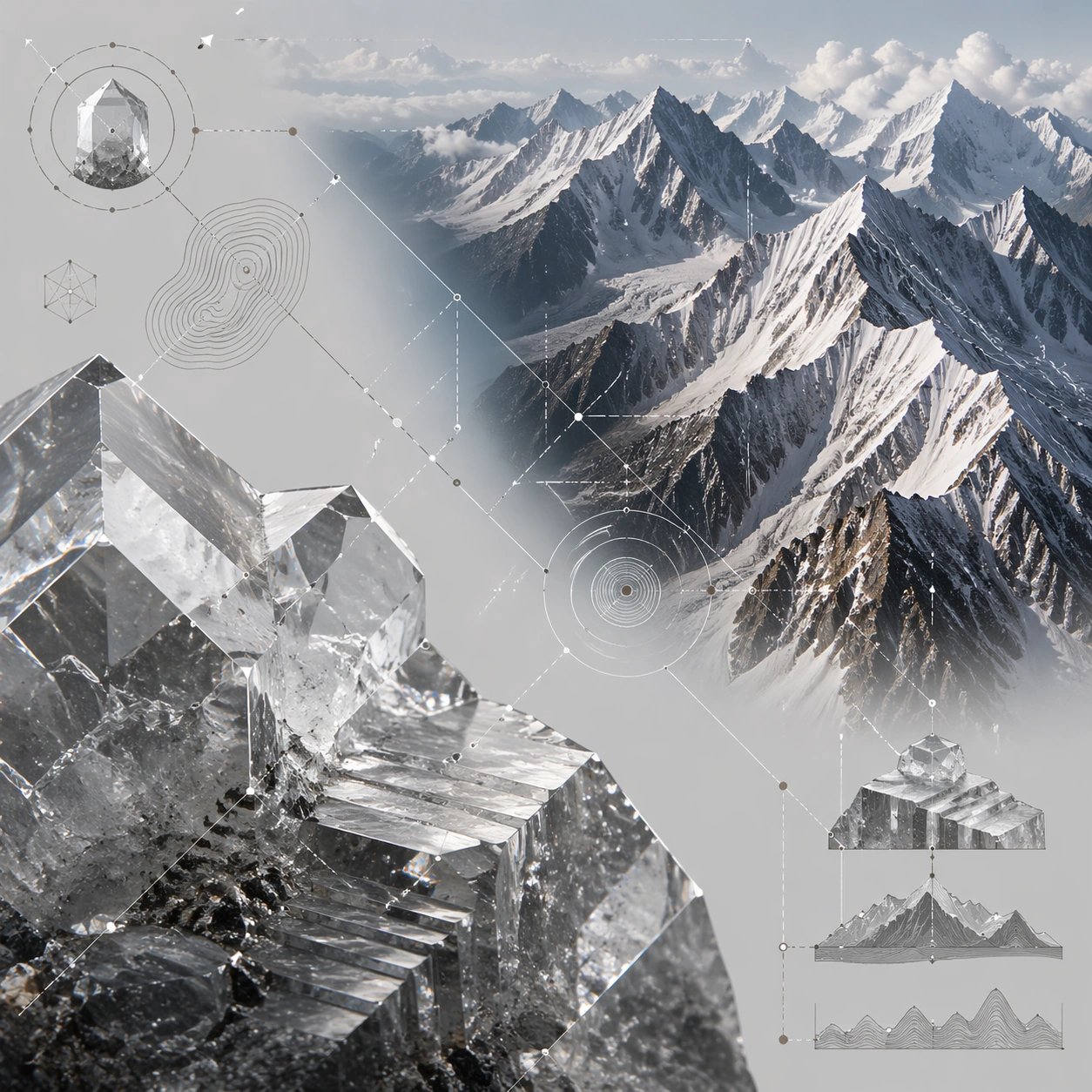
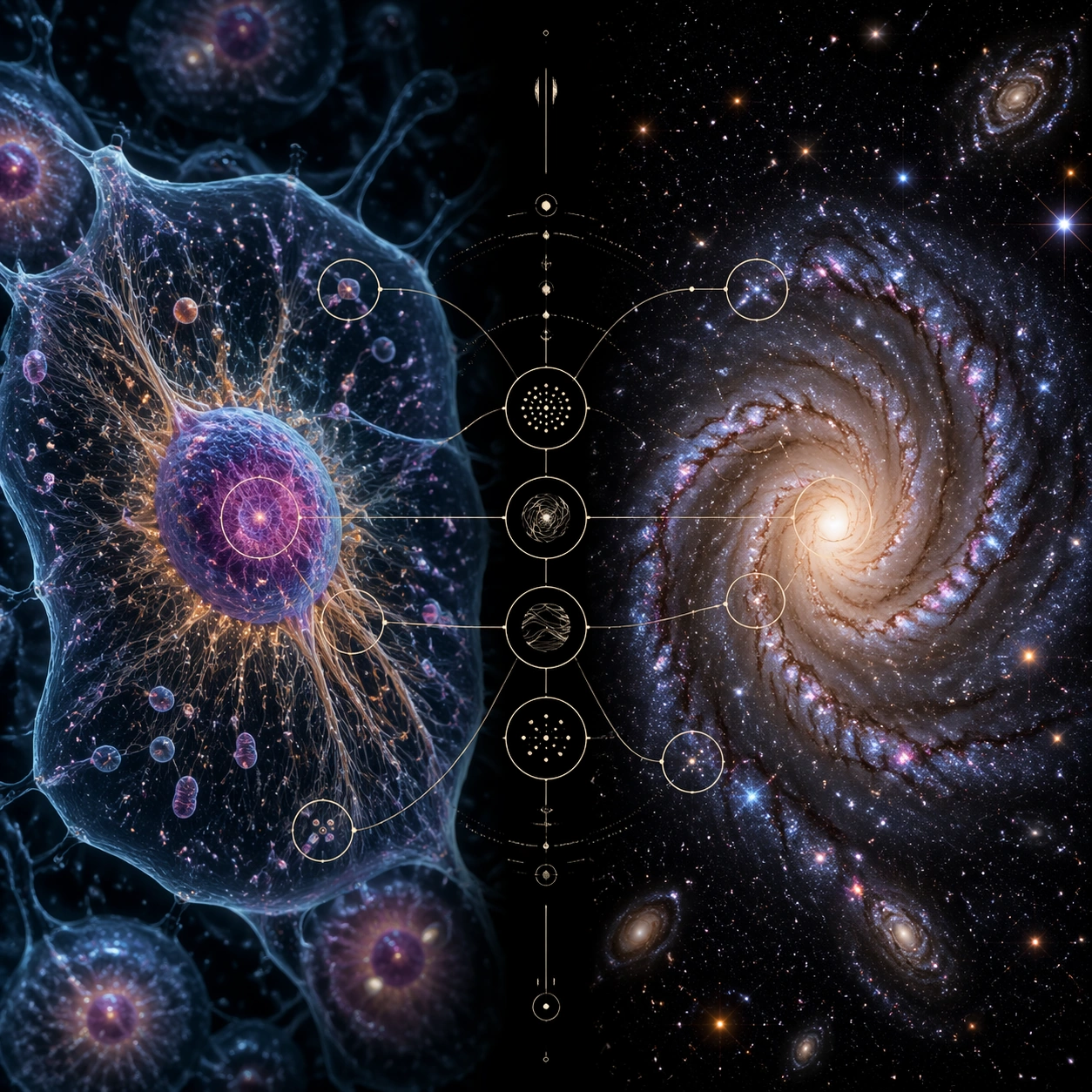
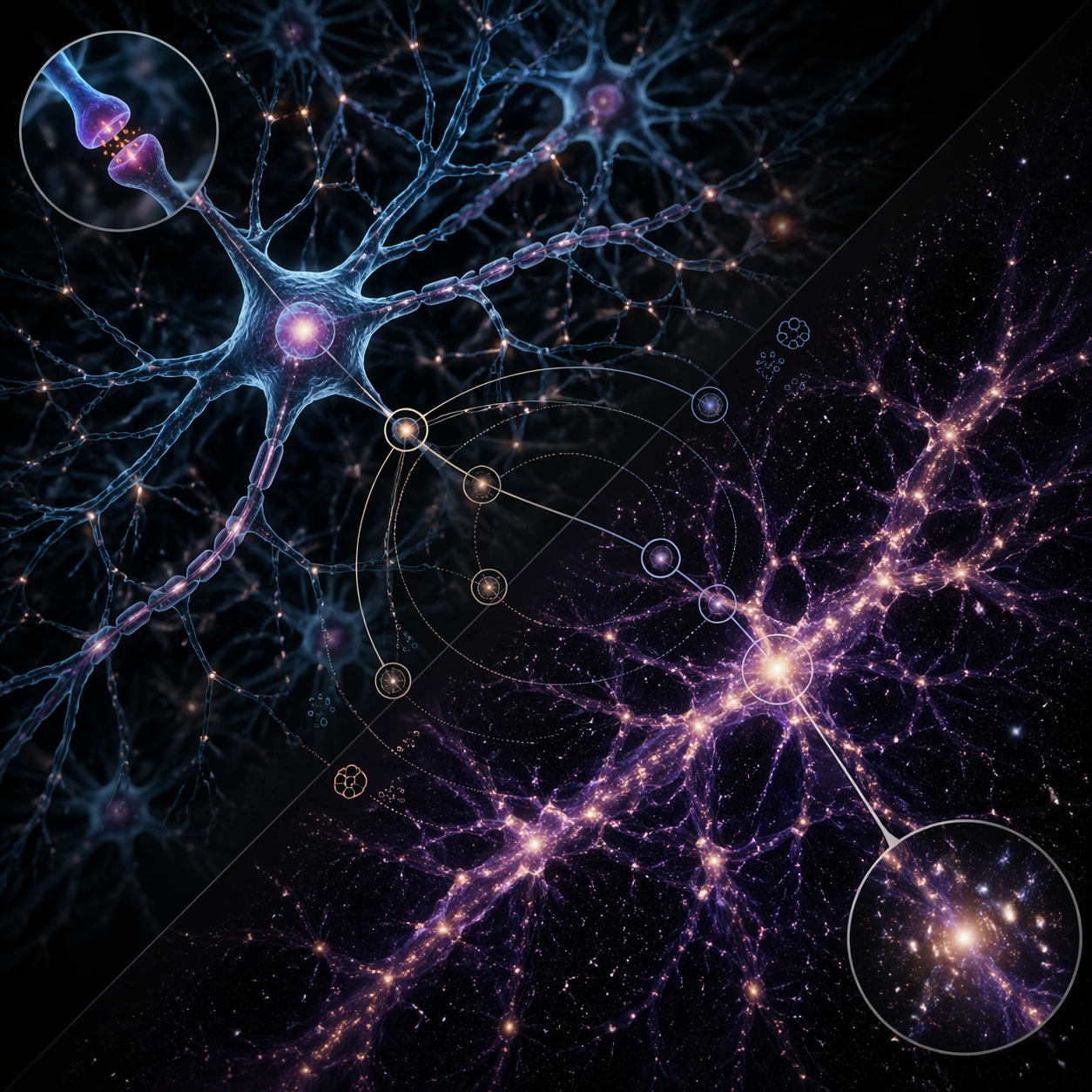
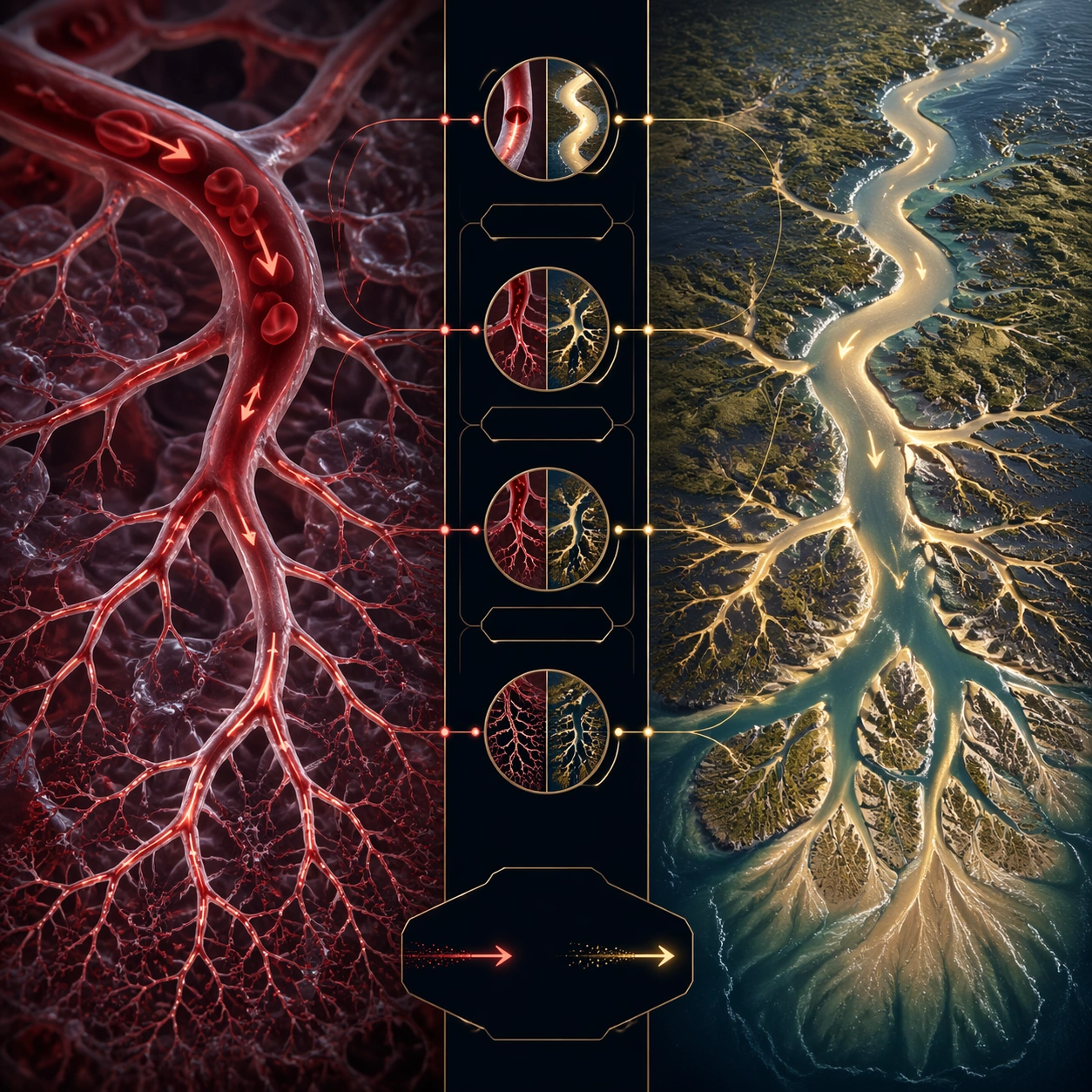
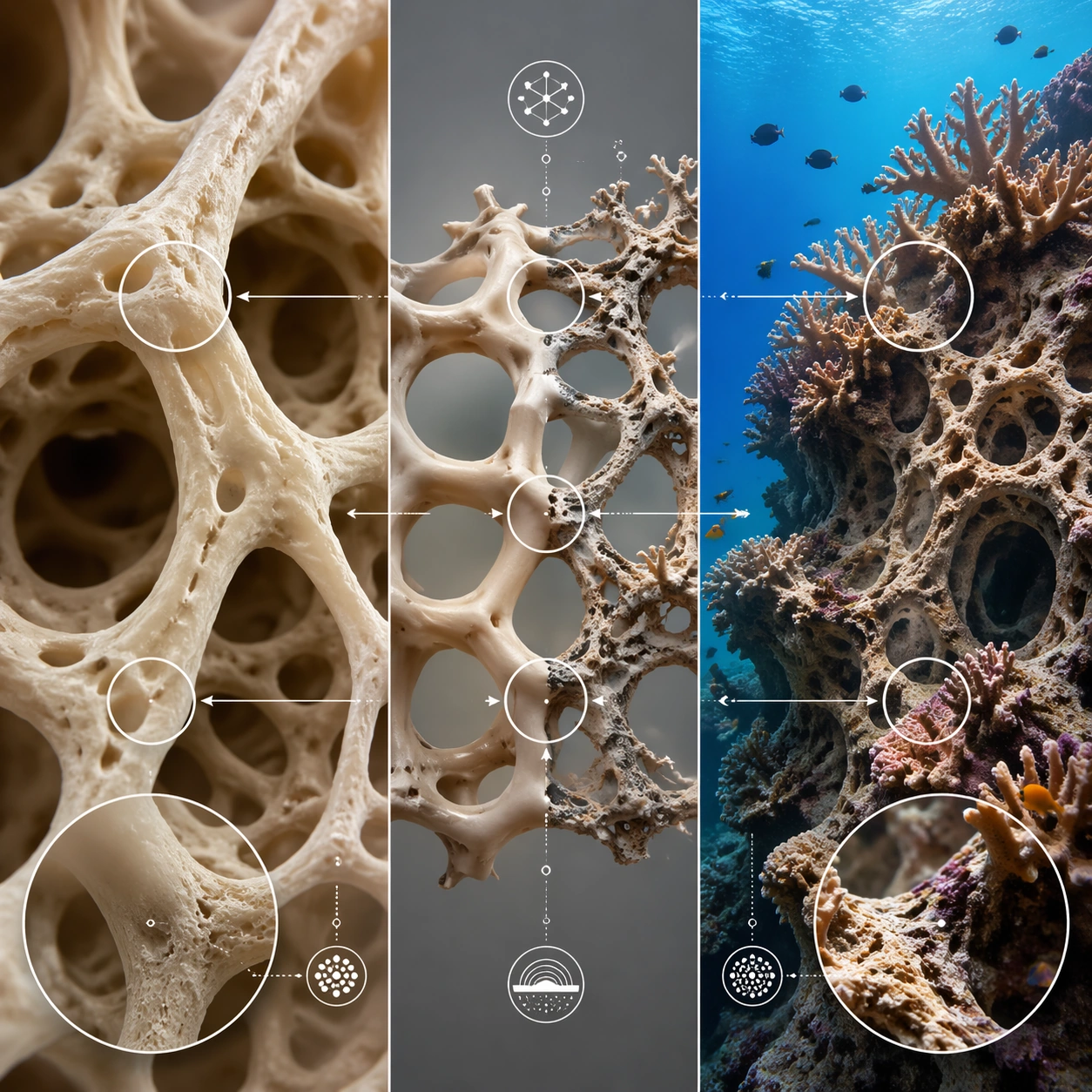
A square photorealistic science infographic with a soft studio-gray background and a balanced triptych structure: microscopic bone lattice on the left, central transition column, coral reef architecture on the right. The layout uses thin white dividers, translucent callout circles, and small non-readable glyph marks. Lighting is sculptural and tactile, emphasizing porous material surfaces.

Subject:
Left panel: trabecular bone seen at high magnification, with ivory struts, porous cavities, subtle mineral grain, and realistic shadowing. Right panel: a coral reef wall photographed underwater, with branching coral, porous limestone, small fish silhouettes, and blue water depth. The central transition column blends the two structures as matched load-bearing lattices, showing how voids and struts create strength and habitat.

Important details:
The comparison should be material-driven, not merely decorative. Match pore scale, branching angles, and light direction across both panels. The bone must not look like dead coral, and the coral must remain alive and underwater; the bridge is about architecture and porosity. Use small arrows and magnifier circles to point at analogous voids, arches, and struts without text. Keep the composition calm, premium, and scientifically plausible.

Use case:
Micro-Macro Infographic single study 4/8, comparing trabecular bone structure with coral reef architecture and porous load paths.

Constraints:
No readable text, no watermark, no logos, preserve exact 1:1 aspect ratio, no gore, no medical diagnosis, no dead reef imagery, no fake labels, no chaotic aquarium scene, no low-detail sponge texture, no overlaid paragraphs.
Verwendung
- Den vollständigen Original-Prompt einschließlich Parametern kopieren.
- Motiv, Text und Komposition an die eigenen Anforderungen anpassen.
- Ein kompatibles externes Werkzeug nutzen; Zugangsbedingungen und Ergebnis prüfen.
Vor dem Start
- Prüfen, ob ein Referenzbild nötig ist. Kompatibilität belegt nicht das tatsächlich verwendete Modell.
- Namen, Zahlen und Bildtexte prüfen; Modellversionen können andere Ergebnisse liefern.