
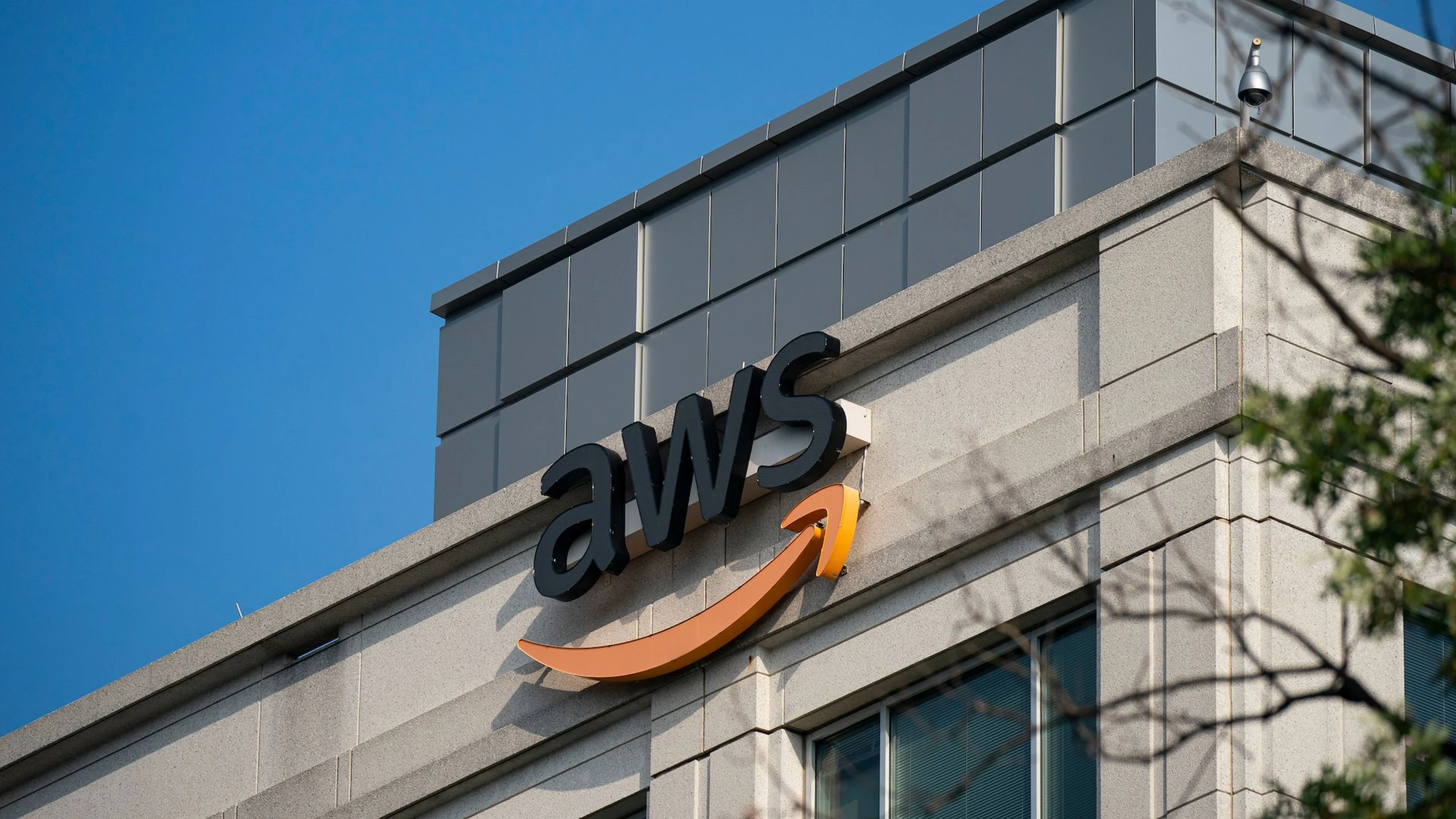
Amazon is offering more than $1 billion in additional community investment over five years while warning that local resistance to data centers could undermine the United States' position in artificial intelligence. The pairing reveals a physical constraint on the AI expansion: buying servers does not secure permission to use land, connect power, obtain cooling water or run equipment near homes. AWS needs local approval as well as capital.
In an October 2 post, AWS chief executive Matt Garman compared computing infrastructure with transportation, electrification and the internet. He said more than 100 data-center moratoriums were being considered nationwide and argued that adopting them would damage economic growth, national security and technological leadership for generations. That is Amazon's strategic argument, not a demonstrated calculation of the capacity lost to each proposed restriction.
What the $68 billion disruption figure actually counts
The headline investment figure comes from Data Center Watch, as reported by Bloomberg, rather than an inventory of Amazon's own projects. It counted 45 proposed U.S. projects worth a combined $68 billion blocked or delayed by local opposition between April and June 2026. In the first quarter, at least 75 projects worth roughly $130 billion encountered delays or blocks. These are industry-wide proposed investment values, not exclusively AWS facilities or proof of permanent economic loss.
A delay differs from cancellation. A project may return with a changed design, conditions or location; spending may move within the United States or adapt to available energy. Buildings, land, electrical equipment, servers and future multiyear phases can all contribute to a project's announced value. That total is not local income: benefits retained locally depend on taxes, employment, purchasing and infrastructure agreements.
Repeated delays can nevertheless constrain real capacity. Accelerators need memory, storage, networks, electricity, cooling and an approved building. AI training creates substantial demand, while serving models to millions of users sustains it. AWS competes with Microsoft Azure and Google Cloud to supply model developers, enterprises, agents and government workloads. Customers also need particular regions for latency, regulation, data residency, availability and disaster recovery; a facility elsewhere is not always a direct substitute.
Independent coverage cited approximately $220 billion in Amazon's expected 2026 capital spending, including data centers and other technology investments—not solely AI infrastructure. Garman links domestic computing to government agencies, defense suppliers, researchers, critical industries and control of sensitive workloads. His argument strengthens when many developments meet the same obstacles, but no public formula converts one local pause into a specified national-security loss. It also assumes blocked capacity cannot be replaced or redesigned without material cost.
Built Together specifies benefits, not automatic approval
Amazon says Built Together adds more than $1 billion over five years to over $1 billion invested in data-center communities during the previous three years. Host communities, local nonprofits and community foundations are to help direct flexible funding toward education, training, household energy improvements, water conservation, public facilities, affordable housing, roads and emergency equipment. A rural county's priorities may differ from a suburb's; the framework is not a single national allocation formula.
The education commitment targets an estimated 300,000 community-college students in host communities. Amazon plans to cover remaining expenses after other financial aid, not provide unrestricted scholarships to every resident. Its Modular Training Centers offer short certifications for electrical, mechanical, fiber and other skilled trades connected to construction and operation. Three centers are operating, six are under development and another 16 are planned. Each is designed to train approximately 2,000–4,000 people annually through four-to-16-week programs.
Energy-efficiency upgrades target more than 300 schools and public buildings and over 30,000 homes. Amazon estimates participating households could save about $700 annually, depending on local energy prices and building conditions. Insulation, heat pumps, batteries and solar installations can reduce participants' bills, but that does not establish that a new data center leaves systemwide electricity costs unchanged.
The five-year addition averages more than $200 million annually—roughly one-tenth of one percent of the company's projected 2026 capital spending. The comparison has limits because community support and capital investment serve different purposes and periods. Still, it explains the competing interpretations: meaningful benefits responding to real needs, or a commercial cost of securing construction. Both can be true. Neither settles who controls the scale, pace or conditions of development.
Employment and tax claims need their own accounting
Training can ease shortages of electricians, cooling technicians, fiber specialists, construction workers and equipment operators. Credentials can remain useful in manufacturing, utilities and telecommunications beyond one campus. But thousands of construction roles do not equal thousands of permanent operating jobs. Duration, wages, location and whether jobs go to residents, regional contractors or transferred employees affect the value a host community retains.
Garman cited St. Joseph County, Indiana, where Amazon expects to pay more than $3 billion in taxes on land previously generating $1.2 million. That is the company's favorable example, not a universal result or a basis for treating unlike time periods as a normalized comparison. Incentives can reduce property-tax collections, while roads, substations, emergency services and utility infrastructure create public costs.
A 2023 watchdog analysis estimated that five Amazon data centers in Morrow County, Oregon, would receive roughly $1 billion in property-tax breaks over 15 years. Those projects could still create net value, as Amazon and officials may argue, but the tradeoff requires transparent accounting. Grants, college assistance and home improvements should be measured separately from tax incentives, utility obligations and legally required mitigation.
Microsoft provides a negotiating comparison: it promised to cover electricity costs, minimize water use, create local jobs and avoid seeking local property-tax abatements. Amazon calls itself a major local taxpayer but has not made the same broad commitment to reject tax incentives. Its community program therefore should not be mistaken for matching every competitor's policy.
Efficiency averages cannot answer a local resource question
Amazon says its average data center uses less than 13,000 gallons of water daily, its facilities are seven times more water-efficient than the industry average, and backup generators remain idle 99.9 percent of the time. Garman uses those figures to challenge claims that facilities exhaust water, cause every electricity increase, generate extreme pollution or give communities nothing. They are company claims and averages, not measurements of every campus.
Water sources, cooling systems, weather, workloads and grid conditions differ. Even a rarely used generator can concentrate noise and emissions during testing or an outage; Amazon has promised lower-emission backup generators. A low operating-time percentage does not eliminate that local concern. Likewise, the reported global 2025 power usage effectiveness of 1.14 compares total facility energy with computing-equipment energy. Nearer one means less cooling, lighting and support overhead—not low total consumption or proof a regional grid can sustainably supply it.
Amazon also says it was 75 percent of the way toward its 2030 water-positive goal across data centers. The goal means returning more water through conservation and replenishment than it consumes. Portfolio progress does not guarantee a neutral impact at each location: water restored in one watershed does not automatically offset stress in another.
On electricity, Amazon says its contracts cover the cost of serving facilities, with state utility regulators reviewing rates. It also joined technology companies promising the federal government to pay for power and required grid upgrades. Yet bills combine generation, transmission, aging equipment, fuel prices, storm damage, regulation and demand. Residential rates rose faster than the national average in several major data-center states in 2025; correlation does not prove the facilities caused those increases. Phased campus growth and changing AI workloads also make final demand uncertain.
Transparency has a boundary, and opposition has evidence
Amazon's new commitment stops future nondisclosure agreements with government agencies; it does not terminate all existing ones. Microsoft said it would end existing government agreements, a broader policy. Amazon says many previous restrictions lose relevance once projects become public. That explanation does not erase the question of whether residents can inspect incentives, infrastructure obligations and environmental assumptions before decisions.
The company promises annual energy use, water use, efficiency data and carbon-free electricity shares. Their usefulness will depend on geographic detail. Site or regional consumption, peak demand, water sources, cooling methods and performance against original projections would let residents compare forecasts with operations. Audited measurements and consistent definitions would carry more weight than global ratios and permit comparison with other operators. These are tests for the promised disclosures, not data already delivered by the announcement.
Opposition is not confined to a few activists. An Economist/YouGov survey cited by GeekWire found 63 percent of Americans would oppose a data center in their own community. Reported concerns include electricity prices, water, noise, pollution, land use and limited permanent employment. Residents can experience construction traffic, land conversion and transmission projects even if they never work at the site or directly buy AWS services.
Amazon argues some opposition involves misinformation or foreign influence. OpenAI and X identified China-linked accounts discussing U.S. data centers, but PolitiFact found limited evidence that foreign-linked posts reached a broad audience. That is grounds to investigate influence, not to attribute most local objections to it. Treating all concerns as manufactured risks worsening the trust problem; Amazon itself acknowledges some apprehension is reasonable.
The next test is what becomes enforceable
More than 100 proposed moratoriums are not 100 identical enacted bans: duration, scope, legal status and support vary. A temporary pause can allow zoning and utility rules to develop; a broad prohibition can exclude a region for years. Clear approval standards replacing pauses would suggest communities seek conditions rather than a permanent halt. Continued resistance after Built Together would pressure Amazon to reconsider scale, location, power sourcing or local governance.
Voluntary promises can change with budgets, leadership and economic conditions. Permit conditions, utility tariffs, public reporting requirements and community-benefit agreements can establish stronger accountability: who funds generation, substations, transmission, water treatment, roads, emergency services and reserve capacity; what happens when a campus expands or exceeds resource forecasts; and what follows if promised programs are late. Community support is not a substitute for these obligations.
Amazon must translate a national infrastructure argument into verifiable local outcomes. Approvals, detailed resource reporting and binding terms will reveal whether Built Together changes results rather than only messaging. The $68 billion figure makes local consent visible in the AI supply chain, but it cannot decide whether every project deserves approval—or whether every pause is justified.
Sources
Data Center Watch figures reported by Bloomberg · Amazon's Built Together announcement · Associated Press coverage · GeekWire reporting and survey context · PolitiFact's influence-claim review · Tom's Hardware reporting