
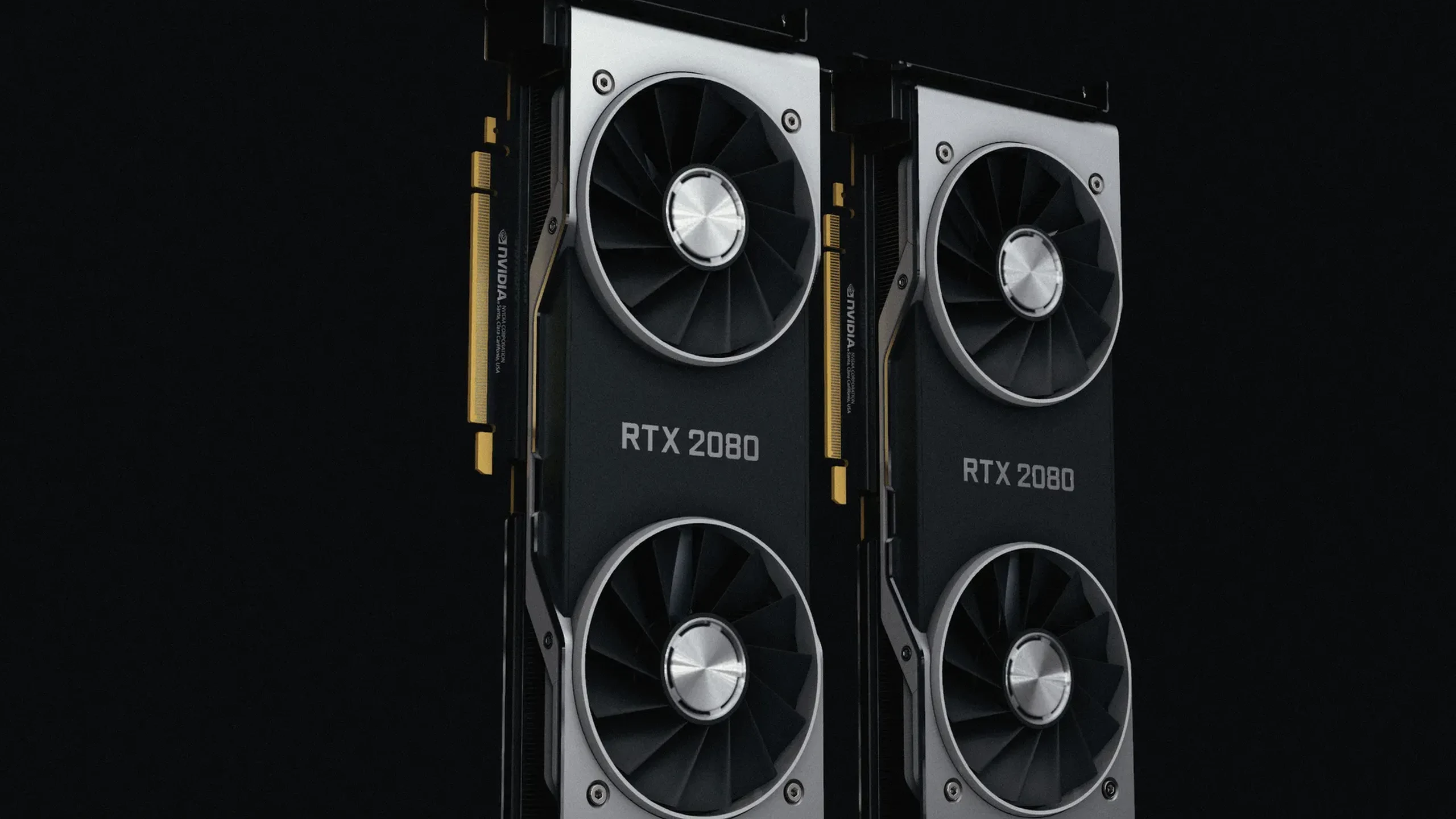
NVIDIA already has several reasons to want Reflection AI to succeed: it is an investor, infrastructure partner and collaborator on open models. The reported possibility of owning more of the company changes the question. A supplier can benefit from many laboratories buying its computing platform; an owner also has an interest in one laboratory winning.
An October 10 report described preliminary discussions that might produce a full purchase, recruitment of the team with a technology license, or additional investment. At the time of that report, neither party had announced an agreement or terms. These are alternative outcomes, not three completed transactions, and repeating the report does not independently confirm a deal.
Beam makes the timing significant, but its numbers are not deployment proof
Reflection introduced Beam on October 5, only days before the talks became public. The company describes a sparse mixture-of-experts model aimed at coding, reasoning and agentic work, with 501 billion total parameters and 23 billion active for a request. Selective activation reduces active computation; it does not erase the need to hold and serve a much larger model.
Reflection says pretraining used 23.8 trillion tokens. Its reinforcement-learning phase reportedly generated more than 100 million rollouts using 10,500 NVIDIA GB300 GPUs over four weeks. These are developer-reported training figures, not independently verified evidence that Beam will operate reliably or economically on every enterprise workload.
The announced package promises weights under Apache 2.0 and documentation and software for running, evaluating and fine-tuning. Reflection also described red-team testing and final evaluations. Introducing a model and promising a release are not the same as independent reviewers receiving every promised artifact and reproducing its results.
The relationship therefore has a concrete technical basis, not just acquisition speculation. The team has worked at substantial scale on NVIDIA’s newest accelerator generation. Closer collaboration could connect model architecture with memory, networking, serving optimization and deployment support. But NVIDIA can already gain from that work when Reflection remains an independent customer.
Three transaction structures would change control differently
A full acquisition could put Reflection’s roadmap, staff and product commitments under NVIDIA, with tighter coordination around inference and future hardware. It would also bring integration costs and a direct commercial interest in Beam’s adoption over competing models.
A team-hiring and licensing arrangement would emphasize people and selected technology rather than necessarily transferring the whole company. That leaves distinct questions about Reflection’s remaining organization, existing customers, leadership and responsibility for maintaining released weights, documentation and future versions. Hiring a team does not by itself settle those obligations.
Increasing an investment could deepen influence without the same ownership integration. Reflection might preserve more formal independence and continue working with multiple infrastructure providers. None of the reporting establishes which form NVIDIA prefers or whether discussions will produce any transaction.
Resources are not the only execution variable. A research startup may gain hardware expertise and support inside a larger company while acquiring approval layers and competing priorities. Retaining researchers does not guarantee retaining their experimentation speed or the mission that attracted them.
Open weights expand the hardware market without eliminating operating work
A managed API lets customers send requests while the provider operates the model, safeguards, updates and underlying infrastructure. Customers accept its availability, pricing, geographical coverage, model changes and data-handling terms in exchange for less operational work.
Downloadable weights make another bargain possible: local servers, cloud partners or national computing infrastructure, with customization and tighter control over data location and intellectual property. Governments and regulated organizations may value that control. It still requires security, evaluation, monitoring, serving expertise and sufficient memory and networking.
Open-weight is not automatically fully open source. Numerical parameters, code, training recipes, datasets and evaluation tools can have different disclosure and use conditions. The rights attached to released materials also differ from a corporate owner’s decisions about what to release next.
Reflection’s proposed AI-factory approach combines models, computing and operating software for localized environments. Its descriptions of national-laboratory, enterprise and proposed South Korean sovereign-cloud deployments remain subject to execution and customer validation, rather than proof of a universally finished service.
This creates infrastructure demand beyond a handful of centralized model providers. Corporate data centers, specialist hosts, clouds and regional projects all need accelerators, networking, libraries, reference architectures and support. NVIDIA can benefit when a customer chooses open weights or a closed service; both require computing.
Operating the model is only part of operating an application. Documents, permissions, retrieval, evaluations and human review still determine whether its answers are useful and appropriate. A governed personal or team knowledge base illustrates why control of parameters does not automatically give control of the complete information system.
The coalition makes neutrality more valuable—and ownership more sensitive
NVIDIA launched the Nemotron Coalition in March 2026 with Reflection, Mistral, Perplexity, Black Forest Labs, Cursor, LangChain, Sarvam and Thinking Machines Lab among initial participants. The stated approach pools research, data, computation and development expertise across laboratories, rather than placing every bet on one closed provider.
NVIDIA also develops Nemotron and other open models spanning agents, speech, robotics, physical systems and biomedicine. Ownership of Reflection would add another route into the model layer, beside internal development, optimization and support for independent partners.
That broader network is the strategic constraint. Partners share technical information and depend on optimization tools, deployment support and computing resources. They would need confidence that collaboration does not advantage an owned competitor. Organizational boundaries and continued support for rival models would matter as much as Beam’s own performance.
Potential concerns include preferential optimization, bundling or unequal technical access, particularly given NVIDIA’s hardware position. They could attract customer or regulatory scrutiny; the source supplies no evidence that NVIDIA plans discriminatory conduct. An acqui-hire would not automatically remove questions about talent, licenses and access.
If independent laboratories instead seek closer chip or cloud alternatives, deeper integration could weaken the common-platform position that made NVIDIA valuable to them. The question is not whether owning a model creates benefits, but whether those benefits exceed the trust and coordination costs.
Adoption will depend on useful independence, not a single leaderboard
Mistral and Reflection offer Western open-weight alternatives in a field also advanced by Meta, DeepSeek, Alibaba, Moonshot and Z.ai. Competition includes licensing, efficiency and deployment control, not only benchmark rank. Reflection need not win every general test if it is sufficiently capable for a customer’s coding, document or agent task and the control benefits justify operating it.
Other customers will prefer managed APIs. Maintaining large weights requires scarce skills, and providers such as OpenAI, Anthropic and Google can respond with stronger enterprise controls, private-deployment features, efficiency and contractual protections. Open infrastructure can complement those services without replacing them everywhere.
Safety also differs between the models. Local access lets defenders inspect and adapt systems, while downloaded weights are harder for the original developer to update, monitor or restrict. Closed services can block accounts and change safeguards; neither route guarantees safe outcomes. Capability, deployment controls and the balance between defensive adaptation and harmful automation still matter.
The next evidence has three parts: an official transaction description, delivery of Beam’s promised materials with reproducible independent use, and NVIDIA’s treatment of its other model partners. Long-running agent workflows, where small errors compound across tools and steps, need more than selected launch benchmarks.
At the point described by the reporting, the acquisition remained a possibility and practical portability remained something to demonstrate. NVIDIA can move further up the stack, but the value of that move depends on preserving an ecosystem in which independent builders still trust the platform beneath them.
Sources and related reading
Reported preliminary talks · Beam announcement · Nemotron Coalition · Related reading: personal and team knowledge bases · Open-weight competition