
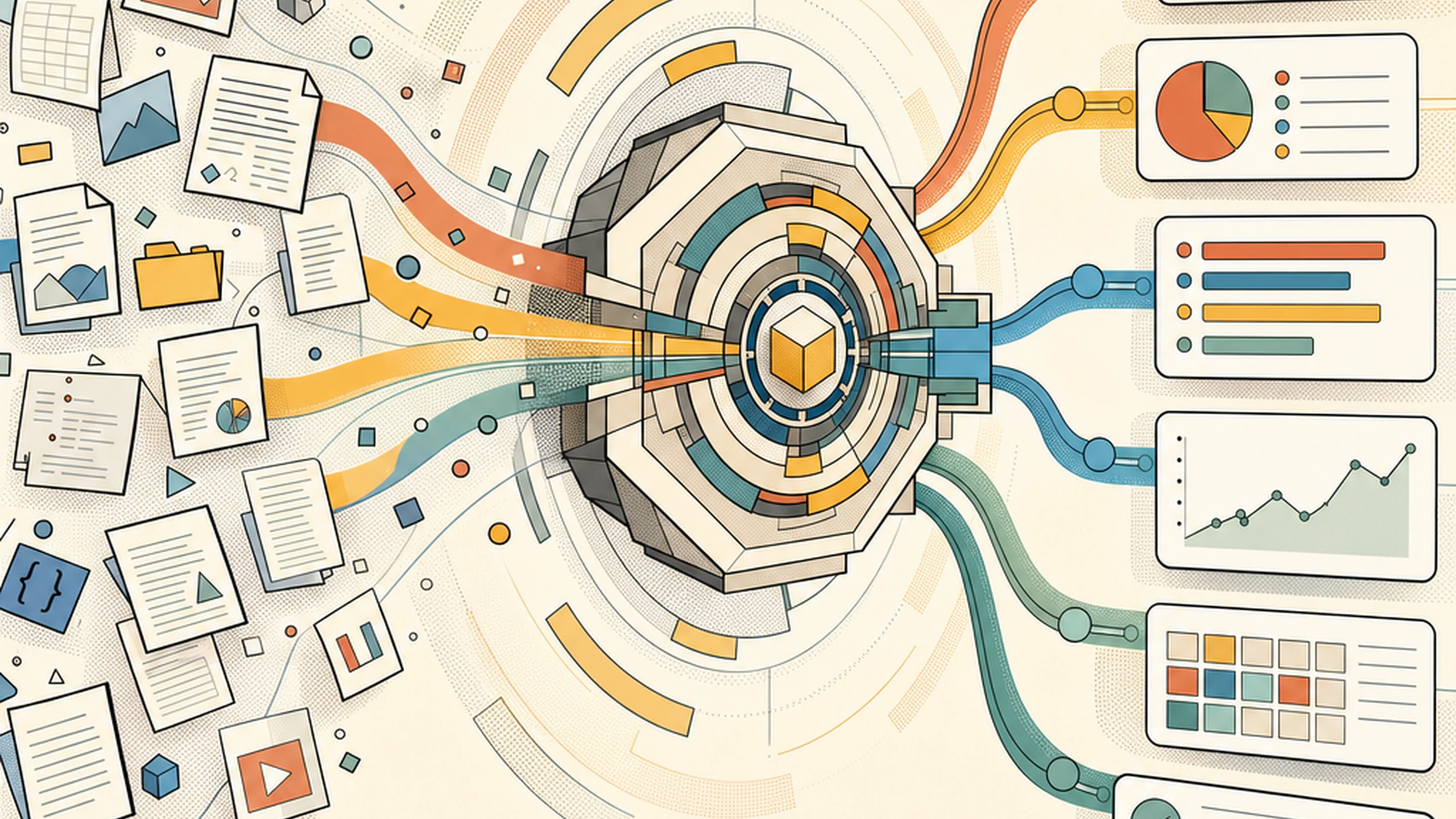
Asynchronous Collaboration: Optimizing Team Productivity with AI-Enhanced Workflows is easier to use when the concept is connected to a real decision rather than treated as another AI buzzword. This AI Tools Radar guide focuses on the working idea, the tradeoffs that matter, and the questions worth asking before you adopt a tool or workflow.
Asynchronous work AI refers to AI systems that support team collaboration without requiring simultaneous presence. These systems capture activity, surface relevant details, and complete routine steps so contributors can act at their own pace.
Distributed teams face delays when answers sit in one person's inbox or one meeting recording. AI reduces those delays by indexing past work and making it queryable on demand.
What Asynchronous Work AI Means in Practice. Asynchronous work AI combines capture, retrieval, and light task execution. It records what happens in tools and conversations, then answers questions or prepares outputs later.
The method differs from simple note apps because the AI layer actively connects information across sources. A team member in one time zone can ask about a prior decision and receive the relevant context without waking anyone else.
Core attributes include persistent memory across days or weeks, natural language queries, and the ability to generate drafts or summaries from stored content.
How Asynchronous Work AI Works. The process starts with continuous capture. Every document, chat thread, and meeting transcript enters a shared index without manual tagging.
Next comes retrieval. When someone needs background, the system matches the query against stored items and returns the most relevant excerpts with source links. Retrieval often relies on vector embeddings that map text to high-dimensional vectors for semantic similarity search, followed by retrieval-augmented generation (RAG) to synthesize grounded responses from the index.
Task execution forms the third layer. AI agents can draft updates, list action items, or prepare status reports using the same index.
Real-World Applications. Product teams use it to maintain project history across releases. A new member reviews past trade-offs before adding features. Acme Corp reduced meeting follow-up time by 40% using this approach.
Engineering groups apply it to code review context. Comments and decisions remain searchable months later without digging through chat archives.
Consulting practices rely on it for client handoffs. Background materials stay accessible so successors avoid repeating questions. A McKinsey report found async-first teams improved productivity by up to 25% (https://www.mckinsey.com/capabilities/people-and-organizational-performance/our-insights/the-future-of-work-after-covid-19).
The system also syncs conversation history from other AI tools, which reduces context loss when work moves between platforms. Research from Stanford's Human-Computer Interaction Group highlights similar knowledge-retrieval benefits in distributed teams (https://hci.stanford.edu/publications/2023/asynch-work.pdf).
Common Questions About Asynchronous Work AI. Q: Does asynchronous work AI require everyone to change their daily tools?
A: No. The approach works with existing calendars, documents, and chat apps through connectors that read activity without forcing new logins.
Q: How does privacy stay intact when AI indexes team content?
A: Leading systems keep data local or encrypted by default and allow admins to set retention rules per project. Google's approach to enterprise data controls
A: Data silos can emerge from incomplete integrations, and retrieval-based answers carry hallucination risks if source coverage is patchy.
Q: What is the first workflow most teams automate?
A: Meeting summaries and action-item extraction produce quick wins because they replace recurring manual notes.
Q: Can small teams benefit, or is this mainly for large organizations?
A: Small teams see gains first because fewer people means each saved hour compounds directly into faster delivery.
The practical test is whether this approach improves a repeatable piece of work without hiding its sources, costs, or failure modes. Start with a representative task, keep a human checkpoint where mistakes matter, and reassess the result as models and products change.