
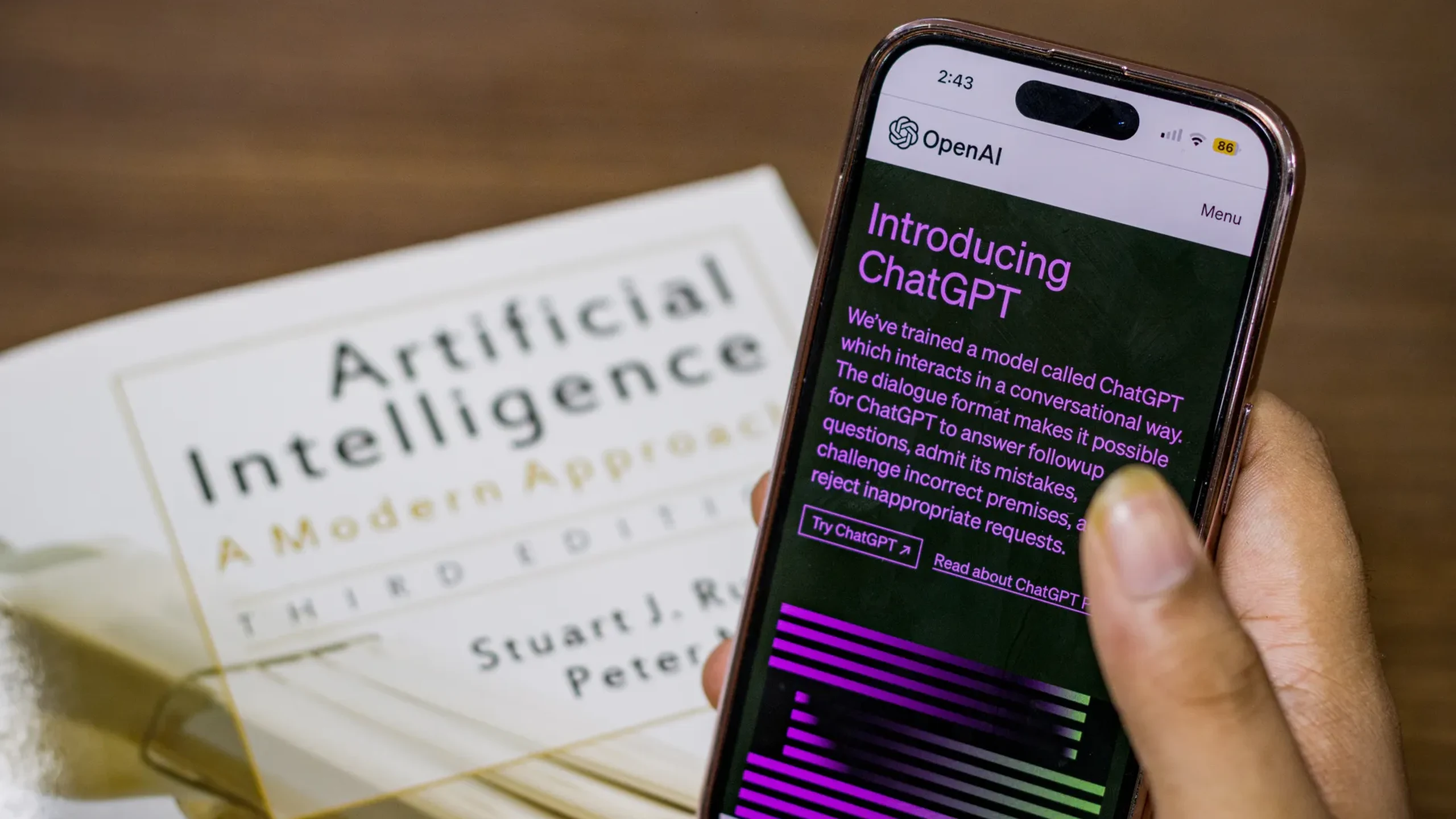
OpenAI’s next advertising test will run beside something users are creating, rather than simply below an answer. Announced on October 5, 2026, the visual format is scheduled for later that month with a small group of US advertisers during ChatGPT image generation. OpenAI says the ad will be labeled, separated from the generated image, and unable to influence that image or ChatGPT’s answer.
The placement is only one part of the announcement. Conversion-data integrations, attribution partners, geographic incrementality experiments and independent brand-suitability pilots form a larger attempt to make ChatGPT a measurable advertising channel. Their shared constraint is unusually intimate context: an assistant may know the project, preferences and limitations a user has explained over several messages.
A commercial image beside a creative decision
OpenAI says ChatGPT reaches 1.2 billion people weekly. That is a company audience claim, not the published reach of this limited pilot. The full advertiser list and detailed rollout schedule were not disclosed. The proposed images can illustrate a product, its use or an experience connected with a service.
A room-design conversation shows the distinction the interface must preserve. A furniture ad might be relevant to someone imagining a small apartment, without becoming part of the room ChatGPT generates. Labels and separate placement are necessary, but users must also understand that the assistant has not endorsed the advertiser or altered its output to accommodate the sale.
Earlier units generally appeared beneath responses and included a brand, headline, description, landing page, logo and image. During 2026, OpenAI expanded beyond its initial impression-based pilot through self-service Ads Manager, click-based bidding, supported conversion objectives and integrations with HubSpot and Shopify. Merchants can work from existing catalogs and customer-management workflows rather than replacing their entire stack.
September additions included AI-assisted campaign creation and Sponsored Agents. Advertisers can draft or update campaigns with natural-language prompts and suggested text or images based on objectives and landing pages. Sponsored Agents open a separate, labeled business conversation after ad engagement. Visual ads address discovery; the agents address a subsequent exchange. Neither changes the promise that ordinary answers remain independent.
Rich intent is not automatically superior performance
A ChatGPT conversation can combine exploration, comparison and a decision. Someone planning landscaping may have already supplied climate, space, style and maintenance constraints. Google’s search ads often capture an expressed query; Meta’s visual ads often rely on inferred interests in a feed. ChatGPT can reach an explicitly described project while those tradeoffs are being resolved.
OpenAI says placement considers conversational context and, when personalization is enabled, selected signals from a broader ChatGPT experience. It says advertisers do not receive individual conversations. The opportunity for relevance therefore comes with a boundary that must remain credible, not merely a richer inventory description.
Google retains mature auctions, merchant information, advertiser demand and familiar optimization tools. Meta retains deep visual-creative and optimization experience. OpenAI has not published comparable evidence establishing better conversion efficiency across industries. Integration with existing campaign systems reduces the cost of experimentation; it does not demonstrate that the new channel deserves a wholesale budget transfer.
Following a click is different from proving an extra sale
The new conversion-data connections include Hightouch, Tealium and LiveRamp. Web and app attribution partners named in the announcement are AppsFlyer, Triple Whale, Adjust, DV Rockerbox, Northbeam, Branch, Singular, Kochava, Airbridge and Tenjin. They support reporting, click attribution and OpenAI’s Conversions API.
Fospha, Measured and INCRMNTAL are full-funnel measurement partners. Haus, Measured and WorkMagic are working on geographic incrementality experiments. Attribution allocates credit to advertising interactions; incrementality asks whether an outcome would have happened without the campaign. A purchase completed elsewhere after ChatGPT discovery makes the distinction especially important.
OpenAI’s native click reference, oppref, is appended to an eligible landing-page click. The Pixel can retain it in a first-party cookie and connect it to a later action. Server-side events can also arrive through the Conversions API. OpenAI recommends combining Pixel and API with a shared event identifier to deduplicate purchases, registrations, leads or other configured actions.
Advanced matching can supplement incomplete click information with eligible first-party data, normalized and hashed before transmission according to OpenAI. Modeled measurement can estimate attribution for some otherwise unattributed advertiser-reported events. Hashing does not settle every question about consent, collection or assumptions; these mechanisms create the familiar need to explain how events become reported outcomes.
OpenAI warns that its results may differ from an advertiser’s analytics system because of time zones, attribution methods, consent, event configuration, deduplication or modeling. A click can leave the assistant and enter a site governed by the advertiser’s own data practices. Privacy therefore extends beyond whether a private conversation was shared.
Three early examples are three different kinds of evidence
DV Rockerbox attributed a 15.3% lower acquisition cost for WeightWatchers relative to its blended paid-search benchmark. WorkMagic reported statistically significant lift for Dose, with 67% of incremental purchases coming from new customers. Triple Whale reported that 93% of Portland Leather visitors arriving from ChatGPT Ads were new.
Those figures describe acquisition-cost attribution, the composition of incremental purchases and the composition of visitors, respectively. They are not interchangeable measurements of platform performance. They also come from individual partner and advertiser cases, not a standardized independent cross-category study.
Campaign duration, spending, audience definitions and full experimental methods were not published with the examples. Early participation can mean different competition, attention or demand from a mature auction. More advertisers and inventory can change both prices and audience mix. Repeatable geographic experiments across retailers, services, apps and longer purchase cycles would provide stronger evidence than one striking case.
A separate August 2026 preprint studied more than 3,000 ChatGPT advertisements from 186 advertisers using 91 controlled accounts and 335 prompts. It found an early emphasis on consumer goods, links often leading to an advertiser rather than a specific product, and exposure differences associated with signaled income.
That study examined an earlier program stage, not the newly announced visual unit. Its findings do not prove the new format behaves identically. They do show why averages cannot replace audits of which users receive advertising and under what conditions, including disparities that can arise without explicitly discriminatory targeting.
Suitability testing must not become access to private conversations
Brand suitability concerns an advertiser’s tolerance for particular subjects and environments, beyond general safety. A static travel article is easier to classify than a conversation moving from a holiday to financial pressure, health or family conflict. An acceptable context can change within a few messages.
OpenAI says its placement guardrails avoid emotionally vulnerable, sensitive and unsafe contexts, using automated systems, human oversight and ongoing monitoring. Eligible advertisers can use Negative Phrases for narrower exclusions. Its guidance also says Plus, Pro and Business users, and accounts identified as minors, do not see ads. These are stated boundaries, not independently demonstrated error rates.
DoubleVerify and Integral Ad Science are developing controlled evaluation pilots without access to real private conversations. Evaluators could construct scenarios and observe placement decisions, reporting aggregate results rather than identifiable transcripts. IAS chief Lidiane Jones emphasized consistency across changing scenarios; DoubleVerify chief Mark Zagorski stressed that conversational context differs from pages or video.
The pilots’ methods, pass thresholds, reporting frequency and advertiser access to results had not been published. Ambiguity is material: weight loss can mean general wellness, medical treatment or eating-disorder distress. Image prompts can disclose body concerns, religion, politics, living conditions or financial limits without those details properly becoming advertising profiles.
Both false positives—blocking a suitable ad—and false negatives—allowing an ad into a sensitive exchange—need measurement. A separate sponsored label also does not prove perceived independence. Placement, size, color, motion and timing can make an advertisement feel like part of a generated composition even when technically separate.
The next evidence needs to cover users as well as advertisers
Published suitability methods, false-placement rates and correction times would make outside testing useful. Repeated incrementality results would test whether attributed performance reflects additional business. User research must establish whether people distinguish the ad from the generated work and understand that it did not shape the answer.
High clicks can coexist with confusion, avoidance and declining trust. A slow rollout alone could reflect careful testing, limited demand, safety concerns or ordinary iteration; more disclosure is needed to tell them apart. These questions matter to enterprise buyers and developers interpreting sponsored recommendations even if they never buy an ad.
Advertisers can preserve experiment records, measurement assumptions and tracking changes in a searchable knowledge base, compare browser and server events, and test attribution against incrementality. They should also inspect the actual labeled experience and what happens after engagement. The broader opportunity is credible, but the October pilot remains an experiment in measuring commerce without making a private creative conversation feel commercially controlled.
Sources
OpenAI announcement · Conversion measurement documentation · Independent advertising preprint · Engineering knowledge-base reference · Ad format and eligibility guidance · Canonical announcement record