
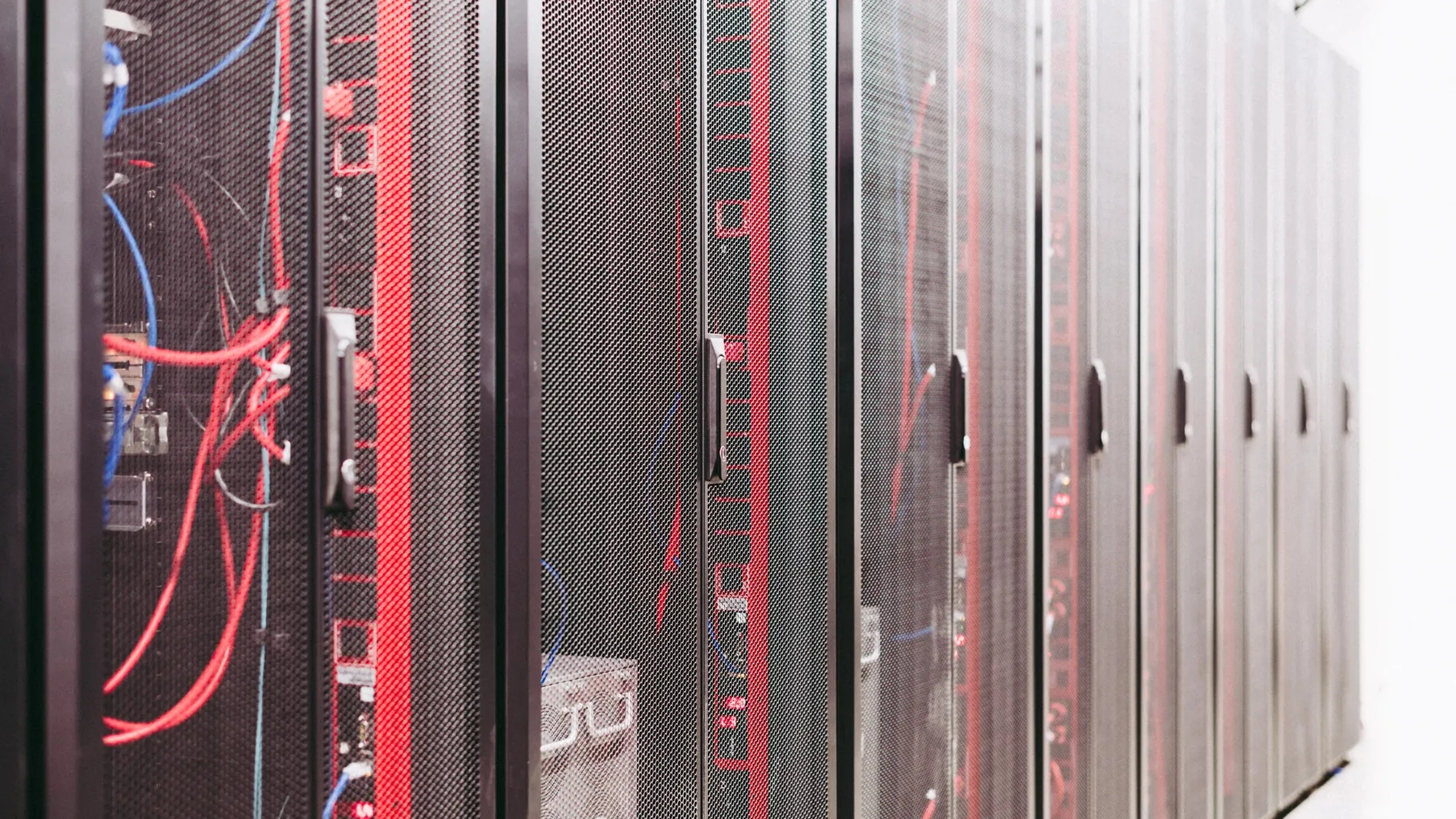
A large Texas AI campus can absorb billions of dollars before its advanced processors arrive. Bloomberg’s construction-cost breakdown makes the industrial system behind the AI boom visible: land, electrical equipment, cooling, networks, labour and financing must work together before chips can earn revenue. The issue is not simply an expensive building, but the time and cost of turning a proposed site into dependable computing capacity.
Texas offers extensive land, energy expertise, renewable generation and development incentives. Projects clustering around Abilene, El Paso and West Texas also compete for the same equipment and skilled workers. Capital can reserve a place in line; it cannot instantly manufacture a transformer, complete a transmission connection or commission a cooling system.
A $14 billion example excludes the chips
Bloomberg reported approximately $14 billion in development cost for Meta and BlackRock’s one-gigawatt El Paso venture, excluding advanced computing chips. BlackRock-managed funds were set to own 80%, with Meta retaining 20% and acting as the initial tenant. A complete gigawatt-scale AI facility could cost several times more once computing equipment is included.
The ownership structure shifts part of the upfront funding outside Meta’s balance sheet, not outside the economic system. Investors and lenders still depend on construction completion, tenant payments and continuing demand. A long lease can finance durable buildings while the operator replaces accelerators through several generations.
Land acquisition is only the start. Grading, drainage, foundations, roads and utility corridors prepare space for halls, substations, water systems, security and expansion. Heavy equipment needs structural support, fire protection and coordinated routes for cables, fibre, coolant and maintenance. Changing a layout can alter several systems at once.
Dense AI racks require transformers, switchgear, busways, batteries and distribution equipment well beyond a conventional warehouse. Switchgear protects and controls circuits. New substations or transmission links may decide whether a finished hall can operate at all. Power must shape site selection and financing from the beginning, not be ordered near completion.
Supply chains and labour turn speed into a cost
Bloomberg’s electrical-equipment reporting describes US expansion relying partly on imported transformers, switchgear and batteries, including Chinese supply. Specialized manufacturing and long lead times can delay projects despite available investor money.
Developers can order early before every detail is final, accept delay risk or redesign around available parts. Each option has a price. On-site generation adds another program of turbines, fuel connections, emissions controls and permits; it does not make the energy dependency disappear.
Electricians, welders, pipefitters, concrete crews, network specialists and commissioning engineers are needed together. Nearby megaprojects compete for them, potentially adding shifts, temporary housing, transport and higher bids. Commissioning tests interconnected systems under realistic loads, so it is not merely finishing the building.
Financing continues to accumulate before service begins. Delays postpone tenant or cloud revenue while capital remains tied up. Partnerships and financing vehicles distribute ownership, construction exposure and leases, but cannot eliminate a project’s dependence on a viable operating system and paying customer.
Abilene shows that the tenant can change
Bloomberg previously described the OpenAI-used Abilene campus as eight buildings expected to consume about 1.2 gigawatts when complete, with more than 6,000 construction workers. Those quantities explain why the site resembles a major industrial complex rather than a routine technology purchase.
The reported Abilene transition then showed plans changing: OpenAI and Oracle ended talks over another phase following discussions of financing and OpenAI’s requirements. Microsoft later agreed to take two planned buildings. An attractive location can remain valuable while its intended customer changes.
Microsoft’s additions were expected to take the campus to ten buildings and about 2.1 gigawatts of computing capacity. Crusoe also planned a 900-megawatt power plant for the expansion. These are reported expectations and plans, not evidence that every building or power unit is already operational.
Concrete and substations last far longer than a chip strategy. A new accelerator generation can require different rack density, coolant pipes, pumps and electrical distribution before the tenant finalizes the architecture. Modular construction allows phases to open sooner, but several modules can still share a delayed substation or constrained transmission connection.
Chips need a complete thermal and network system
Accelerators need fast links to exchange data, and storage must feed them quickly enough to avoid idle processing. Networks, optical links and redundant fibre therefore affect the output of expensive chips just as electricity does. High installed core counts do not establish useful throughput.
Nearly all computing electricity becomes heat. Liquid cooling brings coolant closer to processors but needs pumps, heat exchangers, pipes, sensors and leak protection. Designers must plan how heat leaves the facility during failures or extreme weather, not just how liquid reaches a rack.
Evaporative cooling may reduce some electrical demand while consuming water. Closed loops recirculate coolant and can reduce direct water use, but still need heat rejection. Generation can also consume water elsewhere. Neither “liquid-cooled” nor “closed-loop” alone defines the environmental outcome.
Reliability adds batteries, backup generators, duplicated cooling and redundant connections that may sit unused until something fails. Cutting redundancy lowers construction spending but increases outage risk. Interrupted training, thermal shutdowns and network faults can delay development or depress cluster utilization. At gigawatt scale, concentrated asset value, weather and complex dependencies also create insurance uncertainty with limited historical precedent.
Electricity demand is a range, not a fixed forecast
The US Department of Energy’s data-center electricity report puts the sector at about 4.4% of national electricity use in 2023 and projects 6.7–12% by 2028. The wide range reflects construction, chip efficiency, model use and operating behavior, not a guaranteed endpoint.
The IEA’s Energy and AI assessment likewise connects AI growth to generation and grid investment. Regulators must decide who funds transmission upgrades if a planned campus shrinks or never reaches its advertised size. Utilities receive large requests, but not all represent projects that will be built.
Demand can grow while individual campuses disappoint. Capacity may arrive in the wrong place, on unsuitable hardware or at prices customers resist. Better chips, compression and software can reduce computation per task and encourage more use; the eventual balance is uncertain. Utilization, not the general popularity of AI, determines whether a particular infrastructure stack pays.
Communities enter the financing equation
Large sites affect roads, electricity, noise, water and tax policy. Many jobs are temporary construction roles; the permanent workforce may be modest relative to power and acreage. Communities therefore compare short-term activity with long-term infrastructure obligations.
Governor Greg Abbott called for water-efficient cooling, electricity and water reporting, and protection against higher residential costs. The reported Texas proposals also included reconsidering tax incentives and neighbourhood protections, with further scrutiny expected in the 2027 legislative session. These are proposed policy directions, not a statement that every measure has become law.
Recycling, sound limits, setbacks and dedicated generation may reduce some impacts while raising initial capital needs. Gas generation brings fuel infrastructure and emissions; closed-loop cooling still rejects heat. Clear standards can allocate grid costs and reduce disputes, while uncertain approvals or tax changes are themselves financing risks.
The next test is energized and accepted capacity, sustained useful utilization and transparent allocation of infrastructure costs. Transformer, turbine, transmission or cooling delays would expose physical constraints; finished halls waiting for chips or customers would expose commercial ones. Texas’s AI buildout is a bet on delivering every layer together. Its value will be measured by dependable service and returns, not announced gigawatts alone.